
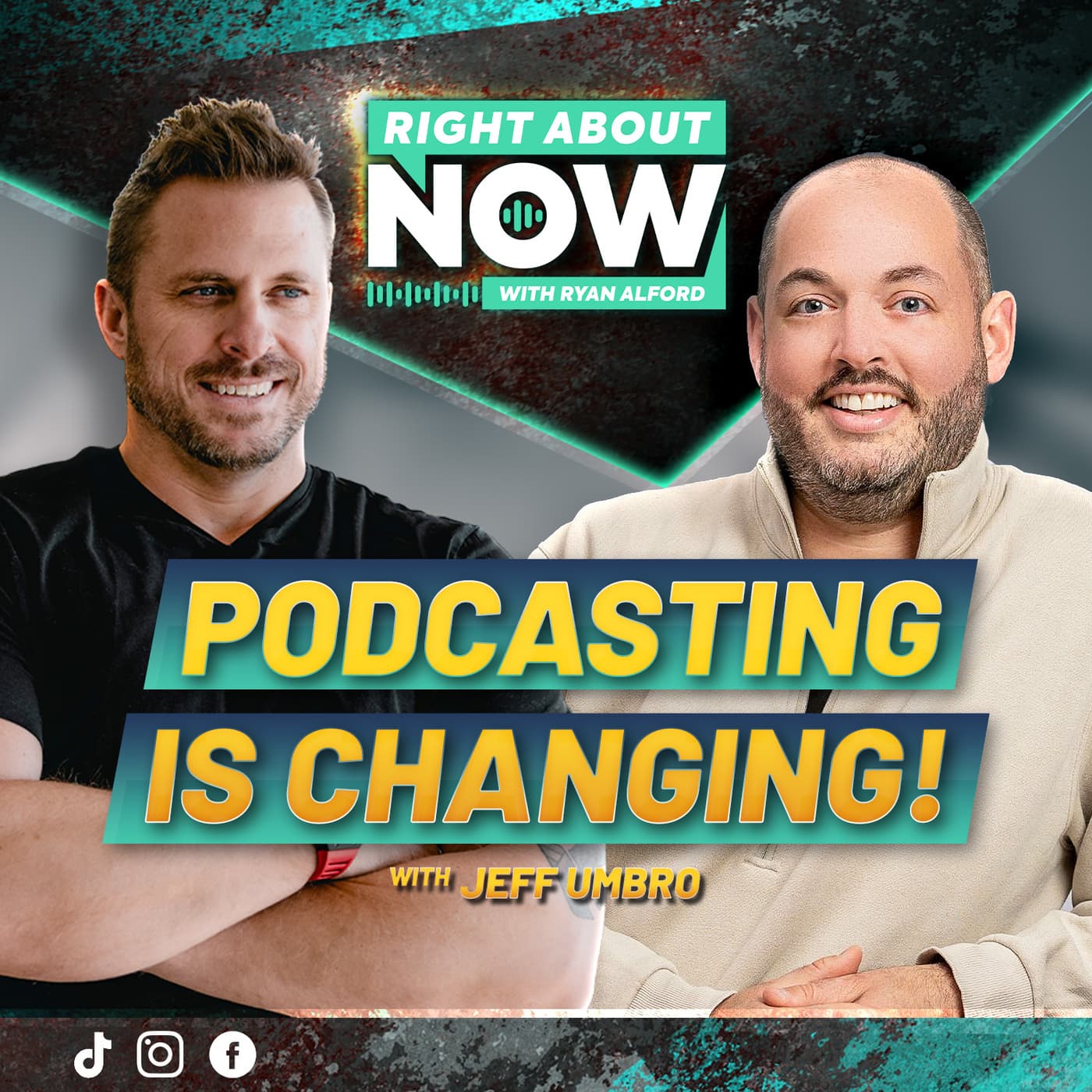
Podcasting’s Next Era: Chat Shows, Video Expansion & The New Advertising Landscape | Jeff Umbro
Jeff Umbro of The Podglomerate on programmatic ads, the video shift, the decline of narrative podcasts, and what actually grows a podcast audience.
- Treat audience growth and audience retention as separate disciplines with different data and different tactics; polishing your intro matters for loyal listeners but for a new listener the only job is keeping them from hitting stop.
- Answer two questions before you build a show: what are your goals for producing it, and what will listeners get from it. Those answers determine how polished the production needs to be.
- If a podcast is a lead-generation vehicle, it only needs to be good enough to get buyers in the room; a show meant to entertain a million people is a completely different build.
- Doing production work well is not the same thing as production being a good business, because of scope creep, crunched margins, and clients who cancel once the hard work is finished.
- The Podglomerate's three business lines (production, monetization, and audience development) were unintentional, but they let a strong year in one unit offset a bad year in another.
- Podcasting is shifting from premium direct ad sales to programmatic marketplaces, which turns it into a scale play with more impressions at lower CPMs.
- Narrative serialized podcasts are declining because consolidation, programmatic ads, and video have removed the money that funded them, pushing budgets toward chat shows and monologue formats.
- Audio and video are different mediums with different demands, so what is audibly interesting is not always visibly interesting, and few creators win both at once.
there are two different arts and two different sciences and there's different data that you're going to read in order to try and manage the expectations on both of those things
production is such a funny business because when it goes right it's an amazing business but when it doesn't which is most of the time you just have like crunched margins
i'm really paying attention to right now is just the death of the narrative podcast and i'm making that sound much worse than it actually is
On this episode Jeff Umbro joins us to dissect the rapidly shifting landscape of the podcast industry from the rise of programmatic advertising to the game changing impact of video we dive deep into the future of monetization and production exploring why understanding your audience and staying adaptable are the absolute keys to long term success in this evolving medium that starts right about now a lot of people when it comes to the audience development side forget about the difference between attracting a new audience versus retaining the existing audience there are two different arts and two different sciences and there's different data that you're going to read in order to try and manage the expectations on both of those things if you're trying to bring in a net new person you should only be paying attention to that to the extent of I don't want them to turn this off right when they hit play and there is a way to address that in the finished product and it's all about like AB testing and talking to your audience and also trusting your own intuition and your gut. This is right about now with Ryan Alfred a Radcast Network Production
We are the number one business show on the planet with over one million downloads a month taking the BS out of business for over six years and over 400 episodes. You ready to start snapping next and caching checks? Well, it starts right about now.
I like to bring people that know way more than I know I just pretend I know everything and podcasting I have to like I know more than most but this guy has been doing it all he is the founder and CEO of podglomerate he is Jeff Umbro what's up buddy how you doing it's great to be here and you know planning don't count yourself out. Jeff and I have taken different paths and I've been fortunate enough to benefit probably from his leadership and passion for the industry indirectly he's done a lot for the space he's well respected by a lot of people that I respect him and I are a lot of like and a lot different this is a weird statement Jeff and I'm going to say you know real wicked nice just real I don't do everything perfect I'm the trailblazer I try to look behind me to see whatever it is but I'm trying hard to do it the right way.
To do it the right way and to just do it my way you've obviously done the same and respect a lot of what you've done thank you very much it's great to hear that from you and I've also been a fan from afar for a long time I always love seeing how other people are doing similar things to what we're working on because it gives me a lot of perspective and sometimes good sometimes bad but it always shows me something that I can be doing differently to take advantage of what's out there and you're very much one of those muses in that regard I appreciate that and I love what podglomerate is done they just seem to be sort of like great. It's one of the beacons like doing it right do you do production audience growth marketing there's some crossover but it's different I've gotten as far away from production as possible except for my own shows Jeff's willing to stay there and give him credit because people need the good work their team does it's just tough work production is funny because anybody who is listening who has a production background is probably having PTSD right now it's a funny thing because it's fun and creatively fulfilling or it can be but at the same time it's everyone has the same problems over and over again it's scope creep to the max you might have
according that you're doing it gets pushed to a different day which then crunches your deadlines for everything else you're doing it's very much one of those things that you are at the whim of the people that you work with whether that be a client a guest or even folks on your team I can't tell you how many times somebody's like oh we'll just record on a Saturday or can we do this at 10 o'clock at night or whatever no big deal they don't care this is fun for most people whereas for us it's a job and hopefully also fun but not always production is such a funny business because when it goes right it's an amazing business but when it doesn't which is most of the time you just have like crunched margins you have a lot of kind of scope creep that feeds into every part of the business just because you produce something great doesn't mean that you're going to find an audience for it the person who's paying you to do it might not be happy with the result and they may decide that in six months once all the hard work is actually done they don't want to do it anymore then you lose that recurring paycheck I'm going to tell my own story which enters that my own experience I came in the ad agency and production value and all that means a lot to me brand
and all of it it is certain point with my own stuff made it's had to go is it good enough and the issue in my mind what I want when I had Verizon and Apple money and unlimited seemingly time and resource to do 30 second commercial or a brand campaign the good enough or standard was different but when you're working with five million dollar budget you can just go hire somebody that can do the work at night or on the weekend exactly no big deal or moving the deck chairs around and getting every detail and looking it matters to me this was a hard thing for me to learn when to put it down when is it good enough is it good enough to again keep an attractive audience versus your own ego versus a perceived magical place of perfection in your own mind and we can polish a turd all day long and then you got a nail that I've done that look I've done 700 episodes there's some turds in my first hundred I was boring I didn't know how to have energy on the mic I'm a very energetic in person guy I'm the guy you know now was that same guy eight years ago
and I was like hey Chris you know we're here today hanging out number one why to invite my friend Chris down the road when I could have invited Steve Jobs second in command I could have gotten test man on I could have had the CEO at Audi I played small ball and I sounded like small ball and really worried about the intro outro and oh god it sucked funny to your point the first question I always ask what are your goals for producing this show and the second question I ask is what are the listeners going to get from this show I stole that from Dan Meisner from bumper he's incredible you guys should all read his stuff it's always a really interesting conversation to have because maybe you are making a show because you just love talking to people and you want to learn more and this is a vehicle to do it maybe you're the big
fortune 500 organization that's trying to sell a product maybe you want to get 10,000 people watching or listening each month you can make some money on it but whatever your answer to those questions are it should determine like what kind of show you make and how you make it and to your point about an MVP or a minimum viable product versus like a really polished thing what you make should be informed by what you're hoping to gain from the thing and that could be using this thing as a vehicle for lead generations you will only want it to be good enough that you can get those people in a room that may buy your product or something or if you want to just have something that's entertaining that a million
people are going to watch it then that's a different show and then on that note a lot of people when it comes to the audience development side forget about the difference between attracting a new audience versus retaining the existing audience there are two different arts and two different sciences and there's different data that you're going to read in order to try and manage the expectations on both of those things you just mentioned like spending all your time on the intro and outro that might be really important for your show depending on your existing listener base and how much they're actually consuming of the show but if you're trying to bring in a net new person you should only be paying attention to that to the extent of I don't want them to turn this off right when they hit play
and there is a way to address that in the finished product and it's all about like AB testing and talking to your audience and also trusting your own intuition and your gut but to your point all of the reasons all the things that we're talking about right now just feedback into the original idea to do production work really well is not the same thing is production work being a really good business you might be able to charge a portion for this stuff but you might not and you might still have to do all those things anyway while hiring someone to do mine I'd hire Jeff they do great work that wasn't pre planned or in this isn't a sales show we have a really good team that does this stuff we have an Emmy award winner who runs our studio and he
does incredible work and the team underneath him is just as good podcasting's weird Jeff you've been in a long time how you got into it where we are today and exactly what the hell podcasting is isn't trying to be you've got these intersections of opportunity and growth and sustainability and it's what I'm looking at all of those are here there's positives and negatives but I love that lens through your journey take all this with a grain of salt I started listening to podcasts in high school this is about 20 years ago a friend of mine burned a CD with five episodes of this American life and gave it to me I don't even think they were called podcasts back then that is the story that got me into the medium and then it was another 10
years before I actually turned to this professionally I was working in New York as a book publicist I decided for the creative outlet I wanted to start a podcast where I would talk to authors and I did it for fun byproduct of making this show which still is out there nobody should listen to it I won't tell you the name of it is that a lot of the authors that came on said some version okay my book comes out next month I'd like to hire you guys to help me to grow this thing and I bring this to my boss and she'd write me a check for commission on the referral I'm like oh wow this is cool there is a whole business model here that has nothing to do with advertising that is entirely engaged because
of the vehicle that I'm doing after a few years of this left that job and started the podcast in 2017 we started as an ad agency where we're trying to bring together a group of shows and then sell ads as a package to advertisers across that group of shows very quickly I realized I have to pay my rent we started producing podcasts and then because everybody kept asking us for it we started doing audience development work for podcasts but quickly became this three-legged stool that has been a godsend in hindsight it was all unintentional when we built the business now like if we have an okay year in marketing and a great year in monetization and bad year in production everything can kind of help sustain one another and the goal is always to have an
amazing year for all three of these business units but that doesn't always happen we have been able to kind of weather this storm and become like this fairly sustainable organization over the years in part because we have those three different business or it's true and some people come to us for one of those things and some people come to us for two or three of those things it truly is we will do all the same things for you that like a serious exam or an eye heart would do but you don't have to be of a certain scale to work with them and you get to own your property and you can just hire us to help you with it or you can use this as a testing ground to try and
expand your show in order to go and work with one of those guys I'm happy with any of those solutions because it means that we're gonna get some good projects along the way over the years what I've realized is that the podcast industry started as thing little magical bubble of people who are just making shows that they wanted to make because they were really interesting to them and they wanted to listen to them you had a few thousand producers all over the country who were putting out stuff the memory palace from radio toopia or this American life or on the other side of that scale you had like the Joe Rogan's of the world who were doing chat shows there is this whole ecosystem that developed over time where they created these things that suddenly somehow
we're getting hundreds of thousands and even in some cases millions of listeners or viewers this entire ecosystem sprouted around those shows in order to try and monetize them and bring some revenue to those creators I do feel like it's frequently the other way around where somebody sees a business and then builds all the content around the business and from my vantage point the opposite happened here that was really cool to see podcasting today looks really different from where it was 10 20 years ago there's a ton of consolidation in the space whenever an organization does get to a certain scale where there's real money there they get snapped up by amazon or serious xamera ihard or Spotify video has become this massive part of podcasting which is great it's like a really
cool way to bring in new audiences but what it also inevitably means is that you have a tech stack that was designed for one thing and then being used for another thing and it breaks all the time you have this big move and shift towards like true programmatic advertising on audio and in the future video properties which inevitably means that podcasting becomes a scale play where these programmatic marketplaces are looking to pump as much advertising into this impressions available as possible often at a lower cpm in order to get people in the door that's a big shift from what we've seen over the last few years where a lot of people have been paying a premium for this ad space because of the quality of what they were buying and then one of the other things i'm sure
i'm not going to touch on all of them that i'm really paying attention to right now is just the death of the narrative podcast and i'm making that sound much worse than it actually is in essence a lot of people came into podcasting because of these narrative serialized shows bone valley or serial or sound or you name it and because of all the things that we just mentioned consolidation in the space the changing from direct to programmatic advertising and the rise of video and many other things the business model is just not the same as it was five or ten years ago a lot of people who were previously investing in these big crazy narrative stories that the listener loves are not able to do
that anymore because they don't have the same amount of money to put into these projects and instead they're investing in a lot of chat shows and i love a good chat show there's nothing wrong with that that's a lot of what i listened to but it's not the same thing and or people are coming up with clever ways to do a close to narrative series maybe a monologue or something if they're like subject matter experts it's a lot easier to sell ads on shows that are less serialized because a lot of advertisers don't want that for any number of reasons all of that to say the podcast industry just looks really different than it did historically because of a lot of those changes i mentioned
and more and it's kind of transitioning the entire landscape into something new and the question becomes then do all of these millions of people who have really loved listening to these shows do they want video do they want chat shows do they want all of their favorite creators being managed by the same three or four companies i have my opinion on what that answer is but that's the landscape that we're in right now you crystallized all of it but you're trying to create something for audio there's a reason there's radio and television it's a different medium what's audibly interesting is not always visibly interesting and vice versa it's not easy to create and win the day in both of those mediums at the same time i'm not sure the audio audience was
really asking for video but the advertising dollars and the demand for this style of content on youtube and others is getting attention so it's like hey we love the audio we love more people we love more money to be made and the content that we're doing but wait a second we're not really creating the right thing for that we're at a really interesting intersection of all those things i think that we're at this funny point where podcasting is having a little bit of an identity crisis and my answer to that is that like a lot of different things can exist simultaneously you can have the youtube bros moving into the podcast space you can have the serialized npr folks that are making these big vast investigative series and you can have everything in between it's just
the thing that is missing from a lot of these considerations is what's the business model there and it exists and there are a lot of people who are paying close attention to this there's still quite a few people who are just high in the sky i want to do this but they haven't really put in a legwork to figure out how where can our audience find a way to you jeff and what you're doing glomerate.com you can shoot us a note at moorate.com slash connect i'm on linked in at jeff on bro and and really appreciate the time thanks for having me. jeff really enjoyed it brother and look forward to continuing to collaborate go check out podcast perspectives jeff's got a great show and i look forward to being on
and to continuing our relationship and thank you both for coming on. yeah thank you this was great i really appreciate it. hey guys you're gonna find us ryan is right.com find all the highlight clips the full download all the details on pod current and where to keep up with jeff and other things happening in this ever evolving podcast industry it's gonna be right here right now we'll see you next time on right about now. this has been right about now with ryan alford a radcast network production visit ryan is right.com for full audio and video versions of the show order one choir about sponsorship opportunities. thanks for listening
Justin Brennan on Multifamily and Other People's Money
Real estate investor Justin Brennan explains syndication, check equity vs. sweat equity, bonus depreciation, and how to buy apartments without your own
Hiring Is a Marketing Problem: Nicole Feenstra
Nicole Feenstra of The DNA Agency tells Ryan Alford why job descriptions fail, how to market the trades, and how geofencing and storytelling win
Earned Media and AI Search with Brett Farmiloe
Featured.com CEO Brett Farmiloe joins Ryan Alford on earned media, digital PR, AI search visibility, and the relaunch of Help a Reporter Out.