
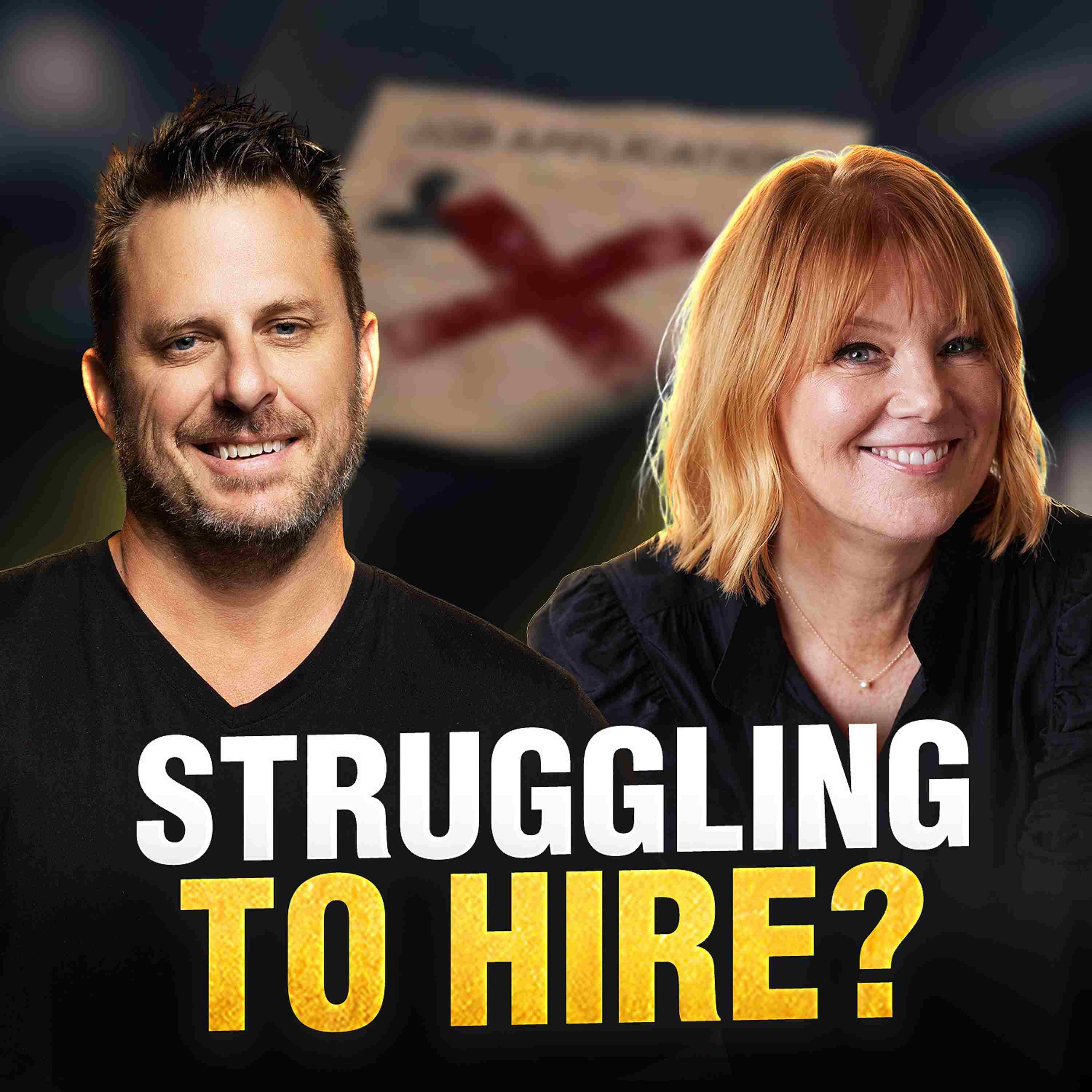
Are You Marketing Jobs or Just Posting Them? The Critical Difference
Nicole Feenstra of The DNA Agency tells Ryan Alford why job descriptions fail, how to market the trades, and how geofencing and storytelling win
we've had maybe a 70-year bad PR campaign around work.
how do you make job sexy is really the conversation I have with my team. How do you make welding sexy? How do you make engineering sexy?
You want to fix a million person labor shortage with paper flyers that you cannot track.
On today's episode of Right About Now, I talk to Nicole Feenstra. She is the CEO and founder of the DNA Agency, the DNA of hiring. Yeah, that's right. We gotta market our positions better. Everybody wonders why you can't hire good people. You know why you don't hire good people? You don't market it the right way. We talk about why work shouldn't be called work, it should be called opportunity. And today is your opportunity right here, right now.
You don't win by following the playbook. You win by rewriting it. 700 episodes deep with the people who actually built something real. No theory. No fluff. No shortcuts. This is Right About Now with Ryan Alford. What's up, Nicole? Welcome to Right About Now. Thank you. Nice to see you. Good to see you. We have mutual friends. I like what I've read. I love storytelling. So I'm hoping we get into all that today. Okay, I'm ready. Let's do it. Where are we at today, Nicole? West Hollywood, California. There we go. Hollywood. Hollywood. What's happening in West Hollywood in 2026?
Goodness me. You know, I just moved here. I was in the I was affected by the Eaton fire in January of 25. So I've been in Pasadena for a really long time and just thought, you know, I'm going to I'm going to go right into the belly of the beast. I'm going to go right in the center of the city and see how it is. It's good. The roads are not as good as Pasadena, I will say. But there's a lot more to do. Yeah. Yeah. So where do we grow up? Do we grow up in California? Mostly Houston, Texas. All right. Texas. There we go. Now you're getting towards our territory. We're in South Carolina. I saw that. I saw that. Yeah. My accent gives at least half of it away.
You know, these guys from the South, but you're not exactly sure. I like to say I had a I had a I had like Boston nuns that that taught me in Houston and there was no fix in or any of that. So when I got to California, they didn't think I really sounded that Texas, except when I think all Nicole, what are we up to? Talk to me about the DNA agency. Yeah, you know, we're sort of we're a full service agency, but we have been doing a lot of consulting around workforce development and sort of fixing large systemic problems like workforce development, a lot of the stuff around the recovery. So we've we've really been doing a lot with regards to uncomplicating, very complicated things.
Workforce development can be very complicated. There's a lot of steps in it. Recovery when you're coming back out of a fire or disaster is really complicated. So we really have specialized in finding ways to simplify the messaging for the people who need to find the solutions around whatever the subject is, whether it's jobs or getting back into their home after a fire or any other disaster. We figure out sort of where they need to see things and simplify the messages and just make sure they see them. So I hear the DNA agency and I was like, this is a really creative like HR company. Like someone's finally figured out how to market HR, you know? Yeah. Well, you know, and our, our website has, you know, all sorts of DNA kind of, you know, we definitely, people are like, are you the science company?
We are a little, like, I like to say we're a little science, a little art, you know? I like, I think, um, you know, you've been in marketing a long time. If any, anybody that's been in digital advertising for any amount of time, it's, you know, there's a lot of, there's a, there's number crunching, but, um, but my heart is always in story. So. Yeah, I spent the first half, first half of my first half of my career of in the on the brand and analog side. And then the second half and it's, you know, it was more of the art for sure. And then it got into, you know, the storytelling was always there. But then with digital and digital marketing certainly became more data, technical focused.
But I feel like I always I've always believed this. I like what I was reading about what you guys are doing, Nicole, like. you know, even with, you know, you have analysis paralysis from all the data. And at the end of the day, you still got to take an action. At the end of the day, people buy from people and you need to tell them stories and make them understand things. And sometimes the data... It doesn't get in the way of that, but I think you can get lost in conversions and metrics. And I'm not saying they don't matter, but that's been a little bit of the maddening part of it from someone that came up in the branding and storytelling side that we're so focused on an action today versus building something over time, which takes repetitive messages and storytelling to do.
Where do you fall in that camp? You know, I found a data point that was from well before the Internet that said it takes 21 times for somebody to see something before they'll do something. And that data came from before the 1900s. So well before we got inundated with all of the amount of dog videos that I see on my feed, just that alone. And so I think it is, you know, when you think about where people are seeing and what they're seeing, I think you're right. I think people really need to see something that means something to them and sort of takes them through a journey because, you know, It is going to take them a lot of times, especially when they're not familiar with whatever the thing is.
And when I talk about workforce development, I talk about the fact that we've had maybe a 70-year bad PR campaign around work. You know, it's always been how quickly can you retire? How quickly can you not work? You know, how quickly can you get rich and be done with work? And I think we've lost the idea of the value of work. The joy that can come from doing something you're really good at, doing something that gives you a sense of accomplishment. I saw a TED Talk. It was, gosh, I think like mid-2000s, Mike Rowe about work. And, you know, he was talking about like a trash collector can sometimes be happier than the guy in the corner office. Yeah. And it's an interesting conundrum. You know, he was doing these shows with people doing these really dirty jobs.
And so he had these data points from having worked with people. And so I'm really interested from a story standpoint in like the value of work. It's something that's, gotten me very like jazzed as of late. Like, how do you make job sexy is really the conversation I have with my team. How do you make welding sexy? How do you make engineering sexy? How do you make IT sexy? How do you make construction sexy? You know, my team will be like, oh, right, we want to make it sexy. I'm like, just make it fun. Make it cool. You know, make it something that somebody would want to do.
You said something really interesting, Nicole, that I want to kind of shine a light on. And I'd never, I guess, you know, we all think about the things that we think about because they're in our lane. And, you know, I like to think I'm introspective or even like, you know, trying to decipher what different things are. But. We've always sort of put work in this place where it had to earn its way out of being negative from the very beginning. And that is a terrible thing. Because think about how much purpose we get from the work that we do. Think about all the good things that come from work. It provides our livelihoods. It provides for us. And we set it up from the beginning.
And even the word work has become synonymous with something bad in a way. Oh, that's work. Oh, that sounds like work to me. I mean, wow. I know that's simple, but like it's so true. It's so fundamentally true for how the historical marketing of work in general has been so flawed and so negative that it's It's always, you know, people with jobs like yours and people, anyone that owns a business is trying to hire, you have to work against it. Cause like you're saying literally, Hey, I need you to come do something when you're not just, you know, doing your free time and here's why it's great, but it's not having fun. What? No, like it can be all of those things, right? Yeah. Well, and I think, you know, I think we, when we, like you talk about HR, you know, jobs and all of that ends up in the lane of HR, right?
And they just put a long description that is what you and I like to probably call from marketing word salad. You know, it's just a big old plate of word salad that is really, you know, as uninteresting as reading the phone book that we don't have anymore. But, you know, the days of having phone books. The Rolodex. We can say these things, Nicole. We're old.
So, yeah, I mean, they put these job descriptions out, and then they're really boring. And then they are surprised that people are not interested. And then you have the converse where people are putting their information in. Then they're not hearing anything from the companies. Or they're saying, oh, these people are just putting out because they have to, but they're not really hiring. So there's this... There's this sort of latent battle that's happening in the workforce around there's people saying there's not there's not any jobs. And then the company saying, I can't find any workers. And the reality is, is both are wrong.
And what I would say is that part of the problem is the story in the middle. A big piece of the problem is a story in the middle. How often people see opportunities on the side of the worker and how well people are talking about those jobs to the people who need to see it. And so that communication gap is where the opportunity lies as a marketer, as a storyteller, as somebody who figures out kind of journeys online, journeys in person. How do you clean up a customer journey for somebody who's looking at a career, a job or whatever? And how is an employer or a company or an industry? How easy are you making it for somebody to go through that funnel? How exciting are you making that funnel?
My friend, my friend, she's like, oh, God, don't get Nicole started on the funnels. I'm like, but they're real. Like funnels are real. They're paths with which things happen. Right. And nobody gets out of the funnel. Like nobody gets to be like, I want to I want to cheat the funnel. Like when people tell me more people in this class, I'm like, well, you need more people to see the class. Yeah. So, you know. I love job marketing as a lane. You know, like it's so over-needed. Because again, we've already established that it starts from this negative place. But people suck at it. Like I think I've caught myself. Literally, I've condensed my team, the stage of my career. I manage 100 people, you know, like indirectly or directly in New York, like in another lifetime ago.
And... I've scaled my agency and things back to where I'm comfortable. But like, even I find myself, I've done these things. I know exactly and agree with everything that we're saying, but I've, as a, I think a professional world-class marketer, I have sucked at this. I've been like, what is, if I read that, I wouldn't want to do that. Like, I, We didn't make it interesting. We didn't tell the story of really what they get the opportunity to do. And that's a, that's a, there's a big gap. I think that this is like a, this is a blue ocean, I think for opportunity for, for yourself with companies like you're hearing this, go read your job descriptions, go read, go, go see how much friction there is for someone to try to come to work for you.
Yeah, go do that. Go eat your own dog food. And then we'll call Nicole together. But right, Nicole? I mean, it's not that fruit. Well, you know, and also you have AI coming into the mix, right? So everyone's like, oh, AI is going to take my jobs. AI is going to take repetitive jobs. But AI can't replace creativity. It can't replace, I mean, in some, it can't replace human experience. It can't replace perspective. And those things are things that people really, really value is understanding, awareness, You know, story, being a human in the world, understanding things that a robot doesn't understand. You know, you look at when people are saying, oh, AI is going to take my job. And, you know, the trades are one industry that I work in a lot.
They're not going to be fixing that anytime. The AI is not going to be taking construction, manufacturing, healthcare jobs. in any, you know, reasonable amount of time. So the trades, physical work, the work that you do with your hands. So there's a really big opportunity for organizations. I mean, the building industry is at a labor shortage of about a million people around the country. So that's the trades. That's anybody. They call them the subs, right? So not the builders. The builders are, they hire the subs. So they hire the plumber, the electrician, the drywaller, the roofer, the The carpenter, the mason, those are all trades that require your hands and for you to be there in person. Those jobs aren't going anywhere. And, you know, when you think about the building industry, you know,
you know, two things happened to create this labor shortage. One, people that had these companies knew that they thought that it was very hard work and they didn't want their kids to do it. They wanted them to go to college and they didn't want them to take over the family business. So that happened. And then in 2008, when the market crashed, a lot of the workers went overseas, went back to their countries and didn't come back. So you have this confluence where you've got these Two situations and you have a massive gap and you've got this gray tsunami that's coming in where all of those people that have those skills are going to be retiring because physically they can't do it anymore. They just want to go hang out on a boat, which God bless.
Yeah. Why not? Yeah. But I think what's interesting is those industries, how and if, how they are talking about that industry, those jobs, how they're talking about it. I think there's a really big gap. And I've watched it happen for the last six years. And, you know, I mean, oftentimes I'll say, how are you fixing this problem? And they'll go, oh, it's a really big problem. I would say, great. Naming it is not fixing it. How are you fixing it? They'll say, oh, we have career fairs. And I will say, how do you market the career fairs? And they will say, and I'm not even joking, paper flyers. I'm like, okay, let me just get this right. You want to fix a million person labor shortage with paper flyers that you cannot track.
Cool. Awesome. Oh, car gone. Take me away. Right? I think I... I don't know what they expect, but, you know, to their defense, you know, it's not what they do every day. Like they're not marketing. They're not storytelling every day. They don't think they are. They probably are, but they don't. That's I think the biggest thing is people just translating like the things where they think they pull creativity from to do like, OK, this is a creative activity. Well, this, you know, hiring someone and how you do it. The question I have for you, Nicole, is how do you.
work with companies and bringing to life the story that you weave? Like, let's say they're a good company and they're doing some things and it is a good job, but do you help them connect the dots with like maybe the things they should be doing to make that job truly great? Yeah. What we'll do is we will back up. I, you know, I'm a data nerd. I'm a storyteller with a data. My dad was an engineer. So, you know, I come by it genetically. But I always think about how we would know if we're winning. Right. Because I like to win. I like to know when I'm winning. That's a really, you say a lot of things that are simple, Nicole, that are actually deeper than surf's level, because that's a deep statement.
It's like, I know that's important. Yeah, it is. And so I will always track back to what can we track? What can we actually track with this thing you want? How do we track it? And so I was working with a group in Iowa and they had this big, they call it Build My Future. It's a one day event. They bussed in 7,500 kids in Des Moines, all over Iowa, went to the Des Moines area fairgrounds. It's a one day career fair. They had about a hundred vendors. So ROTC was there. I crane operators and electricians and healthcare and all these different places for these kids to come and see what jobs were out there, what kind of careers they could do. And I asked the group afterwards, I said, well, how are you marketing?
I'm like, what are you doing with them afterwards? So they get excited and now what? Yeah. And so they said, well, we're not doing anything. And I said, does that seem like a problem? And they were like, it does. I said, do you want to fix that problem? He said, yeah. I said, okay. So we took the event. We geofenced it for the following year. And we, because they, as high schools, they can't market to students because it's a very, there's all these, you know, variables. And I said, well, everybody has one of these. And this is a big tracking device, all the kids do. I said, so we're going to geofence the event. And then after that event, we're going to market to them.
I said, do you have summer jobs, internships, and apprenticeships for them to go do during the summer? And they said, yeah, let's market to that. So we created a landing page and we created ads that spoke to that. And the signup was an info session to meet with these teachers and the people that were doing it. And we had in like three weeks, 90 kids sign up for a Zoom info session. That's awesome. That sounds like a success. It was, you know, I mean, there's the part of the journey, the part, the workforce journey is a complicated one because the reality was, is that they kind of had those programs ready to go, but they didn't totally. So it was a bit of a miss in that they weren't able to take them the next step of the way, right?
Which is that full, I think they did take some of them and I'm not sure, you know, they were, it was sort of a, it sort of, kind of ended there. So I think what happens with workforce development is this idea that you have to kind of, it's a long game. It's not the short game. And so being willing to kind of be in for the long game. What separates the companies that hire well and get the talent that they want versus those that don't? Obviously, we're talking about ways that no matter the company or, you know, whether they've been good or bad, if they could storytell and do things to improve that process. But, you know, maybe for someone listening that runs a company that always struggles, you know, with hiring talent in competitive fields, what does separate one from another?
Well, acquisition is one thing, retention is another, right? Yeah, that's... No, they're very true. You can bring them in the front door as fast as you want, but if they're going out the back, it doesn't matter. Yeah. I mean, it's all the things that we know about any company that you've ever liked working for, you know, have it be a good place to work. Have you feeling like there's a learning, there's a, there's a, the next stage of where you can grow, what you can grow into, what you can learn, how you can expand, how you can be part of the success, how you can be part of a bigger, something bigger than you, how you can enjoy the details of that thing, how you've, you know,
mentorship, extra training, skilling up for more money, knowing what kind of certificates or things that could come and bring you more money, more stature, a path where you can see yourself growing. I mean, all of the things that we've ever had is, you know, and what's interesting is kids, when they're coming out, they think they're supposed to know it all. I feel bad for the generations behind me because they were sort of everything was sort of curated and there was this belief that you're supposed to know everything out of the gate. And the reality is, is anybody who's been in their business or career for any amount of time knows that it's, you know, it's sort of, it can be circuitous and it changes, you know?
I think what's interesting is I actually researched you a little bit and I saw that you, I hope I'm not misstepping when I say you did not finish Clemson. And I did finish. I just had, I had a two point, I had probably the lowest, I had 2.01. You had to have a 2.0 to graduate. I had, I graduated the 0.01 high enough. So I did. Yeah, I did finish. Very good. Very good. But barely. But if somebody had looked at a certain perspective of just a GPA, they wouldn't have seen how all of your capacity and all of the things that have come to make you successful, if they had just judged you on a GPA, they wouldn't have seen the wholeness of you, right?
Right. For sure. Uh, I, I'd put my lifetime earnings versus GPA, uh, against a lot of equals. Yeah. And a lot of people. Correlation has been absolutely zero. Yeah. And I think so many people who, you know, that have created successful companies didn't graduate from college or didn't, you know what I mean? There, it's so much about, um, sort of real world practical understanding of like what you learn out in the world. But I think it's, it goes to the idea of if you see somebody in one way, you're missing all of the opportunities of what they could provide. So I think it's that two-way dialogue. If you're an employer is really looking at an understanding potential and also allowing people to move based on their,
what they're good at. You know, I often, when I'm asking people when they're coming to work with me, I say, what would you do If you could do anything in a day, what would you be doing? Like magic wand. And I do it with my clients when they give me a North Star. I'm like, paint me the picture of how it's done. Right. It's done. It's completed. You get to do it exactly the way you want it. It's like you're writing the script. And it's really interesting because you get to hear what and it's sometimes things you wouldn't have even imagined. So I'm. Yeah, I think that's a long-winded answer to your question. No, it's good. We're getting into some good topics. I love it.
Talking with Nicole Feenstra. She is the founder and CEO of the DNA Agency. Nicole, you know, we broached the AI topic and... It's related, but it's somewhat related to what I'm going to ask. You know, with AI, with the proliferation of these tools and things that are going on, I'd love to know what you're seeing, you know, the impact is overall in the job market. I think more broadly and potentially more interesting than that would be, I think there's, we've been in this period where it's been real cool to become an entrepreneur. entrepreneur or for yourself. And then now you've had the tools that actually enable it to be more accessible. How is that playing a role in hiring or is it, you know, being an entrepreneur and me seeing that, I might be in my own little bubble thinking, well, I guess everybody's thinking about doing this now, but is that the case or is that something people have to,
Is there education in that? Because I educate people all the time. I say, go work for somebody. I did it for 15 years. Like, you know, oh, it's cool to be on shore, but I worked for other people for 15 years. I cut my teeth, learned from others, you know, absorbed a lot. So I coach people that way. But I also know if I'd had the tools we have today, I might not have taken the path I did. But I digress. I think you know what I'm asking, Nicole, thoughts here. Well, you're right. Being an entrepreneur is a lot harder than it looks. What people don't realize is you are your own boss and when things have to get done, you're the only one. It definitely is not for the faint of heart.
I would say... I agree with you. Working within a company and within an organization to see how things run when there's a system is really helpful because businesses work best when there's some sort of systems in place. And if you've never worked with another system and you're not systems minded or an operations expert, then it is good to kind of have an experience of what that looks like in another company. Yeah, you know, I think what's interesting is if you have, so I'm all about niches, right? Because I think the niche is where expertise is. That's why I call the company the DNA agency. Because you and I or anybody, you know, if you were a woman and blonde, I would say this as well, which is that you and I are 98% exactly the same genetically.
It's only 2% that makes us different. And yet nobody would say that you and I look the same, are the same, sound the same or anything. So if it's that small amount that makes us different and yet it's everything, that's what I work to extract with my clients, with a company, with yourself when you're out in the job market, is like what makes you completely and utterly unique? What makes this job completely and utterly unique? What makes the product that you want to sell completely and utterly unique? I always tell this story about my big fat Greek wedding. I don't know if you saw that movie. Yeah, it's been a while. It's a cool marketing story, if you haven't heard it. It was Nia Vartalus.
She had a one-woman show. Nobody knew who she was. Tom Hanks' wife, Rita Wilson, is Greek. She thought it was awesome. They said, let's make this into a little independent movie. They go make it, and they have, despite Rita Wilson being Tom Hanks' wife, they don't have really a large marketing budget. Yeah. And so they decide to seed the movie in Greek Orthodox churches before the movie opens and get this like groundswell of support. And it was because it was brilliant. It was brilliant. And it was like all these people that understood that, yes, the best way to clean everything is Windex. And so they opened wider than any romantic comedy of its time before. And for about 30 years after, they stayed in theaters longer than Titanic.
And I use that story because it's all about finding the people that are into the thing you're into. And the great thing about digital marketing and the great thing about the tools we have is you can find those people. You can find that subset of people that are into your tennis shoes that feature comic book characters from the 1980s. You know, like people can find the thing that is that you can really find your audience. And when you focus on the thing that is the specific thing, you can then open yourself up to more. So I use that analogy for a lot of things. I use it for how you sell a product, how you sell yourself, how you sell the opportunity. You know, we're working on a project right now with a group of governments that's along two freeways.
I call it the gateway city. And we've got 42 training programs on this website called the Gateway Cities Hub that and we have narrowed down to what a day in the life of an admin assistant in government looks like. And it is specific to what they do so that I'm not just looking at like admin general. I'm seeing what an admin within government would do. And that's now it now I understand it more. And if you if you're looking to sell somebody on a job, like what makes that job different than any other job? I don't know. I mean, I keep coming back to the more we talk, the. framing of the opportunity instead of the framing of the job. And yeah, it's about the duties and the tasks and all that.
Of course, it is. Here's your list of tasks that you're going to have tasks in anything that this job or that's even not a job. Even if it's fun, if you're planting a garden or doing whatever your hobby is, there's a list of tasks that you have to do to complete it or have success or measured results. But it's all about the opportunity to have impact, right? Because that's what people want. I think when it gets down to it, they want to feel like they have, you know, a purpose and, you know, like a meaning and what they're doing will show up. And I think that's a big part of it, too. Right. Yeah. Yeah. Yeah. No, I mean, especially the younger generation, they're not as motivated by the money.
They're they're very motivated by a bigger cause. Like I think there's definitely people are often, you know, motivated by money. But I think definitely like Gen Z, Alpha, they're really about like, what are we doing in the big in the big stage of things, you know, in the big in the big, the big sense of things. And I think as I've started hiring people and what I see motivates people is like, oh, are we doing something cool? Are we doing something that's going to make people's lives better? Are we doing something that's going to impact community and society in a better way? Obviously, working in workforce development, we get to talk about, hey, how quickly can people see jobs and jobs? pay their bills and do the things that they want.
And that I think is a good thing. I have found that my team really is excited by that. They don't feel like they're just selling another widget, you know? So yeah, I think, I do think people want to feel like they're doing something bigger than themselves.
Nicole, someone comes to you. What's the process? Like, how are we going, attacking this? How are we directly helping people? Like, the nuts and bolts of how you work. Yeah, that's a great question. I will first ask what problem they're trying to solve. Bigger, big picture. Like, what's the problem you're trying to solve? And who needs the problem solved beyond you? Like what's and what problem are you solving for the people that you want something from? So and then we will look at sort of who needs to see that message and where are those people and what things can we create for them to follow that journey that we talked about at the beginning. Right. What pages are they seeing? What ads are they seeing?
What messages are they getting in different vehicles or different places where they go? And then how do we track it? How do we track whether or not people like this message or that message? Where do they fall off? And it's iterative. You know, I always tell them we're not going to get everything the first bite of the apple. You know, we're going to unpack it like an onion. We're going to unwrap it. I'm using, I'm mixing all of the metaphors. We're going to unwrap the package. We're going to unwrap the onion. Yeah.
We'll think of another one to go over there too. Peel back the onion, peel back the package. Don't throw the baby out with the bathwater. We will. Exactly. So yeah, so we look at that and we see how we do the first pass. And I like to get in fast and iterate faster. A lot of people want to perfect, perfect, perfect. And I think what they don't realize is people will not spend a lot of time with the thing that you think and you're spending 18 million hours on. Like how quickly can you make that message as good as possible and then get to what it unpacks and create a dialogue as opposed to a model? So how quickly can we create this dialogue between the people who need to see the thing and you and make it a two-way street?
Iteration, yes, you're playing my love language. I mean, in business, like literally, like I'm telling you, enact some things and see, you know, it's not just like, well, throw a lot of, throw a bunch of spaghetti on the wall and hope it sticks. You wanna have a process, but then like, let's learn. Like, I think you nailed it. People get so caught up in, this step and that, do we have that in order? I'm not sure, but let's talk to Fred in accounting. And it's like, we could have learned already with three different ways and had real customer feedback or client feedback or employee feedback. Yeah, yeah. All of those things. Yeah, qualitative and quantitative. You get to see how many people saw it and what insights did you grab and how quickly do you take those insights and use them for the next thing.
So oftentimes, you know, I'll ask them, what do you think you know and what do you think you what don't you know? Like if you there are things, you know, are there questions or is there insight about these people that you know? you know, the audience that you're going after that you don't know. And let's validate the things that you think you do know, because maybe you don't know at all. And I think that's the thing that I find very interesting as a storyteller, because I started as an actor and then a writer, producer, And so I think like a performer, but my customer journey, I also have a mild version of ADHD. So I get distracted real fast. So it's a combo between how well am I telling a story quickly because I get distracted.
So like if I'm distracted, like, you know, so all of my, all of the things that I work with people on is like ADHD proof. Cause I'm like, if you've lost me, I'm just going to assume you've lost everybody. For sure. The point is you have a process for working with people and you iterate fast, you change fast, but you start tracking the results to see how you move the needle, where you move the needle. And Nicole, talk to me about where people can learn more about what you're up to, learn more about the DNA agency and, you know, maybe any final like small steps that every company could be taking. I love that. Yeah. Well, the website is the DNA agency.com with one A.
It's just one A. One A. The DNA agency. DNA agency. DNA agency. DNA agency. Okay. Sorry. Exactly. So we have some case studies on there. We have some stories on there. Some cute FAQs and things like that. All my contact info is on there. And I also put, I have been putting more stories on LinkedIn. So we've been doing some story building on LinkedIn. There's some interesting tangential stories. You'll see the, my big fat Greek wedding story. You'll see the 21 stories, 21 times story. So I have a lot of stuff on LinkedIn. Yeah, I would say if you're thinking about, well, I guess two things. One, if you're working in workforce development, you're trying to find people for your industries, your company, I would look at how you're saying what you're saying and take it in isolation as if you were trying to explain that to somebody on an elevator between the first and the second floor.
Yeah. Right? How quickly... Would you get would you get the thing? And how quickly does somebody get what's in it for me? The with him. Right. What's in it for me? How quickly. That's everybody's favorite radio. See, we are alike. That's everybody's favorite radio station is WIFM. Yes. Well, that's in it for me, baby. Yeah, what's in it for me? Exactly. Because so many companies want to put on their site all the things about them. Half the time, it looks like it's for the people who would be giving the money. It doesn't necessarily look like it's for the people for the jobs. So how quickly would somebody know what's in it for them? That would be the thing I would have you look at with your company.
And I would say... If you had to boil down the story, is it something that you would want to listen to at a party? Is it something that would, if you were telling the story of your work, your company, is it something that if somebody wasn't in your industry, is it a story that would inspire you? I talked to a woman, a young woman, and she was in plumbing and somebody said, you know, Does it seem weird that you're doing plumbing? You know, like, do you feel out of place with all these guys? And she said, no, I saw that dude that's a dum-dum doing it. And I thought if he can do it, I can do it. And I thought that was a very funny story.
And I think it's, what it does is it says a lot with a little, which is why would women want to be in the trades? A sense of humor that women have about being in the workplace in general. It says a lot of things with just a tangential story. And so I think those kinds of stories, you know, there's an old adage, facts tell, story sell. So what kind of human story are you telling with the opportunity? I love it. Cole, it's been a lot of fun. Yeah, it has. Thank you. A lot to learn here. And I mean, it's an important, it's, there's so much, your company is only as good as the people you have, you know, it's representation. So you got to put more effort, more stories, more energy and more opportunity in these positions and how you put them out there and then delivering it every day and measuring it.
I learned a lot and it was a lot of reminders in some ways, but then gave me a couple ideas as well. So I appreciate you for that, Nicole. Oh, absolutely. I appreciate you. I love what you're representing. I love your story. I think your story is a very cool one, and I look forward to keeping the dialogue going. Yeah, exactly. Hey, guys, you're here to find us. RyanIsRight.com. We'll have highlight clips from this episode, lots of takeaways, and of course, links to Nicole and her company, the DNA Agency. We appreciate her, and you know we love you. We'll see you next time, right about now. Here's the truth. Information doesn't change your life. Execution does. So don't just listen to this episode and move on.
Take the idea. Make the call. Launch the thing. Fix the problem. Build what you keep talking about building. For more, follow Ryan Alford on Instagram at Ryan Alford. And watch or listen to every episode at RyanIsRight.com. This is Right About Now. Now quit waiting. Go win.

Jason Brown on Options Trading, Risk and Rebuilding
Jason Brown turned a $10K student loan into six figures, lost $250K on one trade, and rebuilt. He shares his options, risk and wealth roadmap with Ryan
Earned Media and AI Search with Brett Farmiloe
Featured.com CEO Brett Farmiloe joins Ryan Alford on earned media, digital PR, AI search visibility, and the relaunch of Help a Reporter Out.
Robin Alex on Replacing Your Business Tech Stack
GoHighLevel co-founder Robin Alex joins Ryan Alford on AI hype, speed to lead, white-labeling for agencies, and scaling a 2,500-person remote company.