
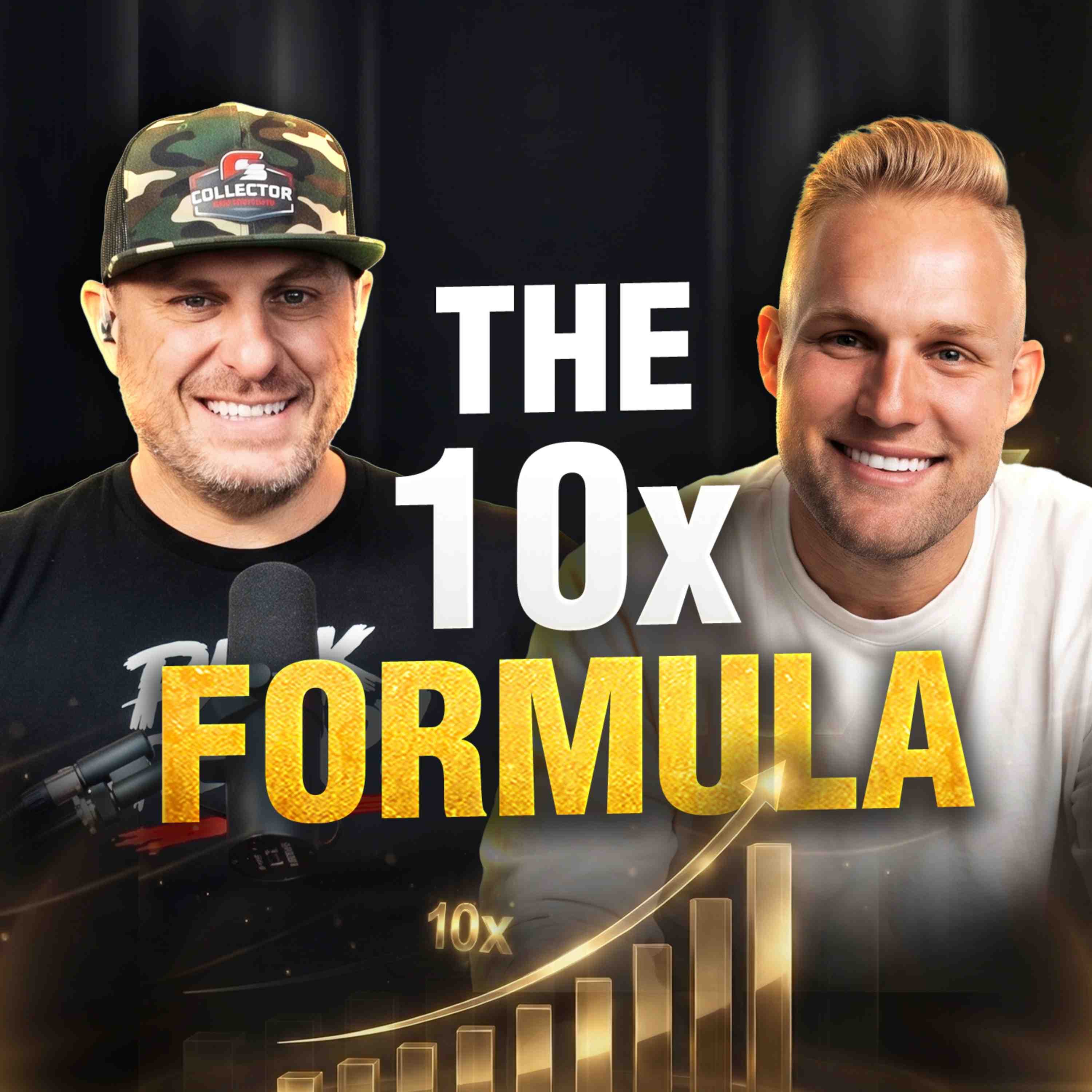
The Science of Scaling: How to 10X Your Business in 3 Years with Blake Erickson
Scaling.com co-founder Blake Erickson shares four steps to scale, why scaling is 80% psychology, and how one company went from $20M to $200M in 12 months.
- Spend your time solving for the company you want to become, not the one you have today; founders who stay stuck are the ones working on the $10M problems alongside everybody else.
- Do less, better. Every yes makes you worse at everything else, and nobody is best in the world at seven things.
- Hire from where you want to go, not where you are. If you want a billion-dollar company at $20M in revenue, your team has to look like a billion-dollar team.
- Stop being the bottleneck in your own business and get out of the way of your team.
- Replace the 'what if it doesn't work' question with 'what if it does' and 'what needs to be true for this to go' before you make a hire or a bet.
- Big thinkers won't join small thinkers, so the fastest way to raise your own ceiling is to spend time around people who think bigger than you do.
- Get The Science of Scaling audiobook free at scaling.com/free; Tony Robbins' foreword frames scaling as 80% psychology and 20% execution.
- Elkridge Investments went from $20M to $200M in annual revenue in 12 months after the founder recruited a billion-dollar C-suite out of larger Utah companies.
It's really hard. It's probably impossible to get big thinkers to come play with a small thinker. You must be big to play big to get big.
So most people hire and build a team from where they're at. Ones that scale build a team from where they want to go.
They're just a genius with a thousand helpers. They just one man show and they have a bunch of people helping them run that one man show.
Before scaling.com, my background, I built a door-to-door sales organization. We recruited 1,200 individuals in four years. And so I always get asked, what's the key to recruiting? The key to recruiting, there's two rules. One, that you must be attractive first. Two, you must have a vision and mission big enough that's so inspiring for big people not to want to come play the game. It's really hard. It's probably impossible to get big thinkers to come play with a small thinker. You must be big to play big to get big.
You don't win by following the playbook. You win by rewriting it. 700 episodes deep with the people who actually built something real. No theory, no fluff, no shortcuts. This is Right About Now with Ryan Alford. What's up, Blake? Welcome to Right About Now. My man, pumped to be with you, man. I love the energy. I'm fired up. Hey, man, I'm ready to scale this baby. We're going to scale this show right out of sight. We're going to tell everybody how to do it at the same time. I'm all in, man. I'm all in. It's easy. I like easy concepts. Scaling.com. Blake's the co-author. of the New York Times bestseller, The Science of Scaling. Hey, man, let's grow. Let's build. Let's stack it. Let's stack the wins.
I like shit that's easy, but I have a feeling it ain't always simple just because it's an easy word to say. Take some grit and some grime. I could tell. You've called your way to the top, I know. But tell me about yourself, brother. three boys in three years. One of my favorite parts about life right now, enjoying being a dad. I have an amazing wife. We live here in Utah. And since I've been 18, man, I've just been very interested in helping people and organizations accomplish scale. It's just from the very beginning that's been what's always drawn me towards things and what I've been obsessed with. I love rapid growth. I love the transformation that's required to rapid grow. I love playing big. I love making big swings, big asks, big conversations, big deals.
We started a company a year ago, Dr. Benjamin Hardy and I, who's big author, if you've heard of him, called scaling.com. We advise 550 plus companies today. The only reason we exist is to help them 10x in three years or less. It's very results oriented and driven program. It's been amazing to see a lot of the results, case studies and companies that are experiencing insane, insane scale. That's what we do, man. I'm going to do it the rest of my life. It's the thing that I love and care about, and I'll do it the day that I die. I like to rake leaves. And you know why, Blake? Because I see it. You got a big pile of leaves, and I like blowing them or raking them.
Whatever you got to do because you're like, you see the results. And that's rewarding. And I do say all the time, the most successful people don't have to to see the fruits of their labor too quickly. But dang, I like to see it, man. And that's kind of like scaling. Like you just look at that bottom line. E10X, the numbers don't lie. It's rewarding. It's a good drug to be on. The drug of growth of the numbers. Being obsessed with that in a healthy way. High on your own supply. I feel like scale fixes everything in the sense of if the bottom line's growing, you can get more resources. The bottom line's growing. If the top line's growing, you can get more people. Winners want to be a part of winning organizations.
So when you're scaling, they're fired up. They're excited. Culture is much easier when you're scaling because people are fired about the mission and the vision. And so a lot of things get fixed when you scale. Right. I have four boys, brother. Do you? Yeah, man. Give me some advice, man. Show them, don't tell them. They do what you show them. Always do what you tell them. That's the biggest one I go by because I don't have to say a lot to my kids. They know the standard. And then we talk about shit, but kind of same thing in business. Lead by example. Talk to me. What got you obsessed about scaling? When I was 18 years old, I went and served a mission. So I was this young white kid living in Peru for two years, learning a language, and then I was preaching the gospel.
I had just this desire and conviction about the message that we were teaching. And I wanted to figure out how to get it into as many people as possible. It kind of started with... man, how do I go convert as many people as possible? And then there's another 180 missionaries that I was with. And I said, how do then we go convert as many people as possible? And super young age, man. But I had the opportunity to go lead those missionaries. We accomplished some really incredible things. It was cool seeing the transformation that took place in so many lives, but also in the life of the missionary. There's just nothing greater than what comes from an individual when they go for scale because it forces the most out of them and the best out of them.
Hey, God was the greatest sceler on earth. Yeah. That's right. He still is, man. He's got low scaling. That's all he's trying to do every day. You got it. He is the best example. He scales everything. How many fish and how many loaves? That's scaling right there, man. He's got a little more power than we do, but I can follow that. There's a lot of that in the Bible. We got a lot of people out there listening. They're running businesses. They're executives.
What's the tangible steps of the art of scaling? Let me give you four. So one, the most common mistake of entrepreneurs is they spend so much of their time in the present rather than the future. And here's what I mean by that. If you're always firefighting today, you're never going to solve for tomorrow. And what happens is you get just really stuck doing exactly what you're doing and not strategizing to get to the next level. The best founders that I've seen, Ryan, have the capability to say, okay, yeah, we're at 10 million, but we want to go to 100. I'm going to be working on 100 and then I'll let you guys work on 10. And the founders that stagnate are the ones working on 10 with everybody.
Therefore, you never get to 100 because you're not problem solving for it, not building the team for it, not strategizing for it. That's one. Two, do less better. It's really simple. But my friend, if you own a business, I just want you to do less better. And I promise you, you are not going to scale by doing more things worse because that's what happens. Every time you say yes to something, you get worse at all the other things. I promise you. If you actually want to scale, you must become him at the thing that you do. You must become best in the world at what you do. And there's nobody out there that's best in the world at five things, seven things, eight things. But there's a ton of people out there that are best in the world at one thing.
And so what is the one thing you can go be best in the world at and then stop doing anything else that's that? Go become known for that thing. Everything else is going to take care of itself if you can accomplish that. Three, get out of the way. Stop being the bottleneck. It's very simple. We can talk. We can expound on that. And then four. The easiest lever to pull to go create scale is by building a scale team to the degree which you will scale as to the degree of quality of your current team. And what I mean by that is if you want to go build a billion dollar organization, but you're at 20 million dollars of revenue. your team must look like a billion dollar organization, not a $20 million organization.
So most people hire and build a team from where they're at. Ones that scale build a team from where they want to go. Those are the four quick things I would share. Very practical today. If you want to get to the next level, if you want to go make a quantum leap scaling wise, go do those. I've started at the beginning and the end. I feel like they're related, which is think and plan for the future and not the present. It is hard to do. I own multiple companies. I've worked for multiple companies. You get so mired in the day to day that you either lack the ability to have time for the vision or you're too busy putting the fires out. But you'll never scale in that position.
So you have to. And honestly, I think, Blake, some people get in that position because maybe they're in the wrong direction. thing or selling the wrong thing or doing the wrong thing. And that's a tough one to judge when you're giving general advice and not one-to-one. Anyone listening, there's a million-step process to maybe figuring that out. But we can't solve all the problems. But if you were in a good spot, either working for someone or doing your own thing, and you can't spend... One of my favorite people as a saying assistant, we need to think more about thinking. Weird way it's saying that. I need to think more about the future because you ain't thinking when you're mired in fire drills. It's called reacting. Yeah.
constantly and you don't build or scale reacting. You got a plan and you got to have the team because you can't do it alone. And AI is changing things and all that, but it's still the truth. It's hard to scale a one man team. Do you guys run into that a lot? People try to scale and there's just the one man show, one woman show. All the time, man, all the time. You'd be surprised. Even some of the best thought leaders we know. They're just a genius with a thousand helpers. They just one man show and they have a bunch of people helping them run that one man show. I'm over here taking notes. We need to think more about thinking. That's the line of the pod.
Yeah, man. I got a wall of fame over here. We're about to get Blake Erickson on this wall of Alamarts for a lot of my guests. His name is Christopher Lockhead. You'll look him up. He's the master of category development in marketing. He's category pirates. I want to give credit to him. I don't claim to have many mentors, but I might call Chris one. He is a brilliant man. He says that all the time. We need to be thinking about thinking. So good. So good. Shout out. I love the four. I love steps, practical things. Very practical. When you start working with a company or a group, we can't do it because X. Even the companies that are ready to grow have some excuses or built in trauma or whatever it might be.
What are some of those things that you guys help people overcome? It's always due to scarcity or fear, and they're probably really correlated. Some people feel imposter syndrome. Some people feel they just play the what if game a ton. Some people just feel like they might not even deserve it, or they don't even believe that they could have those results. They've never even considered that before. A lot of it's just due to small thinking, just putting their own limits on themselves. In order to scale, you have to literally take limits off the table and just think about possibility. It takes a unique mind to be able to do that. The reason I say scarcity and fear is everyone's always thinking about finances and they're always thinking about, well, if I make this higher, what happens if it don't work out?
And it's like, well, what happens if it does? What happens if this person lights their business up? How do we vet them so well to make sure it's not a bet? It's just, yeah, we're going to go get a return. How do we set it up in a way that we're going to go make sure that we force return and mitigate downsides? So there's ways to do it. But what if you played more of the game of what if it does work rather than the game of What if it doesn't? Most founders are stuck in the what if it doesn't game. Therefore, they never move. Therefore, if you look at their business, it's been like this for the last 5, 10, 15 years. This episode is brought to you by HighLevel.
Make sure to check out the link in the show notes to sign up for your 14-day free trial. If you run a business, you know leads rarely arrive when it's convenient. A call comes in while your team is helping another customer. If someone reaches out, but the follow-up gets delayed, an invoice sits unsent, or a promising lead gets stuck in the wrong stage of your pipeline. I've built enough businesses to know that growth has a way of exposing every gap in your systems. That's why High Levels Voice AI and managed AI agents caught my attention. High Levels Voice AI can answer incoming calls, qualify leads using information from your website or uploaded documents, and even book or reschedule appointments. When your team is busy, Voice AI can keep that conversation moving instead of letting a potential customer slip away.
Then High Level's managed AI agents can handle multi-step actions across your CRM. They can update pipeline stages, send invoices, and execute follow-up sequences across SMS, email, and social. That means fewer repetitive tasks for your team and a more consistent process for every lead coming into the business. For me, the real value of AI isn't adding another complicated tool. It's using technology to handle the work that slows your team down so your people can focus on building relationships, serving customers, and growing the business. If you're ready to create better systems and get more from every opportunity, use the link in the show notes to sign up for your 14-day free trial. You know what I call that? And my executive producer, who I love, I give her, her name's Bella, but I give her shit sometimes she's young.
I go, we don't need to create any boogeyman that don't exist around the corner. People create boogeymen. They will. You got to be cautious. You need that person and you need people that can ground you and make you think about it. Things that can come. If you don't plan, you ain't ready. Sometimes just scarcity mindset for sure. And then it's really expanding your mind about the possibilities. We're very limiting as humans. I think big. I'm almost too big sometimes. But sometimes when I think the biggest, I didn't even go far enough. Because if it works or something good, I'm like, if we'd done that, it would have 10x'd. That's how crazy the human mind works and how we are with people. How do you get people past that when you're working with them?
Man, first off, I just want to say my favorite people in the world are the ones that think big. And the reality is, this answers your questions, they're probably the biggest thinker in the room. They probably surround themselves with people that think really small. A really easy way to get around it is just start being around people that think big and then they'll become normalized. If they were to hang out with you and me for a day, I'm sure they'd leave thinking a lot different than they did before. That's one step. And then two, helping them actually recognize that if you're not scaling, you're slowly dying. And if you're not on offense, you are on defense. And then if you're also not scaling, the opportunity cost that is your mission's not being accomplished.
There's a significant amount of lives that are unchanged because you're not on offense. There's a lot of people that need your product or service, they're not getting because you're not on offense. And so they just need to recognize the opportunity cost of what happens when they don't scale. And oftentimes that helps them see like, okay, logically, I understand emotionally. Now I understand why I need to begin making the transition, the transition. And I just got to get out of my own head so that that can occur. Oftentimes a lot of the right people, the right accountability, the right influences help make that transition. Probably with Blake Erickson. He is the co-founder of Scaling.com, the co-author of the New York Times bestseller, The Science of Scaling.
They say defense wins champions, and I say bullshit, and here's why. You can't win if you don't score. If you're always playing defense, you are always under attack. Always under attack. If you're at war and you're just, oh, we're fighting them off for defense, you don't win the war. You don't win the battle. You don't win the war. You don't win anything. You can have the greatest defense on earth, and you don't win. You definitely don't scale. It doesn't mean you don't need good defense, but that's a flat-out lie. You've got to play offense. You've got to go on forward in attack mode. Amen. Why is the quarterback the most important person on the football field? Because he drives the offense. He's literally making the throw.
He's literally making the plays. He's literally making sure that things get executed to happen. Can't win without him. Zero, you don't win. Zero-zero is a tie. And guess what? That's a loss in my book. The only way to win is the score. The quarterback is the CEO or the founder or whoever it is in the company. They got to be on offense and be thinking. You can't hire your way to big thinking and offense. You can. You need to have a team that's like behind it in growth. I'm not saying that. Do you all see that when you're working with companies? Before Scanlon.com, my background, I built a door-to-door sales organization. We recruited 1,200 individuals in four years. And so I always get asked, what's the key to recruiting?
The key to recruiting, there's two rules. One, that you must be attractive first. Two, you must have a vision and mission big enough that's so inspiring for big people to want to come play the game. It's really hard. It's probably impossible to get big thinkers to come play with a small thinker. You must be big to play big to get big. It all starts with you, man. It all starts with you as a quarterback. That's why you're the highest paid person. That's why the founder and the CEO, that's why they're always going to make the most money at the end of the day. Yeah. I tend to pay my people more than me, but I don't even get paid these days. If you succeed in scale, if you succeed in scale.
Yeah. I get paid in other ways from past successes. You actually want to be in that place where you don't have to take from what's growing. Blake, the book, why should people buy it? What are we going to take away from it? What do we learn from it? Don't buy it. Go to scaling.com forward slash free download free audio book for you listening. There it is. We don't even pay for that shit. Blake Erickson is giving it away. Let me tell you why you should read it. We don't care about people buying it. We care about those reading it. It's because the game we play when Tony Robbins wrote the forward for the book, he said scaling business is 80% of psychology, 20% execution.
Most people think it's the inverse. And so the reason why you must read this book is this is going to tell you the exact psychology needed, the frame of mind, the thinking required in order to go scale. And if you don't have that in place, nothing else occurs. This is the ground zero foundation that must be in place for it to happen. And so it's kind of the one thing that if done, everything else becomes possible. And that's why you should read the science again, because it'll tell you exactly how to think.
Della Schaefer's going to read it. I'm going to make it a required reading. Smartest girl on the planet. But she's got to scale that mind. But there's a lot of people out there. That's why the people need to hear this. I know you and I are probably rare breeds and thinking big and all that. We have our own flaws. Thinking big is not one of them. Just because you think big doesn't mean you don't have flaws. I have more flaws than I can count. But it is a key part of growth is the way that we talk to ourselves and the way that we project to others. And sometimes I think it's funny, small mind and small thinking, it leads to the energy is an aura.
I don't know. I don't know how you got to get past that. I love hearing the psychology part of it. That is so important. We can talk about the numbers and the math and these tactics. But if you can't get past it, then those tactics die in a hurry if your mind's not in the right place. Yeah, and we've seen it. Tell me a success story as we close out here, Blake. We're going to do another episode, by the way, if you're up for it. I want to do a follow up in like a couple of months. Yeah, let's run it. Give me a quick recent story, something that's just made you feel good, that will make everybody feel good. People using some of the things that y'all have taught them or anything that you can share.
You must have faith in business and you must continually see evidences that continue going down the path because it's tough and hard. So evidence is important. I told you that we exist to 10X companies. The most recent company that's 10X and scaling.com, our advisory program, is a company called Elkridge Investments out of Utah. When they started with us, they're at $20 million of annual revenue. The CEO, the founder is a really incredible individual. in the sense of he thinks big and he plays big. He's not the smartest guy in the room. It's not like he has all the answers. He did one thing that's super important to what we talked about earlier, is he began operating from scale. He said, I actually, I believe that there's a way that this can become a $10 billion company.
They're at 20 million. And so he began operating from that level. And the first thing that he did is he created a C-suite of leadership that was a billion dollar leadership. He went to billion dollar companies all across the valley and said, okay, who's your best guy for this? Boom. Plucked him out, recruit him, showed him the vision, showed him the mission, got him and did that for every single one of his seats. Sniped him, brought him in. And I'm telling you within 12 months as he's done that, they've gone from 20 million to $200 million in annual revenue. Big vision. operating from the future, getting the team in place from the future, not from the present, has created in a year what it took him seven years to get to 20 and it took him a year to get to 200.
And that's what happens when you get playing from scale. That's what happens when you get playing offense. Stop playing defense and you say, what if this actually goes? When what needs to be true for this to go? Hey, man, that's how you do it. Evidence is key. At the end of the day, we can all talk about stuff, but we've got to start to see the fruits of the labor and see the examples. I know they're in the book. I know that you live by example. And I can't wait to have you back on the show, brother. Thanks so much, man. Pleasure being with you, Ryan. Appreciate you. Drop those website details, social media, any of that stuff, Blake. Our advisory firm is scaling.com. And you can reach me at dblakerickson on Instagram.
Happy to connect with anybody. Hey, man. Simple, easy. It's all about scaling. Because look, if you ain't moving forward, you are stuck. You can't score. You ain't winning. And it's not about always the bottom line. It's about the life journey. It's about the mindset. It's about growth. And it's about understanding how to do it from those that have done it before. Scaling.com. We appreciate Blake Erickson. We appreciate you for making us number one. See you next time on Right About Now. Here's the truth. Information doesn't change your life. Execution does. So don't just listen to this episode and move on. Take the idea. Make the call. Launch the thing. Fix the problem. Build what you keep talking about building. For more, follow Ryan Alford on Instagram, at Ryan Alford.
And watch or listen to every episode at ryanisright.com. This is Right About Now. Now quit waiting. Go win.

AI Security for Business With Fable's Nicole Jiang
Fable Security CEO Nicole Jiang joins Ryan Alford on AI security risks, data hygiene, AI-powered phishing and simple habits to adopt AI more safely.

Why Your Ads Aren't Converting, With Unbounce CEO
Unbounce CEO Steve Oriola on landing pages, attribution, acquisition cost and what 2 billion conversion events reveal about paid media ROI.
Scott Scovill on Tenacity and Beating Fear of Failure
Scott Scovill tells Ryan Alford how a U2 tour bus changed his life, why fear of failure is really fear of judgment, and how grit can be learned.