
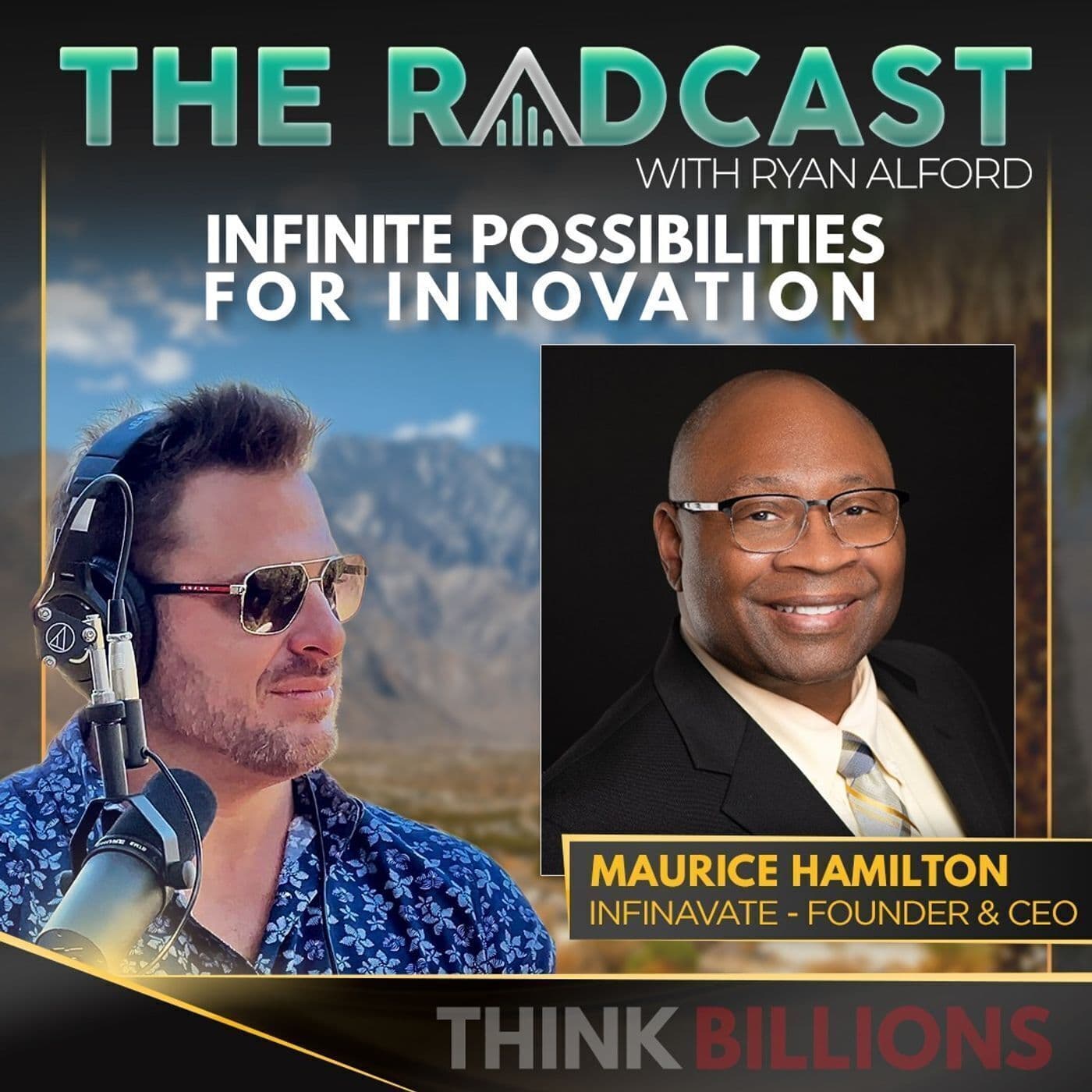
Infinite Possibilities for Innovation with Maurice Hamilton - a Think Billions Experience Guest
Infinavate founder Maurice "Mo" Hamilton joins Ryan Alford at the Think Billions Experience to talk leaving corporate IT, hiring while bootstrapped, and
People say you can go out there and do an eight hour day, no, that's corporate America. Are you working 16, 18, sometimes 20 hours a day, seven days a week, uh, but the reward that you get working and building organizations is self-fulfilling.
And I like how you mentioned that because when you look at it, you say, I learned what not to do, and when you learn what not to do, your chances, your risk is reduced, that you don't make the mistakes
I don't have that luxury right now because you have to bootstrap everything you have. You have to be very, very picky about who you select, make sure you're selecting the right person for that particular role.
The hardest part of it need to study it again. You're listening to the Radcast. If it's radical, we cover it. Here's your host, Ryan Alford. Hey guys, what's up? Welcome to the latest edition of the Radcast. I'm Ryan Alford, your host. We're still here at the Think Billions event in this terrible weather. If you're watching the video, it's gorgeous. We're meeting some of the best and brightest entrepreneurs on the planet, including my good friend, Maurice Hamilton, founder and CEO of Infinity. What's up, brother? It's all good, man. Thanks for having me. My pleasure. Glad you're here. I know it's tough here. Enjoying it. It's such a terrible environment, right? Exactly. Sunshine, mountains, nice weather. I know. It's been a great event, though. It has been a lot of quality people.
I mean, I've done several of these things. I wouldn't say I'm on the circuit, but I've done a lot. This has been like the quality of the people, including yourself, just classy and just really, I don't know. I don't know. Good spirit. Good energy. Yep. Top of the food chain here. Exactly. Maurice, let's talk, uh, and innovate and your background. Let's give everybody, um, you know, a little taste for kind of your journey. Sure. Absolutely. I'm going to date myself here a little bit just to just to get you to let you know. You don't see the gray hairs here, but I've got a few of mine. Yeah. But it's been a while when I actually started off in software development. We use, uh, mainframes and we had to use car punch readers and we had to feed that information
to a system and wait hours before you got the data output back. So I started off doing a software development and, and actually helped build a couple of, uh, var resellers out there, uh, some, some of them are pretty large, I'm multi-billion out of corporations, but I've been doing it for many decades now. Love it, man. So, uh, then what was the inspiration within, innovate then? You know, so I actually went out there and I, and I, and I looked at all I did for the, uh, the companies that I worked for, I built multi-international professional services teams and, and, uh, Philippines and Toronto and Costa Rica. And I actually sat down one day and said, you know, well, I should back it up for a second.
Yeah. One of my really big corporation, corporate jobs, we did a big acquisition and they said, okay, we're going to give you six months, new management is coming into the organization. Uh, we're going to wish you well, but we just need to make some changes here, which I totally understood. New management comes in, they bring their own staff in, I said, I get that. You're going to bring your own soldiers. Sure. But I, I reached a pivotal and I had to make a decision. I said, do I really want to go back and work for corporate America or do I really want to take that entrepreneurial, uh, but that's been inside me for years and years and years and actually do something with it. So I decided to do the latter and go back and explore entrepreneurship and I actually
bought a software, uh, developed me firm. Nice. So how long have we, uh, been going at this? It's been three and a half years now. Okay. Great. And, uh, if you're here, it must be going pretty well. It is, it's going pretty good. I mean, we have a little ups and downs with it, but, but like, exactly, and you, there are a lot of long hours. It's not easy. People say you can go out there and do an eight hour day, no, that's corporate America. Are you working 16, 18, sometimes 20 hours a day, seven days a week, uh, but the reward that you get working and building organizations is self-fulfilling. So that's why I enjoy it. It sounds like you had a similar path that I did.
Like I spent 17 years working for other people, you know, and learning in the, in the addency business before, you know, I feel like I always had the spirit for entrepreneurism, but, you know, I kind of learned under the tutelage of others for a while before starting because that, am I interpreting that path? You, you are 100% on the right track. Yeah. Uh, did that, do you feel like you learned, you know, like, you had it, obviously, you, uh, we'll, we'll get into the, the, the pitfalls, the good, the bad and the ugly, we want to keep this real in the red cast, but, but it did have to help, right, because they helped me, like, I watched and paid attention to what was going on and, and certainly nothing
is as real until you own it yourself, but it helped, right? Well, 100%, absolutely, yeah, absolutely. Did you feel like, um, did it teach anything about people? Because for me, it taught me, I mean, you always want to treat your people well, but like, I learned a lot about, like, okay, what I would do and what I wouldn't do. I might have learned about more of what I wanted to not do, right? Sorry about that. Sorry about that. Yeah. Was that a similar experience for you? 100%. And I like how you mentioned that because when you look at it, you say, I learned what not to do, and when you learn what not to do, your chances, your risk is reduced, that you don't make the mistakes, but, but you're right.
I mean, working in corporate America, working with the people, it's all about relationships, you know, and those relationships that I built up working in corporate America, I've actually taken that and actually put a stronger, even stronger emphasis on building relationships even today. Love it. Smart man. Talk to me. Let's get the nitty gritty. Exactly what if innovate does and for who? Like, who is your typical client? Mm-hmm. Great question. So, what we do is we're a information technology business consulting firm, and what we do is we work with chief technology officers, chief security officers, chief information officers, and we actually do one or two things for them. One, we'll supply developers, for example, to augment or add to their staff, so they don't have to go back out there with the people that are bringing on.
They don't have to bring on additional W2 employees, have their burden cost to go with them. And so we augment their staff. And the second thing we do is we actually provide managed services for clients, so if you can imagine, for example, like I'll use a basic example, everybody understands, like a big franchise like McDonald's. They may have X amount of thousands of units across the United States. They will say, hey, look, we're going to work with them, innovate. We need you guys to go out to this particular center and this particular city at this particular time and actually fix our data center, fix something that's actually with our network. So we actually provide solutions for our clients and solve problems for them so that they
don't have to have the build up the capital and how that extra expenditure to go out there and actually fix whatever problems we may have. That makes a lot of sense, and smart in today's environment, you know, like you mitigate risk, it sounds like, you know, of taking on, you know, that responsibility and that maybe long term commitment to just maybe a short term need. Absolutely. Absolutely. I'm interpreting correctly. You're right. You're 100% spot on. That's great. So we're three and a half years in. What's been the biggest surprise or a-ha being an entrepreneur or owning your own thing and kind of being, you know, the big boss? You know, I would say the biggest surprise is actually when you have that capital and you get that budget in the corporate America and say, here's what your salary expense budget
is for the next fiscal year for- let's say for this particular case, next year. I don't have that luxury right now because you have to bootstrap everything you have. You have to be very, very picky about who you select, make sure you're selecting the right person for that particular role. And I would say that one of the biggest a-ha is to actually make sure that we get the right people that can actually fit those positions what we're looking for in order to get to the next level what we want to achieve. Yeah. What- where do you want to be? Like, where are you going? Where's this, like, you know, like, you seem ambitious, you have a quiet confidence about you. You know, I talked to a lot of people, there's just kind of this, I don't sense a lot
of blips here, like, you know, emotionally up, emotionally down. I feel like you're kind of like navigating really calmly towards something, but we're going towards something. Right. Absolutely. And I'm actually one of those people- some people call them futurists or some people say you're ahead of your time. I actually do believe that our society and the world would actually lean more towards blockchain technology in the near future. I can see artificial intelligence, machine learning and even deep learning becoming some of the thing that's going to happen very soon. So what I want to do is actually get to a certain level so we can actually work with our clients and we can develop specialized applications for them to actually help them with their decision making, help them hire the right people by using something like artificial intelligence
for example. And we can just help them get to the next level so they don't have to go out there and actually what's what I'm looking for, they don't have to waste money and waste time to do what they have to do. So kind of like you become the R&D in a way for that sort of technology. Absolutely. Absolutely. And we do that now because we actually have deep conversations with our clients and we find out what's important to them, what are the pain points, what are they looking to do and our job is what, like in our name, infinite innovation which is coming together to inform, innovate, and innovate. So we actually come to our clients and say what can we do that's going to be innovative
for you that's going to actually give you that competitive edge in the future. What inspired, give me something that made you who you are. What inspired you, I don't know, I just like your spirit, I like your energy, but I feel like there's something, give me something that kind of molded you. That's really another great question. So I go back and look at my life and I look at all the downs, we grew up, we didn't have any very little money. And I think that when you actually grow up and you actually in a situation where you have little, you learn how to maximize what you have. And when I've actually looked at that and say what can I do to actually push myself every
single day, I wake up every day and say what can I do different and better today than I did the previous day. And I think that that is actually so instilled in the back of my brain where I push myself every single day to do something better or something different the next day so I can continuously little baby steps at a time to push myself towards doing something different innovative that people will remember me. So I'm sending the legacy as I have to continue to work every day. That's cool man. That's cool. Everybody learn more about you, learn more about the business and keep up with everything or they want to reach out. Well, absolutely. So we can always go back into our website, www.infinovate.com.
But I also have a personal page out there too. It's Mo Hamilton, Mo Hamilton and then they can go to an Instagram and just a regular website address and they can look up the information so they can actually look at some of the accolades and some of the achievements that I've done over my over the years. Do your friends call you Mo? They do. They do. All right. I'm going to call you Mo. Okay. You know, it's kind of funny because my initials are Maurice O. Hamilton or Lando or those things like the city or Lando. So it actually is befitting to say Mo. Yeah, it's your initials, right? Exactly. Exactly. Hey, y'all go check out Mo Hamilton and everything he's doing with it. It's such a pleasure to have you on, man.
It's been a great pleasure having me here and I really appreciate that. You having me here? Absolutely. Absolutely. Hey guys, you know, to find us theradcast.com search for Mo, you'll find all the highlight clips from today. I'm at Ryan Allford on all the social media platforms. Go follow me on TikTok. I'm blowing up over there. We'll see you next time. Theradcast.
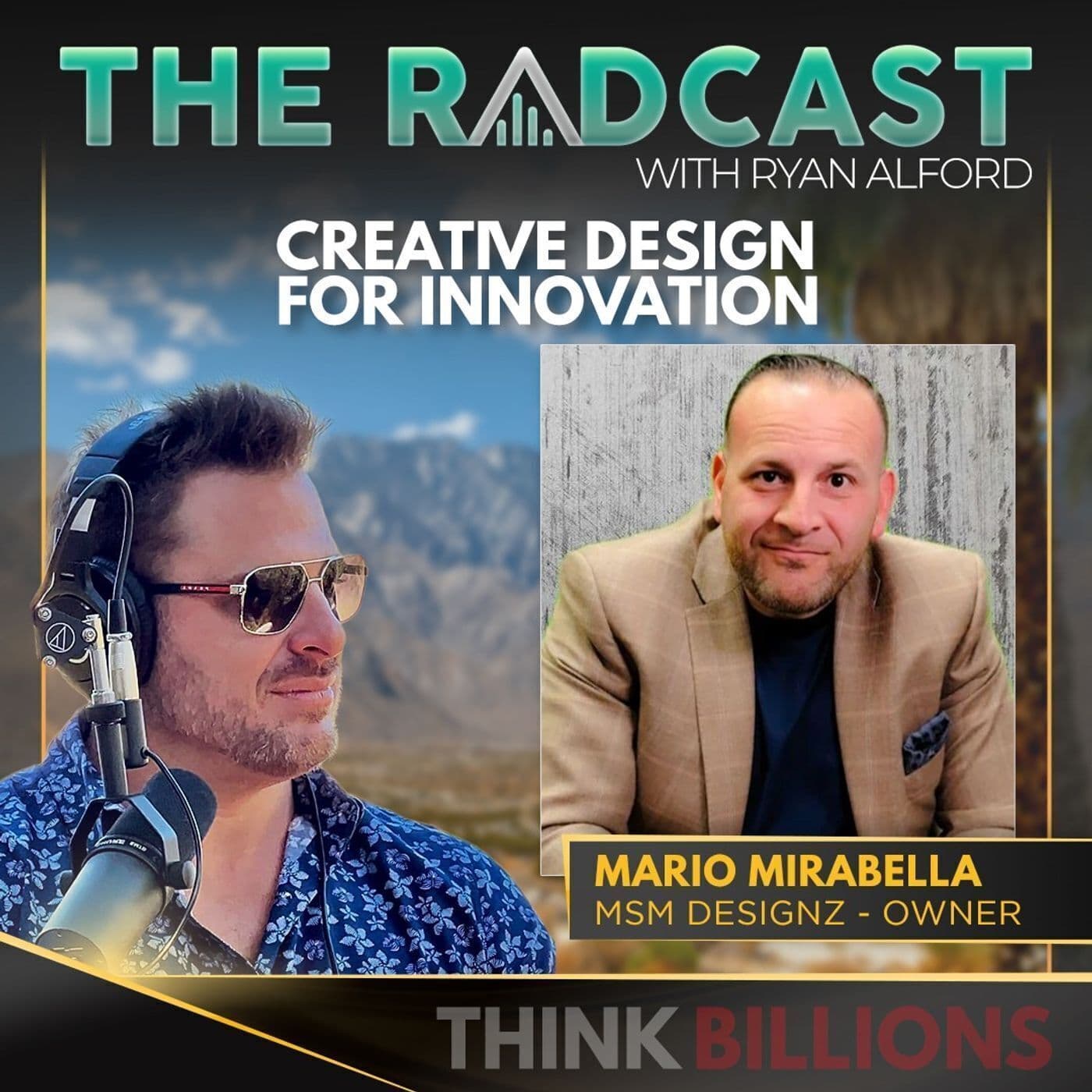
Mario Mirabella on Agency Growth and Personal Brand
MSM Digital founder Mario Mirabella tells Ryan Alford how a bedroom side hustle became an award-winning agency, and why he refuses to niche down.
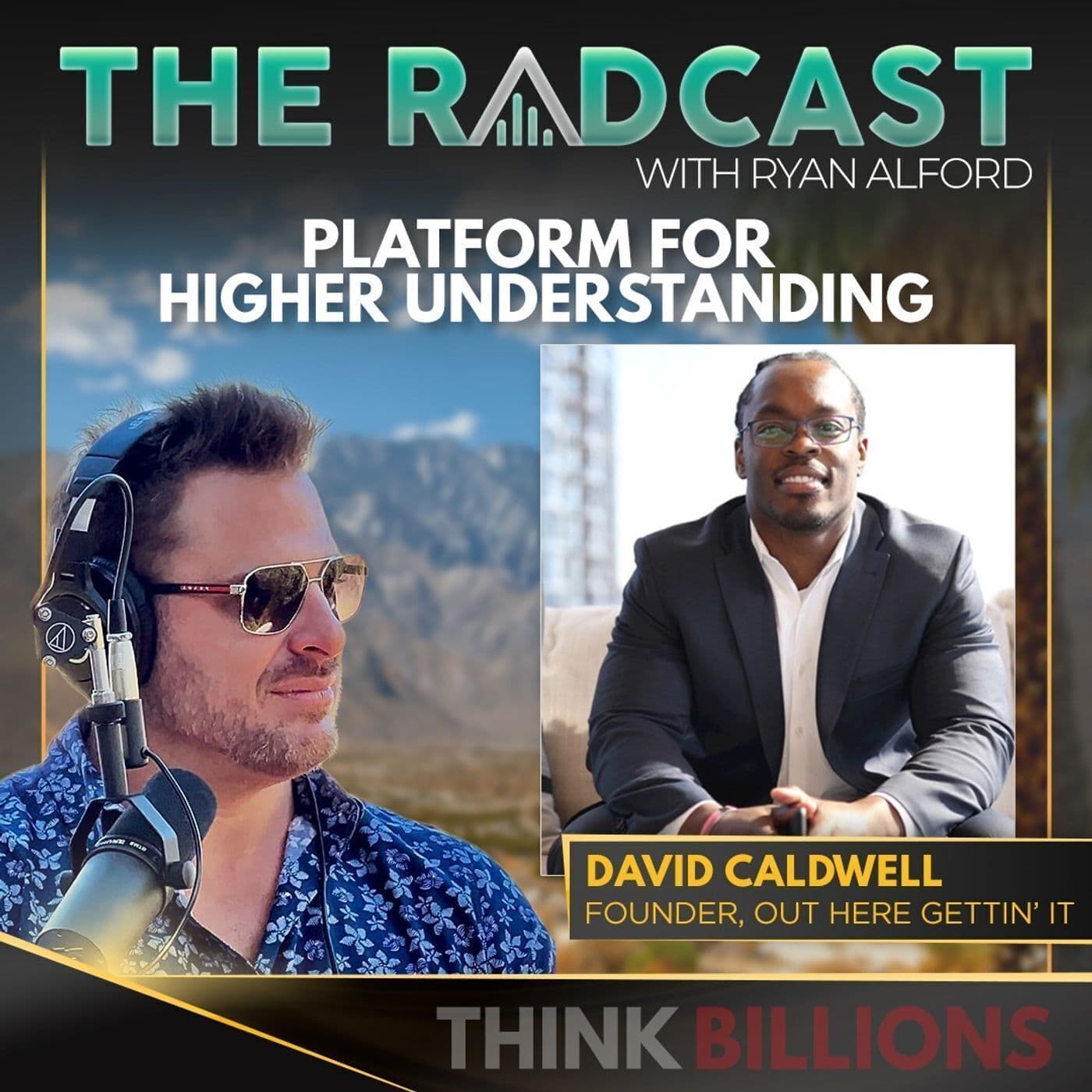
David Caldwell on Life After the NFL and Building OHGI
Former NFL running back David Caldwell on non-guaranteed contracts, the NFL Alumni Association, and building OHGI, a "Netflix of skills on demand."
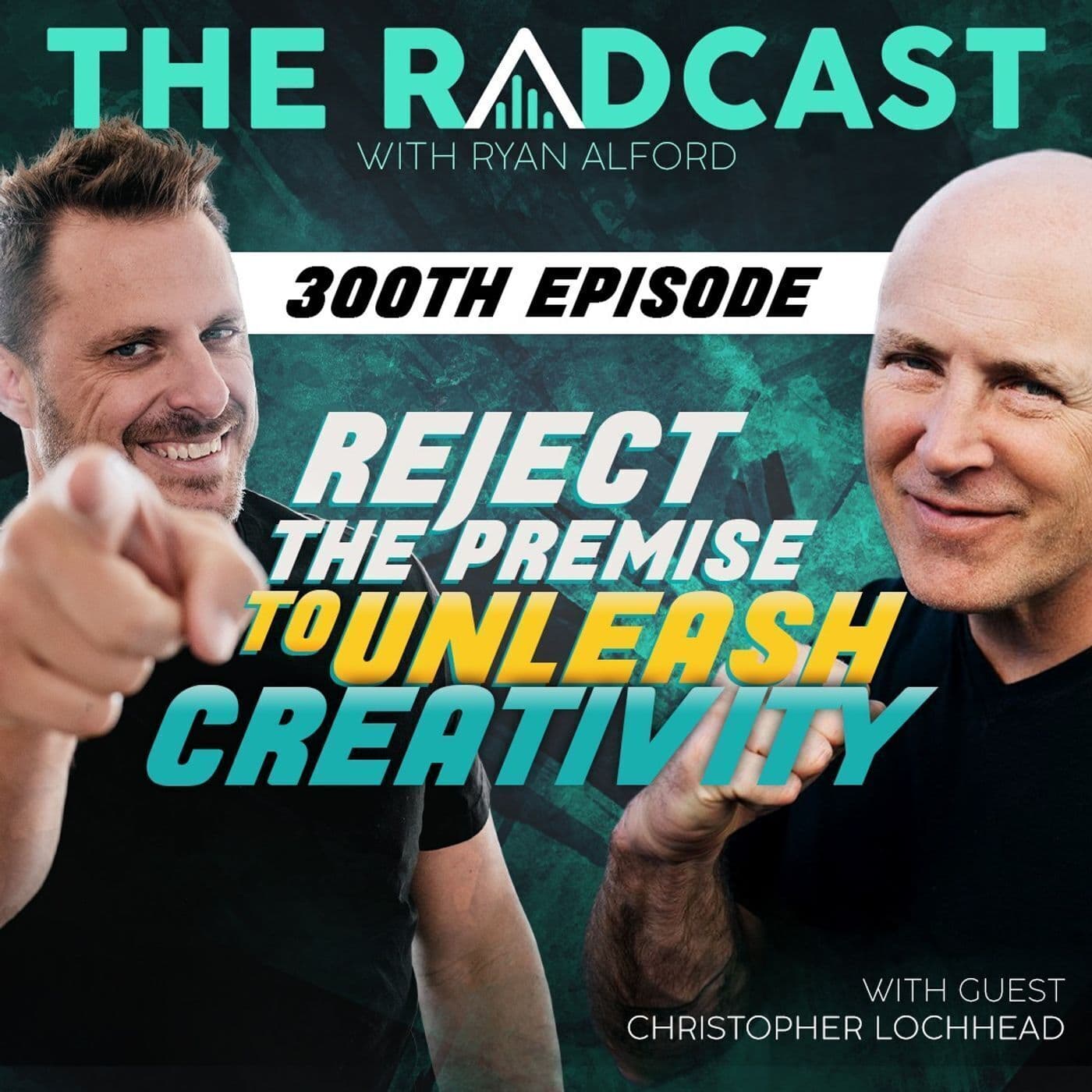
Christopher Lochhead: Reject the Premise to Get Creative
Christopher Lochhead joins Ryan Alford for episode 300 on reflective thinking, languaging, rejecting the premise, and marketing to native digitals.