

What's up, everyone!
A woman yelled for me while I was walking down the dock at my marina the other weekend.
I didn't recognize her, and for a second I had no idea what was going on. Turns out she was a friend of someone at the marina, and she wanted to tell me how much she loved the podcast. She even started talking about a guest we'd had on.
I've spent a lot of years in advertising and marketing. I've seen campaigns with big budgets, polished creative, and all the right metrics. But I'll tell you something: having a complete stranger stop you because something you created actually meant something to them is hard to beat.
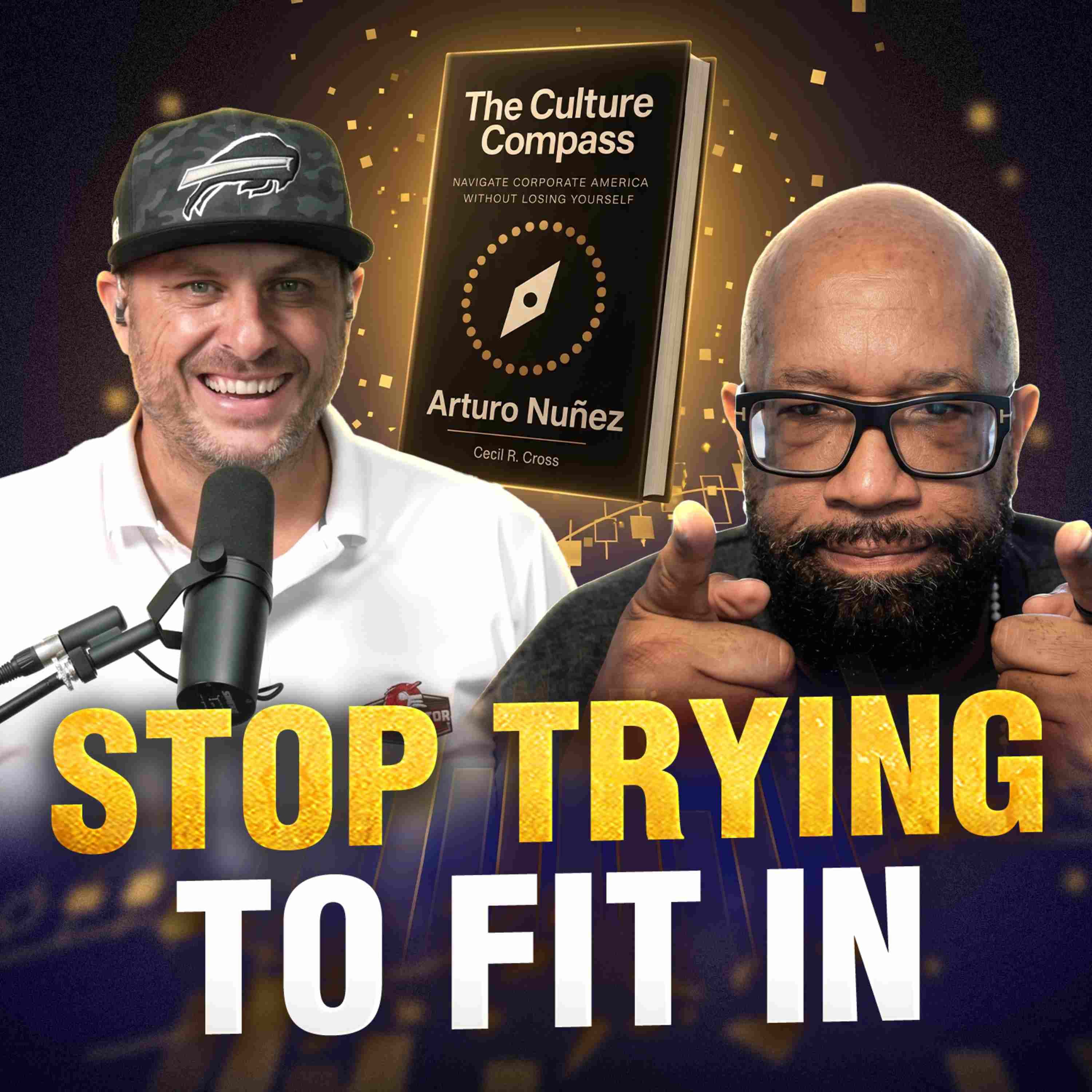
That's exactly what Arturo Nunez and I got into this week.
Arturo has spent his career building brands at places like Nike, Apple, Pepsi, and the NBA. He's worked with some of the biggest athletes and creative minds in the world, including Kobe Bryant. And what stuck with me wasn't some complicated marketing framework.
It was the idea that the most powerful thing a brand can do is create something people care enough about to talk about when you're not in the room.
With AI making it easier for everyone to create content, copy competitors, and produce more of everything, that kind of connection might be more valuable than ever.
Here's What I Learned This Week
01Your Customers Are Better Marketers Than You Are
The Idea: Arturo made a point that every business owner needs to hear. Of course you're going to tell people your company is great. That's what you're supposed to say.
But when a customer tells someone else you're great? That's a different level of credibility.
Arturo told me about sitting next to someone on an airplane who still remembered Nike's Bleed Blue cricket campaign in India roughly 15 years after it ran. The campaign had become part of that person's experience as a fan.
That's what happens when marketing becomes something people actually connect with.
Your Move: Find three customers who genuinely love what you do. Ask them what they'd tell a friend about your business, then use their actual words to improve your marketing. Pay attention to what they remember, not just what you hoped they'd remember.
02Stop Selling the Product. Sell What People Actually Want.
The Idea: Arturo shared a story about advising a company that helps people send money to family members in Latin America.
His observation was simple: nobody wakes up excited to send a remittance. They want to help their family, celebrate a birthday, or make sure someone they love has what they need.
The transaction is just the mechanism. The emotional outcome is what matters.
It reminded me of a campaign we discussed for busy executives. They didn't really want someone to give them more time. They wanted to be on the golf course on a Wednesday morning.
Your Move: Rewrite your main sales message without mentioning your product's features. Instead, describe the specific outcome your customer wants. Make it something they can actually picture themselves experiencing.
03Two Great Companies Can Win With Completely Different Cultures.
The Idea: Arturo worked at both Nike and Apple, and I loved hearing how differently those companies operated.
He described Nike as open, collaborative, and built around inspiration. Apple, on the other hand, was much more private, deliberate, and focused on people executing very specific responsibilities.
Both approaches produced extraordinary results, but they weren't interchangeable.
Your Move: Write down three behaviors that define how your company operates. Not the generic values hanging on a wall, but what your people actually do. Then ask whether those behaviors support the business you're trying to build.
04You Can't Break the Rules Until You've Mastered Them.
The Idea: Arturo brought up composer John Cage, who famously created a piece consisting of four minutes and 33 seconds of silence.
The point wasn't that anyone can sit at a piano and do nothing. Cage had already established himself as a serious composer. He understood his craft well enough to challenge its conventions.
The same principle applies to business. Being different is valuable, but being different without competence doesn't automatically make you innovative.
Your Move: Before trying to reinvent something in your business, identify the fundamentals you need to master. Build credibility through execution first. Then challenge the conventions that no longer serve you.
05AI Can't Replace What Makes You Different.
The Idea: This might have been my biggest takeaway.
Arturo made a comparison I loved. Everyone has access to the same words, but that doesn't make everyone Maya Angelou. Everyone has access to music, but that doesn't make everyone a world-class DJ.
AI gives more people access to information and tools. It doesn't automatically give them taste, judgment, creativity, or years of experience.
Your Move: Identify one thing your business does exceptionally well because of your team's experience or perspective. Make that advantage more visible in your marketing instead of trying to sound like everyone else.
06Obsession With the Details Creates an Advantage.
The Idea: Arturo shared stories about Kobe Bryant that went far beyond talent.
Kobe told him he preferred away games because he loved silencing opposing crowds. He also studied competitors so closely that he knew how to exploit tiny details in their movements.
That level of preparation wasn't accidental. It was part of what made him exceptional.
Your Move: Choose one part of your business where being 10% more prepared could make a meaningful difference. Study the customer, the competition, or the process more deeply than you currently do. Make that preparation a repeatable habit.
Connect with Arturo Nunez
Arturo Nunez is a marketing executive, entrepreneur, brand strategist, and author whose career includes work with Nike, Apple, Pepsi, and the NBA.
From creating global marketing campaigns to working with world-class athletes, Arturo has spent decades exploring how culture, storytelling, and human connection influence the brands people love.
His book, The Culture Compass, explores how understanding culture, embracing what makes you unique, and navigating relationships can help people and organizations perform at their best.
📖 The Culture Compass
Available through major booksellers, including:
The audiobook is also available through audiobook platforms, including Audible and Spotify.
So, What's Next?
I've been thinking a lot about what happens when everyone has access to the same technology.
The same AI tools. The same platforms. The same ability to create content in seconds. The same information sitting right in front of them.
At some point, having access stops being the advantage.
What separates people is what they do with it. Their experience, their perspective, their willingness to put in the work, and their ability to connect with another human being.
That's what I took away from Arturo. Nike and Apple didn't become iconic by trying to be everybody else. Kobe didn't become Kobe by doing the bare minimum. And the brands people remember aren't necessarily the ones that produced the most content.
They're the ones that gave people something worth remembering.
The easier it becomes to copy everyone else, the more valuable it becomes to be yourself.
See you next week.
Cheers,
Ryan Alford
Host | Right About Now
CEO | Rad Collective LLC.