
The Brutal Truth About Podcast Growth Nobody Wants to Hear with Tom Webster
Tom Webster of Sounds Profitable explains why podcasts plateau, how editing for flow drives growth, and what the data really says about podcasting.
- The majority of Americans now listen to a podcast at least monthly, and roughly 37% of Americans 18+ listen weekly — podcasting is fully mainstream, not declining.
- Podcast growth has never been a hockey stick; it grows steadily every year, and last year's dip reflected a rough year for all ad-supported media, not podcasting specifically.
- You are entitled to make the show you want, but you are not entitled to an audience — building for yourself is a different project than building for listeners.
- Stop asking listeners "what do you think of my podcast?" The answers are useless; ask better questions and be prepared to hear the answers.
- Define roles and goals for every speaker on the show — the old morning radio trope of "the Dick, the Dork and the Deer" is about differentiated personas, not about needing a jerk.
- Editing has three levels: no editing (often excused as authenticity), hygiene editing (coughs and pauses), and editing for flow — where you reorder material so each moment answers the question in the listener's head.
- Get an unsmoothed, human-created transcript of a recent episode with every um and ah, print it out, and go through it with a red pen to find what you'd change.
- Don't try to eat the whole elephant with marketing — audiences spread locally and by word of mouth first, the way Rush Limbaugh built from local jock to syndication.
- Free industry research, a weekly insights newsletter, and a daily podcast news newsletter are available at soundsprofitable.com.
You can't just create a show for you. You know, that's the thing. Like you are entitled to make the show you want. Make your heart. I would never crush your dreams. But you're not entitled to an audience. You don't deserve an audience. You have no right to an audience.
If you ask people a question like, what do you think of my podcast? You're going to get an answer back. Oh, that's interesting. It's funny. I like it. That's useless.
I'm authentic and I edit and I'm authentic and I rehearse and I'm authentic because what is authentic to me is doing a good job when I'm on stage. It's not authentic to me to struggle.
Ever wonder why 90% of podcasts plateau before they hit the big leagues? Today we're hacking the growth code with podcasting's uncle Tom Webster, who reveals why the secret to a million dollar audience isn't more promotion. It's the ruthless art of editing for flow and talking to a singular fleshed out human. Get ready to stop chasing vanity clicks and start building a high impact show that actually moves the needle. It starts right about now. There's an old radio trope for morning shows called the Dick the Dork and the Deer. A great morning show typically has at least those three personas on the show. The person who says the awful thing, the person who really represents the actual audience, who makes that other person look bad or whatever, and then the sort of deer in the headlights kind of male or female
that says sort of the innocent thing or the naive thing, and all of that kind of works in a stew. I'm not suggesting that your podcast needs a jerk, but it does require some thought about who's listening, why they're listening, and is the voice of that person represented well on the show? This is right about now with Ryan Alford, a Radcast Network production.
We are the number one business show on the planet with over one million downloads a month. Taking the BS out of business for over six years and over 400 episodes. You ready to start snapping necks and caching checks? Well, it starts right about now. What's up guys? Welcome to right about now. It's always fascinating when you feel like you kind of know somewhere, at least you know their profession and what they're good at, all those things. Then you actually get them on the show. We've got Tom Webster. He's the author of the audience's listening, a little guide to building a big podcast, and he's a co-founder, sounds profitable. One of our partners and someone I can't recommend enough. What's up, Tom? Ryan, it's good to be here.
Can I call you the godfather of audio? No. More like podcasting's uncle or something. There you go. Friendly uncle. How long have you been in audio? I have been in audio for 30 years and I've always been a media researcher. I started my career in radio and TV and more sort of traditional broadcast media. But 19 years ago, I started doing a little bit of work in podcasting. Not that there were any clients for that kind of work, but we just added it into our annual surveys and things like that. And I've been lugging away at it ever since. I love it. I love the storytelling aspects. I love spoken word audio period. It's really been a wonderful career over the last certainly 19th of those 30 years,
trying to make podcasting as big as I think it can be. The proliferation of the smartphone and everything that it can do and the functionality and all the apps right at your fingertips. That's not new either, but I do think it's certainly helped, right? Yeah, and we've had this sort of interesting lab doing research into other countries. For years, I used to work on audio survey called the Infinite Dial, which has actually been in production since 1998. I worked on it for about 18 years. And besides that sort of main Infinite Dial, we also did one in Canada. And Canada for years lagged behind the US by a fair amount. And the reason for it was very related to what you're talking about. It was how draconian the cellular broadband charges were in Canada.
They were usurious. That's a good one for you. When the telecom companies were sort of forced to change and adapt to having more all you can eat plans or at least reasonably price, podcast consumption skyrocketed in one year, because people no longer had a worry about who's paying for all this data. What's your view for building talk with Tom Webster author of the audience's listening? Tom is sort of building to talk specifically about the book. What's the state of the state here of podcasting? Maybe that question you may be even through the lens. You've been for tracking these things with the studies you guys are doing. It sounds profitable all that, but maybe give the audience kind of a lay of the land of the industry.
This year, the majority of Americans have listened to a podcast at least monthly. It's the first time we've really been able to say that, although we've been flirting with it for a couple of years. It's a fully mainstream activity. It's about 37% of Americans' 18-plus. Listen, weekly. It's as much a part of American mainstream media consumption as the audience every year has grown. It's never shot up like a rocket ship. It hasn't done that kind of hockey stick growth that an online video did and YouTube initially did. But it plugs along. The industry itself had a bit of a down year last year, but any ad supported media did last year. It was a rough year for ad supported media. There was a lot of right sizing as I believe the term that is unfortunate.
But that's really turned around. Sales are good right now. Certainly the top shows continue to sell out. There's enormous opportunity, even without growing a single audience member, to continue to monetize the incredibly long, long, long tail of podcasting, which is 99% of it. Or there's still some friction, I think, in monetizing that. We continue to grow partners that sounds profitable. We really function as the trade organization for the industry. And there's increased interest in multiple layers. Podcasting is not on the way down. True or false? Podcasting is not on the way down. Podcasting is not on the way down. Is that true or false? That is true. Yes. Podcasting is not on the way down. Yes. I don't know that I hear them. People don't like it.
It's sort of the whispers maybe a little bit. Podcasting is plateaued a little. It's got nowhere to go, but down. That's the whispers I hear occasionally. That really bugs me. And I acknowledge that because I hear it all the time. Where I often see it is in online articles from different online publications that seem to delight in any bad news related to podcasting so that they can write about them. In their own increasingly failing digital media. That's the thing. I'm like, well, how are you doing? Because I know we're growing. There's always been a weird skepticism about podcasting just because of how it started in a lot of ways. It started as another version of pirate radio. A group of malcontents doing little shows about all kinds of stuff.
And maybe it developed that kind of a reputation. But it's not the case now. It's a fully mainstream activity. It is growing. It is one of the two fastest growing advertising-supported industries. That's for sure. There's so much more of attention. Branded podcasts is something that you're involved with. Those are huge and getting bigger. And we're being able to count them better. We have a project to do that. Is there a cap on podcasting? Sure. There's a cap on everything. But we're not there yet. I talked to someone other day. We're making this analogy with marketing and saying, if I can sing really good, you want to amplify it. People want to hear it louder. But man, if you sing like shit, are you turning the amplifier on?
Hell no. So we don't need to amplify something that's not working. I think it's hard to look in the mirror for some podcast people. Those are the hard questions. Everything you were talking about is the hard exercise. And hard might not even be the right word. It's just the right thing to do. But requires a different level of thinking and planning. That's where people maybe get off the rails. You can't just create a show for you. You know, that's the thing. Like you are entitled to make the show you want. Make your heart. I would never crush your dreams. But you're not entitled to an audience. You don't deserve an audience. You have no right to an audience. And if you are focused on making the show,
you want to make then that's an entirely different thing than making the show that the audience wants to hear. And I hear people sometimes be disrespectful of an audience. So they don't even know what they like until you show it to them and all this other stuff. And that's not true. You can ask better questions. People ask really terrible questions. Anytime I'm talking to somebody and they've attempted to talk to their listeners. If you ask people a question like, what do you think of my podcast? You're going to get an answer back. Oh, that's interesting. It's funny. I like it. That's useless. That's not going to help you do anything. That's not going to help you improve it. So you just need to ask better questions
and you need to be ready to hear those answers. We've gone through this exercise on Arshad. We get a perfect ounce of our new stuff. Three people that are on it. But we have this discussion. I listen to shows and it's not clear. You've got the two guys or two girls or whatever. And there's no differentiation between the clarity of Abbott and Castella. Yeah. This is an old radio trope for morning shows called the Dick the Dork and the Deer. A great morning show typically has at least those three personas on the show. The person who says the awful thing, the person who really represents the actual audience who makes that other person look bad or whatever. And then the sort of deer in the headlight
is kind of male or female that says sort of the innocent thing or the naive thing. And all of that kind of works in a stew. And I'm not suggesting that your podcast needs a jerk. But it does require some thought about who's listening, why they're listening. And is the voice of that person represented well on the show? Rolls and goals. Rolls and goals of every speaker on the show. Talk with Tom Wester, author of the audience listener. The audience is listening and co-founder of Sound's profitable. Tom, once you've got rolls, you've got goals for all the hosts. You've done the look in the mirror while also talking to your audience. Where do we go next? To get the audience continuing to listen. To me, it is the most neglected thing in podcasting
and that is editing. And there's sort of three levels of editing. Level zero is I don't do any editing. And I support that with the crutch of I'm authentic. Well, I'll tell you something. I'm authentic and I edit and I'm authentic and I rehearse and I'm authentic because what is authentic to me is doing a good job when I'm on stage. It's not authentic to me to struggle. I do the work of rehearsal. I do the work. I mean, it's script everything, but I certainly script transitions and things like that. I want to do a really good job. That's authentic to me. Not doing any editing under the guise of authenticity. Don't love that. The next level of editing is sort of hygiene level editing
where you take out coughs and awkward pauses and things like that. And at a minimum, you should be doing that. But the next level of the game is editing for flow. And if you're in an interview and something comes up late in the interview that actually would have been better to have come up earlier, you can do that. You're not broadcasting a live show unless you are. That editing for flow is super important. Alex Bloomberg is really, really good at this in the shows that he has produced. And I worked for years on Planet Money. Then it was a co-founder of Gimlett and startup and startup was a great podcast. The way that those shows were edited and constructed were whatever was coming up on the show next,
answered the question that was in the audience. The next question that was in the audience's head. Even if the interview wasn't structured that way, the way it was produced was structured that way. And so there was an arc to it. It wasn't just sort of a random whatever. That's not appropriate for everything, but it could make a lot of things better. And one of the things that I always advise people to do is get the best human created transcript of a recent show that you can. There's a number of services that do that. Leave nothing out. Be unsmaring. Get every um and aw and there are services that will do that. And get the whole thing printed out and sit down with it with a red pen.
And tell me you wouldn't change some things. And that's a really outstanding step you can do to access the next level of this. I create like an outdoor board campaign for my show to do locally all around. I never ran it. This shows doing well. I've almost probably by gone national, but need to go. I just never was like, all right, do I spend that money? Like we could have spent it. We had the money, but it was just like, I was just kind of paused. I usually don't second guess myself. I usually don't have definitely just to go do it. But I literally still have like the billboard playing off number one in XYZ, born in Greenville, but born and produced here in Greenville,
kind of playing off national show now, but born and raised right here. I love that. And we've talked about some syndicated personalities. Rush Limbaugh didn't start out as Rush Limbaugh. Rush Limbaugh was a night jock at a station in Pittsburgh or whatever and then moved to Sacramento. And like he was a local jock and it was friend told a friend or whatever and that's how we started to spread. That's how it always starts to spread. And if you just try to eat the whole elephant at once, you're likely to do marketing that is not particularly precise or articulate. Tom, tell me anything you want to mention that you're doing with Sounds Profitables, your latest stuff or things coming up with that platform. Sounds Profitable is a partner driven organization.
We function really as the trade organization for the podcast industry. And as a part of that, we produce a lot of resources, a lot of free research that we make available on our site. We put out a weekly insights newsletter and a daily podcast industry news newsletter. We're constantly putting out resources. All of that is at soundsprofitable.com. I've been lately doing a lot of writing about the role of video. Video was part of podcasting from the very, very beginning, but maybe never more so than now and what video really does. And that's just been really a fascinating inquiry, I think. That's what I've been writing about lately. This thing got to eat your own dog food. We got to do it ourselves. And if you're out there and you're listening,
you're thinking about podcasting. It's still on the way up big time. It's changed my life. It's impactful in so many ways. And we have people like Tom and Sounds Profitable to think. For propping up the industry and taking it to the places that are going.
Tom, how do we find the audience is listening? Audience is listeningbook.com. You can also find it at Amazon, Barnes and Noble. And there's an audio book, of course, unhottable. You can find it there. Tom, thank you so much for coming on today. Thank you, Ryan. You've been a great host and I really enjoyed this. Hey guys, Ryan is right. You'll find all the highlight clips as well as links to Tom's book, Sounds Profitable and everything going on in the industry. We'll put some links to some of their great, the greatest hits of their decks. Tom's are always writing some thorough research. If you're a brand out there, it's time to get off the bus and get on to the podcast train. Because that's where the most trusted advertisers are
and the medium is growing. We appreciate you for making us number one. We'll see you next time. I'll write about now. This has been right about now with Ryan Alford, a Radcast Network production. Visit RyanisRate.com for full audio and video versions of the show or to inquire about sponsorship opportunities. Thanks for listening.
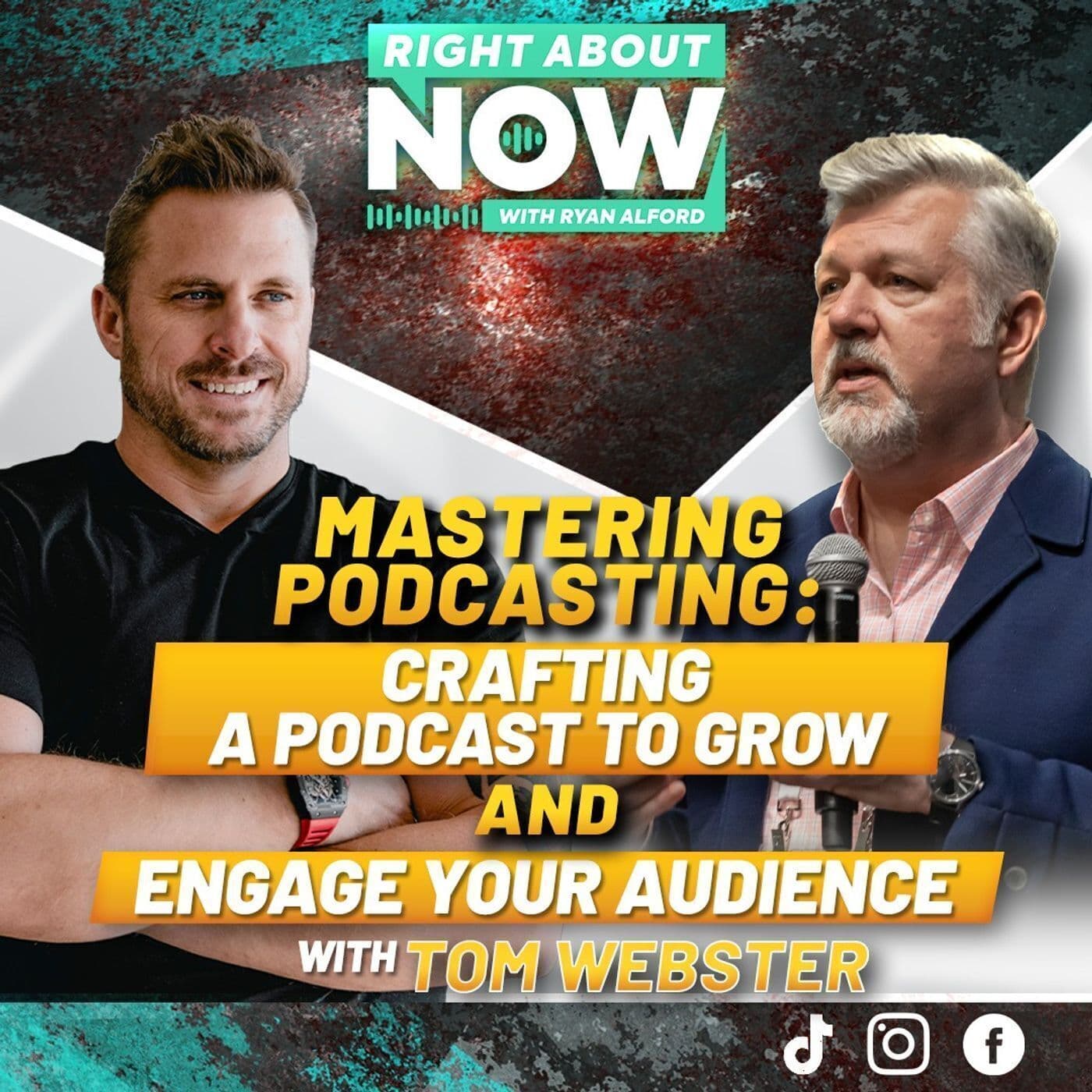
Tom Webster on How to Grow a Podcast Audience
Sounds Profitable's Tom Webster on defining your ideal listener, roles and goals for co-hosts, editing for flow, and why podcasting is still growing.
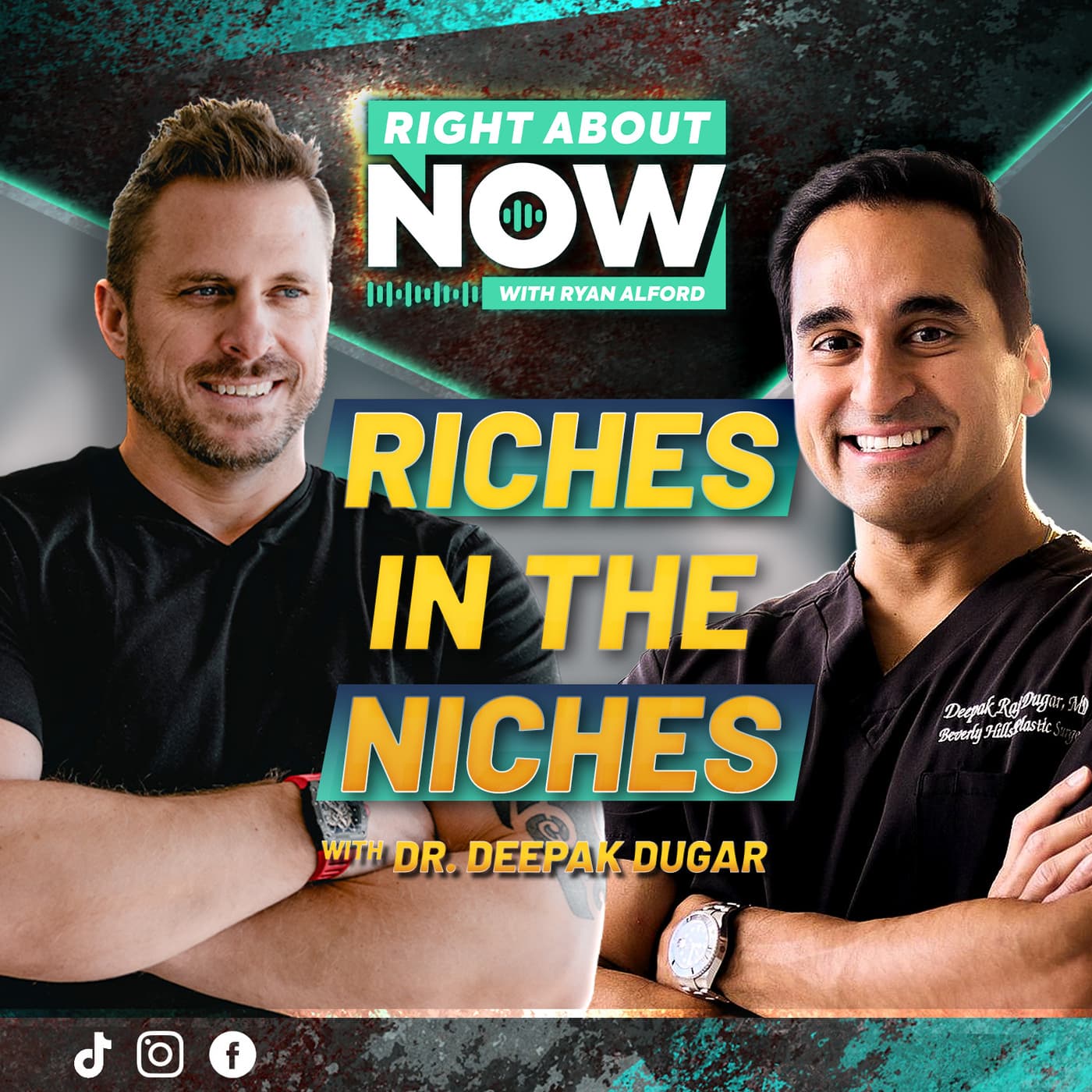
Build a Luxury Brand With No Ads: Dr. Deepak Dugar
Beverly Hills surgeon Dr. Deepak Dugar on niching down, charging $500 just to talk, hiring elite performers, and building a luxury brand with zero ad
Jon Davids: Build a Movement, Not a Marketing Funnel
Influicity CEO Jon Davids on why paid ads alone fail, how to own demand instead of renting it, and the community formula behind magnetic brands.