
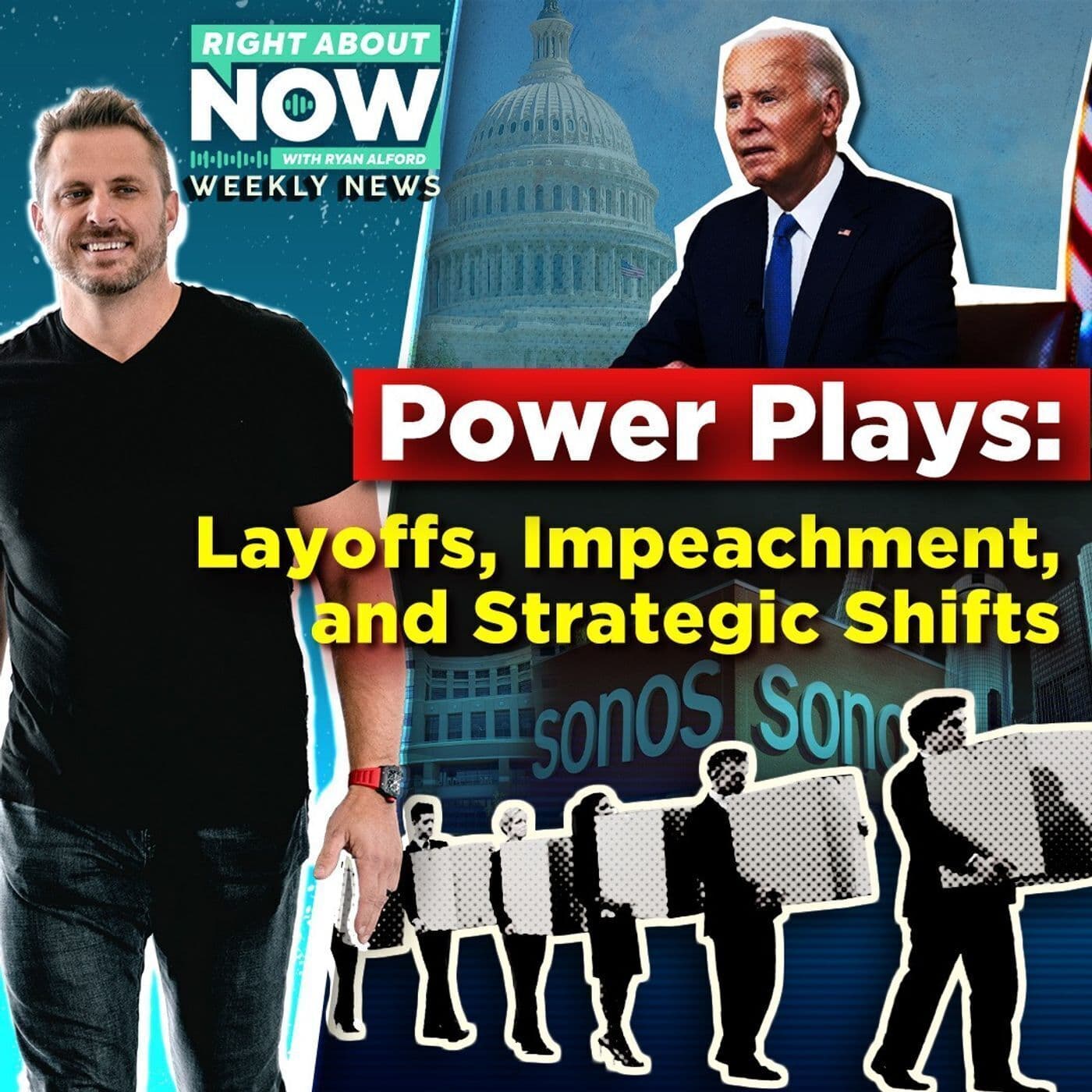
Power Plays: Layoffs, Impeachment, and Strategic Shifts
Ryan Alford, Chris Hansen and Brianna Hall break down mass layoffs, shrinking margins, RFK Jr., the Social Security breach and Disney's arbitration
- Layoffs are stacking up across industries: GM cut 1,000 salaried software and services employees (about 1.3% of its global salaried workforce), Cisco 7%, Intel 15,000 jobs, Paramount 15% of its U.S. workforce, and Sonos 6%.
- Ryan's agency math shows the real margin squeeze: entry-level marketing salaries moved from roughly $30-35K seven years ago to $45-50K today, while client fees rose only about 2-3% - costs up ~15%, revenue in flat.
- Marketing is the first budget clients cut when cash flow tightens, so agencies absorb inflation on both sides at once.
- California's $20 fast food minimum wage reset the whole labor market - Brianna says owners now need to pay $30-$40 an hour to keep good people from leaving for McDonald's or Starbucks.
- Grocery margins run around 1.8%, so 'corporate greed' framing and price caps miss how volume-dependent everyday goods businesses actually are.
- Read the terms and conditions: Disney argued a Disney+ agreement's arbitration clause barred a wrongful death suit over an allergic reaction at a theme park restaurant.
- The NAR settlement has stripped words from realtor marketing - 'bonus,' 'offer,' 'commission,' 'buyer's agent' and 'seller's agent' are now off-limits in ads, reels and social posts.
- Chris's read on the Social Security data breach: create the problem, present the solution - a mass hack is the easiest on-ramp to a new digital ID tied to central bank digital currency.
It's a lot of sizzle and not a lot of steak. But sizzle sells sometimes until you have to live with what you bought, you know?
My thought process is that the DNC is, you know, doing so well because all the people there are not at work.
all the outs have gone up. The ends are about the same, you know, same. It's about 15% up on the outs and like two or three percent up on the ends.
This is Right About Now with Ryan Alford, a Radcast Network production. We are the number one business show on the planet with over 1 million downloads a month. Taking the BS out of business for over six years and over 400 episodes. You ready to start snapping necks and caching checks? Well, it starts right about now. What's up guys? Welcome to Right About Now. It is August 24th, 2024. It's our weekly business news of the week joined by two of my favorite people. We've got here in studio Brianna Hall. Hey guys. And of course, my Kimisabe, my good buddy, Chris Hansen, what's up? What's up? What's up, Brianna? What's up, Brian? Hey, living the dream. Hey, the show must go on a bit a little under the weather.
The team's been, Brianna's been rocking it. The team's like keeping things afloat down and out, but hey, I made it back for the end of the week here. Hold on. All right. It's going around apparently. It's stomach bug flu. Yeah, whatever it is. It's stomach bug. It's all kind of headache and just a little tired and all that stuff. But feels good. I binge watched outer range if you're listening, you know, you get into, I don't, I don't want to watch TV anymore. I don't have time, but kids, work, jobs, boating, it's about all I can fit in. So if I really got into it, outer range, watch the first two seasons, binge through it over two days, and now it's canceled. I'm like, of course.
So if you're listening and you've watched that show, I bet you liked it because like the ratings were like really high, but it's, but it was clearly very well produced, beautiful, feel like the old stone with a sci-fi edge. But I was like, when I was watching, I was like, this was not cheap to film. And sure enough, they said it's like, it did well, but cost too much to make and then get into something, you know, so anyway, highly recommended here on right about now, outer range. So yellow stone with a twist. How's the week been, Chris? We're cranking, we're cranking down here in Miami. We're good. Yep. I like it. I like it. Brianna, how are we today? Great. We're love in Greenville.
Yeah. I'll move, Chris. Congratulations to Brianna. She got a, she's a next time, another time home owner here in G Vegas. I am. I'm super excited to be here and now I'm a local. So local? Yes. She got on that California exit train to Old South Carolina, Kaka Lackie. Have you heard that? Southern. South Carolina. South Carolina. There's so many things. G Vegas. South Kaka Lackie. Yeah. I've been sending my family Southern business titles because I, on my driving, you know, around, I see things like squirrel towing. Oh, yeah. Got to have some scroll towing. It's better than a different kind of towing, but you know, the, Chris, what's happening in Miami this week? Nothing, man. It's for consumers. It's raining every afternoon. It's hot.
Steamy. Yeah. Hot and steamy. I like it. Hot and steamy. The Democratic Convention's been this week. And you know what? God, it's going to come on the show here in a few weeks, Ryan Stuman. Made a good point to me yesterday. And he's, he's, he's like, I stay, you wouldn't know it the last few weeks. I stay out of politics more than I'm in it. But you know, sort of made my, my feelings known was just, it's going to take some of this been happening. But in general, he said, you know what? You know why the Democrats are having a better convention than the Republicans said. He said, because they don't talk about anything important. They just get into emotions. Everything's about feeling. He's like, you know, Stevie Wonder gets up there and says absolutely nothing, but it's
so like emotional driven. He's like, he's like, I know why all the women vote Democratic. He's like, and I know why a lot of them in now vote Democratic, because they're all betas anyway. And he's like, but he's being serious. I make a point. He's like, I think they've probably done a better job than Republicans. The Republicans get there and talk about all the facts, the percentage and the data and all this stuff that we know and that we're talking about. But the Democrats get there and talk about all this stuff emotional and energy and, and vibes and like all this stuff. And he's like, they're probably having a better convention like because they know how to make people feel something even if it's fake.
And I was like, he made a good, it pained me to acknowledge that he was right. I mean, it does seem that way a little bit. It's like, Oprah Winfrey gets up there and, you know, you got a Hollywood, you have, it's Hollywood. It is Hollywood. Even my, I was talking about a family that kind of even said the same thing. They're like, it just seems so overly produced, you know? Yeah. You're right. It's all emotion, not much on the data and the numbers and the policy. It's a lot of sizzle and not a lot of steak. But sizzle sells sometimes until you have to live with what you bought, you know? You like the way it looked, you like the way it smelled, but then when you take a bite
of it, it tastes like, it's like, but, but some people get enamored by the, the outer coating. Right? Have you watched any of it? Shiny object. My thought process is that the DNC is, you know, doing so well because all the people there are not at work. Yeah, right. Yeah. And that's why the RNC, you know, all of the people who are Republican are at work doing their jobs. That's why we care about the data. Yeah. Well, we're going to care about something if, if these prices don't come down and inflation doesn't come down, you know, more consecutively. And it is still quite a mystery to me. The coronation of Kamala and Tim Balls, I mean, Walls, um, you like, it's just, uh, I just don't understand the popularity of it.
But because even if we're doing a popularity contest, they just would not be the most popular people. Did you see Tim Walls' son? Yeah. He's got a video of him crying, pointing at his dad, I mean, like, that's my dad. Oh, that's my dad. Well, you know, it was, it was very emotional, emotional, emotional, yes, it was very emotional. Yeah. They do Hollywood well. So, uh, but in the real news, GM lays off a thousand salaryed software and services employees, uh, it says they're laying off a thousand salary employees globally and it's software and service division, following or review to streamline operations. They also include roughly 600 jobs at General Motors Tech Campus near Detroit. Job cuts represented about 1.3% of the company's global salary workforce workforce.
So, uh, layoffs, it multiple places, Cisco's laying off 7% of its workforce, Intel, cutting 15,000 jobs, paramount reducing US workforce by 15%. District card laying off 3%, Sonos cutting 6% of jobs. So that's a lot of jobs. So they saw, I did see where there was a re-correction of like 800,000 jobs or something, I mean, I mean, adding a zero, but I think I do, I think if we add in what I just said, there's close to 800,000. So all these job losses, how is that going to be positive at the end of the day? Well, I mean, what I would say is if you look at Biden's former campaign and everything that he says, he talks all about all of the jobs that he created and how great the economy is doing.
But then if you look at these articles, that's not the case. No. And a lot of those jobs were just jobs added back that were lost for in COVID. And now we're trimming back to sort of reality. So, uh, you know, I, I'm waiting for the glimmer of good data that makes me good. I was wrong about what Biden and Kamala are doing. I'll eat that, I'll eat that soup. I'll drink that, that, that soup, you know, humble pie, whatever you want to call it. But so far, none of the data is supporting that. It's just, we're just happy, pride, policies don't matter. Just popularity. Chris, what do you think, buddy? Yeah, it's not a good time. And I think this is a lot of industry.
I also think AI is playing a part in this. I think it's something that's happening almost regardless of administration. I think this is going to start happening. I specifically remember the Biden administration, you know, bringing back factory jobs and blue color. Like that was especially Detroit, right? That was, I feel like one of their big battlegrounds. I mean, that member, they had a rally there with like 100 jeeps because they had some deal of Jeep and auto manufacturing. So numbers definitely don't reflect to positive for for anyone in that industry. So it's just more negative data, right? Like I would love to see positive numbers, no matter who's the administration in power, but this is not good. No. No, I'm waiting for it. I mean, and you would think the way they control the media that if there was good numbers,
they'd, they'd be putting them out there, but they're not coming in. And so, and I agree with you on the AI front, the AI is going to have an impact. It is having an impact. And some of these companies are getting leaner because they were kind of fat and happy. So that's going to happen, but it's just more like if we're going to market all these jobs, like you said, Chris, that we're adding back, let's then let's just be specific about the impact that we're really having versus what we're selling. And that's really sort of what, what the premise here is overall, let's get past the politics, the slogans, the all this stuff and get down to the raw data. You know, like where are we adding jobs?
Where are we lowing interest rates? We're what's bringing costs down. Let's stop fighting one of the one of our biggest industries, oil and gas, you know, for this, the new green steel deal, excuse me, a little for you to slip. And like really get behind what it takes to make move the economy forward. And so I don't know. I think the news is going to be a little muddy to say the least before it gets better. You know, it's not really business news, but I saw this, these impeachable offenses from Biden, you know, pretty much selling access and some China stuff. I mean, it's a lot. And I don't want to go down to all these theories and all this is just when you go back to
like all the stuff that happened with his son and the laptop and all that stuff that was all peddled as fake news and all peddled is not real. And then 94% of it ended up being exactly what, what they said it was and it's like, but then when they peddled the collusion of Russia with Trump, 94% of it, it ended up being wrong. So it's just like, you know, Donald Trump, Jr. posted this graphic and it's like, you know, 94% of the coverage by mainstream historic media, ABC, CBS, NBC for Kamala has been positive. And 89% of it for Trump and the, you know, the Republican committee or a convention has been negative. It's like you're all, if you are on the right, if you're whatever, whatever one is not,
you're fighting all this media and all these dollars and all these eyeballs that are getting painted a picture. And it's just, it's never been, and I don't know, like I think about this stuff a lot. You know, maybe you're listening and, you know, I'm in my mid 40s now and like, is it always been this way? And I just am old enough now that I'm paying attention to it, you know, in our own businesses and all that. Or is it really just gotten this bad to where mainstream media is so far on one side of the other? I don't know the answer to that. Maybe, maybe we've been, we've been tainted our entire lives by the media, but it just seems like it's just gotten worse and worse and worse.
Is it, is that a forever thing? Is the media? I guess some of them, some of you would tell you the media has always been liberal. I was thinking the same thing yesterday, like, you know, because right now we're like, oh, the world is so weird and it's crazy. And I wonder that too. If was there a time in my parents life that they felt they were in, you know, this divisiveness and stuff like that, I mean, I definitely think it's a weird time where it feels very hunger game, game-ish almost. Yeah, I would agree with that. And I think, I mean, I don't think it was ever this bad years and years ago, you know, when it was, I mean, I think the most controversial thing that we had was Bush, was it Bush versus
Obama? Yeah. Yeah. Yeah. Yeah. Yeah. But it's like, that's kind of when everything started. Yeah. It's also when the rise of the computers and everybody having, you know, phones and access. So I think that there is something to be said for, like, over connectedness. We're so connected. We've never been meant to be this connected before and we're so connected that everybody takes everything that they see online as fact and whether it's right-sided or left-sided. So I think you really have to follow some independent journalism. You really have to be interested in unbiased coverage. You really have to take, you know, an open mind with both sides to kind of find the middle ground to be, you know, not crazy radical either way. Yeah. And that's where I'd like struggle to find the data points in not the sizzle.
It's just, I'm not going to, like, my beliefs just don't align with, you know, making non-normal things normal. And with, you know, the direction of the economy overall is just not positive. And this sort of fight against capitalism and over-regulation. And so I watched this video that was like Phil Donahue passed away this week, like the original talk show, you know, host. And he had a guy on who he was questioning because Phil Donahue leaned left and a guy, and I forget his name. So I apologize. But anyway, go look at my stories or maybe I'll repost it or like save it or something. But he was talking about like all the facts that supported like if you go look at, you know, everyone wants to, you know, fight capitalism, but it's been proven to be like the only
method with which true growth happens that because no matter what, the world is, people are individually greedy. And it's like if you think, you know, comment Sovietism, you know, Sovietism and like is good for the economy, then you're fooling yourself because it's like, it doesn't generate jobs. The only way to generate growth is for there to be an open market and there to be capitalism and less regulation because we get out because you don't get lazy. You don't get complacent. You're not relying on this stuff so that enough innovation shines through smart people, driven people, the, you know, Elon Musk, the whoever, the revolutionary people are allowed to shine that then bring thousands and thousands of jobs and opportunities because if you collapse all of that and you try to make it, you know, everything even do all this,
then you stall innovation and ideas that generate and springboard growth. And I was like, this guy's like described it better than everyone anyone had ever heard, you know, because you don't have anything. If you have everyone stalled and not like allowed to sort of bring ideas and be motivated by sort of that own self interest to start, but that own self interest creates compounding effects of positive things once it's unleashed. I don't know, it's fascinating. I'm right there with you. I mean, I'm sitting here thinking in my medical business, the laboratory, right? And I think the government's in control of pretty much what we get paid from the insurance companies or Medicare. They cut rates every year. And any doctor will tell you this, that it's becoming less, less profitable to be a physician
and practice medicine, which to a degree is going to drive you less to work harder, right? But I look in our instance, we do lab testing, specialize lab testing. If our rates from getting cut and we had more profit, we could do more research and development. We could look into new technologies, new tests that can help people cancer testing, genetic testing, all these things because the government is cutting our pay or raising taxes, we're less innovative. We can't explore that stuff because it's more about just keeping the business running. That's where I think, and Ryan, you can really have this with your marketing company or we could talk about this with VK, you know, VK, it's like, okay, gas is more, so shipping costs more.
So therefore we have to raise what you're paying for our products more. I mean, everything just that example, right, for our gummies, all right, well, even to get the raw materials that requires that being transported. I really think you have to break it down to people to fully understand how this all connects. Yeah. Yeah. So release. And for guys like you and I, real business guys where, of course, I've always been more conservative, maybe libertarian, but definitely pro business because I know how many employees do you have to, like two real question, how many, what do you 15 probably or something? Across the world, we have probably more than 17, 18, 20 total people that work for the company. Right. And in the US, roughly 10, you know, so it's like half and a half.
But it's like, so and growing every day, maybe we have a couple offers out as we speak. So, but yeah, and, but I'll say this, and I mean, I have my teams in the room. They know this. I'll say it. We started the agency. I've been in the agency business 20 plus years. And started the agency seven, we're, we're seven and a half years old. I looked back at some of the data. So you know, I could hire sort of an entry level person in marketing that may or may not have a degree, but was qualified and something. You know, 30 to 35,000 dollars, you know, around there for starting salary. Well, now everyone wants 45 or 50 and they're pretty much getting it. And I look at what I'm charging the clients, what they're willing to pay, what they have
the budget to pay for and it is not like, it might have gone up 2%, maybe. And in a lot of cases, like, it's gone down. Like the clients aren't willing to pay more for the services, but yet my, my costs are up 15, 20%. So our margins are just down period. Because the first thing that your client is going to do is drop their marketing budget when cash flow is not coming in, right? I would say that's probably the number one thing people look to cut when, when business is slow. But like you said, your editors, your graphics people, they're not charging less because of inflation. They're going to charge their rents. I got to pay them and I want to pay them more because I know what it cost to live.
And so I'm happy to pay it. But at the same time, but I go, we're just making most money. I mean, you know, it's just less margin period. And sometimes we don't make money, but we keep the engine going. And so, you know, all in all, it's good. But it's like, but I'm not charging, I'm not able to charge clients more for the services that we do than I was seven years ago for the most part. And some of those things have evolved, but everything else costs more. All the supplies, everything we use to software, everything's going up. The cost of labor's gone up. And, but my fees, and I kind of said this last weekend directly, but I talked about more specifically, all the outs have gone up.
The ends are about the same, you know, same. It's about 15% up on the outs and like two or three percent up on the ends. So you can do the math, you know, from there. I think it's industry wide too. Like I don't think it's, you know, I think it's worldwide because I had this same experience in California, you know, I ran a business out there. You know, you have to keep increasing the salaries of your employees to keep them happy. In California, we had an issue where they made it this year in 2024 to where any fast food worker minimum wage was $20 an hour. So if you were paying over $20 an hour, owning a business, thinking like, wow, I'm doing good and paying these people, you know, five, six dollars an hour more than minimum wage,
well now all of a sudden they can get paid $20 an hour to go work at McDonald's or Starbucks or any of those. And so it became, you know, now that you have to pay $30 or $40 an hour to get good people and get them to stay and to work hard. And so, you know, as a small business owner and having a ton of business owner friends in different industries, I think everybody's feeling it, construction, marketing. Yeah, I mean, yeah, because you can compete with the corporations. Yeah. And I think everybody's, I mean, like, air, I think, well, it just assumes that we've been able to charge more, you know, like I'm sure even some of my employees that, you know, you know, like, oh, I was truly charging more than what it was.
Not in most cases. No, what I could charge some clients three or four grand or 30 grand, you know, like whatever, it's not magically six or seven now and now 40, 50, 60 grand. No, I'm looking at I'm like looking at some of the proposals and I'm like, I'm not, we're not making revenue might be higher, but margins are way lower. I think inflation is just killing every industry, you know, nationwide. Yeah, I will, I mean, it's just reality. And then they would, you know, they talk about cap and price is doing all this two percent, like that is going to work, you know, and grocery stores margins are like 1.8%. So, they're not making any money. I mean, yeah, Kroger makes, you know, $3 billion, whatever in revenues,
but they make 1.8% on that. So, I mean, it's a volume game for them. You got to open 400 stores to make any kind of real money. And so, because their costs are just that high. It's not like their margins have tripled. I mean, there's some industries that are, you know, the chip makers and like some of that stuff. Yeah, they're making their margins. They're banking, but some of the everyday goods that we're talking about, the cost of is not like the corporations are making more money. Because that's what the Democrats and a lot of, they'll paint that picture that, you know, corporate greed. And there is some of that, some places, but it's not where they're donors. Yeah, yeah, exactly. And then I think about, okay, Conless raised more money, supposedly than anyone in history,
allegedly, allegedly. And maybe she has, but I'm just like, could we just put all that towards, you know, a charity or something? Because when she loses, it won't just be wasted dollars. What impact on the economy with that $1 billion that she's going to get donated to her campaign have had towards something positive. Anyway, I digress.
It'll be really interesting, you know, this episode releases on Friday. But a little RFK junior news coming today. So if you're listening, you might have already heard it. That will, will that shift the election? Yes. Yeah. I believe so. I think there's a lot of people that were, I mean, was he, was he going to win? No, but I think he had a substantial voter base. He has a big following. Yeah, he's got a big camp behind him, I think. Yeah. I think that, I don't know, I love RFK junior. I definitely follow his politics. I follow, I think like I like him as a person and what I see up with him online. And so, you know, it's exciting for me. I follow a lot of independent journalism that covers him and his family.
And, you know, he has ravens. So if you follow him on social media, he like has these two ravens. He is like trained. So anyways, I digress, but I think it will. I think it'll shift the election. What do you think, Chris? I think he's got a lot of power in his, I look at him like he's more of a legacy politician, right? His name has weight. People like my family, right? Like your older generation feel safe with him. I think it'll sway. I definitely think because he's been big on, you know, the medical stuff, the vaccine schedules. You know, he was part of a documentary. I want to say like 10 years ago, talking about, you know, pharma and vaccines and whatnot. So I think that also gives him a lot of weight now where he was kind of ahead of the game.
With that whole thing, you know, kind of preaching from the rooftops about us need to take a look at that. And pharma's control in our US politics. So I think good advocate. And I say that because a lot of people critique how Trump handled the vaccine roll out and what not. So I think you're going to need a lot of people from maybe that camp, that if he gives them the green light, then they're like, all right.
And I agree with it. I mean, I like RFK. You know, he's a little bit more balanced probably than Trump, but he could not have won. Definitely couldn't have won. No, we're going to win. But I like a lot of his policies. And I believe so. So he'll be potentially endorsing Trump. Well, I can tell you who I'm absolutely endorsing. And that's Brandon Bills, the official merchandise sponsor of right about now and Ryan offered. Look, I mean, I'm not wearing it today, but it would it'll be all matched. I mean, look, look at this thing. I got the green shirt on. We got the green logo. It's all about branding. It's all about alignment. And I'm in alignment. And I officially approve this message, which is you need to get your brand on the branded
beer bills gear sweatshirts hoodies t shirts. And of course, you come and you stay for the hats, the official merchandise sponsor of right about now go to brandabills.com. Click that custom button. And let me tell you, you'll thank us for it. You'll approve this message as well. Because you will get your brand on the most premium hats hoodies and t shirts in the country. And we love them as the official sponsor of right about now. And I approve this message. It's telling you, let me some brand of bills. The, uh, yeah, it'll be, uh, interesting how it all plays out. I do think if they, it was, it's well played because you know, like with the convention, like it'll brunt a little bit of, uh, the momentum coming out.
So if it happens today, good timing, because you know, it just seems like everything kind of get the media, the attention that's been behind the agency. So, uh, we'll be fascinating. And look, I'm just telling you, if you, if you want the economy to improve, Trump, the arcade junior and Musk, these are the people you want thinking and operating about the business and economy. These are smart intellectual people that understand how business works. And the, and our world is a lot more than business. But then the day it takes economy to fund the military, to fund all these other things. So, uh, corporation, America's a corporation. Like it blows my mind to think you're going to have a government prosecutor be in charge of balancing a budget.
You know, I don't know if anyone knows, lawyers or I've met plenty of public defenders and prosecutors, they're good at what they do, but they're not business people. Like, it's crazy to me, America is a business. We're importing, exporting goods. It's all about dollars and cents to have someone who's never balanced to check book of even a small business is insane, completely insane. Agreed. And that's all I have to say about that. Yeah. I mean, I just, I don't get it. I just won't ever get it until I hear, um, I don't know. It's specific to get it right. I'm not emotional enough to get it. I guess you're not biting on the emotional brainwashing in siop. That really what it is. Yes, exactly right.
The high up, the siop called Hollywood. It is, it is Hollywood. It's total Hollywood show is what it feels like, you know, but being somewhat, you know, and men are kind of this way anyway, you know, black and white brown. Yeah, I have this conversation. I'll be like, just say it. Like, just tell me, just speak straight. Just speak straight. You know, like the side talk, I just can't, like, just tell me like it is. Like, don't, you know, a wife will like beat around the bush. So I'm like, just, just say it. I mean, like, you know, like, say it. Don't spray it.
And it's all that with their party. It's like, I'm not a very emotional guy anyway. So like, just, just, you're not going to get me with this sappy stuff. You got to get me with, uh, hit me with the facts, the policies. What's you going to do? It's like a high school pepper alley. Yes, it is. It is on a national scale for the our Andromic kids. Yeah, with $12 billion behind it. And with some explicit content. Yeah. And it's funny. All this stuff's going on. We talk all this stuff. And then potentially every person in the US is so security never got leaked this week. We almost missed that. Even in this news discussion, you know, no big deal. Comforting. Comforting. But that's what's back to, you know, the sizzle and the steak.
We're, we, even we've been talking about a lot of the sizzle. But the steak of like some of the stuff that's happening that, okay, that big deal. And, uh, Chris, I'm going to let you talk to your conspiracy theory on that. My thoughts on that. Yeah. The minute I saw this news article pop up, 200 million, whatever was right. Social security numbers hacked. I'm like, what easier way to get everybody on a new system, right? We know they're working on the central bank digital currency system, the social credit system, which is already implemented in China. Call me crazy to talk about this. But this is real in research this. I just think it's the typical like create the problem, present the solution. Okay, everyone's things hacked.
Everyone's freaked out. Now we have a new ID system tied to your digital currency in your social credit, et cetera. That's what I think this is ushering. Yeah. What do you think about that? Time will tell. I love a good conspiracy. I really do. Okay, that's what I'm here for, guys. I mean, I think it's, you know, it's kind of fishy. It's weird that it's happening right now, you know, in a couple months away from the election. And I also think, you know, we have been in this kind of like touch and go place with social security for a long time. People say social security is going to run out at some point. You know, it's not going to be there when our kids need it.
Yada yada yada. So to Chris's point, what is this ushering in? Is this ushering in a new digital currency? Is this ushering in some kind of like way to monitor and monitor spending? I mean, as you guys know, right? Like we've gotten things in place on Venmo and cash app and whatever else. So you can't even buy, you know, a couch on Facebook marketplace without paying the government anymore. So it is what it is. You can't purchase anything without it being tracked and traced now. Yeah, I mean, and then being fed to a marketing company, that's going to target you with ads, you know, everything is so intertwined now. Yeah, so I'd be really interested to see six months from now, what happens with this breach.
And also now I'm going to go check my credit report. Yeah, uh, business insider released the 10 worst states to live in. I did admit one of them that's on here. South Carolina, baby. Of course, the Greenville itself is a gem, right? Yes, it says, uh, it says each state's affordability, economy, education and the health, quality of life and safety.
Number 10 was Arizona. Number nine, we won't get into each one. Number nine on the list was Oregon. Eight was South Carolina. Says if you're looking for a state with a low cost of living, affordable housing and property taxes, South Carolina was ranked 10th makes an attractive spot. It says, however you may want to turn elsewhere, if you're a parent in a good school district, quality education and health care are high on your priority list. So more of the tell that to your wife. Education. Yeah, no, exactly. I don't think she'd like that opinion like that. This principle. Yeah, no.
Number seven, Oklahoma. Number six, Mississippi. They're all following in the South, right? Nevada. Number five, worst states. Number four, Alaska. What's living Alaska anyway, right? Number three, Arkansas. These are all in the Southern belt, aren't they? Number two, New Mexico. Okay, well, that wouldn't make sense.
Number two, these are all like line up. Number one, who do you think last? Number one, California. No, it's just following that, that belt that I was, that was on in the South. Louisiana. Number one, yeah. So you got Louisiana, Arkansas, Mississippi, all in there.
Yeah, and then South Carolina. Who wrote this article? Business insider, you know, California should be number one. California should be number one. I agree. I don't see people fleeing New Mexico, like they are California. It said this about South Carolina. One reason the state does poorly in health care is it's home to many rural, rural areas with limited access to health care. It's true. I mean, you drive through South Carolina. I mean, you go through some rural areas. I mean, like, there's barely a country much less. I would like them to know on that article, the reason that health care is so bad, because our food is so delicious.
Exactly. Because yeah, you don't need it when you're eating healthy. I would, it would be interesting to rain, greenville, outside of this, and maybe like Charleston, you know, Greenville and Charleston, of course, would be completed. Nobley's probably to this with probably, because they're amongst like the, the fastest growing cities in America, small cities going in America. So yeah, it's kind of a greenville's its own thing. I mean, I'm in a Facebook group multiple, but one of them is conservative girls who moved from California to South Carolina. And there's no joke like there's like 250 women in this group who moved from California to green, like Greenville County. You need to invite my sister to that group and we're critter back to the East Coast.
They had a Cali and back in the South. Yeah, no kidding. A center and invite. Lastly, today, it's kind of scary for a Disney plus customer. So a couple was eating, I guess, a restaurant in a Disney theme park and got, had a allergic reaction to the meal and she ended up passing away. And supposedly, allegedly, because they had signed a Disney plus agreement, saying that they would enter arbitration or not sue Disney at all. In any way, shape or form, that was the argument that Disney was come back with. It looks like it's going to get thrown out, but anyone that's a Disney plus customer and you sign that agreement, don't go thinking you can sue Disney if something like really tragic were to happen on their property or otherwise.
I don't like litigious stuff and I don't like over-regulation, but this feels like a leap. A lawyer shoving yet one more thing in the T's and C's on something and hoping it just covers the blanket of everything. What do you think? I mean, dude, it's not like Disney can't write a check. No, I mean, it seems like a bad PR play, more than anything.
Right to check. The lady was also a doctor, I believe, and it's just really interesting to think that they can throw those under the terms and conditions and then not be held accountable for a mistake that cost her her life. Yeah, and you know, read those terms and conditions. Page 46, we told you, you can never sue us. Next time you want to stream Star Wars, be careful. Yeah, I feel like we're going to get to this stage where there's going to be terms and conditions like when you become a friend, like about a friend, here's the T's and C's, and you decide if you're going to be my friend, like you will not leak anything to social media. You will not talk bad about me while I'm back.
I mean, I'm for this. If I actually poison you, I wouldn't have you rid of my dinner. Hey, why didn't you mean to and you will not sue me. Longers would just love that, right? Anyway, some an interesting tidbit about lawyers following that that I think is relevant is, you know, we've been kind of talking a little bit about the NAR lawsuit for realtors. The nationwide lawsuit affecting all realtors, there are now words based on this lawsuit. There are words that lawyer, I'm sorry, not lawyers, that realtors are no longer allowed to use when advertising their services or posting a video or posting a real or doing social media marketing, included on the words they're not allowed to use are the word bonus, so they can't
advertise a bonus room or bonus space. They can't use the word bonus, they can't use the word offer. So if you want to make an offer on a house, they can't use that word. And then what was another one was like, give us a proposal. Yeah, they can use commission, and they can't use buyer's agent or seller's agent, which is from this is the medical industry too. I'm not even some huge realtor fan, but that's just crazy. Like, talk about over regulation. Regulate. Regulators. Unite. Regulations. Take more money out of your pockets.
G Wayne. Regulators. Nate and Nate dog. Nate dog. Yeah, one G, four and G, Nate dog, 80 final thoughts. Brianna. Have a great week, everybody. Christopher. Coming in September, hit the ground, Ryan. End of the year is coming soon. There you go. Policies over popularity people. You don't find us Ryan is right. calm. Find the highlight clips, all the links to the content, links to social media, links to our sponsors, go support them. That's how this works. You support them. They support us. We support you. It's a cycle. Christopher, we hands it on Instagram. I'm at Ryan offer. We'll see you next time. I'll write about now. This has been right about now with Ryan Alfred, a Radcast network production. Visit Ryan is right.com for full audio and video versions of the show,
order one choir about sponsorship opportunities. Thanks for listening. Finding great candidates to hire can be like, well, trying to find a needle in a haystack. Sure, you can post your job to some job board, but then all you can do is hope the right person comes along, which is why you should try Zippercruder for free at zippercruder.com slash zip. Zippercruder doesn't depend on candidates finding you. It finds them for you. Its powerful technology identifies people with the right experience and actively invites them to apply to your job. You get qualified candidates fast. So while other companies might deliver a lot of hey, Zippercruder, find you what you're looking for. The needle in the haystack. See why four out of five employers who post a job
on Zippercruder get a quality candidate within the first day. Zippercruder, the smartest way to hire, and right now you can try Zippercruder for free. That's right, free at zippercruder.com slash zip. That zippercruder.com slash zip zippercruder.com slash zip. Your kids could get free or low cost health coverage from Medicaid or CHIP. Even if you've applied before, they may be eligible now. Kids up to age 19 are covered for checkups, vaccines, dentist visits, hospital care, and more. And if they already have Medicaid or CHIP, remember to renew every year. Visit insurekidsnow.gov or call 877 Kids Now. Paid for by the U.S. Department of Health and Human Services.

Justin Brennan on Multifamily and Other People's Money
Real estate investor Justin Brennan explains syndication, check equity vs. sweat equity, bonus depreciation, and how to buy apartments without your own
Hiring Is a Marketing Problem: Nicole Feenstra
Nicole Feenstra of The DNA Agency tells Ryan Alford why job descriptions fail, how to market the trades, and how geofencing and storytelling win

Jason Brown on Options Trading, Risk and Rebuilding
Jason Brown turned a $10K student loan into six figures, lost $250K on one trade, and rebuilt. He shares his options, risk and wealth roadmap with Ryan