
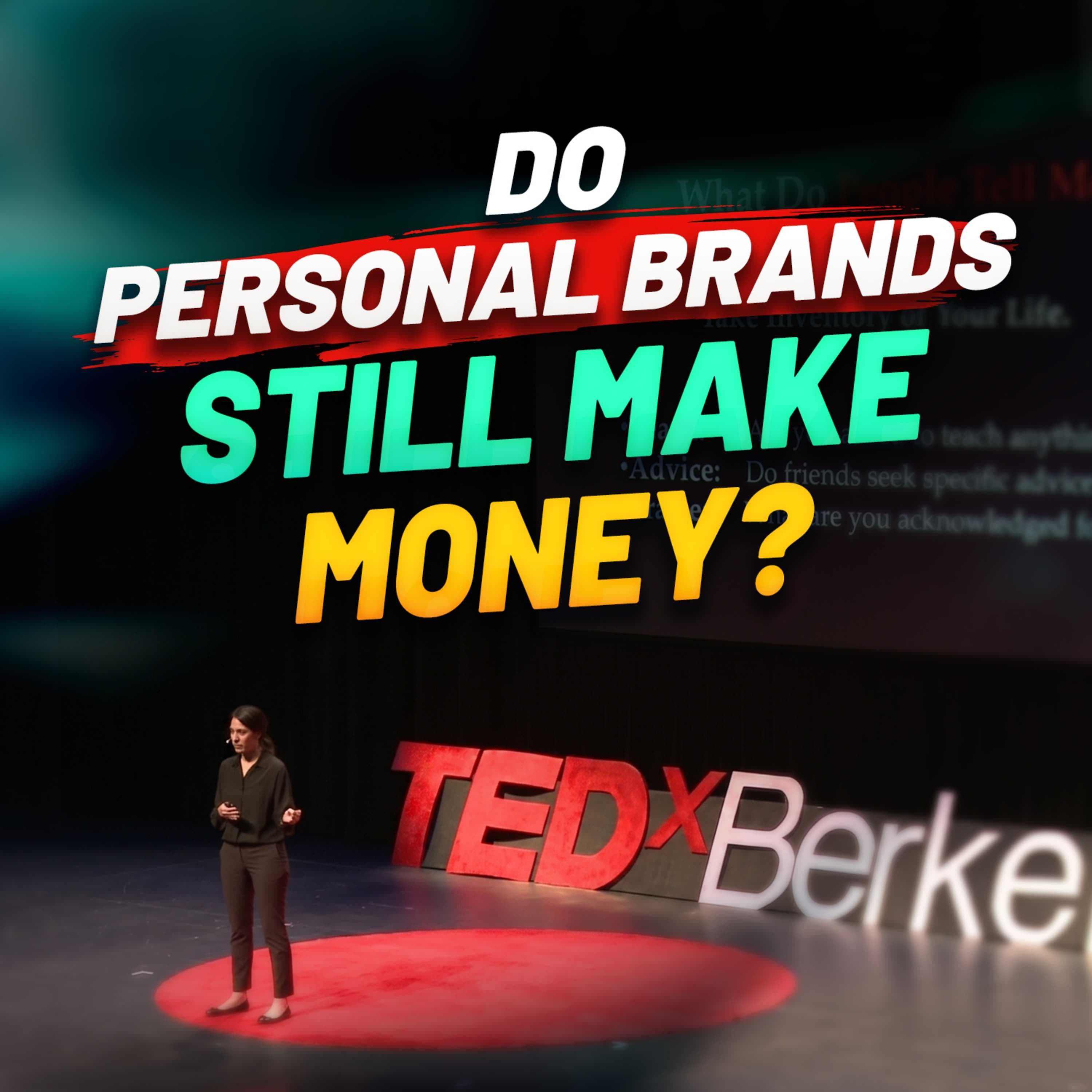
Personal Branding Isn’t Dead: How It Still Drives Real Income in 2026 with Ashley Stahl
Ashley Stahl joins Ryan Alford to explain credibility vs. authority, why TEDx still works, and how one great talk turns attention into real income.
- Separate credibility (experience, degrees, trainings) from authority (being the name people associate with your topic) — most professionals already have credibility and keep adding more instead of building authority.
- Treat a TEDx talk as a YouTube asset, not an event: "TEDx is the bouncer at the door," but the talk lives and compounds on a channel with 45 million subscribers.
- Pick the one topic where you have the most original thinking, not the one big idea and not all four or five topics you could speak on.
- Choose your talk topic based on what your ideal client is Googling at 2 a.m. — be a painkiller, not a vitamin.
- Make talk titles boring and obvious rather than cute or punchy: "how to," "the power of," "five ways to" — because meeting bookers search YouTube by topic.
- Vet TEDx events by theme alignment: roughly 3,000 events a year, about 1,500 in English, and maybe 200 with a theme matching your topic, all run by unpaid volunteers who may be slow to reply.
- Ashley's viral TED Talk generated about $3 million in revenue, supplied 90% of her coaching leads for 12 years, took keynote fees from zero to $30K, and led to an Asia licensing deal.
- Quality beats volume: three exceptional videos everybody clicks can do more for your brand than 500 uploads.
- Distinguish your skills (what you do) from your values (how you do it) — unmet values make you irritable and off the rails, which is how Ashley knew national security wouldn't work.
Authority is being a household name. It's the person that everybody thinks about for the thing that you're doing.
You know, TEDx is the bouncer at the door. They own the channel, but YouTube owns the party. They own the house.
I always say don't do what you love, do what you are. And the harder question to ask is who are you?
a lot of people don't realize that there is a difference between credibility and authority. Credibility to me is that you're legit. Maybe you're a doctor. You went to school. Maybe you've had a career for 10 years and you have the experience. A lot of people search for more credibility. Maybe they get trainings or stuff like that. It's the person that gets too many trainings. But what people don't realize is that that's very different from authority. Authority is being a household name. It's the person that everybody thinks about for the thing that you're doing. This is right about now with Ryan Alford, a Radcast Network production.
We are the number one business show on the planet with over 1 million downloads a month. Taking the BS out of business for over six years in over 400 episodes. You ready to start snapping necks and caching checks? Well, it starts right about now. A lot of people want to build a personal brand. But very few actually understand how to turn it into a real opportunity. And if you look at the people who have done it well, there's usually a moment where everything changes. For Ashley Stahl, that was going viral on TEDx, turning that visibility into book deals, speaking opportunities and ultimately a total business around it. Now she's the founder of Wise Whisper Agency helping others do the same. I just get attention but
actually convert it into something meaningful. Ashley, welcome to right about now. Hello. Thank you so much for having me. I saw the counterterrorism. I saw personal branding. You had me at counterterrorism. Then the personal brand was the icing on the cake. When in Rome, you just got to keep it interesting for yourself.
Exactly. I've been doing personal branding myself for probably 10 years. I spent a lot of time doing things that would have totally built my personal brand but didn't do any of it. It's like, wait, I looked around. We had all these ninjas on Instagram. This is a 2015. Remember the ninja era? I was like, wait a second. They're ninjas. I'm freaking Obi-Wan Kenobi because I had done a lot but no one knew the hell I was. That was a problem. Eleven years later, I am very interested in the state of personal branding. I'm going to grout at that and definitely talk about your story but that just coming at you hard. I'm very curious of what this landscape is like in 2026. I think I still
do it but it's just become the default. I really love what you're sharing because what you're pointing out is the line between credibility and authority and I think a lot of people don't realize that there is a difference. Credibility to me is that you're legit. Maybe you're a doctor. You went to school. Maybe you've had a career for 10 years and you have the experience. A lot of people search for more credibility. Maybe they get trainings or stuff like that. It's the person that gets too many trainings but what people don't realize is that that's very different from authority. Authority is being a household name. It's the person that everybody thinks about for the thing that you're doing. There's a lot you can do to become an authority but there's very little
that actually works in a way that you can really count on. For example, a lot of people they pay for heavy PR retainers and they're spinning their wheels, hoping that results come. When was the last time you watched the news and you wrote down the name of a guest on the television? Almost never. It does give you credibility and that's good if you're building a business and it gives you authority if you're on a lot of news all the time. If you're just passing through the news, this is just a credibility builder. The reason why TEDx has changed my life so much is because that platform has 45 million subscribers. It makes it the biggest stage in the world. My thinking is why are we spinning our wheels doing so many things to get authority and to be seen as the
person that does the thing we do when we could just get on one stage for 10 minutes. Have the whole world hear us and like an investment portfolio, it gets founded and compounds over time. Here in you talk, it's credibility, experience and authority awareness. In 2026, that's kind of what that means. It's one thing if you're credible, like you're the best doctor in the world or the most experienced doctor in the world, but nobody knows your name. That's the difference. It's just a different frame. Credibility is the you have the experience and being an authority is people see you. People see you that way. There's a lot you can do to keep getting more credibility, but a lot of people already have credibility. They need to think differently about their brand. They need to ask themselves,
how do I actually build authority? It's not just speaking. It's the ability to write a talk that is truly a work of art is what can skyrocket a speaking career faster than anything. There's a lot of speakers that come into my agency and they're like, well, I could talk about this and I could talk about that. And if there's anything I've learned, it's that every communicator or content creator has two, three, four or even five topics living inside of them, but just because they can talk about those topics doesn't mean they should. The reality is that of those three, four or five topics, there's usually one that you tend to have more original thought and if you want your content to have legs and really get out there, especially for something like TEDx. People think it's a TEDx talk.
It is, but it's actually a YouTube talk because it lives on YouTube. You know, TEDx is the bouncer at the door. They own the channel, but YouTube owns the party. They own the house. If you think about what is going to make something do well on YouTube, whether it's a TED talk or anything, the answer for me has always been and the reason around 70, 80 percent of our clients are going very viral. It might not be easy, but it is simple. You simply write the best talk you've ever written and if you're not the best writer, you've ever met. Get a better writer to help you express your ideas and then obviously working on your stage presence, the ability to move a room, to make people really feel something, to tune into where you have original thinking is crucial
if you want to build real authority. I don't know if we think alike or we read a lot of the same material and then digest it the same way. You use a lot of terms that I use. I say to a lot of people, it's real, they have simple, but it ain't easy. And I also say don't fucking follow your passion. Follow what you're good at. That was another tip and I picked up on your stuff, which is there's been peddlers of this passion following for a bit on social media. It's gotten a little better. It was my biggest problem. Gary, these are friends. You don't follow your passion, man. He says that shit and I'm like, I love you, Gary, but you don't follow your passion. You become
passionate about what you're good at. And when you're good at something, put that out there. Yeah. Yeah. I really love cookies, but nobody wants me to follow that passion into baking because it's not going to go well. There's a very big difference between being a consumer of something and a producer of something. Honestly, like 2010 or something, there's this tool on Google called the N gram, like the letter N. And if you type in a phrase, it shows basically how much that phrase has been Googled. What it really is showing you is how much something's a part of culture because it's what we Google is what we're thinking as a collective. And it's the biggest search engine in the world. Next is YouTube, which is why I keep going on about authority there. It's just so big.
When you type in, follow your passion, it goes crazy. Like you see the bar very low in 1980s. And then it goes up and by the time the millennium hits, it's like wildfire. So it's almost like somebody said it and then everybody repeated it and then people believed it, which is just how anything with culture kind of works. It's true. I love the way you frame it, though, which is around don't follow what you love, follow or talk about what you know or what you are.
Can you expand upon that? Like what you are and how people find that if they haven't already? I always say don't do what you love, do what you are. And the harder question to ask is who are you? This is the question so many people sit with. I was reading a quote about spirituality just the other day and the human experience. And a lot of our experiences humans is in our attachments and wanting things, wanting success or wanting a partner or wanting money or wanting to have more fun or wanting a better body and be more beautiful. Whatever that wanting is. And in the depths of our soul is like all this pain that we don't have this thing. And I think what spirituality really is a choice to question all of that. An ongoing choice to question that, an ongoing
choice to detach from that. It's really, really hard. I think a lot of people don't really know who they are because they're hiding behind a lot of stuff and a lot of beliefs. And there's nothing more powerful than somebody's desire to have an identity. People feel safe when they have an identity. Even for me, my business, we've had very successful times. We've had challenging times. And when it's not as successful, it's like so hard for me to even a lot myself identify as I am someone who does not have a successful thing. I need to be successful. Why do I need to be so successful? What is that really about? Anyone who's listening right now, if you could just fill in the blank, I'm the one who, who are you? You are the one who, what? You're the one who works. You're the one
who succeeds. For me, I'm the one who hustles. I've got a lot of hustle and I've got no excuses. Finally, I hope not. And I just get to work. That identity has served me as much as broken me in different times of my life, taking the time to say, and maybe if you don't know who you are, asking yourself, who are you not? There's a lot of value in that. What experiences have you had that you know you're not that? In my book, You Turn, it's really about coming home to yourself. And I talk about 10 core skill sets that everybody largely has. I can't put the entire workforce into a box, but largely I'd say there's 10 I see the most often. There's service. People have a
gift for service. It's natural for them to serve and to go into and to help the helpers. And then there's communicators. People have a gift for words. That's me. If you look at my bank account, it's all word money. Everything I do is words. There's people who maybe have a gift with numbers. That's their gift, asking people around you. Hey, what's my gift? What have you noticed that I'm really, really gifted at? That's one of my agencies called Wise Whisper because we all have an intuitive Wise Whisper that talks to us and nudges us at any time. And if we don't hear it, our job is to make it quiet enough to hear it. A good friend of mine says, you got to make time
to think about thinking. We'd all do enough of it. And I think a lot of it's that quiet moment because you really can't think it's either literal or figurative noise around you're in there. There's a lot of wisdom there. A lot of people have audiences or building audiences. Some people monetize. Some people get opportunities. Some people don't. Even with a similar type of audiences, why is that? One of the most painful things for an artist is to monetize their art sometimes. A lot of people are in this time right now of asking what makes me relevant? How do I be relevant? And when you look at some of the most viral people of our time, they had resonance. In order to resonate with other people, you have to resonate with yourself, like that conviction,
that deep sense of belief in roles other people. And when you could do it from a non-manipulative heartfelt place, people really want to come along. A lot of people, especially if they're pivoting, they'll say, oh, I don't want to do this anymore. What do I do? I have a million followers that love cooking and I don't want to talk about cooking anymore. I go back to that same question. What do you resonate with right now? What do you deeply resonate with with the conviction? We're in a time right now. You were asking me about the landscape earlier. We're only going to see there's no secret here. Like a huge rise in AI avatars that are doing brand deals on Instagram and a lot of content and reels from a person's face. Movies written by a person are eventually going
to be seen as like artisanal in a way. I just saw an AI avatar talking about how hard her job is. It was so weird. I'm like, you've never had a job. Wait, I mean, she did work. Is it really work if it doesn't create exhaustion? Exert energy. That's interesting thought. What Martin Scorsese says. One of my favorite quotes, he says, what's most personal is most creative. We write a lot of talks for a lot of speakers and for a lot of people who've never been a speaker and they want to become one. And we coach a lot of people on this. And what I will say is that a lot of people who come in, they're like, I don't really have a crazy story. Nothing big. If you look at my TED talk, I talk about
my dad getting a phone call. I was kidnapped and it's a pretty gnarly story. My poor dad can't watch because he's like so traumatized by the whole thing. So not everybody has a crazy story and some clients will come in and be like, I'm kind of unremarkable. And I'm like, that's great. I love going into the doctor and being unremarkable. If your life hasn't been chaotic, good for you. We love that for you. I know there's character in the hard times too. Cool. They say, well, I don't really have a big story, but I feel like in my heart, I want to share. I want to connect in this way as a speaker going back to that Martin Scorsese quote, what's most personal is most creative. So instead of
asking what's my craziest story that everybody's going to listen to. And instead of asking yourself, what's going to be relatable? Ask yourself, what is deeply personal to me? And that sense of heart is what a lot of leads and a lot of people are deeply yearning for in the time of brand right now. And I know brand is confusing. A lot of people say, you are your brand and clients come in on time, they're like, what hell does that literally even mean? And well, I would start with asking yourself, how do you want people to feel because they've experienced you? What are two or three things you want to be known for being helpful with? What are your content pillars? And then I go back to my original thought of what is your most original thinking and original thinking does not
mean you've nobody's ever said this thing before. Original thinking to me means nobody's saying it in the exact way you are saying it or delivering it in a way that you're delivering it. Maybe you're a curator. You've written the book, you've got a TED Talk, there's stuff out there, but maybe synopsis of your time there and then maybe how more how you've pushed it and levers it into what you're doing here. If you want to be an original thinker, I studied psychology. What I would do if I don't have any thoughts coming out that feel like they're original to me is I would read the most old school book that is the founding father of psychology and I wish I could say founding mother, but this is
our history. Whoever is the founding father is. Maybe somebody that is well known, somebody well known right now. Who's on Instagram with a huge following that has a super New York Times bestseller? What is reflective of the community's consciousness right now? What are people reading? And then I would read something you're super into. I was into Carl Young, so I'd read some of his stuff. What makes your originals being a curator? Being able to get on a stage and say Carl Young says this. Nightingale from their early books about mindset says this. Nicole LaPera, the holistic psychologist on Instagram says this. Here's what I have to say about all of that. That makes you an original thinker being able to curate knowledge and have an opinion and look at it from a perspective. There's a lot
of ways for you to become original. In regards to my time in national security, that was a doozy. Obama was leading at the time. DC was super different and it is now and I just wanted to make an impact. I remember where I was standing in high school when 9-11 happened. I remember looking at people and my mom's families in Jersey worried about the world trace center. I just remember thinking if I could do something about this, then I'm really going to be helpful. I always knew I was good at words. I always knew people talk to me. The older I get the more I learn about what I'm not good at. With words, like I'm good at a lot of things, but my partner Jason is like one of the most
empathetic people I've ever met. He is very good at not just words, but meeting the other person with the right words. I'm just very poetic, but he knows how to put an energy match with someone else. There's different things I'm learning. In national security, I just thought if I could get people to talk to me and I could help keep people safe, that would be pretty cool. What I didn't really know at that time is there's a big difference between what you do, your skill set, what you're doing, how you do it, and what I mean by that is what you do is your skills and how you do it as your values. My skill was words and writing and people. My values were balanced. I really care about balance.
I don't have as much of it as I would like, which makes me irritable. I noticed when it's happening, I'm like, ooh, irritable, it's balanced. Your values, if you don't get those met, they change you. And people ask you what's wrong and it's not that you're mean like I was irritable. But if you're a funny person and you're not funny that day, people are like, what's going on? Your values are the how people experience you. They're the how of how you set the bar for your standards. It's a filter for what's going to work and what's not. Your gift, what you know how to do, can guide you into a path that uses your gift and harnesses your gift. A lot of people talk about purpose. It's like, so yeah,
I knew my gift. I went into security thinking, let me use this, but I didn't understand my values at the time. I value justice. I value doing the right thing, integrity. I don't know. If you work in national security, am I doing the right thing? It's a matter of perspective. I can't even go into this spiral of you going to one country and one type of person's seen as a terrorist. You go in another and the other person's seen as a terrorist. There's just so much subjectivity to integrity and national security that it wasn't going to work for me. It was going to crush my soul. I ended up getting a really succeeding at what I was doing. I was working on Afghanistan. I got invited to
expand the program. It was like an 80 million dollar contract vehicle that I was working with. I was 25. Earmarking huge expenses going through it. I just thought, I don't want to do more of this. I'm too sensitive. I would deploy people and I knew that some people wouldn't come back and that kind of broke me. I was just honest with myself and I learned what it means to have core values. A lot of coaches are like, core values are what you care about. To me, I'm like, core values are the non-negotiable principles by which you live. If you don't know what those are, you're going to say yes to a lot of things that are actually a no and your life's going to feel
really off the rails and that's why this question we talked about of who am I is so important. That's why I have a speaking agency. A lot of what speakers are doing is sharing who they really are and what they really think. At least the ones that succeed because eventually people feel of something's not real. A lot to impact there. You proved the point of how you got to add them, why you got out. Yeah, it would be tough deploying people. I don't know. I can separate a lot in my head. Well, it wasn't people going to work with civilians that were at the top of what they were doing. The reason they would go outside of like their own passion if they had it about.
Afghanistan or politics is they get danger pay. They have families. You get a premium payment when you put yourself at risk. Danger pay is like a huge premium on your payment for the job. They would deploy for one or two years. I built bonds with these people because my job was to prepare them with a bunch of different things. People would leave and hope they come back to their family. And then a couple people didn't and I just really stuck with me. I'm too sensitive for that. There's a lot of opportunity for my soft girl who grew up in L.A. with too much sunshine. Harden and get stronger. Diamonds are made from pressure. But ultimately that just was not going to be a career. That was going to be healthy for me. That's how we learn. How we learn is through
trial and error. Ted X was the thing 10 years ago. It's still a thing. It's 45 million subscribers going to ever go out of style for people to see you. No, it won't. I know it's still a thing. People ask me all the time. Is it crowded? It's crowded if you're not the best writer you've ever met. We've helped write a lot of these signature talks, not just Ted talks. And people can do whatever they want with the signature talks. We write for them. They go to Galas and do thank you speeches. They do Ted talks, whatever they want to do with it. And we see most people go viral because number one, if they're going to pay us to help them write a talk, we have speech writers that
were on sets for our one writing teams for like Gray's Anatomy or Succession or White Lotus. So they're truly next level our creative director spent 13 years at Apple writing speeches for Steve Jobs executive team. My playbook has been working with world class talent, having the best in the world and not being the hack to having a unique business and impact. If you have the right rocket fuel behind you, these Ted X's put you on the map still. I just saw a client. She got two million views in a hundred days. She's quit her job in one full time as a speaker. Ted X's are a waste of time. You don't want to write something really good and prepare. Just saying you have one can hold
something in the speaking world you can get higher fees. We have a good video that shows authority. But if your talk's not good, it kind of hurts your authority just as much as it try to help it. What's the process for the writing process? You're soup to nuts for Ted X speaking. I'm not affiliated with them which I'm happy about because I feel like some of the stuff they do is kind of old school. For example, they're all about the one big idea. Over at Wise Whisper, we absolutely love asking people what is your one big idea and the reason we hate it is because if you take a talented, busy, hardworking person like you or me or ask what's your one idea, it's very myopic thinking. Our whole brain is going to go into one thought. The reality is going
back to original thinking. I would say, what topics do you have in mind that are going to support your goals? Do you want to launch a speaking business? Do you want to get more clients? What do you want out of speaking? And everybody says, oh, I want to make an impact and leave a legacy. That's great. That's already going to happen. But you're about to spend money and time on this. What do you want in exchange? Do you want more clients? Do you want more book sales? And based on that, what topics align with that goal? From there, the question is of those topics, which one do you have the most original thinking? If that topic was a headline and you could give three sub headlines of it,
you could have three conversations with somebody about that topic. What are your three conversations? Who have you had those conversations with that can give you feedback? Maybe it's your customers, especially if you're a coach, have your customers ever said to you, hey, that thing you said really stuck with me. That thing locked me in because when I wrote my TED Talk that went super viral in the top 100 on the channel, I've made probably $3 million of revenue from that thing. 90% of my coaching practice I had for 12 years, all my leads came from that TED Talk. I tried to do speaking agent. He put me on tour. Keynote fees went from zero to 30K over two years per talk. I got a licensing deal in Asia. So many things happened, but it was because I thought about what is
the topic that my ideal client that I want to come find me? I wanted leads out of the TED Talk. What is that topic? They're googling it two in the morning and they're sweating about. What is that topic that I can speak on that they're the most stressed out about? Because what I don't want to be on the TED channel and what nobody should want to be is a vitamin. You want to be a pain killer. How do you get on the TED channel and actually solve a problem and meet people in the pain of the human experience? I might steal that one. I like that.
The vitamin is like it's preventative. Maybe you don't feel it. Yeah, it might be doing something might not be in pain killers. Man, man, please, I got a headache. I got to get rid of it. That's also when it comes to the process of any YouTube talk. YouTube is the second biggest search engine in the world. It's not only 45 million subscribers with TEDx specifically. It's the second biggest search engines. Meeting bookers, where do they go if you're in corporate and you need a higher sphere? You go to YouTube. You type in your topic. Titles are not a place to be cute or funny or punchy. They're a place to be boring and obvious. It's what people are googling. How to be successful, the secrets to success, rewaves to stand out on your job application, five ways to whatever,
the art of, the skill of, the reason why, the power of. If you look at the top 100 most viral TEDx talks, those are the titles you're going to see. Those are a couple things I think about with just the initial phase of forming somebody's TEDx talk. Is there goals? We don't want people paying us to help them craft a signature talk and help them get booked on any stage without them getting something out of it. Once we've done that, how are we getting on that stage? How does that happen? I'm not TEDx, but what I will say is they have like 3000 events a year or so and 1500 of them in my experience, they speak English. We usually look at those 1500 of those 1500. They all
the theme. They're all run by volunteers. It's a very interesting juxtaposition because you've got entrepreneurs and change makers that this is in their head, probably one of the most important talks they'll give. It's the biggest audience they'll ever get in front of. Meet that with an intern at a TEDx at a university that is trying to put this on her resume and she's never done audio before and your slides don't work. It is a volunteer run institution. Ask yourself, why would somebody work for free to run a massive event that is a huge piece of work? It takes a very specific type of person to do this and a lot of them have jobs or families so they might not write you back that fast. It's a volunteer run institution. Of those 1500 volunteer run events,
there's probably 200 that have a theme that align with yours and this is actually something we coach people on is to get themselves their TEDx talks and their speaking engagements in general because the thing you have to remember is what do you really have to speak on and what events align with that? It's a waste of time in my perspective to submit your application for events that don't align TEDx and otherwise, but especially with TEDx. I would say it's really a numbers game and it's also a tailoring game. Really filling out every application with intention. You can do cold networking. Sometimes it's off-putting if the person says no phone calls or emails please on the website. It's pretty labor intensive, I would say, to get it done. But your agency does it for
you do it for people or not? Yeah, we help a lot of people with this. We help people with all sorts of speeches and TEDx is just one that we get asked a lot about. Is that the most powerful one that you do? I think so because we can get you booked at South by Southwest perhaps. Is that going to transform your career, getting in front of 45 million subscribers? And being on YouTube forever, and I talked my most recent one got maybe 10,000 views the first year and then the second year got 3 million views. And then the next year and now is at 10 million. They just have legs, these things. They're like little work courses. What makes something go viral is a few things and
one is your title, which we talked about. The second piece, the clickability. The second piece is your opening. How you open up your top. The goal should be for people to feel a range of emotion. If you can achieve that, the odds of your talk going viral go up significantly. The next piece is your stage presence. Really paying attention to your energy. If you don't have good energy, people don't want to watch you. The final piece, I would say is the world. Where is the world at? My talks started going super viral during COVID and that doesn't surprise me because I think what happened is probably a lot of people needed purpose and they felt sad. And my talk is about purpose and figuring out what you want. It started to really take off then.
These TED talks and any YouTube talk is really like a little race horse that runs when the world wants it to. That is really powerful for your brand more than anything else if you could just put instead of having a YouTube where you have 500 videos, can you have three that are so good that everybody clicks them? And that's not always how somebody knows how to create content. For some people it's portfolio. You put out 500 a few hit. For me, with TEDx especially, this is a huge platform. If I could bring my best and brightest. I could work my ass off for this and I could get up there and really deliver. This is going to take off and it happened for both of my TED talks.
I do think it's just math. Just write something powerful and care about it and deliver it with care. You're going to do well. The goal from that is the attention it brings that then can be monetized like for us leads for other people. It might be more speaking, which is monetization. Yeah. But it doesn't necessarily have to lead to more speaking. It could just be more. I got a ton of speaking from mine. So my first talk was my first speech of my life. I gave one 15 years ago, which I'm kind of embarrassed about because my first try in it. Everybody sees it. But that one brought me three to four speaking up invitations a month and some of them were paid. That's what built
my paid speaking career. It was kind of a set it and forget it for me. And the thing that nobody knows is all the different things that could come to you based on you getting on a stage in front of a massive amount of people and sharing a gift. And for that reason, people think about where should I get my TEDx? My experience is it doesn't really matter because they all get on YouTube. And that's really where the brand opportunity is. This was such a good conversation. I actually give our audience some details and different thing. And then promise me we'll do it again. Yeah. Let's do it again. You can find us at wisewisperagency.com or you can shoot me a DM at Ashley Stahl. We are here to help you craft your best talk, get yourself booked on big stages,
whether it's TEDx, whether it's Keynotes, panels, etc. And we're here to help you skyrocket your brand. That's what we care about. We have a pretty soulful roster of clients. That's what we seem to attract people that feel a lot of heart for what they do. I'm here. Ashley, it's been pleasure getting to meet you and I really appreciate you for coming on. Thanks for the time. Hey guys, you can think you can do this on your own. It doesn't happen. You need professional help in crafting your story. We oftentimes get caught up in our own head and you really need professional help for other things too. But mainly crafting that story in a professional way and a way that actually delivers meaningful value to the audience on the other end. It's not about talking about
what you want to talk about. It's about what moves the needle for the person listening or watching. We really appreciate Ashley for coming on. You know where to find us. Ryan is right.com. All the highlight clips, the full episode and of course direct links to YouTube and all the other channels we're on. You can find me on Instagram at Ryanalford. We'll see you next time. We'll write about now.
This has been right about now with Ryanalford, a Radcast Network production. Visit Ryanisright.com for full audio and video versions of the show or to inquire about sponsorship opportunities. Thanks for listening.
AI for Small Business Growth with Dave Charest
Constant Contact's Dave Charest on how small businesses use AI for efficiency, data insights, email marketing, and owning their customer relationships.

Real American Beer's Playbook for Breaking Into Big Beer
Chad Bronstein and Terri Francis on building Real American Beer with Hulk Hogan, winning distributors, and outmarketing big beer without big budgets.
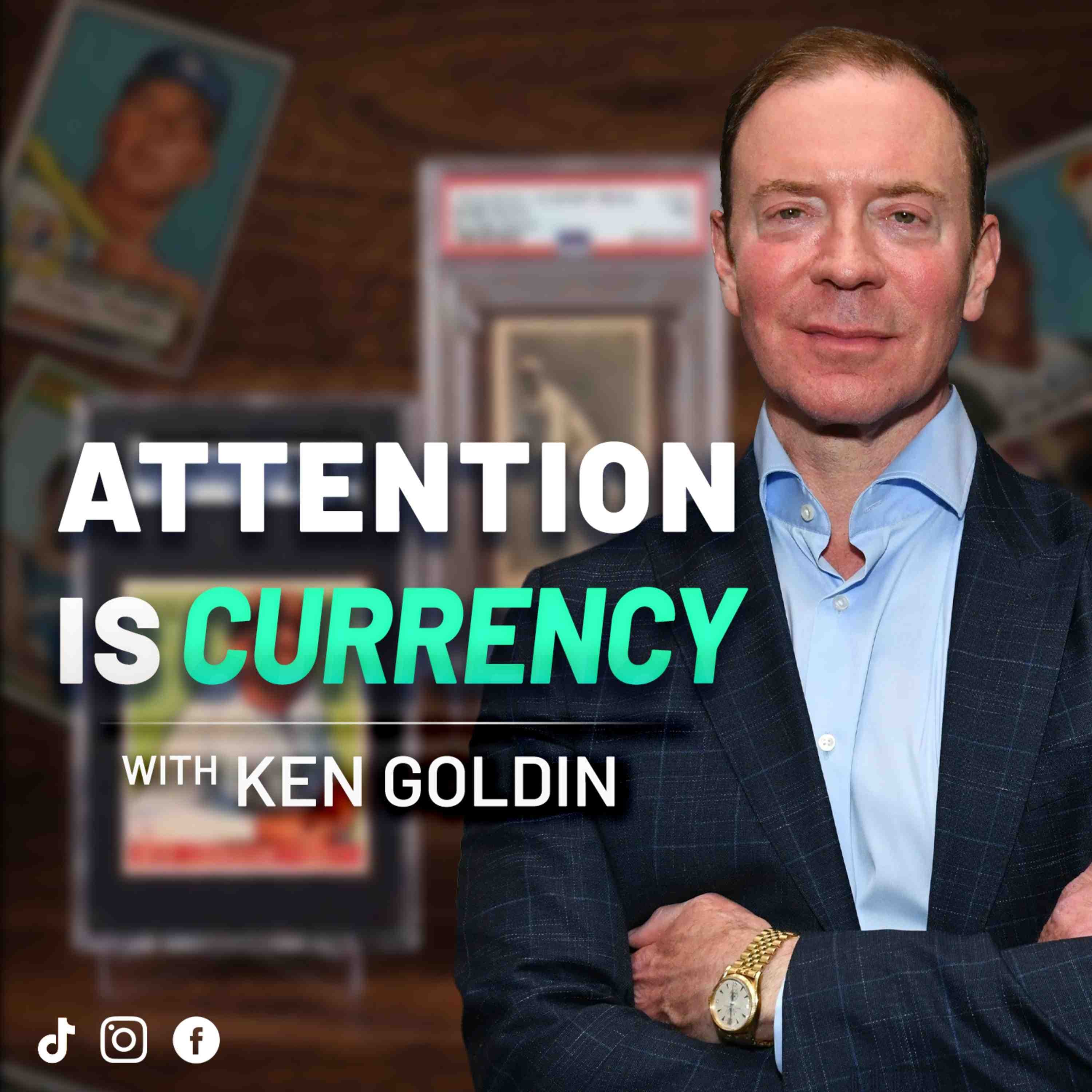
Ken Goldin on Attention, Hype and Collectibles
Ken Goldin tells Ryan Alford how he built Goldin from $100K into a half-billion-dollar auction business, and where the collectibles market is really