
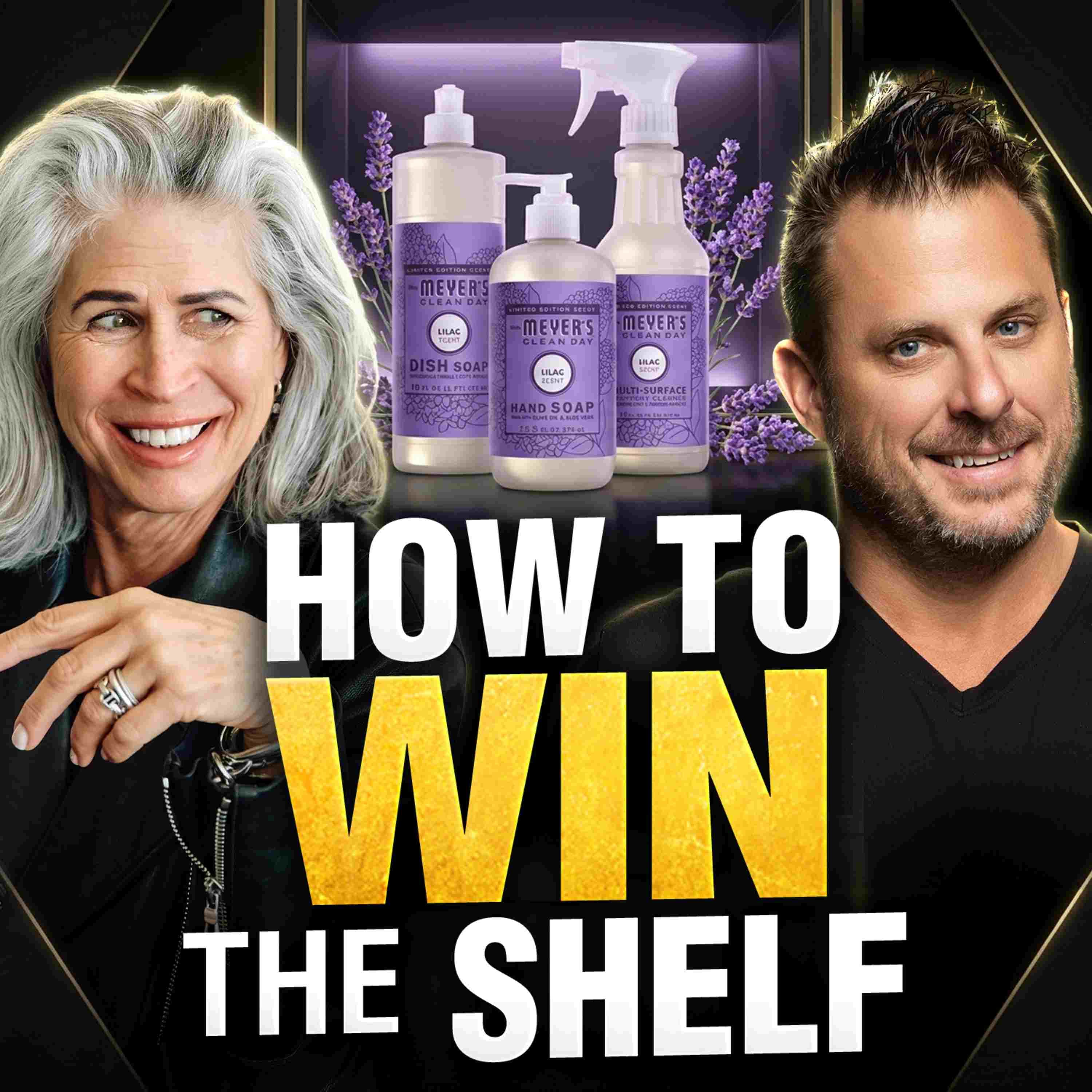
Mrs. Meyer’s: How Reinventing a Boring Category Became a Premium Brand | Monica Nassif
Monica Nassif on building Mrs. Meyer's: knocking off her own brand, walking away from a failed Target test, and making cleaning products premium.
- Don't bring a product to market with an imperceptible change; identify exactly which brand you would push off the shelf and why, and start thinking like a merchant.
- Monica intentionally created Mrs. Meyer's to knock off her own successful brand, Caldrea, because 80% of household cleaning products sell at mass and Caldrea's packaging was too upscale to survive there.
- When a 250-store Target test underperformed, she pulled the brand out herself rather than be kicked out, then returned 18 to 24 months later leading with a trend report instead of an order request.
- Cleaning products are highly consumable, so the goal is not one bottle of dish soap but thousands over a customer's lifetime.
- The packaging brief was 'imagine your parents made the labels in their basement' - sophisticated but not too slick, with stock bottles and stock triggers because Mrs. Meyer's wouldn't have a fancy bottle.
- Compete as the total solution, not head-to-head on performance; the mental image was owning the entire cleaning cabinet rather than beating Dawn.
- Borrow from other categories: seasonal giftable fragrances like holiday pine and chestnut came from fashion's spring and fall collections, and a Hendrick's gin bottle inspired the Williams-Sonoma private label bottle still in use 25 years later.
- Feed creativity by walking real aisles at Target and Walmart and keeping a running Excel file of anything interesting - you won't find it on your computer.
go to Target and you tell me who you're going to kick out. Because you're not getting a wing of Target or four extra feet of shelf space. You've got to take somebody out.
Hey, Monica, stop the branch you're sitting on because it forces you to reach for the one above you.
I went in and I told the buyer, we're going to take ourselves out. I don't want to be kicked out. We got work to do.
It would be harder because the competition and social media, oh my God, there's a new lip liner every other second. And now you've got AI models hyping all this stuff. The media is so fractured. The choices are endless and you've got to work really hard to really disrupt a category. That's why I tell a lot of entrepreneurs, don't come to me with some little tiny item with some imperceptible change. No one will even notice. No one cares. You have to disrupt something. And I also tell them, hey, go to Target and you tell me who you're going to kick out. Because you're not getting a wing of Target or four extra feet of shelf space. You've got to take somebody out. Who are you going to take out? Why? Just start thinking like a merchant.
You don't win by following the playbook. You win by rewriting it. 700 episodes deep with the people who actually built something real. No theory, no fluff, no shortcuts. This is Right About Now with Ryan Alford. What's up, guys? We've got Monica here. She is the founder of Ms. Myers. She put her mother in a bottle. That's what we're going to talk about today. Mrs. Myers, the trailblazing cleaner brand you've been seeing for 25 years. Monica Nassif saw something most people missed. Household clean did not have to be boring, harsh, or forgettable. She turned her real mother's grit, common sense, and Midwestern practicality into a brand that changed the cleaning aisle. Right here, right now, today. What's up, Monica? Everything's up, Ryan. I've just been cleaning all morning.
That's what I sort of visualize with the founder of Ms. Myers. Constant in the laboratory, cleaning, finding dirty things and spraying them down. It's never done. Never done. How many years are we now with Ms. Myers? About 25. 25 years. I mean, are we throwing a 25-year party? We probably should, shouldn't we? Here we are. And right about now, we're announcing the Ms. Myers 25th anniversary party. It's going to be clean as hell. Yeah.
I'm old enough and young enough to remember seeing these products at mass general stores, and then suddenly it was in the grocery store, and then it was in everywhere. What's it been like growing this brand? It's been an interesting challenge. It looks easy because you can see it on the shelves just like you've described everywhere. But when we started, the only places that would take us were the Whole Foods on the coast, Columbus Circle in New York, Atlanta, Texas, San Francisco, those big cities embraced the brand early on. And we had a very difficult time landing in the Midwest where I grew up and now where I live. Back then, we sold one by one into all the Whole Foods stores. Now it doesn't happen. You have to go to Austin at corporate headquarters, but they wouldn't see us. That's how we got started was one by one in upscale grocery stores with Mrs. Myers. Probably could be a movie, I bet. I wrote this book and I was talking to an editor in LA. She goes, I don't really want to edit your book.
I want to make a screenplay. I said, well, I got to get a book first. It could be. It could be. It could go one of two ways. It could be one of like those marketing and business movies or stories that feel almost big screen-esque, or it could just be big screen-esque. I could see it probably going either way, knowing what I know just from what I've read and followed and that you're going to tell us about. It's fascinating because you guys have kind of come up as a brand through all these technology and different things that have happened and how distribution with Amazon and with stores. I've kind of grown up in my marketing career in those same things. And then when I put the lens of like a brand like Miss Myers, I think about like what you've decisions made and brand direction and all that is fascinating to me.
When we started selling to Amazon, they were six years old. They didn't even know what a case pack was. I go out to Seattle and I call on these guys and it's a bunch of techies running around. They got a big chalkboard out here. There's math problems on it. No one really understands consumer products. They just understand they've got this big system set up to sell everything to the world. They're experimenting. And we sold our first products on Amazon in case packs of six. because they didn't know how to do onesies yet. You know, one bottle of dish soap with something else. It was fascinating calling on them. It was a wild west out there when we got started with Amazon. Talk to me about the origin of this brand and your mother. When did we know that would be the foundation? My mom is mother of nine. She had nine babies at age 31 and she ran our house like a drill sergeant. She was the child of the depression and she was frugal. She was a great cook and
She raised us to be adults, not children. She kicked us out of the house really early to get a job. I had a first brand when I started, and it was called Caldrea, named after my two daughters, Cal and Andrea. And that grew really quickly over two years to about three to 5,000 specialty stores, upscale gift stores, if you will. Even we were even in Nordstrom for a while. I thought really quickly, someone's going to knock off our concept. And I'm just highly competitive. I grew up in a family of nine with five brothers. Just a terrible loser. I thought, someone's going to knock us off. I know it. I thought, let's knock ourselves off. We started talking about, if we brought in somebody else, a whole other marketing team to obliterate Calderia, just take them out, what would we do? Then we were brainstorming and thought, oh, we should name this after your mom. We're Midwestern. We're frugal. We're earnest. We're hardworking. I called my mom and said, hey, do you want to be a brand?
And she goes, well, what's the brand? I said, I'll explain it later. We got a lot of work to do. That was the genesis. There's something really brilliant about that and also scary as hell and crazy as hell. Knocking yourself out. I don't know if enough brands, pardon my statement, have the balls to do that. It's crazy, but it's so smart on some ways because you created the path to success that you did, but you weren't scared to throw the baby out with the bathwater. Because the market was so much bigger. It was 80% of all household cleaning products are sold at mass. And I had a boss in my early days at Target who's always told me, Hey, Monica, stop the branch you're sitting on because it forces you to reach for the one above you. And as competition heated up, I thought to myself, I'm going to get my saw out. We got to reinvent ourselves here. We got the concept down. But the Caldera packaging was way too fancy, way too upscale for mass. I knew it wouldn't survive there. We had to do something different. Smart as hell. Realizing, hey, if I'm going to scale, let's play big, baby. We need more people buying this. I'm only going to sell so many fancy packaged cleaners. I got to sell to the masses if we want to make this a...
That's totally right. And then the consumer would be ready for us. When we started with Caldria, we were frankly a little ahead of our time for the mass market. I could see that playing now, actually. A couple of two to three years, we can work our kinks out on R&D lab and shipping and get our back end in order. Then when we scale, we'd be ready. How did people embrace the brand at first once you made that switch? You mentioned the geographical embraces and things like that. Talk to me through what made it really click for consumers. It was earth friendly. It was aromatherapeutic. People loved the fragrance. If you want to clean your whole house in basil, lavender, lemon, verbena, you can do it. And that was unheard of at the time. We had very few competitors at the time. When we got started, it was really rough. Distributors wouldn't take us. So we were drop shipping to the back of the stores. And then we had on-ground merchandisers to stock the shelves. You're on the ground stocking plantograms at Whole Foods and other upscale stores. Target wanted us in there.
They said, hey, we'll give you 250 store test. I know Target. I used to work there. I kind of know how they operate. I'm in Minneapolis. We couldn't control where these test stores were. We didn't do very well. People didn't really know the brand. This was really the early days. We were probably in about 50 Whole Foods and probably another couple hundred upscale grocery stores. So you get your numbers every week. You know that if you're flying or you're choking off the shelf. We were choking. We weren't selling through. I went in and I told the buyer, we're going to take ourselves out. I don't want to be kicked out. We got work to do. We pulled the brand out and about 18 to 24 months later, we went back in. But by that time, we got in all the Whole Foods and then I didn't go back and ask for an order. I went back and said, hey, I just kind of did a trend report. Hey, here's what's going on. Here's what's happening in the marketplace. Here's what we see the consumer doing. And then when we were ready, they were ready. So that really worked out to our advantage, but I didn't want to get kicked out.
So many people get so caught up in their own sauce that they just think, okay, my brand or the highway and it's going to work. But you're looking at data and going, okay, number one, punt it on one brand to go to another for bigger scale, bigger opportunity. And then recognizing you didn't want to crush what could be a long-term, we can jump ahead to what became a long-term, probably good relationship by them kicking you out. Yeah, I don't want to get kicked out. I don't want the buyer to go, this woman's an idiot. She can see the numbers. I can see the numbers. I want the buyer to think, okay, she's smart enough to know her numbers stink right now. What did flip the switch with consumers? Just visibility, seeing the brand. This is before social media. We did a lot of PR. We had this mobile kitchen we would take to big music festivals in San Francisco, Boulder. And I just think we got the product out there more.
And then once people use it, the beauty of a cleaning product, it's highly consumable. I don't want you to buy one bottle of dish soap. I want you to buy thousands over your lifetime. So that was to our advantage too. And people love the fragrance and love the performance. Now with the fragrance thing, you were well ahead of your time. What went into product development? When I started, I'm a marketing salesperson. I had no idea that you needed a chemist. You're damn right you are. Let me just say that right there. I'm not a chemist. Where do I go to get this stuff made? I don't even know how to do this. Minneapolis is a big hair care town. Aveda is there. Other companies were there. So I asked the guy who cut my hair. I said, hey, do you know anybody who puts stuff into bottles? And he goes, no, I know a fragrance consultant. I don't know what that is, but I called her and she said, you've got to write a fragrance brief.
Meaning essentially it was like a marketing brief. Who's your target customer? Where do you want to be? Blah, you know, et cetera. You know that. I said, now what do I do? Where do I go? Who can fill this? What do I do? She goes, you need a chemist and you need a filler. Then she directed me to this outfit west of Minneapolis who had just started a contract manufacturing company. And these guys came out of the Clairol business. They were just getting set up when we were starting. And I go out that I had these dummy bottles. I filled up in the bathtub with my daughter. I had all my labels and I show her what I'm doing. And she leans back in her chair and she says to me, you crack the code. I'll help you. I've been waiting for somebody to disrupt this category. She would help me. She was a chemist. She found me. Then I said, okay, I need a chemist. She gave me three names, two people I called that I was a complete. I just lost my marbles. And one person said, oh, I'm in. I'll help you. I'll freelance.
That's how I got started. And then that person became our full-time research and development person. And she's brilliant. She really made the products. Was there ever a time that you almost bailed? Or were you always all in? For this startup, I was always in. Now, I'm not saying I didn't cry in my car, Ryan. I wouldn't think you were human if you hadn't. I never thought about quitting this one. I thought about quitting some other startups I've done. There's a feeling of dread that you know, I am kind of screwed here. There's the feeling of, oh, this is just a little rough patch. I can get through it. I don't know how I'm going to get out of here, but I can get out of here. How's Ms. Myers held like authentic place in the hearts and minds of consumers? It seems hard. Today, it seems harder because social media is so prevalent. There's so many of these stories trying to find authenticity can be difficult. But for you guys, you obviously found that place. Were you ever in Walmart? Was it always just Target?
No, we started in grocery stores. Walmart came after Target. And I remember seeing the Ms. Meyer. The pack, it looked premium and different. It stood out. Maybe being a marketing guy and like seeing stuff, but I believed it. I believed the story that I was seeing with the packaging and then I smell or whatever. And there was something always authentic and different about that brand. we worked hard to do that. We basically took how my mom was frugal, earth friendly. We worked with a design firm in Minneapolis and she said, Hey, Matt, and my father was an engineer. She said, imagine, think about if your parents kind of made the labels in their basement. It's sophisticated, but it's not too slick. That's exactly spot on.
And it's got a lot of words because Mrs. Myers has a lot to say about the product. And we wanted it to be highly differentiated. It couldn't look like anybody else on the shelf. The bottles had to be stock bottles, nothing fancy. The triggers all stock. You know, even the bottles were right off the shelf because Mrs. Myers wouldn't have a fancy bottle. We tried to stay true to that. What was the Home Run product at the beginning or even to this day? Probably the Home Run product is a countertop spray. It's used a lot. People love the dish soap. And think about it. We had all these competitors with very problem-specific dish soap. Dawn was our competitor. Laundry detergent, Tide. And that's how cleaning was set up. You've got one problem. We have the solution. It was never an assortment of cleaning products.
And that was the other disruptor, that we could be brand blocked on the shelf. And that really took a lot of work on our end from our on-ground merchandisers to make that happen. That is interesting thinking about each product line and each competitor. Some of it's the same, but a lot of it's a different challenge depending on consumer perception. It's hard to knock off the leader, isn't it? We wanted our performance to be on par. And we're not like going to be, oh my God, we're better than Dawn. No, because we are the total solution. My image in my mind's eye when I started was when you open up somebody's cleaning cabinet, that's ours. We own your pantry. You want to clean windows? We got something. You want to wash your hands? We got it. We own laundry. That's how I owned it in my mind, the geography of it. We own the pantry with all these cleaners.
I don't consider myself a nature protectionist. Wear that cross even if I believe in, hey, we need to do everything we can. I'll do whatever I can, it's just not something I wear on my T-shirt. At some point though, Ms. Myers crossed over from that target was buying you to, okay, mainstream's buying you too, right? You became a mainstream product at some point. When was that? When we started was food was going natural and organic. What I put in my mouth, skin care and body care going natural and organic. What I'm putting on my body. Cleaning was next. All this stuff's around my house. The consumer, she was way ahead. The kitchen was becoming huge. Williams-Sonoma is scaling. Celebrity chefs, people are in their kitchen. And here are these crappy cleaning products. And I thought we should be jewelry for the counter. We should be able to nestle up right next to a Nespresso, a KitchenAid, or French ceramics. Those are our people.
They crossed over when they realized, wow, I got to really think about what's happening in my home holistically. We progress as consumers. You can think of having nicer things. I don't think anyone had ever thought about having nicer dish soap until Ms. Myers. But you know, think about it, right? Other commodity categories were moving up market. Pet food, shampoo, coffee. All these commodity markets were being disrupted and people finding premium ends of it because the consumer was ready for it. How do you keep creativity in a business going? You've done a great job with that. You talk about that. I've always been a very creative person and a creative problem solver. And first of all, you got to stay curious, number one. Two, keep track. I have this Excel document. Anytime I find anything super interesting, I write it down. It doesn't even have to make any sense. And the other thing, you have to stay on the street. You have to look around. You know, these people who get online and say, oh, I found this product on Amazon. Well, let me tell you something.
That's one screenshot of one product. You should go run down to Target or Walmart and look at a 16 foot shelf of car cleaning products. You want to find out what's going on in the garage for cleaning, for example. People just need to walk around and see what's up. I just think you got to feed your mind and feed your brain and teach yourself how to see things in the marketplace. That is very practical, but very true. I am a creative as well and grown up in this business. And I don't think anything special about me, but I'm curious and I care and I watch and I observe. And I'm like, well, they're like, well, how do you do this and the other? And I'm like, well, my taste is informed by my eyes, what I see and what I like. OK, how are people responding to certain things? Sometimes we get in our own little vacuum and it's a dangerous place to be.
I would agree. We did all the private label work for Williams-Sonoma. And having spent so much time in that store and grew up in retail, I knew they had a very sophisticated eye. They came calling to us to build a private label program, which I completely wanted to do. We can talk about it, but here's how creatively we thought about it. We got to bring them a custom bottle. We got to bring them something fancy. This ain't Mrs. Myers. This is more on the Caldria level. You want to see great packaging? Walk the aisles of liquor stores. I found this great Hendrix gin bottle in a liquor store and took it to them and said, your bottle should be like this. Okay, that bottle is still alive today in their private label program. That was 25 years ago. I'm all for walking around and borrowing from fashion, home decor, liquor stores, anywhere with a good idea. But you're not going to get it on your computer. You ain't. You're not going to. That is also very good advice. Inspiration comes outside of your own category.
There's always the potential to learn, I call it borrowed interest, but there's some things that are like taste making. And then there's some things that are intellectually finding adjacent things that aren't always as obvious as they seem, but just take a little bit of depth and interest. Completely. One thing we took from the fashion industry was giftable. No one was gifting cleaning products. Did someone ever give you a basket full of Donner Tide? No. We introduced spring floral. We introduced holiday pine, chestnut. I still have people stop me on the street and go, Monica, do you have any Iowa pine stashed away for Mrs. Meyers? I love it. And I didn't buy enough last Christmas. I mean, that was unheard of in cleaning, but that we took right out of the pages of fashion. They introduce all these collections spring and fall. You were the first product that it was ever designed well enough to actually, if someone got it, to feel they were given a gift. Think about like the first time I got soap given to me and it was probably a similar type of thoughtful design and packaging. And I'm not like bar soap. This is a fascinating lesson in marketing and branding. That's why you need to be a movie. I should be a movie. I'm in.
talking with yeah monica nasa she's the founder of miss meyers and soon to be a star of her own movie no no i don't want to be the star all right you kind of look a movie star though i can see it see that okay yeah let's say why not what's it been like the age of social media comes around what's been the social status and the way that you guys have navigated that landscape We started and I was still with the company. I sold the company in 2008 and our internet was just coming into play. The Instagram wasn't here. LinkedIn was just bubbling up. We were just behind, if you will, all the social media trends. Now, if you check out Mrs. Myers, it's everywhere. It's got Facebook, Instagram, it's on LinkedIn, everywhere.
So I think they've done a really good job and they have so many fragrances. There's always a story to tell. And I have to say, if you're a passionate Mrs. Myers customer, you will drive across town to find a fragrance that you're in love with. People tell me this all the time. I just did a book signing in Des Moines, Iowa, where I grew up the other day. And the stories of, did you know I love this fragrance? Did you know I love that? I'm this person. I'm that person. It's like they're a basil person. It's really gratifying, I have to say. People really embrace a certain fragrance. They love it. They do. That's got to be starting a brand as iconic as it is. And then hearing stories like that, that's got to be really rewarding. Yeah, it makes you feel good. But you know who has more fun than I do? My mother. She's still alive. She's 93. I've given her a box of books to sell. And she's on a warpath, man. She is hyping that book, promoting it at her church group everywhere, her bridge club, everywhere she goes. She's having the time of her life.
I bottled my mother. I love just the title alone. Well, yeah, I bottled my mother. I did. You did. Followed it right up. What ultimately made you want to write the book? Well, I've always been a writer. My first job is I was an executive speech writer for Target. I wrote for the top executives. I'll be honest, that's where I learned a lot about business. I did a lot of investment conferences, sales conferences. I kind of heard firsthand from these very high CEOs at the highest level. And one thing I found for working with Target, they always respected the consumer. They always wanted to be ahead of her. They always had a great deal of respect for how she thought about things. And I tried to carry that through as I grew a business. I've kept notes my entire career about things that have happened to me. I wanted to write a letter because I've done a lot of speaking about entrepreneurship. And I get asked the same questions.
How did you start it? How did you raise money? What do you do when you're scared? Your question earlier, did you feel like quitting? All great questions. I'm just going to write the book. I'm going to just answer all the questions for my point of view, not from somebody else's. And then I thought I was raised by this dynamic boss, if you will, my first and best boss. And I should really have it be a love letter to her. It was kind of a memoir and I grew up in a family of nine and you can imagine the chaos and the fighting and the scrum that was day in, day out combat. And I thought, I'm going to write about how that influenced me as an entrepreneur and how it helped me be successful. That was the idea behind it. If you're going to create the FAQ, if you're going to keep asking, that's why you did it. Now you've done it and it's out. How do you reflect on all of it now? You came into it with this predisposition. This is why I'm going to do it. I've done it. Now you've done it. Is it like everything you thought it would be?
Well, you know, the writing process is really enjoyable for me. I've got a couple of other writing projects I want to start. So that I love. I love doing that. And so what's interesting is the book industry is really different than what I'm used to in retail. I'm used to, I got my numbers every week. This, wait, where am I selling? Who am I selling to? Just a lot less transparency. My background makes me more of a business person to know how my sales are going and things like that. I need to just enjoy the ride. This is my advice I give myself my entire career. I'm still learning. Just have fun with it. You've got to promote the book. You want to sell it? Promote it. That's what we're doing. And look, that's why I wanted to just start by talking about the brand itself. There's a lot for people to learn. You have a characteristic about you that I'm struggling with the right exact word, but something really fascinating about the way you think and that I know you write. It is Midwestern. It probably is that Midwestern. It's practical but creative. You're like California meets Midwestern because you have this creativity that I sort of associate with West Coast or something. It's this practical wisdom that's really fascinating. Yeah.
My father was a mechanical engineer and that man, I was just in his garage yesterday. That man could fix anything. He never had a problem he didn't meet and love and figure out. And if he didn't have a tool, he made a tool. He has seven patents from John Deere and his mother, who's long gone, described him as he was always tearing apart the farm equipment and putting it back for another purpose. Watching him solve problems and then kind of being raised by two parents who thought work was a joy and a pleasure, not a hardship. and you should be grateful that you can work. A lot of people can't work. Maybe that's the combo. And then my mom taught us how to work with our hands. We were taught to sew, cook. She said, failure wasn't in my vocabulary. I called it learning. When you grow up in a household where you're not, oh no, Monica, you did that wrong. That never happened. It was like, okay, now, you know, fix it. Let's go. We got something else to do. That was how we were raised.
We need more raising like that. There is a parenting chapter in the book. And I interview my mom about parenting and she's got a lot of opinions about parenting. Let me tell you. Yeah. A little too much coddling going on to me. Participation trophies. No, we're not teaching our kids how to do hard things. We've overcorrected wanting our kids to have it better than we did. Having it better is not making everything easy. She wanted us to fail when she could watch us, she said. I wanted you to get in trouble when you were still at home. Not that she stepped in, but she could make sure you didn't injure yourself or get arrested. Is it harder or easier to build a brand and a business today than it was when you were doing it? It would be harder because the competition
And social media, oh my God, there's a new lip liner every other second. And now you've got AI models hyping all this stuff. The media is so fractured. The choices are endless. And you've got to work really hard to really disrupt a category. That's why I tell a lot of entrepreneurs, don't come to me with some little tiny item with some imperceptible change. No one will even notice. No one cares. You have to disrupt something. And I also tell them, hey, go to Target and you tell me who you're going to kick out. Because you're not getting a wing of Target or four extra feet of shelf space. You've got to take somebody out. Who are you going to take out? Why? Just start thinking like a merchant.
Parity is a problem. Most people like to play it safe. It's like, oh, I can somehow stand out because I'm 1% different. No, it doesn't work that way. Nobody cares. Nobody cares. Nobody cares. If they brought me things and they show it and I said, have you walked the aisle at Walmart lately and just looked around? No. Go away. Go do your homework. Don't come asking me. I'm not going to tell you. I'm not doing your heavy lifting. Figure it out. See, now I'm sounding like my mother. Get out of here. Figure it out. My mother's pretty smart. That's not a bad thing. No, I agree. When people look at Ms. Myers today and you reflect on all of it, what's one thing you want them to know, think or feel? That it's based on a real person. It's authentic. It's really authoritative. We created different packaging because we wanted to be perceived as different and it's real. It was based on a real person with real values. I spent two days with my mom in Iowa and we were doing book events and man, she.
It's still the real deal, let me tell you. Well, we bottled her up and we put her into a book. Yeah, we did. Monica, let me ask you a couple quick rapid fire things as we close out. Is that all right? Yep. What's the most important trait in a founder? Perseverance. One thing creativity needs. Walking around never stops. Best advice for a founder stuck in fear. get out of your way and write down the worst things that could happen. And if you really look at it, you can survive all those. I've really enjoyed this. This is a lot of fun, Ryan. Monica, I'm a fan of the brand. I'm a fan of you officially now. I feel like I know you. I know Ms. Myers and I'm glad you bottled her up. I do. Thanks for having me on. I really appreciate it. Where can everybody find the book? Monica, where can we find that and anything else you're up to? We can find the book on Amazon, Barnes & Noble, Target, and Walmart.com.
If you can't find those, then you're listening to the wrong show or watching the wrong show. Monica, it's been a pleasure. Thank you, Ryan. Hey guys, you're going to find us. Ryanisright.com. You'll find links to the book, I Bottled My Mother. We appreciate Monica. And look, I appreciate what it takes to build a brand, what it takes to build a legacy. Monica's done it. You can do it and you need to do it right now. We'll see you next time right here. Here's the truth. Information doesn't change your life. Execution does. So don't just listen to this episode and move on. Take the idea, make the call, launch the thing, fix the problem. Build what you keep talking about building. For more, follow Ryan Alford on Instagram, at Ryan Alford. And watch or listen to every episode at ryanisright.com. This is Right About Now. Now quit waiting. Go win.
Chris Allen on Netflix Fame, Sales, and Startup Pivots
Million Dollar Secret's Chris Allen on trading finance for startups, becoming his own celebrity front man, and turning global attention into real revenue.
Why Brand Loyalty Is Dying: Shopper Promiscuity Explained
Devora Rogers of Alter Agents on shopper promiscuity, brand narcissism, attribution myths, and why real human research still beats synthetic data.

Rick Jordan on Going Public, Failing, and Rebuilding
Rick Jordan tells Ryan Alford how he scaled an IT company from $4M to $15M, took it public, lost it in six months, and what he is rebuilding now.