
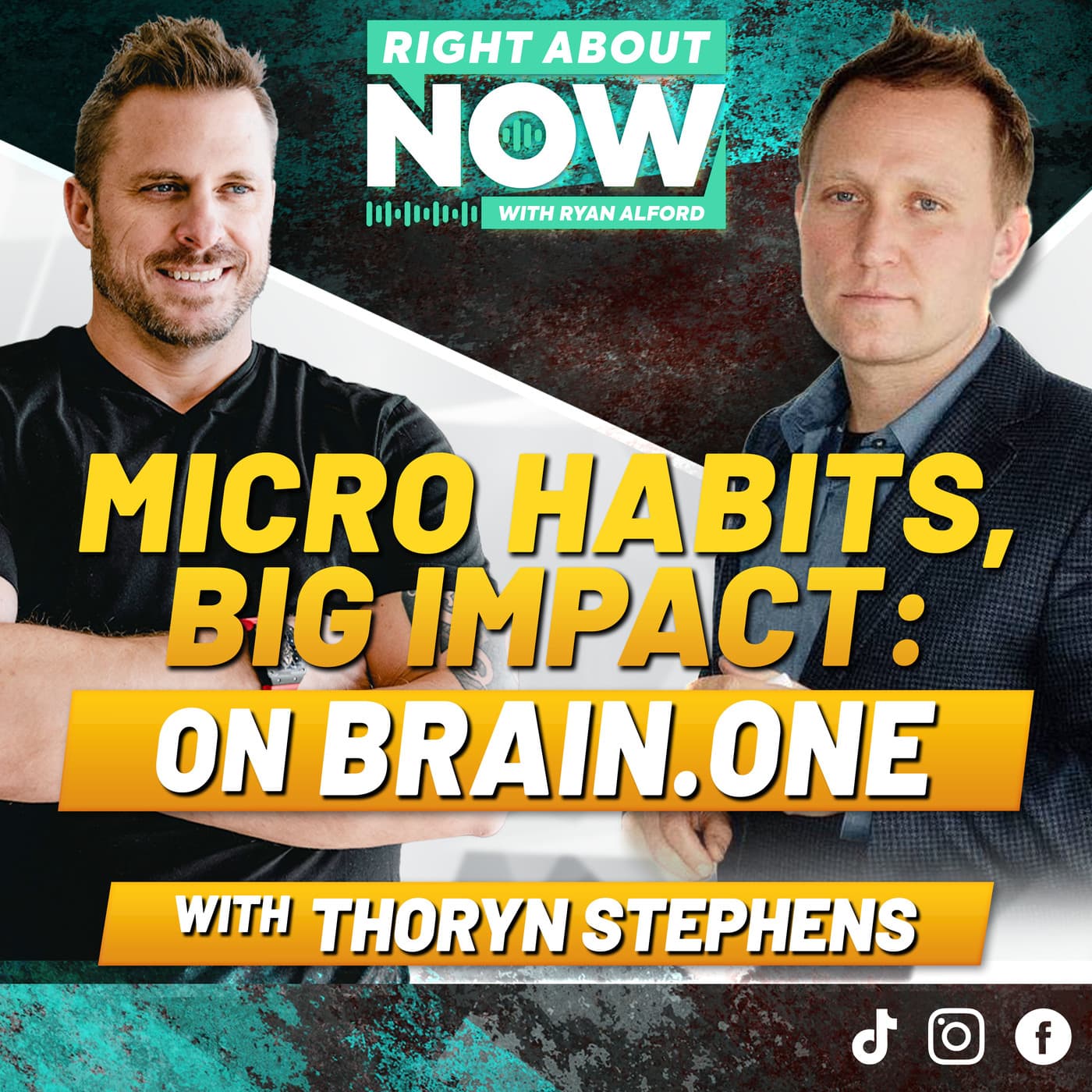
Micro Habits, Big Impact on BRAIN.ONE with Thoryn Stephens
BRAIN.ONE CEO Thoryn Stephens on micro habits, AI-built brain health protocols, dementia prevention, wearable data and why sleep beats diet.
- A protocol is just your daily routine made structured and measurable, and nearly every longevity protocol reduces to four categories: nutrition, exercise, stress and sleep.
- Micro habits are the unit of change: for cold plunging, the variables are water temperature, duration and frequency per week, each tracked over time.
- BRAIN.ONE trains its AI on peer-reviewed scientific papers rather than asking ChatGPT for generic answers, then keeps a human in the loop to verify output because hallucinations are unreliable.
- The Lancet 2020 paper identifies roughly 12 lifestyle modifications that could improve 30 to 40 percent of global dementia cases, including social connection, clean air and hearing.
- Three free micro habits Thoryn recommends: direct morning sunlight for circadian optimization, daily connection and purpose (people with both tend to live 10 to 15 years longer), and continuous learning of a new skill or language for neuroplasticity.
- Sleep deprivation is worse for you than an occasional cheeseburger: you cannot be neurologically or biologically optimized without adequate sleep.
- Compare wearables against each other because there is no standardization of metrics like HRV; Thoryn wears a Whoop, an Oura and a Garmin and runs time series to see which is most accurate.
- Influencers and athletes can publish their personal health protocols on the platform for followers to download, creating a monetization path beyond social posts.
by the time I was 20 I could genetically modify any model organism By the time I was 30 what I found is we could really optimize any human behavior to do the thing online
Instead of giving me one, give me five creatives And we're going to test them And we're going to see what the actual consumer says about that And usually they're always wrong
But I think if you're just sitting on the sidelines And watching you're going to get left behind
It's a brand one. You have a human in the loop. You can have the machine create the creative create the copy You still need some of it to verify it hands down as you know the hallucinations are out of control We're taking a little bit of a different framework But we're actually starting with scientific papers summarizing them using them to train the models and so forth But you have to have a human in the loop and so you can be that human at the end of the day And it's absolutely critical. You cannot count all the machines to do all the thing This is right about now with Ryan Allford a Radcast Network production We are the number one business show on the planet with over one million downloads a month
Taking the BS out of business for over six years and over 400 episodes You ready to start snapping necks and cash and checks? Well, it starts right about now Hey, what's up guys? Welcome to right about now. We're always talking about how you need to stay ahead of business tech AI anything and everything is happening in the business and marketing world We're here to tell you. Thank you for making us number one. I am Ryan Allford your host coming you from Greenville, South Carolina Here in the new South capital of the US That's what we call it and I have friends that in high places sometimes that introduced me to friends in higher places and cooler places And all those things. This is one of those instances where it's both a pleasure and insightful for you because we've got Thorn
He is the CEO and founder of brain one. What's up, Thorn? Hey, Ryan. So good to see you again How we doing? Hey, man? I enjoyed our call a few weeks ago Love what you're doing and pump to just have a little discussion, man I'm sorry. Let's do it. Thorns on the road taking time. I was busy schedule for us So the audience where you're at now. What's your up to that will probably set the table more than anything for kind of where we're headed with Disconversation. Yeah, so I'm based in Colorado and I'm currently in Venice, California Venice Beach LA and then I'll be giving a keynote at the longevity leadership conference at the Verizon Technology Center And talking about all things longevity brain health and then joining me on stage will be a famous NFL champion
Leak Jackson and he's an ambassador for brain one and we'll be joining us and discussing some of the The protocols and programs we're building with him around our logic optimization and TDI support The longevity space the brain space and you're probably going to get tips insights Things that you should be thinking about literally for your brain as executives founders all the people They're listening that follow these categories We all need to be thinking about brain health a lot but also protocols and then there's a big story here on influencer Platform audience retention and growth and monetization. We're covering a lot of pass here Thorn That's why I love this topic because it really encapsulates a lot of different things because when you think about Influence or marketing and you think about people of influence they all have passed to success that they have both daily weekly monthly
So they have protocols that are valuable a lot of them especially maybe non celebrities that don't have you know Constant representation but are influential don't always have the clearest path to monetization capturing all of that audience Giving them a place to go and live and learn from them one thing to catch social posts But that's what I love about your platform is it kind of is all these things at one Thorn Let's set the table of your background and what led to brain one starting off I am a molecular biologist and a researcher scientist of my core I was working towards a PhD but ultimately jumped directly into drug development and biotechnology This is in the 2000s worked for essentially a startup that got purchased by Amgen directly out of college doing small molecule drug therapeutics
So quite literally I was part of the molecular biology but genomics team And so we were going after novel essentially drug therapeutics and mechanisms of action My team would be focused on essentially the cloning the characterization the expression of very specific novel proteins Essentially, you know, DNA makes proteins So I worked in biotech for half my career And then as I moved to Southern California and actually was here in Venice Beach for 10 years I became a data scientist not a lot of biotech not a lot of science in LA especially back then And really took a structured framework to my approach to data science So by the time I was 20 I could genetically modify any model organism By the time I was 30 what I found is we could really optimize any human behavior to do the thing online
That's the idea of using insights hypothesis testing and then rapid iteration at scale And that was the general framework and I applied that to number of industries from media to e-commerce to retail And it was quite successful and it was actually two years ago I mean literally almost at the day Ryan I was traveling I was overseas in the Mediterranean and I had these epiphany for ultimately brainworn And came full circle back into my roots of science and it's really just been a rocket ship ever since I also have about one year ago we're still kind of in the public of stealth Where you people can go online they can sign up but we're, you know, slowly letting people into the platform Growing like crazy
It's exciting and congratulations on all of that It's an interesting path and I know you've been entrepreneuristic And I probably your entire life but like where you're doing with others and for other companies and all of that And then transitioning into your own thing as rewarding and especially when it's playing in such an important space Like longevity and protocol and all those things I feel like a little bit the last 15 years 10 years wherever you want to call it And I think about like the marketing space We've gotten in such a shotgun world where it's just what do they say? Fire him ready because the platform's in the speed with which stuff happens Interation is allowed but what I love about what your background is is what you just said is
The greatest marking decisions and things that impact sales are that movement of a consumer or person from position A Current mindset to position BC or D wherever we need them to go Based on research and trends and data and other things that then influence Creative that then influence decision creative could be a lot of different things by the way SEO it could be ads if we TV all those Brain out with me just a little bit about what you did in that space And your kind of perspective on marketing here in the now One of my first jobs when I got to LA was working as a junior analyst essentially So really started off in at the ground floor But everything I did was focused in measurement
So in biotech it was on the molecular level in the context of digital platforms It was really focused in user level and then media ultimately And so we were using metrics like customer lifetime value a decade ago And that idea of understanding you know current valuation future valuation And that kind of being the systemic method essentially measuring your users And then also on the media side similar methodologies right So things like multi-touch attribution is what we were doing then Utilizing essentially customer journeys understanding fractal attribution And then tying that back to the ultimately your customer acquisition cost And then obviously you know the CAC and the CLB tech equations But we were doing that about 10 years ago and doing it at scale And really understanding again the value of your media
And then ultimately the value of your user base And kind of become the norm now which is great I was just on a call with a Wharton professor about two weeks ago His name is Peter Fader Peter is a marketing professor And wrote literally the book on customer centricity lifetime value And I've known Peter now for many many years And I was actually one of his advisor to one of his companies called zodiac Focused only in CLB So again user level measurement And we saw that thing did Nike within less than a year basically And now his current firm is focused on what's called customer base corporate valuation So that idea you understand the value of your customers over You know essentially the footprint and then that gives you a corporate valuation
And so the mainstay of everything I've ever focused on has been within measurement And then again you know the idea of understanding journeys and pathways And then optimizing iterating very quickly Inside now you have this generative AI explosion I mean we were doing dynamic creative testing with meta Facebook You know back in 2017-18 We were doing program SEO years after that Really utilizing these tools to generate content, copy And ultimately value at scale So a lot of these things you're now it's just like catching up But you know certainly not the most novel But the tools have gotten completely commoditized And now they're super cheap So it's exciting times It is now the best ideas win I think there's still some truth to this I think you're proving it out
You know executions everything It is But the path the execution is a lot cheaper, faster, cleaner If you have the ideas now That's kind of like okay Battle of the ideas Yeah I mean I've worked with some really interesting creatives over the years And even back then this is like you know seven, eight years ago You know they'd be like this is the best creative And I'd be like is it though Instead of giving me one, give me five creatives And we're going to test them And we're going to see what the actual consumer says about that And usually they're always wrong And so you know now these methodologies A, B testing multivariate You know it's all kind of the norm which is great But you don't necessarily know
And especially dealing with creatives They always feel they're correct And you know not always speaking Every tower of the creative department lived in I was in Manhattan for five years Let me tell you Okay I had a brittle plastic key to get in Every now and then when they allowed me at the door Sure You know Yeah But that's the good thing about data is you know it's unequivocal I mean you literally you know you run five creatives And then you know so Exactly Before we transition heavy into brain one And some of the exciting things there I do want to pick your brain because you're one You're so fucking smart But number two What's happening with AI And business, marketing, white color, jobs What say you to the reality that are a doorstep
Of where all this stuff is at I'm an optimist at heart And I feel again having used these tools For many many years That you know they can be used for good And I think that if you're in one of these roles now You better understand them immediately And we're applying them at brain one A few different ways that we can talk out in a second But I think it's really important to embrace the technology And honestly it's not that different than You know what I saw in biotechnology In those industries And the you know the tools have just become More commoditized and cheaper ultimately You know you can literally sequence your DNA Basically in your kitchen now You can do CRISPR at home I mean there's all these like home kits
And people are doing some pretty crazy stuff out there Not that I really recommend it But if you really want to become a leader in the space You have to know the tools And you need to understand you know Where we're at today where they're going And how to utilize them And so I actually think it's an opportunity If you know how to use these tools But I think if you're just sitting on the sidelines And watching you're going to get left behind I agree There will be some jobs lost But I think it is Primarily the ones that just Think this is a fad Or that aren't embracing it Because you're just going to have people That work and do 10 times more than you
Because they use them I haven't seen and even with the agentic AI And the agents and stuff Which is amazing And you can automate a lot of stuff There's still a human creativity A human component to management of these things The right way That I don't think it's going away In the next few years I think some things will go away That we do that we probably don't want to do anyway But there's still going to be Someone driving the car You're either going to get a license Or you're going to sit at home How we apply these models are brand one You have a human in the loop You can have the machines Create the creative Create the copy You still need some to verify
Hands down As you know The hallucinations are out of control We're taking a little bit of a different framework But we're actually starting with scientific papers Summarizing them Using them to train the models and so forth But you have to have a human in the loop And so you can be that human at the end of the day And it's absolutely critical You know, you cannot count on the machines To do all the things So there still will be Governments And you know, someone who needs to oversee The processes and the workflows And you know, so forth What's the most random prompt You've ever given chat GPP That you can remember I think it's interesting to ask The machines around spirituality Things of that nature
Or psychedelic I've asked a couple questions again around Because AI will even go out I haven't asked it that Yeah, sure So I mean, this is getting a little deep in the weeds But I like to go there A white paper I'm thinking about writing Is again, the expansion of consciousness And so, you know, that idea that If you take a quick step back With expansion of consciousness Throughout the ages You know, you have things like Say, prayer, meditation Psychedelics Again, indigenous uses of a number of psychedelics For I mean, tens of thousands of years And now we're on this inflection With what's called BCI In brain computer interfaces And our chief brain futurist Brain Wollin, his name's Dr. Gaelin Buckwaltor He has six neural implants right now
And so, one of the questions I asked JGPD was, you know, around again The concept of What is the expansion of consciousness Look like relative to BCIs And specifically, you know, I'm with Gaelin He's doing a clinical trial at Caltech So you've heard of neural link This is similar All these are different His arrays are called That's part of the BlackRock Neuro Utah array They're an A by A chip And he has six of these on his neural You know, essentially tissue right now One in prefrontal, five in the neocortex And so we're at Caltech doing clinical trial Ryan and he connects his brain to the internet Literally I mean, you want to talk about the matrix And so forth So we are seeing the intersection
Of what he actually can record it Like he knows that knowledge Can he get to the internet? Well Again, it's not he So right now what it's primarily doing is Recording, you know, the different electrical activity The different places within his brain But they can also do excitation You know, of course In the future Will we get to the point where you can actually Download a Jiu-Jitsu routine And know Jiu-Jitsu Well, we're not there yet But you know, certainly in the future Can you see that future With what you know You know more than the 99.9% And you've seen enough Is that feasible with where it's headed? Yeah, they're making progress For sure And again, to be clear, that's not my focus Relative to my research
But I've seen this first hand at Caltech And it's incredible where it's going The immediate applications are Galen's a quadriplegic And so he is in a wheelchair And it's for him to facilitate the science But he can control a robot I think there's a possibility in the future For sure Yeah, these technologies are moving Very, very quickly I watch some of these old movies I watch iRobot the other day With Will Smith And I'm like Are we creating like these horror movies Or are we creating like the good versions of the Haha Yeah I mean, it's an important dialogue Especially now It is Talk to me, Thorin Why brain? What got you into this longevity space And the brain space What kind of was the fundamental thing
That started you down this path So I've always been Very fascinated by just the idea of Biological optimization I began doing Triathlons in my 20s And that went all the way to full iron man's And what I saw Is that when I was wearing Awareable And so in that sense We had the big chunky garments back then But through the use of data I could Ultimately optimize my biology period And then the devices have only gotten better And right now I'm wearing three I'm wearing a wolf I'm wearing an aura I have a garment But that concept Again, using data to optimize your biology And so as I was going down that road But I saw You know, relative to my training And my racing
Is that I could attenuate my lactic threshold By doing X or Y And ultimately So I started to get faster And stronger in all of these things And that was through the use Of a structured framework Or a protocol And so I think it's important To kind of start there What is a protocol A protocol is just your daily routine At the end of the day When you get up in the morning What are the things that you do On a regular basis period And if you take a quick step back And you look at all of the protocols That are out there around things like longevity It kind of comes back to really key areas It's nutrition It's exercise It's stress And it's sleep fundamentally
And at Brain 1 We've fed every protocol From cubermin To peterotia To brine Johnson To calibarans You know, into our AI And ultimately It's kind of in those four major categories And then the protocols Are comprised of microhabit What's a microhabit A microhabit is a small Incremental change That ultimately You can measure Theoretically, ideally So it's an example Cold plunging Again, being a triathlete We've been doing red light Cold plunging I mean for like decades And it's cool Now, like these are all the rage It's a great mechanism To help manage your autonomic nervous system So cold plunging though You look at that as a microhabit As part of a protocol You're looking at temperature of the water You're looking at duration in the water
You're looking at frequency per week When so forth And so those are all Essentially the variables within that microhabit As part of the protocol that you're optimizing And so what I saw on the triathlon side Is that following this structure framework You can really optimize your biology And about two years ago I was doing some work With a group out of Columbia University Focused in the protection Of neurological data And that's actually a very important area For me personally We were the generation That gave away all of our behavioral data Especially you talk about marketing And I remember back in the day When the Facebook API You could download everything Same with Twitter You could literally With a fire hose around the data Now it's a wild garden of course
All the stuff quite well But you know that said That concept We gave away all of our behavioral data Under the guys that were connecting With our friends from junior high in high school But really what we were doing We're training models For these large technology companies And so we're also on the cusp For neurological data And so I was doing some work with this group Called the NeuroRide Foundation And focusing on the protection of neurological data And what does that mean on a state Federal international level And what I saw was that there was just Such a lack of resources around brain A lack of resources for education And ultimately lack resources for Yeah for protocols And so that was kind of the initial impetus
And so we went down the road Of focusing on unbrained And building essentially the Noom for neuroscience Is how we would frame it What does that mean If you're familiar with Noom So this is a behavioral weight loss Essentially platform using CBT So cognitive behavioral therapies And they've been incredibly successful Because what they do is they focus Again on that concept Of cue rewards In microhabits Optimizing your behaviors As opposed to just calorie counting And it's interesting Because noom is now valued at Four billion dollars Whereas like two weeks ago Weight watchers just filed for bankruptcy Why? Well, weight watchers is following You know these older methodologies Your calorie counting You got the colors And honestly It's just obviously mismanaged as well But it's just an outdated mechanism
And something like Noom for neuroscience That's really where we have been focused And so the idea of again These small incremental changes That ultimately impact the whole human With ultimately Essentially habits That they can learn And integrate And it's not like a fad So that's really what we've been focused on And relative to that kind of approach Ultimately to brain Which has never been done before It's really fascinating The microhabits We complicate things as human beings sometimes And I think it's somewhat of a If it's complicated Then I have a reason not to do it Or self sabotage Go down to the whole psycho And analysis that But these microhabits And understanding them And training based on What some of the most successful athletic It's simple but smart as hell
It makes a ton of sense Incremental change That's it It's why do people fail After the new year Saying they're gonna do X, Y, or Z Because they set these, you know, big goals And ultimately, you know, they're not Approaching it from that perspective Incremental progress I'm gonna change everything And that's the hardest part I've been building these analytical systems I've applied it to a number of industries And to private equity The machines are the easier part It's the human behavior That's always the hard part You know, at the end of the day And we're creatures of habit And so fundamentally Focusing on The reason why And how Usually we'll get them there Quicker I'd bar but on point I'm thinking of foreign Like making a decision
The kitchen And how much data goes into that Tell me you'll let your hair down sometimes Haha Oh For sure As we were chatting about And I'm also a munition I really actually have both side Of my brain that are firing constantly So very much analytical But also very much a free thinker And I'm a multi-instrumentalist I've been a drummer since I was 5 years old And I've been composing Pumpkin electronic I do have a pump single coming out Next month in July It'll be under my name I mean you have perfect name Kind of for science Or music or art Thor is like yeah Covers all the gamut You can go any direction with that thing I appreciate that Yeah, it's a punk song
We're actually Including Neural activity in the song So Galen is Is singing with me on this And he has a microphone in one hand And then we're taking his brain signal Literally out of the neural implants And essentially He's controlling a synthesizer So he's singing And controlling a synthesizer At the same time First time in human history It's all for fun It is fun You can't send me a copy of that I won't hear it Absolutely Yeah I like I definitely like kind of that electronic I don't know I had just time in my 20s Where I was into some electronics I grew up a rock guy And country And all that stuff Then there was like this electronic year too I don't know I think it's that time period
I grew up I love that I love all of it My father's a He's guitar has played Banjo Bluegrass you name it He did a great job Of kind of setting like brain one I think it like 70,000 feet Let's come down to the ground floor Of how this is Getting into the hands Of both the people Setting protocols And maybe the consumers The in game The simplest concept Is you are a reflection of your daily routine So when we use the word protocol We know it's a bit sciencey But it's really just following a series of steps And ideally you have a measurement mechanism behind that And so specifically Where we started at brain one We were essentially feeding in Every paper on neuroscience
That you can find And then we were summarizing it And so as a very specific example Have you ever heard the hypothesis That dementia is preventable I have heard that Generally it's the paper that's cited Is called the Lancet 2020 It identifies roughly 12 behavioral Essentially modifications Lifestyle micro habits That you can do And that 30 to 40% of global cases of dementia There's about 55 million today Could be essentially supported Improved through these behavioral modifications And so these are things like connection Clean air hearing In some of these things If you live in a city You may not have the cleanest air But there's a number of things that you can do And so very early on We took a paper such as that
And we put it into the AI And then we generated essentially an editorial And then secondly we generated a protocol And we're going to be giving these away on brain one These are things our parents are terrified Literally right now of dementia and Alzheimer's And so there's these structured frameworks That you can follow That ultimately will help prevent these things And of course there's a genetic disposition Alzheimer's You have that ultimately You have the specific genes You may have the expression And thereby you know Have the phenotypic Essentially impact on your life But you can still essentially Have the impacts of the expression at bay Essentially is the concept And that with following these types of health protocols We could help support Ultimately the vision of reaching a billion humans
And help supporting their brain and biological health So that would be one example So again, taking the paper Running through the AI You get an editorial You get a protocol And then just giving these away And then our core model Again is the new neuroscience So we've developed a 12 week Essentially neurobehavioral brain optimization program That is comprised of microhabits We have a series of measurements We have essentially daily exercise Weekly exercises That people can follow With a very specific measurement And the measurement is based on cognition It's based on biometrics And then we're also working towards blood biomarkers As we speak Interesting You know, it's just crystallized for me I'm going to throw it out there It's like my interpretation now I almost feel like you're building
When you think about the research That goes into medicine Or products Or whatever It's always the R&D right I feel like brain one in a way Is setting itself up to be The real world In market Everywhere R&D For protocols For any type of health wellness Whatever Because you're taking the existing data Summarizing it Creating a protocol like you said People do it They're You're getting the biofeedback See how that is You can improve it Or change it based on that On almost any type of thing Related to health and wellness We started in brain Where it just because I saw That is the greatest need We're not taught about the nervous system Or really brain health As a child And especially not as an adult
So that's where we've started But you know where we're going To your point I mean this is the structured framework So we can white label the platform We've got a number of white labels that are out there now Women's health This is an area Very near and dear to my heart Why does every single woman I know have a thyroid issue Endocrine disruption And so Because it's a structured framework It can be applied to anything And so now we're working on protocols For perimenopause Menopause PCOS Endometriosis And to your point Again it doesn't really matter You have the protocol You have the micro-habit You have the feedback loops And the structured framework can be applied anything I was speaking about a month ago On Neckar Island
And speaking in front of Branson And these amazing humans Afterwards This woman came up to me She's like Oh my gosh I am so excited you're focusing on perimenopause I'm going through it right now She's 33 years old And so what we're seeing is this shift And so the vision again is to give away These protocols To humans So they at least have a structured framework to follow Because this can be reversed That's what we're also seeing as well And what's the cause of this? Well, environmental toxicity Is a potential cause You know, things like salad You've got BPAs, PFAs, glyphosate Bragrances Side note That's potentially a massive cause Of these types of disruptions And so one hand we're trying to spread awareness But we're also trying to provide an actual solution
That people can use To measure and ultimately improve their life My wife's a cancer survivor And thinking She's made a habit to make a lot of changes And protocols And everything else And now she's healthier, more fit Than she's ever been And demons it takes those wake up calls But I'm just thinking through like a journey of that And the protocols And she's taking a lot of feedback from all places But then created her own It's really fascinating to think about all of those micro habits And everything that kind of add up To any one given protocol And that's what I knew we had a product I started this off I bootstrapped it And as I showed the concept of the framework Of the protocol to people
They were like, oh my gosh I'm doing that in Excel I can't tell you how many of those conversations I had Littlely people who had been looking for a solution such as this And they were doing it again in Google Sheets or Excel Or whatever it might be Because there was nowhere to really put all of this data And there was nowhere to track the different micro habits over time And trend, I mean one woman She created like gamification And streaking around it To see if she was on or streaking And that's what I knew We had a product that people really needed And that we could really, really help support Ultimately up to a billion humans is the goal What's interesting is Kaibo around it is
The opportunity for both people of influencer Just people in general To monetize and gain value From what they've learned What they've implemented And sort of that knowledge capital For a lack of better words Talk about that a little bit You mentioned early on around influencers I'm not really a big celebrity guy But I will say Having lived in LA for about a decade And I mean now In Colorado I do surround myself with some really incredible humans And one example is I'm actually speaking at this longevity conference With Malik Jackson And so Malik is a super bowl champion And honestly just such an amazing, amazing human And I got to know Malik over the last number of months We actually met at a bio resonant clinic
Over at the board seasons It's called Sports IQ in West Lake Village And they're doing some really interesting things Around bio resonance And the use of Tesla coils and frequency And connected with Malik And showed on the platform And he was just blown away And so he's come on board As essentially a brand ambassador for us And taking his health protocol And putting it on to the platform So people can download it And utilize it And then we're working towards a program with him To support his colleagues that are dealing with TBI We're working with world class Neuroscientists and MDs And again that idea of having the protocol That is built into the program That people can follow ultimately To help with some of the things
That they're dealing with You know relative to mad brain injury And some of these other areas And it's just incredible And do people ask about your health protocol And every single influencer athlete says yes Because it happens all the time There's so many articles out there right now Taylor Swift, Tom Cruise What are they doing essentially in their daily routine And you're curious How do people perform that hard And that's strong And again it's following a strict protocol So that's something We're embracing working with amazing athletes World champions But also does normal everyday humans There's a good friend of mine in Aspen She's a two-time cancer survivor She swam The English channel her name's Ali Her protocol is on the platform Single mom of two
And she just crushes it And so we're not just appealing To world around athletes And influencers But it's the normal everyday human We had a woman the other day That is working on a cowgirl protocol She lives in Ohio And she has her own way of doing it And again there's commonalities In these things Being outside And nature And I come back to nutrition Exercise stress and sleep Is kind of a core But then too graphically And you know, it's all over the world People do these different things To optimize their health And so that's actually been a social aspect Of what we've built We had one guy A triathlon buddy of mine We were training for the Malibu triathlon here This is two years ago
And I had a team actually A brain one team And we had about 10 people That were racing with us Before I even launched the company They were so dedicated to health And he rolled in with these jar of worms And these were cordiceps worms And they are not cheap It was about a thousand dollars for these worms And literally They were cordiceps worms And that was one of his micro habits Nutritional supplements Specifically And we crushed that race He got first place in his age group He named Dean And he, you know, eating these cordiceps worms Again, that's a nutritional supplement As an example But people We all do these different things And now a lot of them are becoming more mainstream 10 years ago
We were doing red light And now it's on Tony Robinson's website Which is cool But a lot of these things Are not necessarily new They're just becoming more mainstream Because people are looking outside They're just core Western medicine And just focusing on the disease Now it's prevention And that's a big thing We see across the board And these protocols Is how do you help prevent these things Before they actually become a disease That's really an integral part of what we're doing too That's why I love the crossover With my other show vibe science We're doing We're just trying to shine light On both sides of the equation Modern health The innovations that are happening there But the alternative wellness protocols And that shouldn't really have the word alternative
In front of it It's just wellness Like it's longevity And let's get ahead of it Let's prevent this stuff Remember happening Versus the treatment The never ending treatment Of the problem once it's there Going back to brain health You don't want to be thinking about your brain Just when you're in your 50s and 60s You want to be thinking of this Ideally in your 20s and 30s At least that foundation of health And then in your 40s and 50s So you're not seeing the impacts in your 60s and 70s By the time they get the towel And amyloid proteins start building up The good news is you can still have support But the sooner you start to address these things Obviously the better In your adulthood
Obviously being healthy Ultramarathons All these things that you've done Had protocols that you have And so you have a lot of knowledge there But now being At the center of brain one Everything you're doing there You're learning a lot Let's give some two or three micro habits 100% value to our audience of Yeah If you do nothing else Do these Let's do like three So of course Huberman talks a lot About the impacts of direct sunlight When the morning When you get up And that whole concept Of your chronotype And circadian optimization So direct sunlight is absolutely critical Another is connection Every micro habit We have hundreds of protocols now right And then we have Thousands of micro habits And so you can click on
The direct sunlight exposure micro habit And you have the benefits You have the how to do it And now we're doing videos by the way We're using a scientific paper That's the one thing that's different Around what we're doing We're not just asking chat GPT Tell us the benefits of X We're actually taking the pure viewed Science to paper And that becomes the backbone So everything that we're building Is ultimately cited But it's also using Gen AI We touched on this earlier So side note And now we're doing it at scale So it's interesting How to utilize these tools Another really big one Is connection And related is purpose So part of what we built into that The platform is that concept When you get up in the morning
It's connection It could be connections to yourself It could be spirit Source Whatever you want to call it We don't care But finding that connection And people that wake up That have purpose and connection Generally lived 10 to 15 years longer And it could be a book club It could be meeting with friends At a coffee shop It doesn't matter But people are that of the most isolated You know, generally have a lower life expectancy So I think those are a couple really important ones And then you could also look at You know, learning a new thing Could be a musical instrument Don't feel Talk about neuroplasticity Learning a new language It could be an instrument And keep learning into your 70s And 80s and so forth
Never stop learning Those would be some of the three Really important areas That anyone can do And you can do them for free You don't need some fancy machine And you don't need to pay Expiresy And then of course I love all the standards You know, I'm a big, cold plunge guy Which isn't good for everyone But for me I'll tell you what Measurement of my own stress And the autonomic parasympathetic nervous system You know, cold plunge of course Would would be another one What's worse for you Having a sleep deprived night Or eating a big juicy cheeseburger Oh Like a sleep, for sure Yeah You think Yeah, hands down You know, and again You can eat a cheeseburger every once in a while There's nothing wrong with that
But it's if you're doing it every day That's when the problems occur But you to the prior question You're not going to be neurologically optimized If you're not sleeping You're not going to be Just neurologically, you know, biologically optimized I mean, if you're not getting the right amount of sleep So we're actually working on Sleep stacking protocols as an example There's one thing people could do It's find the best sleep you possibly can And then I'd also recommend Right now I'm wearing Woove and an aura And a Garmin I do time series to see what's the most accurate There's no standardization of like HRV, heart rate variability But at least just having a track So you start to understand those patterns And then you can start to optimize your behavior
It's a game changer for every single human on this planet period Yeah, you can't change what you don't track and measure Absolutely, you cannot manage what you don't measure Yeah, I had a mentor that told me that You know, 20 years ago Into this day So that's really important And these tools have gotten cheaper too So you can get these trackers a couple on our box Are you even less than that Where can people learn more about everything Thorin and Brain1 Brain.1 Oh, any We've got a wait list And if they mention your name, Ryan And right about now We'll put them to the forefront We're going fully public in the next three months And we'll be taking this thing out And the vision of giving away
These protocols And then we have these brain optimization programs And really just appreciate your efforts And all the things you're doing And you know, appreciate the opportunity Love it Can't wait to build on our relationship And all things brain1 It's exciting It's important And it's changing a lot of lives So I really appreciate you coming on the show Awesome Thank you Ryan And appreciate your audience Hey guys, you want to find us Ryan is right.com You'll find links to brain1 Thorin All the information There's a lot of the stuff that we had today That you can access there Appreciate Thorin for coming on We appreciate you for making us Number one, give us a like Give us a review Share it with a friend Hey, friends
Share right about now With their friends We love you We appreciate you We'll see you next time All right about now This has been right about now With Ryan Alford A Radcast Network Production Visit Ryan is right.com For full audio and video versions of the show Order one choir about sponsorship opportunities Thanks for listening
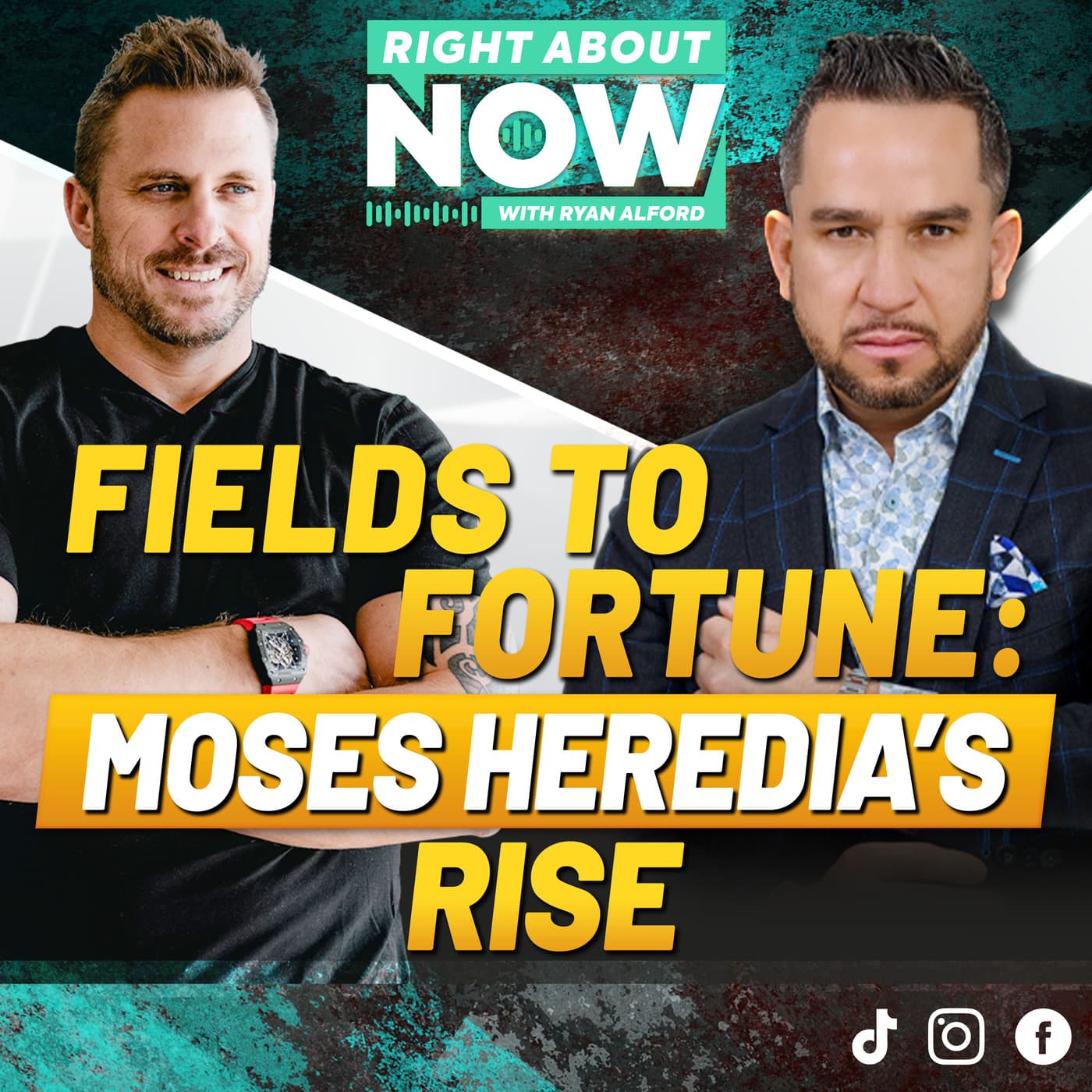
Moses Heredia on Grit, Winning and Servant Leadership
Moses Heredia went from picking cotton to running Global Processing Systems. He talks winning, cutting his own pay in 2008, and what success really means.
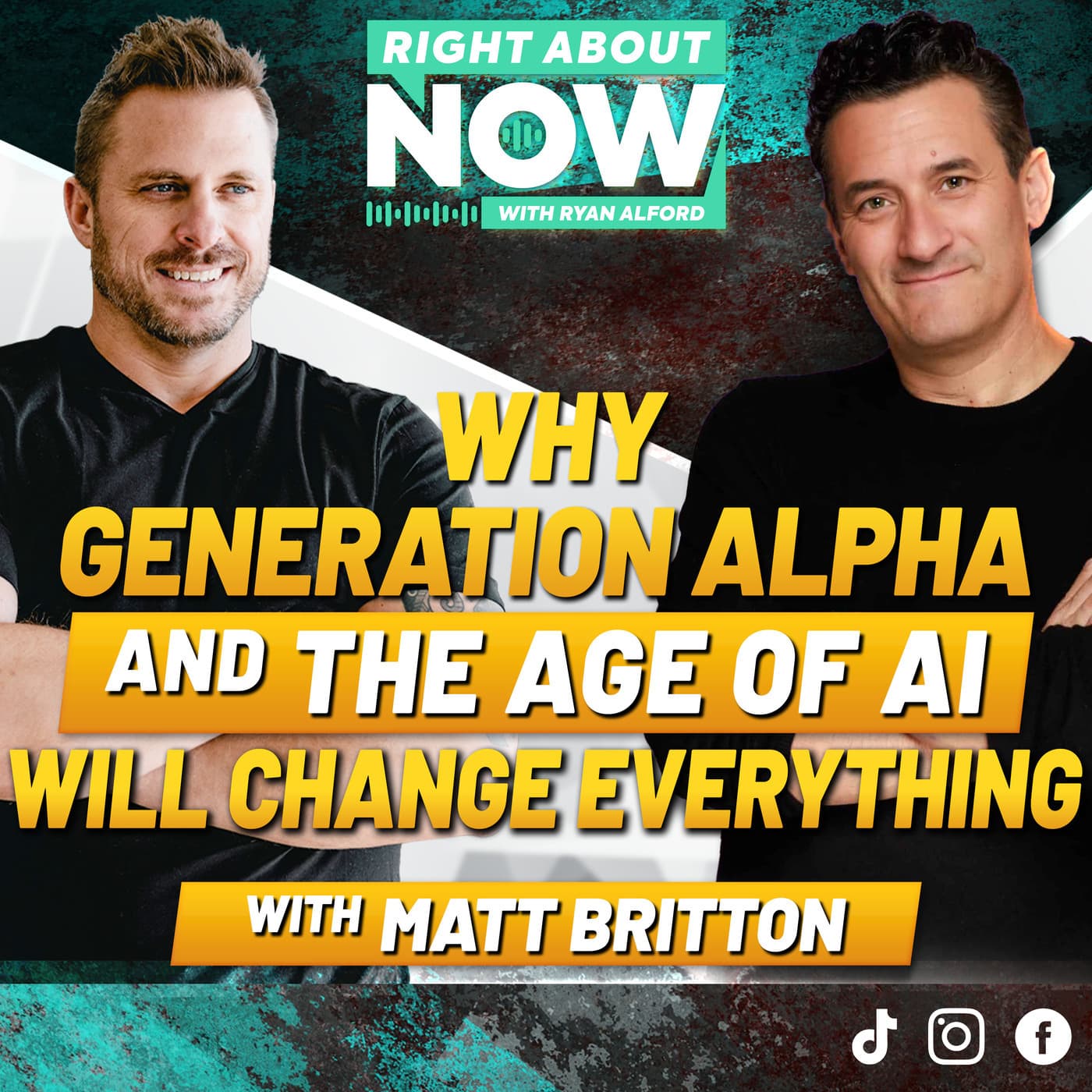
Gen Alpha, AI Agents and the End of Prompt Engineering
Matt Britton, author of Generation AI, joins Ryan Alford on how AI agents, robotics and Gen Alpha will reshape work, education and business speed.
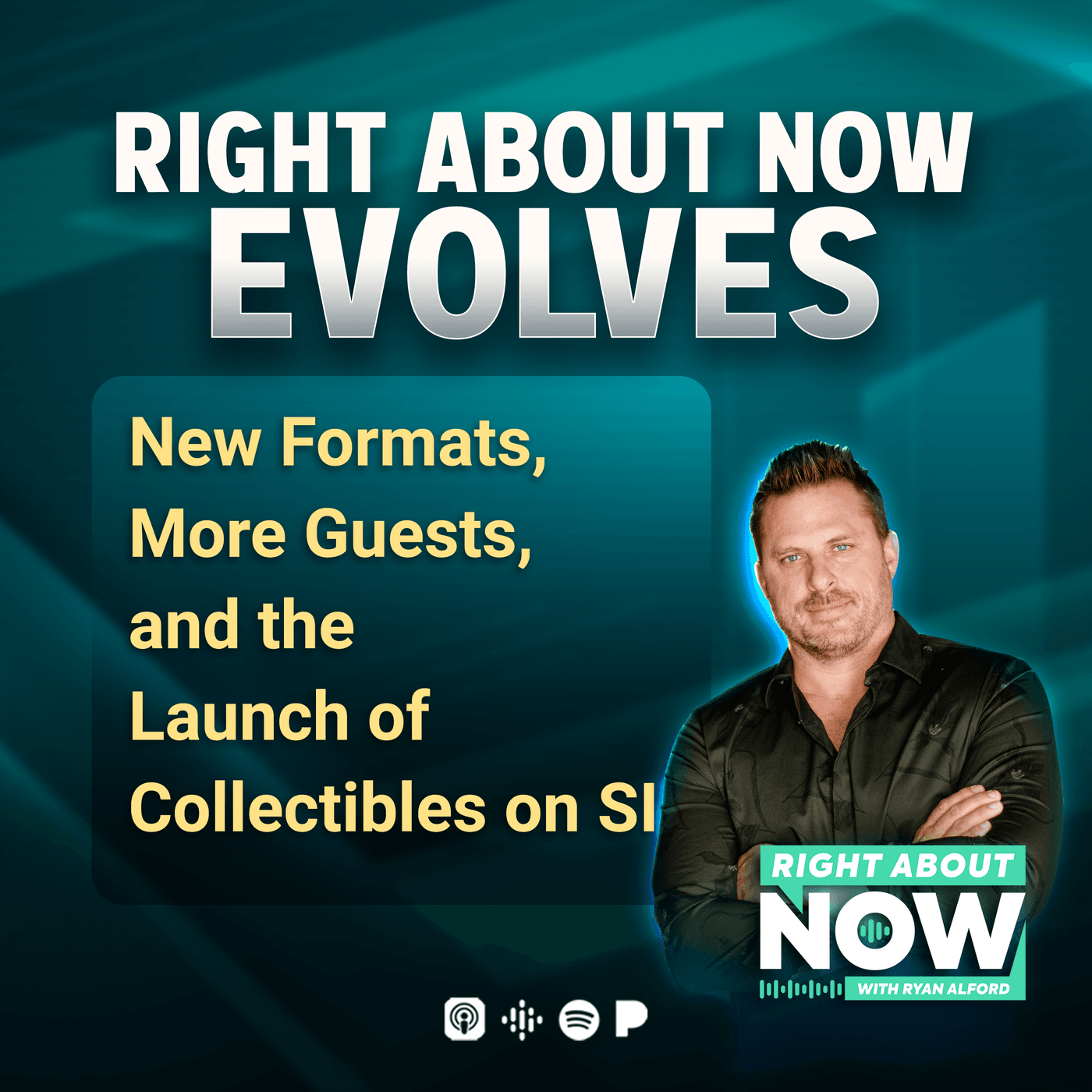
Right About Now Evolves: Collectibles on SI Launches
Ryan Alford announces more guest interviews, the new 'Now in Ten' format, and Collectibles on SI, his new Sports Illustrated show launching August 25th.