
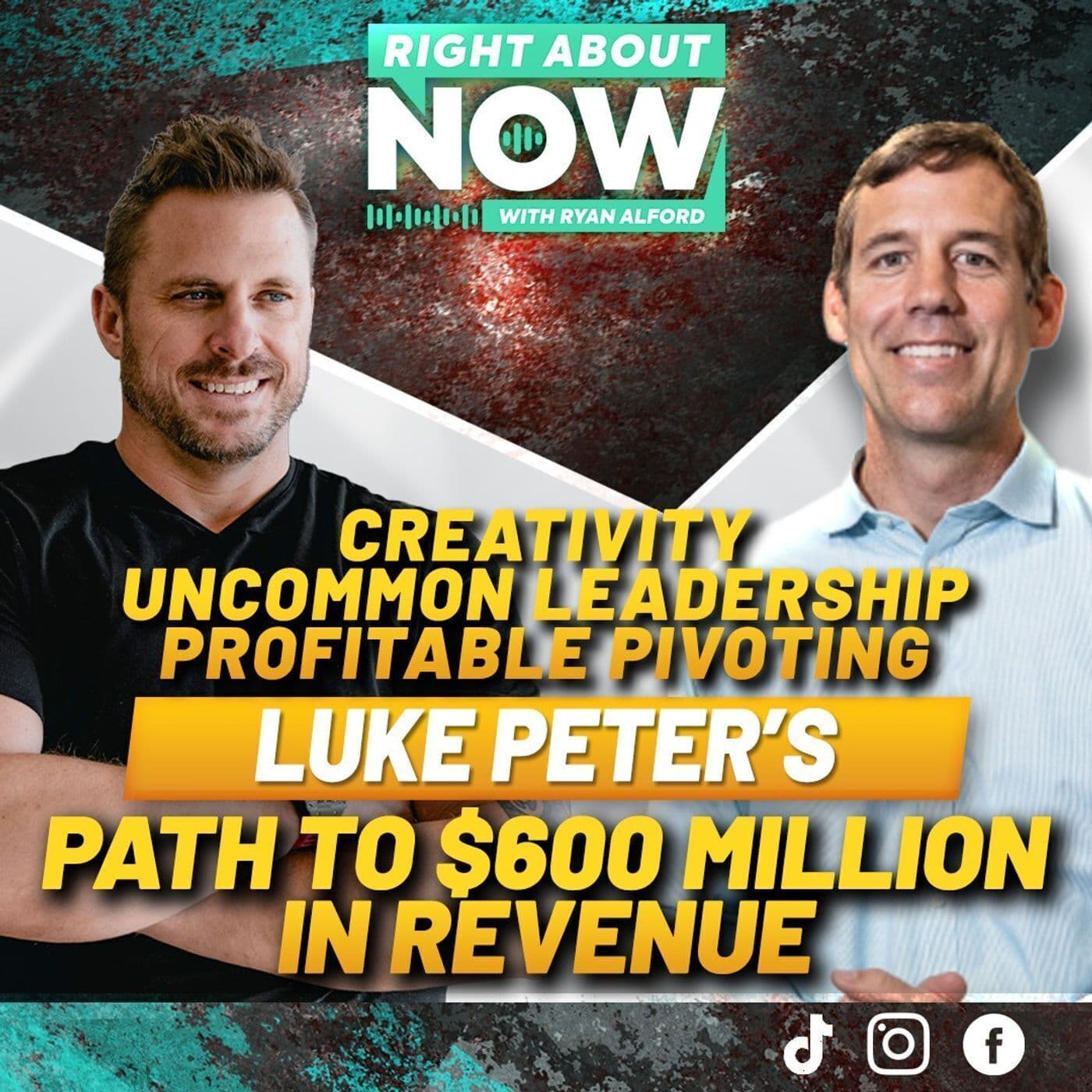
Creativity - Uncommon Leadership - Profitable Pivoting - Luke Peter’s Path to $600 Million in Revenue
Former NewAir CEO Luke Peters on spotting a category in 2001 search data, pivoting from DTC to retail, protecting margins, and hiring people who've done
- Luke found his category in 2001 by reading Yahoo search data showing heavy demand for portable air conditioners, then attacked an HVAC space nobody online was serving well.
- With a one-purchase, non-recurring product, you have to be profitable on sale number one because customers don't come back in six months.
- When Home Depot, Walmart and rising ad costs entered around 2012, NewAir stopped competing on DTC search alone and rebuilt around being the most trusted brand in compact appliances, then sold into big retailers.
- Don't chase revenue and hope scale fixes profitability: if you're not profitable at a couple million dollars in transactions, the market is telling you your brand isn't valuable enough.
- For C-level hires, use an executive recruiter (expect roughly 30%), and prioritize candidates who have already successfully done the exact job rather than those you think have the aptitude.
- Use 'top grading': collect the names of every manager a candidate reported to across all past jobs, ask what each would say about them, then ask the candidate to have those people call you.
- Give strong hires equity and a clear timeline, e.g. 'let's sell in three years and here's what it looks like for you,' because money-motivated people will run through walls.
- NewAir launched products with about 25 micro influencers doing organic unboxings, trading product for content, because that built more trust than paid ads or blogs.
- If you want to exit, start preparing a couple of years early or you'll leave a lot of value on the table.
At the time, Yahoo showed that there was a lot of searches for portable air conditions. That's literally how I got into this business.
before you go build like a 10 or 20 million dollar company, and then try to figure out how to make money, like make money from day one
great people want to work for great companies. They don't want to go work at it, you know, a crap company and think they can turn it around.
This is the story of the one, as head of maintenance at a concert hall, he knows the show must always go on. That's why he works behind the scenes, ensuring every light is working, the HVAC is humming, and his facility shines. With Granger's supplies and solutions for every challenge he faces, plus 24-7 customer support, his venue never misses a beat. Call quitgranger.com or just stop by. Granger, for the ones who get it done.
At the time, Yahoo showed that there was a lot of searches for portable air conditions. That's literally how I got into this business. And just from the beginning, we were just cash flow in it. It was super easy to show up in search. I didn't think there were paid ads at that time, 2001. There may have been, but early on, the paid ads were super cheap. This is right about now with Ryan Alford, a Radcast Network production. We are the number one business show on the planet, with over 1 million downloads a month. Taking the BS out of business for over six years and over 400 episodes. You ready to start snapping necks and cash and checks? Well, it starts right about now. What's up guys? Welcome to Right About Now.
I hope you're doing great wherever you are, whatever you're listening. We appreciate you for making us number one in business and marketing on Apple Podcasts. Today, talking one of my favorite subjects, entrepreneurship, success building, and hey, I like the little mini fridges, baby. You know, you'll know what that means shortly. Let's talk with Luke Peters. What's up, Luke? And I'm stoked to be here. Thanks for having me. Looking forward to it. I know. Hey, I have a surfer too. I heard you. The waves are right here. So yeah, love it. In Huntington Beach, it's a great place to surf out here. It's beautiful. We've had last month's been really nice. Kind of small right now, but the weather's gorgeous. So yeah, blessed. Very lucky. I mean, other than knowing, you know, I'm in South Carolina.
I don't know how you'd necessarily deal with some of the California bullshit. But other than that, it's a beautiful place to live. You got a little bit of the beach, right? Well, believe it or not, we are in like the senest coastal city in California. So very, very, very patriotic city. We have a huge fourth of July parade, American flags everywhere. So we lucked out where we are. But hey, South Carolina is beautiful too. We had a warehouse distribution center out in Spartanburg. So I know the area. I've been out there. Been out to lows, of course, and it's in the area, right? And then Spartanburg, we opened up over there. Yeah, GSP, our airport code, Greenville Spartanburg. It's tiny. It's tiny. We don't even bother with GSP, man.
Just flying to Charlottesville, Charlottesville. Oh, come on. GSP is a model of efficiency. I, I, if I have a six, I used to fly to New York every week. Six a.m. flight. I'd get up at five thirty and be the first one in line on the plane. Oh, yeah, yeah. Tiny airport, tiny airport. It was like flying, you know, private, but commercial until you get into the plane itself. But look, I know your former CEO of New Air. People probably know that they're like, I know that name. You know, like when I first, you first hit my radar. I'm like, New Air. I know that name. Know that name. Then I read a little further. Like, yes, mini fridges. Yeah. Yeah. I remember them. You know, it's like one of the first,
like big names in many fridges. And many also in wine. So we do like just a couple. Yep. It's a wine, the beer, the cigar. So we cover the fun, portable refrigeration categories. Okay. And you put all those together. And it's, it's fun. You know, the employees love it. People love like, like now we've got a whiskey ice maker. That makes the ball ice. You know, so these are the fun categories that people can get behind. Fun refrigeration. I like it. Yeah. You know, we put the fun to business. You know, like, like to let our hair down a little bit on our show. So I like it. You know, you don't naturally go refrigeration and fun necessarily. But hey, the wine coolers, the mini fridges for your coaks.
I mean, beers. I mean, coaks, you know, all that stuff. Always speak back to Chris Farley. He was doing, you know, Tommy boy. He's like, oh, he got a mini fridgin' everything. I can put all my beer. I mean, coke. He's talking to his dad. No, we know we had it. It's part of the culture. Even everybody's responsible. You know, but we had curators in there. We testing those out. We had, we've done different, you know, licensing to partnership deals with different beer brands. And so we'll do cool wraps. It's just, you know, different events that the product will be shown in. So it's, listen, when you show up for work, you got to have fun too. So it's great. You know, we were very fortunate to be in that fun category.
Luke, how'd you make new air so successful? That's a lot. That's a lot of questions. There's a lot of luck and it's a long story. But, you know, you wanted to take you back to the beginning then? Yeah, man. Tell me, let's set the table for the audience. How do we build, you know, a $460, $80 million company in sales? Right. We did $80 million in the last year. Yeah, over the course of, you know, we did well over half a billion total. But then grew up to that size of a company. Yeah. So what happened was, so the beginning's kind of funny. I come from a big family. So I come from a 12 people in my family, okay? 12 siblings. And growing up here in Orange County.
And it was always just, if you want something, you had to go make it by, you know, fight for it, whatever. You had to kind of, you know, make your own way, right? Well, anyways, I wasn't that great of a student, but I did finally graduate college. And I, but I got excited about science. I became a hazardous waste scientist. So I'm working for like a part of the government. And this is after hustling as a kid, right? And it's, it's kind of boring, you know, and all the old guys are like, man, what are you doing here? You're young, you know, come back here to retire. Like you got to get out in the world. Meanwhile, my little brother was selling stuff online, okay?
And at this time, I'm probably, you know, 24 maybe. And he's, you know, I don't know how 18 something like that 19. And he's selling stuff online, making tons of money, driving a sports car. I'm driving a beat up truck, you know, and now we're half into L and my weight, something's wrong. So I just start burning the midnight oil. I see that HVAC is actually an untapped category. Okay, back in the day, it was like, you know, the digital stuff was being sold online. Okay, and I know you're a marketer. So it's like even back then, people are selling RAM, computer stuff. But this is like 2000 and 2001, right? Nobody's selling anything semi-commercial or HIV. Nobody, and the people who are selling it, they sucked.
And so I just learned HVAC or learned SEO and just stumbled on that category because it showed, because at the time, Yahoo showed that there was a lot of searches for portable air conditions. That's literally how I got into this business. And just from the beginning, we were just cash flow in it. The search, it was super easy to show up in search. I didn't even think there were paid ads at that time, 2001. There may have been, but, you know, early on the paid ads were super cheap. And so we just, it was all D to C up until like 2012. And of course, paid ads came in. You had paid ads, you had, you know, all the typical things except social media wasn't that big back then.
And so we just kind of grinded D to C, burning our customer, but we're like a one sale and you're done. Because you don't need, you maybe need a fridge and a nice maker or whatever, but you're not like coming back six months later, right? So it was, you had to be profitable on sale number one. And then what happened was, you know, and this is kind of a big pivot was then all of a sudden, you know, I'm ranking top three for all the big terms. And all of a sudden, I see Home Depot showing up, Walmart showing up, all these guys woke up around 2012. Okay. And they got big freaking marketing departments. I don't, you know, and I'm thinking, okay. And then of course, you know, your, your paid ads start to get more expensive and more competitive.
And I'm like, whoa, this is, this is going to be a problem going forward. You know, as it is today, D to C is challenging, right? And if you're selling a product and you don't have recurring revenue. So what we did is we just totally changed the whole business and focused, put everything into brand, okay? Just everything was focused around newer brand, creating the best brand, the coolest brand, the most trusted, our, our model was the most trusted brand and compact appliance. So we're all after trust, customer service, all of those things. And we sold to those guys, right? So we're still direct to consumer routes, hustle, understand copy, understand messaging, and we're going against guys who are real slow because they're just, they have no idea how to reach the masses.
They just know how to like talk to a buyer. So we were a nice, you know, kind of blend of that. We were actually back, you know, back around 2012, the 2018, we were very unique in that respect. And you know, that's kind of what kick started the growth is selling into these large retailers. Yeah. That 2012 rings true because that's right around. I think when all the, all the big boys woke up, that's when Facebook stopped working organically for the most part, 12, 13, somewhere in there and Google, all the big boys came in. I think they realized where they could get the ad dollars from, you know, versus given the young scrappy guys that rode the train, you know, in, then they let, they knew, oh, I can sell a million dollars a month
and pay per click ads to Home Depot. Yeah. Exactly. Exactly. Yeah. And the big guys don't care. No, they'll spend whether they're profitable or not, you know what I mean? So, yeah, it's, it's a whole new show out of whack. Like it's like, they got to hit a certain number no matter what the expenses, kind of like the government, you know. That's true. That's true. That's a great parallel, actually. Too big a fail. Up until a few years ago, then all of a sudden they got wise because you know, they're getting crushed by Amazon and Walmart so they all had to compete. But yeah, there, there is that grace period in the middle. You know, 20 years, I mean, like as a leader of, of a company and,
and doing the market that you did and having the growth that you had, when you reflect on the both the success and what you learned, are there like, are there like light bulbs that kind of key point or things that come to mind? Yeah, for sure. So we ended up selling in 2001. Okay, that, and for me, you know, personally, that was a big thing, you know, because it's like if you sell, you've created something that is proven value and then private equity is coming in and buying. And then I stayed on for a while and then I was, and then I, and then, you know, I've got a great new CEO running it now. And so I'm able to take time and reflect on it.
And, and I would say that there are definitely a couple of things. Like the first one is when you can afford it, like as a business leader or as a business owner, is getting the best people in and getting some skin in the game for the best people. Okay, and then creating a vision and letting them know what that final outcome looks like. So for example, you know, early on, I probably would have been, I was more tight, you know, because I'm thinking, okay, if I, you know, how much should I share? And then, later on, as I, you know, kind of learned the right way to lead. And there's a lot to it that I learned, but I'm just simplifying it here. It's like, when you get good people and you say, hey, let's sell in three years.
And if, and if we do, this is what it looks like for you, like, they're going to just run through walls. Like, there's a huge, because everybody's motivated by money. Okay, it's like, sure, you want people who are just going to always do the right thing, but I've got to show them that this is what it's going to look like for you. And they're going to work their asses off and get there if there's a big payday for them. And they're going to do things that you could never do on your own. So that was a big one that I learned, you know, as far as like getting the right people. I realize early on, that can be hard, like if companies don't have enough scale,
like they can't hire in, you know, that CFO for 250 or 300, or they can't hire the CEO. But, you know, you can still prioritize getting the best people over saving a few dollars. This is how I would say for most companies. And then just another quick one is just focusing on margins, you know, too many companies are, they're churning revenue, they're churning top line, they're building in lots of expenses into their business system. Okay, and they're saying one day, you know, one day I'll get scale, one day I'm going to get leverage. And that does work for some companies, okay. And especially people who've already done it, they're really smart, and they come at it round two, and they really know how to get to that point.
But for a lot of people that doesn't, it doesn't work. It's like, make, it's like before you go build like a 10 or 20 million dollar company, and then try to figure out how to make money, like make money from day one, because the thing is that can actually, basically what it's telling you is your brand is not valuable enough to the market. Like if you're not profitable when you're a couple million dollars at the transaction level, you know, there's a good chance that as you're 10, 15, 20, you still may not be that profitable, because the market's telling you like, this is all we're going to pay for your brand, you know. And so you want to figure that out early on. What do I need to do with my product or service?
How do I add more value? How do I, you know, stretch these margins? And so that's, that's a huge one, you know, right now you do CEO coaching, and that's a, that's like one of my main focus is like, what are your margins? Okay. What are, how can we get creative and really think about your product and big focus on the product? Talking with Luke Peters, former CEO of New Air, and now executive CEO coach and mentor, call you a mentor. I already feel like you're mentoring me a little bit here, Luke. I'm like taking notes, middle notes while you're doing it. The, Luke, tell me, you would, I want to go back, there's a lot to unpack. There's a lot of good stuff there.
I want to, you know, my, my ears point perked up, like four to five times my rate. My radar is a host, uh, went off a few different times. And this is why, you know, I, I do this because I just take so much from like our guests and how knowledgeable they are. But the finding great people where you feel like you should share equity, give me some attributes that you look for in those people. Like you said, ultimately, like, you got to give them skin again, because everybody's in it. Look, we're all in it for ourselves. They need to be, then they should be, they should be money motivated. That, if they're not, they're probably hard to even motivate period. But what are like the biggest attributes in key, maybe not all chief officer level,
but key component people that you hire. What are the attributes that leaders should look for in those people? Okay. Perfect. Yeah. You know, Ryan, Ryan, that's, this is, first of all, hiring is super hard. I was just talking to a friend yesterday and he's hiring. And I gave him a few ideas, which we can talk about. But it's, it's still super hard. So here's, here's the ways to like, um, if you can afford it, work with an executive recruiter for your sea level positions. Okay. Because a, and I'm not talking about a regular recruiter. And the executive recruiters are super expensive, by the way. They're going to take like 30%. But they're going to do things that you could never do. And they have a network and a pool that they can pull from and they can get people
who are better that you would never be able to attract because they're going to, they're going to soften up their ear a bit and they're going to pull them in, right? Because you're, you want people that might be hard to frankly hire for your company. Okay. Because maybe they have the, the maybe like a younger company, not your company, but I'm saying like the typical company is starting out. It's like they may not have the reputation to pull that type of talent, right? So, yeah. So that's one idea. The other idea is, um, this is something that's a long-term play is like first, you got to make your place a great place to work. So we had, that was one of my main objectives was, um,
when best place to work awards because great people want to work for great companies. They don't want to go work at it, you know, a crap company and think they can turn it around. So you have to, you're selling your business to these great people. So this is a multi-year thing. How do I become best place to work? What do I need to do? What do I have to change in my culture? And so you should always be working on that if you're the leader because getting talent, it's like sports, you know, it's like, you want to track the best players. You know, this isn't just a one-year thing. This is like a journey you're on. So you can pull these best players in. Um, the other thing is that the specific is when you hire,
have they done successfully the job you're asking them to do? So too many times, you know, when we're hiring, you were saying, okay, well, I think they have the aptitude. And now trust me, like, that is, it's okay to think that way. But if you're hiring high level VPC level, whatever it might be, it's like, my number one thing is, have they already done it? I want someone who's already done it because I haven't done it probably. You know, it's like, dude, I'm just putting a team together. I haven't done all these things. I'm not, I'm not able to, I don't have all these connections and know all these buyers. Let's say if I'm hiring a salesperson or if I'm hiring like a, you know, a marketing exec.
Sure, I know my marketing, but, you know, can they, maybe they've got some skills I don't have. And that's what I'm, that's why I'm bringing them in. So I want someone who's already done it. So those are the things, Ryan. And then the other one is just during the interview process references. So the, first of all, it's like very detailed on their track record in their jobs. Super detailed. Put, put an eye mask on. I mean, I'm kidding, but it's like, don't be, be careful that you're tricked on personality and how much you like the person. It's like, what is their track record been? And then do something called top grading, which is a great book. And this is pretty simple. And what it is is go through all the references.
And typically they're going to, well, they're going to give you like their three best references, right? But go through all their jobs. And maybe let's say they've had seven. So you, you say, who did you report to? You get the name of the report. And then later on, you've written down all these names. So at the end, you say, okay, here's three references. But here's four people. They didn't list as a reference, right? Because they just didn't. And you say, okay, you know, you worked, you reported the Jennifer over here. Can you have, what would Jennifer say about you? First of all, you say, what would she say about you? How would she describe you? They won't lie. They didn't know. Now, oh shit, you can call Jennifer.
So they're going to tell the truth of what Jennifer, and then you go through the list. And then you say, okay, great. Can you, and this is, of course, if you would like this person, you want to go to the next step. You say, okay, great. Can you have Jennifer call me and have so-and-so call me? Don't, don't, you're not out there. Like, otherwise, I think you forever to go get in contact with these people, right? So they're going to do the legwork. And you know, you put all this together and your odds are improved. Hey, thorough in this. I mean, at the end of the day, and I've been guilty of this, you know, like never time. Well, there's an old saying, little creative director I worked with said,
he drove me crazy. I was a, you know, young account guy. And I'm like, he's just saying that because he wants more time. But he's like, never time to do it right. Always time to do it over. That's true. And it's like that was hiring, you know? Like, oh, we got to get him in. We got to get him in. And, you know, but it is just takes a subthoroughness with which to vet candidates. And I love, what would you call that last tactic as a name? You said it was a book. Top grading. Top grading. Yeah. I like that. I like that. I like that. Talk with Luke Peters, former CEO of New Air. Luke, you know, my, my, my radar went off on that first little spill on all the success that
you built with New Air and some of the tactics and things that got there. Really interesting. Going, now I'm going to wear the brand, you know, like, you're differentiation. Like, it is amazing sometimes, you know, I've worked with a lot of companies. Good, bad, nugly over the years in marketing and it's real hard to take. You can't make bad companies good. It's really difficult. You can make the good companies great, but it's really difficult to make that. And I do think, you know, there's a lot of truth to be had and a lot of mirror to be looking in, you know, to really determining if your product service or what you do differentiates and stands out and can be made to be again, possible. It seems like there's a lot of people that, you know, do things that a lot of other people
do and they just assume that like, I mean, success will be guaranteed, but it just doesn't happen that way. Yeah. Now, that's why it's important early on. Like, I think it's tough because a lot of times people give up too early. So it is really, really tough to say, you know, if it's not working, you got to tweak this. But I guess you should always be tweaking, but too many people, I would say it's a bigger error is to give up early. So you can't do that, but it's like, at the beginning, you have to be smart and you got to look at your product and, you know, have some way to measure your competitive advantage over, you know, what the market is offering. Yeah.
Like that. Like, think deeper about your competitive advantage and even use things. I mean, there's all kinds of online tools. You can use SurveyMonkey. You can use your friends. You could use LinkedIn. There's ways where you can vet that. But often what happens is as, you know, you're growing your business, you kind of naturally do that. You know what I mean? The good leaders are naturally like, you're probably not even thinking about it, but you're learning. You're like, Oh, okay, I got the sale here. What, what, what copy that I use or what pitch was I using. Oh, okay. This is what they wanted. They wanted this, but they actually wanted this, right? And you're sort of iterating along the way, but if you can do that without making an accidental
like from the beginning, if you could do your basic market research and if this is basic branding, right? So it's like, what is your position in the market? Okay. And can you create some sort of emotional connection? Now not every product, a lot of people think, well, like with us with fridges, how are we going to do that? You know, but you can do it. You can come up with fun ways to create some emotional connection because a brand is a feeling that somebody has about you. That's literally what it is. So how do you make more people feel a certain way about you, you know? And that, I think that would be a good one. I think the guys like, I don't drink a lot, you know, but the company, it's like, you
know, we're having all these beer partnerships and stuff like that and the guys and every year though, you can even do this in a company. It's like, I'm really not, I don't drink whiskey. I'm, you know, I like my IP a little bit, but I don't drink a lot, right? But every year we would, I would joke around and at our party, we'd have a shot of Yeager Meister. Okay. Everybody hated Yeager Meister. Okay. Yeah. I've had flashbacks that you say that. Like, oh, I got your bomb. Yeager bomb. That was like, I don't, it just come out when I was in college like the, you know, mixing Red Bull with Yeager. Like that. Oh, good idea. Yeah. But you haven't forgot it. See? So I would do that at the year end party because it was fun.
It's like, every of you can play, ah, Yeager. Oh, why are these bars and tunes, Yeager? So it's making the fun memory stamps in people's heads. Like that's, that's, you know, what I want people thinking about. Yeah. I think with people think with their head and they buy with their heart. That's what I'm, all time saying to clients, they're like, they get irrational. I'm like, hey, baby. This is, this is all about emotion. You know, emotion moves the power strings, ah, in the wallet, ah, Luke, what was, you know, what was that process like for you guys at New Air? I mean, you know, you're selling fun like you said in a way with what you did. It sounds like you guys found a balance there of the functionality of, hey, the mini fridge,
you need it in this tight space, all that. Like, that's a very functional thing, but you brought the fun in somewhere. Yeah. Well, you know, early on, I didn't. And so that's definitely something I had to learn early on. It was, it was about, ah, winning eyeballs. So it was about dominating SEO, right? It was like, how do I, you know, and that, that's, that's, that's what it was. Of course, it was, it was good delivery. It was being agile, but that, you know, early on we're selling like just portable air conditioners, thermostats, fans, humidifiers, so if you think of those products, like, you know, you're not buying, you know, like an portable AC and you're like, you're probably not taking a picture of it to your friends.
Guys, look what I got, you know, you're not, it's not a shareable product, right? Yeah. Um, I was with my wife, see, I've had a, we have a houseboat and, you know, we've upgraded over the years, but we had a portable AC, you know, I'll send it to my wife. Hey, she's happy. Yeah, you're the one we need, but, but yeah, so, but then I wanted to build the brand. Now we're still selling those things, but then around, I talk about that pivot in 2012. Yeah. So I really want to focus on the brand and that's where we got deep into, into wine, into beer, and even into cigar, even though I don't smoke, it's like my, you know, the guys make fun of me.
They take me to like a cigar house and like, I'm not even, I'm not even sure how to inhale properly, you know, and they're making fun of me, but people love those categories. Okay. It's, they, they want, when they buy one of those, first of all, they search all over YouTube for it. So we, so what we did is we had a cool influencer marketing strategy, right? Because they're like, yeah, okay, and I want to get a cigar here, what do I need to think about? And so they're doing all this research and that's like very top of funnel and we just want to be showing up at different points in the funnel. And it, as far as like AC's, for example, they might search, you know, what size do I need?
They're not going to really watch a 30 minute video on it. They're just going to be like, what are the specs I need to cool my room? The other ones are really deep into content and so it worked good for a, for an influencer marketing campaign. And we were one of the first to do it for appliances. Yeah. I love talking about the phone now. Everybody wants to jump to the bottom. Hey, you can't jump to the bottom. You got to be, so it's got to be aware of you. They got to consider you. They got to have intent for you and then they buy, yeah, that's the true. That's true. We don't want it to be true. I don't, I wish it wasn't true.
It's marketing is sort of, you know, spoil people because, you know, you have the hyper targeting because, you know, maybe somebody's just raised their hand immediately. They're looking for X product and you can close them on one ad, but that's just not the reality for most things. And you got to build that T O P A top or T O M A top of mind awareness. It's hard to do. It is hard. I mean, and for, but for your segment, you know, new air is funny. And you guys did something because, well, again, back to, you know, focus group of one here. I said, I heard that. I knew that. And then when you said the wine for it, that's when it rang. I knew I, that's where I associated you guys, because if I went into a store and I saw
the new air logo, I would know that that better do that my first. So you guys did something that triggered my brain for that over the last 10 years. Yeah. Well, we're fortunate. I mean, we do have in store placements. We're in Home Depot. So we did a little bit of the, you know, the online, you know, the in store, the direct consumer, the, you know, show up on all the retailers. But now everybody's doing that, right? So everybody's like, and, you know, they're doing the quote unquote multi channel. But I think what we were lucky, so not every, it's different for different categories, right? And you know, it's been a marketer, but it's our stuff since it's expensive enough. We can trade it for a video, let's say, okay?
And I know TikTok's hot now, but when I started doing this, it was like 2017, maybe 20, you know, it was early for influencer marketing and we were using the micro influencers, not micro, but, you know, we had criteria, but they were small, and it was always the trade. And, but our system of truth, yes, and I'm a fridge and they're like, okay, cool. You know, we'll do an unboxing and I'll show how it looks. And you just do every time you launch a product, you know, we're like, okay, fine, 25 influencers. And this is what we exactly what we want them to do. Of course, it's got to be organic and there's rules around what you can do and what they have to say.
But yeah, that was, that was, you know, it's funny is that was literally what my marketing was. Like, you know, there's always everything I could do. I could write blogs, I could do PR, we could do lots of paid ads. I'm like, you know what, just do this one because I think it builds the most trust. If you saw someone you follow and they opened up a product, I think you'd kind of like trust that more than if you just see some paid out or something like that. Well, shameless plug here, Luke, but podcast advertising is the number one trusted medium and advertising. There you go. There you go. And the fast. There you go. And we didn't do it. I mean, I'm seeing a spot for my energy drinks, you know, this saying, well, it is because
it's sticky, right? So people who listen, they're coming back into their hearing it and they trust. Like, yeah, that's a, that's a, that's a good one. Hey, Luke, so you've taken all you've learned and now we're teaching others, right? And so how are we helping, how are we coaching CEOs? What are some of the common challenges and things you're working on with them? Yeah, you know, you know what's fun is that everybody's got a different challenge. So it's, it's, I think sometimes, like CEO coaches, I don't know if you want to call the oxy moron, but it's like, it's, it's an overused term in a lot of times, some of these coaches have even literally started their own business. So for me, like, I want to work with a founder CEO.
I can kind of share the same learnings and I know what they feel. And I think I would say I would boil it down to, are they working on the right problem? Believe it or not. Like, that's a big one because, you know, people are in their business. They've, they've gone to a certain level of success probably, but it now, it's hard for them at that at this point to be super creative. Now they just got to keep double down, triple down on what they're act, what they currently are doing. And so I can kind of come in and be like, okay, you know, it could be something they're not thinking about. It could be something obvious, but then I'll just hold them accountable and show them
how to get from point A to point B. That's, that's one. The other one is a lot of, especially now, a lot of clients want to exit their business. Okay, and they want to exit, but they're not ready to exit. Or they, they don't realize, this is like bad news when they hear it, but it's like, it's going to take you a couple of years to get ready to exit, okay? But it's better if you start today, right? Because, you know, if you just go exit, you're going to like lose a lot of value. And so there's a lot of older entrepreneurs. They want to exit. And so that's, that's an area that I end, because you know, I sold my company. And, and there's a lot of people that can help them exit, but it's different when it's
somebody who has done the same thing, sold a business, I'm not a banker, you know, so I talk their language and help them exit. And then the other one is just focus on product positioning and let's think about margin. Other, other times they have people issues. A lot of times you'd be surprised. You know, people don't, they don't have a system they run off of. They don't have, they're not, their, their team is not built around goals and metrics, which is, you know, like one, one client asked me, you know, hey, I need to do employee development. Okay. And so I start working with them. And I'm understanding their company. And I'm like, you know, the best employee development, it's just, let's set up goal, you,
every one of your employees should have a goal. And you, that's super simple, because that makes it clear, why are they literally coming to work? Like if the employee doesn't know why they're coming to work, like they're not coming in, fired up every day. They're like, okay, boss told me to do this. No, you want employee telling boss, like, hey, I think I can achieve this, put a goal around it, let them run with it. And then have one-on-one meetings. Show them you care, listen, schedule the one-on-one meetings. So it was like, you know, it's an easy solution for something like employee development. So there's a lot of different ways, and those are a couple examples. Luke, what's the craziest thing you ever saw at your company?
Like tell us a fun, like, or anything crazy, like, or funny, or something like that. Or just out of the box that people would get a kick out of, you know, running a $20 million company, like shit's got to happen, right? I mean, I'm not simply just for funny, the better here, Luke. Well, I'll tell you, I'll tell you, yeah, I don't know if I can even tell. Okay, something's happening. Some of the things that's the ones we want, Luke. Well, you know, when you have two employees at a Christmas party, get friendly with each other. Yeah, that's the way, that's the way we get awkward at the next day when we show up for work. That never happened, right? I mean, how many employees did you have?
How many employees do you have at that time? Okay, at that time, we probably had 35, there's probably 35 at the Christmas party. That's pretty obvious. That's not a big number. Like, yeah, it's taking a lot of time. Everybody knows everybody at that point and everybody knows what happened that night. And, okay, that was one, I can't, another one, another funny one I can get more into more detail was, you know, I'm in California, right? So this is the land of the stupid lawsuits. Okay, it's like, you open a business here, you're going to get sued. It's like as soon as you hire an employee, you're ready to get a lawsuit, right? So I had this one guy and how he thought he was kind of odd because, you know, he told
me, you know, he's talking about his son and his son is going to, his son is going to MIT. And one time, I was right next to MIT because we were busy in Wayfair and I'm like, hey, there's MIT and let's go visit your son. He's like, no, no, no, he's probably busy. I'm like, dude, you flew all the way out here. You been telling me about your son? Now, let's go visit him. Anyways, he pushed us off and I'm thinking, okay, whatever. So we go on door sales calls. Anyways, down the road, I hear more lies come out of this guy, right? And I'm like, all right, I got to let him go. So I let him go. First off, what he does is he immediately writes me back this thing on how I'm, you know,
I'm aegis because he was like over 50 or something. And I was like, I was like 45 or like the same age, but he's like five years older, right? Yeah. And then I was thinking about how, they write to me this, this really, well, what would me know about how I had been making fake, you know, claims to them, they're all fake. Then he walks out the door and he's yelling everybody, Luke, you know, you set all these things about me. I'm like, this is like I'm literally in the middle of craziness. And then he ends up faking an ER visit in a hospital on the freeway with his wife helping him to say that this caused a heart attack. And of course, it turns into what?
You got to settle these lawsuits. I'm like, wow, this is just, you know, of course, I have insurance, but I was pissed, man. I'm like, I went to the arbitration or to whatever it was arbitration or some, you know, hearing and I'm like, this is complete bullshit, but the judges know it's bullshit. And they all got to just settle and, and, and, and you know, it was actually kind of sad too because it's like, man, that guy just worked here a couple of years. It's like, what's he going to do next time he goes to get a job? It's like, why wouldn't you just, you know, go with honor? I'm never going to talk bad about anybody, you know, behind them. It's like, he really just screwed himself, but at the time, I mean, that was crazy.
It was just like, wow, somebody is such a compulsive liar that they would say these things. It's, it was definitely a giveaway when he didn't want to visit his own son. He's driving by the university. Talk about him coming back. You know, he's kind of, I wonder if it's running through his mind going, oh, God, I've looked at and bring up my son, you know, or if you just, or if you really just caught him, like in the moment, he's like, uh, uh, he's on a, he's on a botanist journey. He's in, uh, he's doing a sabbatical in, uh, yeah, Brazil, uh, and I'm just naive. I'm like optimistic and naive about those things. So for me, it's like, I'm the last one to catch these faults.
You know, it's like that, that's my weakness there. Yeah, um, any success stories or, uh, you know, maybe not naming names, but like with your coaching and stuff, like some transformations or things that you've seen or, you know, things that you're putting in. Yeah, definitely. Well, I'm pretty new. I'm only a couple months into it. So this is, um, it still is a new thing that I'm, you know, because I sold the company, even took some time off and now I'm starting this, but, um, yeah, it's actually really exciting, um, helping people who like one in particular has a vision for a product. And it's a really cool product. But this is early stage and this is something where it's like, you know, it's not really, uh,
I'm not, I'm not even charging the, you know, for this one. Cause it's like, I'm not going to, I've, I've, I've, I've made my keep. I'm, I'm good. So I'm doing this for fun. And it's not really meant for startups because startups don't really have the money to pay for coaching, but in this particular case, I mean, this guy's got a great product idea. So just helping him along, but he doesn't know how to get it to the next level. And also he's like, invested way too much money to get where he is. You know, so it's, for in this case, it's, it's fun because it's holding him accountable. Like, hey, no. Dude, if you, you know, you, you got, he's got a gold mine over here, which is another
business, which is supporting the failing business. And it's like, no, no, no, you got to get this thing to an MVP, minimum, Bible, you got to launch this thing, you got to stop spending money on it and helping them get to that point and even manufacturer here in the USA, which is a, which I think will be a cool differentiator for him. So it's early, but I think this one's got a lot of potential and it's exciting to work with businesses like that to, you know, hopefully get, reap the reward of some success in the future. Luke, other than surfing, what keeps your motor running? Well, I got six kids, so, you know, we're talking about kids, you got four, you got four, you have four boys.
Yep. Oh, yeah. I need deep coaching. I'm coaching. I got a basketball practice tonight, you know. Oh really? Yeah. I don't do, I don't do football because the guys get too crazy in football and then baseball they never really into it. So yeah, I do, do that, hang out with the kids. We're doing a road trip this weekend, we're just going to go up to St. George by Zion, do some hiking. So a lot outdoor stuff. There you go. Luke, for our listeners that want to learn more about what you're doing, how you're helping coaching and all that sort of stuff, where can people keep up with what you're doing? Sure. I've on LinkedIn under Luke Peters, follow me there and then check out apexceo.co.
I do a free coaching call. So if someone's got a business and they just want to, first of ideas at me, just schedule a call on there and we'll have a fun conversation, I can probably help you out, you know, just a short amount of time because some of the bounce ideas off of. So I got the free call offer on the website, apexceo.co. Love that. We'll have that in all the show notes. Luke, you got a great demeanor. I think you're going to really help a lot of people. You have this approachable, like practical side, but then there's like this fun, like brand. I don't know. I really think people will be lucky to work with you. Thank you, man. I really, really appreciate it.
Thanks so much for having me on the show. You know where to find us, Ryan is right.com. You'll find links to all of Luke's stuff, highlight clips, the full episode, and go over there and subscribe on YouTube. We're growing like bang. Luke Busters over there. We've got the largest radcast, the radcast network, the largest podcast network on YouTube. Go check it out and look, we're bringing you value, baby, like Luke, Peter's. We appreciate you, Luke. We appreciate you for listening. We'll see you next time on Ride About Now. This has been right about now with Ryan Alford, a radcast network production. Visit RyanIsRate.com for full audio and video versions of the show or to inquire about sponsorship opportunities. Thanks for listening.
Robin Alex on Replacing Your Business Tech Stack
GoHighLevel co-founder Robin Alex joins Ryan Alford on AI hype, speed to lead, white-labeling for agencies, and scaling a 2,500-person remote company.
Hiring Is a Marketing Problem: Nicole Feenstra
Nicole Feenstra of The DNA Agency tells Ryan Alford why job descriptions fail, how to market the trades, and how geofencing and storytelling win

Jason Brown on Options Trading, Risk and Rebuilding
Jason Brown turned a $10K student loan into six figures, lost $250K on one trade, and rebuilt. He shares his options, risk and wealth roadmap with Ryan