
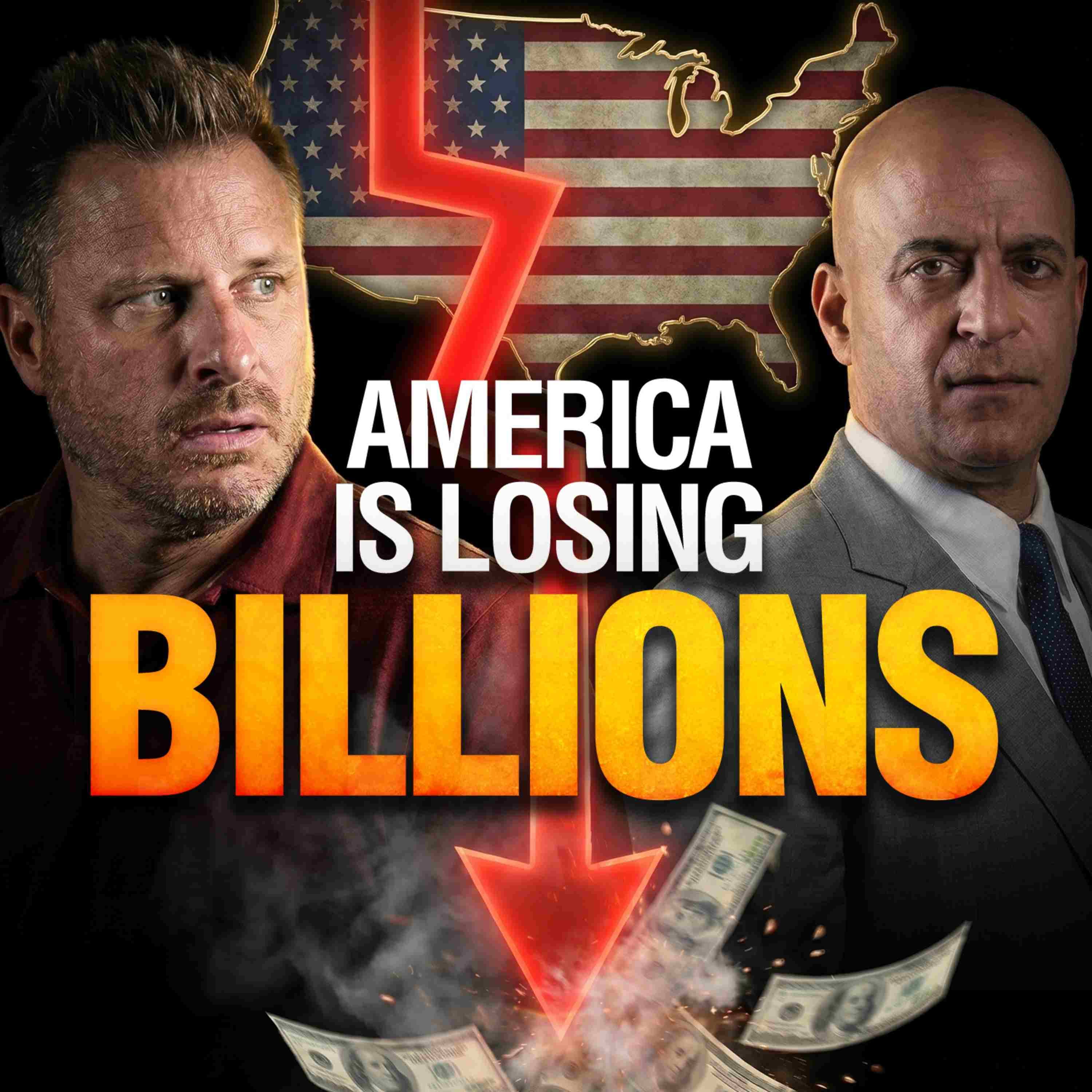
How Unregulated Gambling Is Draining BILLIONS From the U.S. Economy | Ismail Vali
Ismail Vali tells Ryan Alford how illegal online gambling drains billions from U.S. states, why licensed operators are going bust, and what regulation
I'm not looking at regulated gambling as being a source of great news because they are still fighting this battle of we got brought in over the top of what was already a dominant unregulated marketplace. It's not like when they regulated gaming from 2018 onwards in America that stuff wasn't new. It's not like they just were hey how do you fancy some online gaming that would be a really great idea it was already there never three decades. It wasn't anything new that happened and all that we did was graft on top of an existing illegally dominating marketplace some regulated license gaming.
You don't win by following the playbook you win by rewriting it 700 episodes deep with the people who actually built something real. No theory, no fluff, no shortcuts. This is right about now with Ryan Alford. Online gambling has become one of the biggest hidden economies in the world and most people have no idea how much of it's happening outside of legal regulated systems and many people have no idea whose hands it's truly going into. Today I'm sitting down with Ismail Vali president of gaming compliance international and founder of Yieldsack to unpack the scale of unregulated gambling illegal streaming prediction markets and what he calls the gamification of everything. Ismail what's up man. Welcome to the show. Thank you very much for having me. Pleasure to be here. Where are you from originally? I'm from England through recently mixed race parents from different places.
Father's Indian African and my mother was Dutch and born and raised in London in the UK and I've worked on and off in America most of my life. How do you compare England and the US? You don't compare England. I'm leading the witness a bit. I've been a fair amount of time overseas but I always like to know. England to me is the country that has a lot of history. I've been out of the UK for a number of years. It's a country that I think again lots of people complain about it. It's given me great opportunities. I always look to America as the country. I've always called it God's Own Country. This is a beautiful land, beautiful people. You have great opportunities here and an ability to the business and the work I've done in America has always been if you made money for Americans Americans really back to us.
England has a lot more of that class system which can align it sometimes. It can work against itself. I found America as a country where you could get on, make money, make businesses happen here and people didn't question things about race or class or anything else. Just did you do the thing you said you were going to do? I always value it in America. I don't know if it's... Some ways you could say a lack of sophistication over time because we're both of a young country of far as healthcare and other things but the American spirit does sort of push the innovation forward. It absolutely does and again that's something we'll talk about today with gambling is that you have a business for good or bad.
Innovation in America usually means that whenever any business comes to America is crucible of innovation it's completely changes that business and that hasn't really been the case with gambling. It's actually found that legal gambling absolutely is suffering in this marketplace right now. It's kind of not got where it's supposed to after we're now eight years in to legal gambling and it's kind of not at the place it should be. So it's not controlled, it's not contained and it's not compliant by any means. You ready to take a risk? I'm absolutely ready to take a risk. There'll be lots of puns and analysis today as I compare our gambling discussion but it's fascinating here my trading card store and full-term transparency because even this industry is getting screwed now with especially online purchasing called breaks, digital packs, things like that.
I want to get to that but I do want to set the table for our audience. Let's explain exactly what it is that you do and that your business does. Let's frame it that way and then we'll get into some juicy stuff. I'll come at that slightly differently. I'll start out with why you invited me here. We had an article about us in Forbes recently. So Forbes magazine did a piece about a report we published which we refer to as the trillion dollar report. How much is online gambling worth globally each year? Last year online gambling unregulated illegal online gambling was worth five point nine trillion dollars. I put nine trillion dollars to put that in context. It makes that the world's third largest economic flow after the USA and China.
I was doing the math. I'd say top five at least. Exactly. This is a worrying level of illegal gambling dominance of industries that are generally regulated on a state by state and country by country basis all over the world. I came out of 20 years of experience in online gaming. I started my career here in America working for Solomon Smith Barney. I worked as their internet analyst in World Trade Center back in 1997, 1998. I left that job. I went into the gaming industry because I had a written one report which was going to make money on the internet. I took the view that gambling and pornography were going to make money on the internet because people craved. Did you bet on that because I didn't bet on it at the time. Look at the time. I was basically suspended from my role at the bank for a week and then rehired at double my salary because so many people requested this report.
This is in the days before even downloading reports, people being faxed. I took a view on that. 20 years of experience in the gaming industry in operational terms, companies like Paradise Poker, Pokestars, Walking Back, took those to global number one before regulation existed. And then had a moment of pause in my career around 2017-18. I was invited for a job interview in Malta for a company that owned multi-s gaming licenses. But while I was waiting for the interview to go and see this company, a bunch of people got arrested in the office. And I asked the receptionist if my meeting could happen and they were probably not because the guys you were going to see were the guys having just being taken out with bags overheads.
They turned out to be Sicilian and Dranger to Mafia. Now everyone's always known that there's a lot of organized crime interest in the gaming industry. Why does organized crime love gambling? Because they can launder money through it. That's always been the case for as long as there's been gambling. What's been going on recently in the online gaming industry is crime coming to find a home in this industry because they love this business period. It's not just about money laundering, it's about control of audience. Because gambling customer, if you get data on him, you can sell him financial loans, you can sell him mortgages. You can sell him gambling recovery services too. But they're an interesting audience member to target. Crime has been interested in it and that really changed during the pandemic. When sports was canceled, professional sports was canceled in 2021.
What did all those people who were running sports back sites do? Legal and illegal. The legal guys kind of went there and there was nothing we can do. What do we offer the customers? There's no products here. The illegal guys pivoted hard. So they went to illegal streaming and they said we need a product here. We need you to give us content that we can offer people to gamble on. What did up with was children's basketball being streamed and snail racing from Thailand? Can I look this up? I remember. This stuff started to break out the box and then over that pandemic period, crime realized that the audience were willing to bet on anything and they literally would bet on everything. And what you now end up with, what's been in our report, the business that I'm in now around a company called Yilsack which I founded, Yilsack was short for Yilsack security.
We're looking at all of the audience, all their activity from metadata. We have a proprietary scraping technology and we buy data from other people. We're looking for where the audience is and what they're doing, how long for and we estimate an amount of money that they're spending on those things. Our estimates have been proven right year after year on things like the Super Bowl, March Madness, World Cup, European Championship Soccer because what we've said has come true. We're basically very good at the predicting where audiences are in products we monitor and know about gambling streaming cryptocurrencies. We're going to take last year to a company called Gaming Compliance International. Gaming Compliance basically look at the same thing for regulatory clients. So if you're a legal stakeholder in the online gaming business, we help you understand what's out there, what's going on, how much money is being made and making sure that revenue is audited and taxes are paid on it.
The main point I see in the gaming business is this regulated gambling has an ability to provide a commerce community and consumers if it's run correctly. The TTI is the mechanics behind the marketplace. We help our legal stakeholder clients control those marketplaces because if you're not controlled, all that money is effectively being stolen from your marketplace. Now if you look at a marketplace like the United States in 2024, you had an online gambling marketplace that sports betting casino on poker worth just over 90 billion dollars. Last year it was worth 125 billion dollars. Now how much of that money is staying here in America to help local commerce, local companies, your higher people, local community, payment of tax and local consumers being safe and protected, children being excluded for example.
So last year, 2025, 125 billion dollars regulated was 28 billion and unregulated was 97 billion. You're looking at nearly 100 billion dollar a year theft from marketplace in America. On a state-by-state basis, that's all money that's leaving the states, it's all money that's going to fund offshore crime. So this is basically the movement of consumer value extraction being taken away from the United States and given to people who are in criminal industries. I'm digesting. I've got 12 rabbit holes. I want to go down.
Let me start with this. I'm good at dissection and I hear things. Let me boil this down. And the first thing that came to mind was actually another question. Who do you serve? I hear you say that and I go, somebody writes the check. And are we for the consumer? Are we for the company? I get it. Are we looking out for the organized gambling companies so that they make more money in an organized fashion? Are we looking out for people? GCI serves and in my role as president, who do I serve? Regulators are our main clients. Outside of that, there will be other legal stakeholder clients, trade associations, for example. We don't work for operators directly and we obviously don't work consumers either. The point here is get the control that delivers benefit to your local commerce community and consumers.
In terms of looking after the consumer, the consumer would be looked after in a regulator system if so much of the gambling activity wasn't being taken by offshore companies or are completely unregulated and beyond local controls. And if you don't remove the unregulated gambling presence and its availability to consumers, you don't get control of your marketplace, which means losing the money and losing the ability to provide a fair and safe environment for consumers. Right here in South Carolina, you have no legal online gambling in nature. We're forcing people with free will, they get to do this in other places. Exactly. So there is demand and desire out there to ferry potent forces. People are going to find some of that gambling, whether you give it to them or not.
The problem is, who are you giving it to? You're giving it to unregulated offshore gambling firms, taking the money out of America, for not paying their customers even if they do and they win, and abusing those customers and selling their data for lots of other things, like financial loans, mortgage, etc. Because they realize that gambling customers sometimes banks look at that data and go, we don't trust this guy with money because he's willing to throw it away on bets. So basically, we're not going to give him a cheap loan care. So South Carolina basically, let's put this in context. How much is South Carolina worth? 5.5 million people gambling every year. All of that audience activity, so we know. So GCI numbers, 558 million was 2024 number, 708 million dollars is the value of GGR, gross gaming revenue.
The profitability to unregulated gambling firms is nearly three quarters of a billion dollars last year. You're getting on from marketplace, which has produces substantial revenue, substantial potential wealth for local companies, and substantial benefit for American consumers if that environment could be monitored, policed, enforced and optimized effectively. You're forcing people to basically choose what I'm going to find some illegal gambling, some offshore gambling. I'm going to use workaround methods to find that gambling. You're effectively giving the audience a means to criminalize their behavior very quickly, and it also makes them encounter and deal with content that will push them into other forms of criminality too. Some of that's the product of South Carolina still living in 1950, just to cut the Frank, older politicians that have been empowered too long, and belief systems that are grounded in faith and other things and religion, which I support.
But we also hold on to things that aren't necessarily the norms of the country, but they're the norms of what a select few have said should be the standard. But there's always unintended consequences. That's really what we're talking about. It's the unintended consequence of, hey, we don't believe in gambling. It's against the core religion, Christianity here. We're not going to support it, but yet the temper of the nation has changed the acceptability of it, if done responsibly. Again, there's always the outliers, and it forces them into these channels that are unregulated. Any marketplace is just a jurisdiction. So South Carolina has its own marketplace for online gambling. Overall, there are then 50 states of America, the United States online gaming marketplace. We have this problem in every market that comes to us.
So we work for governments and countries globally all over the world. Everybody comes to us and either they take a moral view of this product. You have to divorce it somewhat from the morality here if the audience are doing it anyway. If the activity is out there, it's not policy to simply put your head in the sand and say, we're going to ignore this because we don't like it. We don't believe in it. Regardless of what your view is of this product, the activity is taking place. Warren Buffett recently said, gambling is like a tax on the stupid. So that's what he said. So he's saying that America had the recent Bolshevik conference in earlier this year. He said to investors that basically America's never been in a more gambling mood than right now.
All the gambling activity or the expansion of gambling into other forms and we'll talk about that. He recently said that gambling is nowadays in America, regulated, unregulated and unacknowledged as gambling. So there are three spheres to the gambling that we have right now. Warren Buffett said it's a tax on the stupid. I think you can play that quote slightly differently. What Warren Buffett said is it's a tax on stupid people because you shouldn't be doing this kind of activity. There's a moral aspect to that. But if the economic activity is already taking place, surely it's stupidity if you don't regulate tax and control it, because that money is right now leaving the United States. That money is leaving the United States to the tune of $100 billion in last year.
If you add that up over three decades of the internet, how much are we looking at? You're right. My firm are actually working on it. GCI actually working on that number right now. We're working on give us the seasonality version, the kind of regressive analysis version of this to work out what happened to that money. So from the early days of the internet in 96, then through the poker boom, through 2003 to 2010, then through the expansion into other products with daily fantasy sports and live sports betting, the arrival of firms like draft kings and fangirl. Let's look at this over three decades. You're probably on for around a half a trillion dollars, I think. The figure's not final yet, but I think there is a room there, which is how much has America been stolen from on a national basis, on a state-by-state basis, and then on an individual consumer basis.
This needs to be a regulated tax control model. Otherwise, it's basically your setting up policy as we just want to ignore this thing pretend it doesn't exist. It does exist. Well said, I go to this place, and this is how I even describe we mentioned trading cards and things like that. America's build on, and I think why sport has increased here is because we like to be entertained. We work hard as Americans, we do a lot of things, and responsible entertainment on your own time is the American way. I get to this space a little bit, as long as it's done responsibly, who's to say what kind of entertainment? If you're a responsible gambler, and they do exist, it can lead to the other end, but so can golf, and so can drinking, and so can anything else, it becomes a compulsion.
Yes, there's triggers in gambling, but certainly feed into that. Absolutely. But how we choose to be entertained, and where we do it, for someone to be guiding that, do you want it to be regulated, or do you not want it to be? Do you want it to go overseas? That's really the argument, because it's happening. I could go down the route, it's someone being in media, TV is shit, it sucks, movies suck. So they watch sports, because it's entertaining. It is on the screen behind you, like, and gambling is a form of entertainment. You come to our space here, and rip packs, and we all push the gamble part, we push the have phone with your friends somewhere to hang out, and do it responsibly.
It is a real miss by our people of power within our state, and other places, to, again, when the mindset has shifted, when people are doing these things anyway, who just wash your hands of it, because you don't believe in it, or you think it's stupid, or whatever, is very short-sighted. This is a form of entertainment that we've ignored for three decades, the gambling on this, because the older generation didn't really notice it, until it was legalized in some states, 31 states have legal sports betting in the United States, seven have legal online casino right now. What you've noticed there is when those firms were legalized and regulated, they advertised on TV, they did sponsorships and sports teams, and that's happened across America now. So you're seeing the top of the iceberg there, is what you're seeing. You're noticing that, okay, I see this stuff exists now.
You didn't notice it when it was all unregulated, gambling, did you? You didn't pay any attention to it then. But that was entertainment that was being passed off as the greatest value extraction by crime from American consumers, probably in history. That's what's happened in the last three decades. Everybody else were kind of looking the other way, until Draftkins Found your betting GM started advertising everywhere. And now you're noticing it more because you have polymarket and calcium, who are advertising financial futures products under the regulation of the CFTC in the United States, but it looks smells and feels a lot like it's gambling on anything. That's the problem with prediction market platforms. So you're looking at a mass expansion into these areas of is regulated gambling, lottery, sports betting, casino gambling with a few companies.
And let's just put that in context, regulated gambling in this country, this crucible of commercial innovation at America is regulated online gambling, went from 123 firms three years ago to 90 to 50 last year. Okay. Wow. They're not going out of that number's not getting smaller because of M&A activity and commercial consolidation. That number's getting smaller because they are going bust. There is basically less and less money for them in the regulated space. Then we look at the unregulated sector, just growing like gangbusters at the moment, going through the roof. Unregulated gambling is anybody in that part of the iceberg that you don't see. They have no licensing. They have no legitimate business here in the United States, because they either cannot get a license or they did not bother getting a license. I use the phrase quite openly.
I have some crooks on it. A lot of these firms will also say things like they'll often argue with me bear in mind here. No one ever sued me for saying this. Okay. So lots of firms argue with me when they say, well, we have a license in Curacao. We have a license in Malta. We have a license in Andruan, one of the commercial islands in the Indian Ocean. Yeah. You have a license somewhere where? So why do you have a license in Curacao but not in New Jersey or New York? Why? Why do you have a license in Curacao? And that license, what does it give you rights to do? So you've got a license in one of these offshore jurisdictions. Why? Well, it looks good for consumers. They like to see a license or because that's what's normal in the regulated sector, isn't it?
Why did you get a license in these one of these tropical island destinations? Because they all generally tend to be there. I got a license there because it helps you move money, dirty money. That's what it helps you do. So that's why you got that license because a dodgy bank wants to see that license because then it knows that, okay, well, the revenue is coming. You got a license for the wonderful online gaming business. So that's why those people have those licenses. They didn't get a license in New York or Nevada or New Jersey. Why? Because they weren't going to be given one because they got dirty hands for having been black market operators for decades. So that's where those people came from. To set up an online gaming company, what does it involve?
How much capital need to invest in this thing? About 50 grand will buy your license in one of these places. And then you can get all of the other services, your platform, your accounting software, your payment provision, your games. All of that comes off revenue. So you basically pay people when you make money. But the upfront cost, don't listen 50 grand to set yourself up as an offshore gambling, king being crook of gambling. That's how you get into that business. So it's not exactly a big upfront cost. Now, your listeners, a lot of people are basically want to be CEOs, want to be entrepreneurs. They might be hearing this and thinking about that online gaming business sounds like a great business to be in. If you want to face the rest of your life in jail, yeah, if you want to lose all your money in the future because there is a piece of this which is
you break a law in America. America, I know from the outside having studied law. America always gets his man. You do something wrong to America. America will never forget. America will always come for you. This is one area, the unregulated gambling area where America hasn't shown itself yet in that way. But I believe it will. I want to play the other side of this coin for the consumer side. This is the American way. You're going to hear it. You're going to know what I mean. We should start saying it, but start regulating everything and especially in South Carolina. Nobody wants more laws, more government, more regulation. They're messing with everything. They get involved, get in the way, make it more expensive, make it harder. They don't have to run a business anyway. Sort of the general consumer sentiment a lot of times when they hear regulation.
You've framed it well with money leaving. That's as well as I've heard it and I don't know why I took that long for someone to simply stay like that. Okay, okay, now it makes sense because now people in South Carolina have jobs because they could have had if they had a technology partner here doing it and legalizing something is happening anyway. I think you understand the sentiment that I'm carrying in how a lot of people when they hear that regulation. Let's frame why it's needed and how to maybe turn that sentiment towards not such a negative towards regulation. This is a business that features products with risks. We all know that about gambling. So we don't know that if we choose the number 29 on ruler, that's going to happen or not. Okay, so we all know that we're buying into the unknown there.
We're putting money into the unknown. If it pays out for us, it can be the biggest return you've ever had way better than the stock market way better than a bank account. However, there is room for criminality to be very closely involved with that because of that risk based product. Okay, if you don't have regulation, you will have mass consumer misunderstanding. You'll have mass consumer abuse and the entrance of crime where it dominates the business even more than it already does around the world and in America today. So you need regulation to get rid of the crime. Let's take an example of Vegas. Okay, so there is a what I call a Las Vegas lesson. Vegas was dominated by the mob for decades set up by the mob run by the mob until the late 70s to the point where American consumers were scared to go to Vegas.
They hated the violence, they hated the scams, they hated the crime and they stopped going in droves. When did all that Wall Street money come into Vegas? When did all these big palaces that we now know of modern Vegas? The land-based resort model. Where did that get built? It got built in America in Las Vegas and taken to Atlantic City in New Jersey and then exported around the world in Macau where I was just speaking last week. And all that was led to by American innovation. That came from regulation and an understanding that we wanted to kick some crime out of Nevada. So they got fed up in the late 70s to the point where they went, if we don't control this, we don't have Vegas in 20 years time.
So we need to control what's going on here, get rid of the crime and own our marketplace. So in the brick and mortar world, that was done in Vegas. The last Vegas lesson is own and control your marketplace and put in place processes for the future. Keep crime out, keep consumers safe, keep this business entertaining, keep it focused on that. That's been forgotten about online. We basically thought that we could legalize and regulate everywhere in the world. I'm not blaming anybody for this. The lawmakers came to this too late after decades generally and went, okay, let's get some tax out of that because there's a lot of money. Yeah, online gaming stuff is real. We're behind on that, marijuana. Exactly. Let's get us some of that internet money. Let's go grab some of that.
So everybody came to it late. They put in place fast, quick regulation that sounded like it made sense for what you have to understand with the legal gambling is this. It's not one problem. It's many because crime is not one problem. It's many and it leaves behind many consequences. The point here is unless you can control this properly, you won't, unless you tax and regulate the marketplace effectively. So legalize and regulation, whatever way a jurisdiction wants their marketplace to be, my view, GCI views, will like Burger King to you guys. You can have them marketplace your way, but you need to say what that way is. So if your voters are telling you we want no gambling zero, then monitor police, enforce and optimize so that you have no gambling online.
So then nobody in the state, nobody in the country can reach those services, but you can't be like a government that basically says, Oh, we just want to forget about it. This thing's not our problem to regulate. This is bad people do this immoral activity. It's still economic activity that can provide substantial economic and societal good when you run it right. All that my work and all that GCI's work is control the mechanics of the marketplace for the regulator or treasury or government to be able to achieve the right results in their society. We work a lot in the developing world, right? Okay. So those governments come to us why because they realize that the hundreds of millions, the billions of dollars that come in on the tax that you can legitimately put on top of all that profitability of gambling.
And that doesn't need to be more than 15, 20, 25% of the economic activity of regulated license firms when that money can flow back into your borders into your treasury coffers. That buys a lot of road schools, hospitals and health care. Of course you want that money. Now here in America, we're kind of ignoring that activity is going on out there. And we're saying, well, do we need all this regulation and doesn't add to more bureaucracy? Doesn't need to add to more bureaucracy. But however, that's executed in the marketplace. There can be criticism of it, but you do actually have to execute something first. Just saying that we're not going to do anything about this economic activity is already taking place. That value extraction, if you add it up, the reason me and my phone were working on that number for the last three decades here in America, that number will be frightening.
That number will be scary inducing to the point where people hopefully act and go, we can't keep letting this money leave the American Treasury coffers, leave our state treasury and also harm our consumers in the way it has been for the last three decades. I developed ad campaigns for some of the biggest brands in the world and I'm sitting here and I'm going, you need an ad campaign because we need to fight the stigma of regulation and hate the other side of that rush of what it actually means, the taxes. The thing the dollars are leaving because I don't think people to realize the other side of the coin, especially as it relates to gambling and the other way. They just go, oh, my fees are higher and it's not as easy or it's not as fun or it's a perception and perceptions reality with regulation.
But the framing of what the maybe the unintended consequences and marketing that in the right way. A lot of what we're doing here, hopefully, opening minds and hearts to what that is because even for me, group of South Carolina, I lean towards, oh God, the government's involved again. When things become at a certain scale, you have to have systems, if they have processes, it's the same thing. And so when you maybe start to stop calling it regulation and more calling it organization, I'd say it's policy process practice. That's what it's going to be out to and there shouldn't be the harm for good. Three peace, three peace. They shouldn't be that one. You have a PPP.
You can't have the harm here for consumers. You can't have the harm for children either that's been taking place and also the loss of money. So all that money coming in, yes, we know that this is an industry that features products with risks. Some people are going to get hurt here. You should not have children involved with this product, but how do you police this thing effectively when you have no resources? Those resources can all come if you're taxing people the right way. Now, when all of that value is just being extracted out of America, I have never known a period or an industry in America that was not looked out properly because you're making way too much money and we ain't getting our share.
Now, they're looking at the regulated gambling industry now. Draftkins, Fangirl, etc. Let's ask an interesting question here. Are any of those firms making money profitability? The answer is no. The numbers I've seen say no, but I don't know how there's so much money going in. I think Draftkins and Fangirl have each had one and bet and jam. Each had one called to a profitability in the last two sets because they're not in a sustainable safe marketplace where they can actually go out there and find their consumers. They are spending money in a vacuum against 80% of the marketplace that is run by unregulated gambling right now. And you've got this three ring circus now of regulated, unregulated and unacknowledged gambling, which is diluting the take of regulated gambling companies too.
So if I'm in the prediction market business, in America, I've convinced everyone that we're not really gambling. We are somehow a financial futures product. Everywhere else in the world is looking at this going, it's the biggest form of unregulated gambling there is. So in America, we've called it something. We've got some regulation on it. Our consumer's safe right now. We don't know that yet, but it's early days, but at least it's being looked at. Four regulated gambling, they are the last dog to the bowl in America right now. This is literally an era where I've been looking at the regulated gaming industry in America, sports casino and poker, and saying that it's the silent death that departed, basically. These guys are just silently dying out going from 123 to 90 to 50 firms that regulated the license and operating.
And that number will get less this year, and we're in a year with a World Cup, and we're in a year where there's been a Super Bowl and March Madness. And there's been no cancellations because of pandemics and stuff, but American gaming companies are not making the money they should. Why? Prime is there. Unregulated gambling is there. Now you've got unacknowledged gambling also being there, which is diluting what's coming in. Because consumers have only a finite amount of money to spend on this activity, but they are spending more of it every year. More of their disposal income goes towards gambling on a per capita basis. And not enough of us are looking at this to say you need to be monitoring it so that it can be policed and forced against and optimized correct.
How do we divide these lines, a bucket that's not, that should be, that's not. But what if people and companies that are in that bucket are in the US, are paying taxes? When you move them from one kind of like a tax bracket or anything else, when you go from one place to another, it has consequences. Who's the judge jury and executioner of when that should or shouldn't take place? We can agree. Anyone with half a brain, even those idiots that tax themselves with gambling a lot could hear what we're talking about. Yeah, we don't want going to organize calm. This makes a lot of sense. We don't want money leaving America. It should be here. There's a lot of things that are in this gray area of potential gambling and the regulations that would or could be associated with that.
How does that serve them or Americans for there just to be more governance on our free will on certain things that are in the gray area? Gray area is an overused term. There's a dangerous one. Gambling gray area, there are a lot of operators in the gambling space who say that they are a gray market operator. They have a license somewhere and they sell their gambling everywhere. When I say gray area, I just mean there's differing opinions. Let's have a look at that in terms of a three-tier way of looking at marketplace, regulated gambling. So on its hands and news in America, not making any money and doesn't have a great future. So I'm not looking at regulated gambling as being a source of great news because they are still fighting this battle of.
We got brought in over the top of what was already a dominant, unregulated marketplace. It's not like when they regulated gaming from 2018 onwards in America. That stuff wasn't new. It's not like they just were, hey, how do you fancy some online gaming? That would be a really great idea. It was already there. It's been there for three decades. It wasn't anything new that happened then. All that we did was graft on top of an existing, illegally dominating marketplace, some regulated license gaming. And consumers have flocked to it now and they've seen it. So as regulated gambling grows, illegal gambling is still growing in any marketplace. Now we've got the unacknowledged sphere, which if you ask me where that came from, a lot of people looked at the patchwork quilt of legality in America.
31 states for sports betting after eight years, seven states for legal online casino. Now that's up to lawmakers to decide what they want, isn't it? That's why we're in this kind of weird catch-22 situation where you could have North Carolina all forms of gaming. Some reason we thought we could just throw it all in Las Vegas and Atlantic City, you know. And you will get external internet games. We have not adapted. This is just like everything else. The sum of this conversation is we have not adapted to the technology reality. It's a plus or the tech, yeah. It's a consequence of the internet. You bick with us at a high speed internet, smartphones, and the internet, the web. We are operating because that, that fucking way out of Las Vegas and Atlantic City, 30 years ago.
Took away years ago. And also this was already happening with the telephone because we had telephone back then. Yeah. Why do we have things like betting over state lines and all this kind of stuff? Right. Because all that telegraphic transfer stuff was meant to keep all the money in Vegas and it didn't. And the mob got behind that immediately. So everyone's exploited. The tech, everyone's exploited legal loopholes. The point now is. The politicians are just behind. We're telling you what's going on out there. We're showing you where the marketplace is. You need that awareness to have ability and then action comes from our ability. Right now in America, you're at a point where you need to do something about the regulated space. Because you need to basically say they are dealing with a whole raft of consequences, which nobody saw years ago.
Now we can clearly show you it's a marketplace that's dominated by unregulated operations. They are stealing money from your state, stealing money from your country and abusing your consumers and your children too. There's an audience to an unregulated gambling company. I don't care if you're a self-exploited gambler. I don't care if you're a problem gambler. I don't care if you're a child. I'll take your money as long as you can get me a credit card number. You're good. You're best good here. I may not pay you back, but that's another risk of dealing with unregulated people. The unacknowledged area, so things like what not the growth of trading card platforms, prediction market platforms, even social casinos and sweepstakes casinos, why did they exist? They exist because you have a vacuum in America, because you have a lot of unregulated gambling and this unsatisfaction of the consumer.
I want to have some entertainment on my sports. I want to have betting on my sports. If you can't get it, if you can't get the bet you want at the liability level, I want to win this much from it. You will go somewhere that gives it to you, and the ability of consumers to basically do deals with unregulated gaming companies at the micro betting level, it's not being satisfied. So where is that moving to now? It's moving to really fancy sports. It's moving to social casinos, sweepstakes casinos. It's moving to other forms of things that look very much like gambling, but right now they're not called gambling. And who's losing money out of all of this stuff? American consumers and American taxpayers. Ultimately, who loses here?
And the American states who basically should be getting the benefit of this and aren't. I guess the argument, though, on the gray area, their companies, though, are... I mean, there's a lot of American-based companies in that. And who benefits if it's an American-based whatnot or eBay or insert name here? And I'm not necessarily saying everyone in the every company that my name is definitively only American.
More taxes for them, more regulation for the customer. Who wins then? I'd say this is more about regulating the marketplace is what you should be looking at here. It's not about putting a whole bunch of burden on the firms, a whole bunch of burden on the consumers. You know that this economic activity is taking place, try and bring it under some common sense framework. Look at the money that's coming in from it. Make sure that the companies who are there are rewarded for their economic activity. They should be able to make money and make money quickly for their investors as well. With the consumers, if they take part in an activity that has risk at its heart, they should understand Okay, I could win money, lose money.
If I win, I get paid, if I lose and I keep losing, maybe I have an issue with this and that can be identified early. So that's, therefore, as a consumer safety measure as well. And we're all in an era where no one wants this to become a nanny state, where it's kind of like we want to stop you, prevent you from doing the things that you enjoy. That's the whole point of American culture was basically, it's free will. You guys get to choose how you use or abuse things. At the abuse level, this shouldn't turn into predatory behavior that comes from firms. Regulated or unregulated should not be allowed to do that. So you need effective common sense regulation across the piece here. But it is down to every lawmaker behind the lawmakers are the voters.
It's down to those two groups to determine how do you want your marketplace. It is like Burger King here, but surely nobody wants a marketplace that is dominated by crime, benefiting crime and run by crime. There's always two sides of the coin because there's a reason marijuana is struggling to get to probably where it should be, which is regulated behind the counter 21 and up just like alcohol. Who doesn't want to who's keeping that from happening? Tennessee whiskey. They funnel money into politicians pocket to keep marijuana off the shelf. I don't smoke marijuana, but I'm pro choice and I have common sense of regulation. And I know this is about gaming, but I think the parallel is interesting because there's always someone on the other side financing.
It's hard to get down to the truth sometimes when, oh no, it's a moral decision. We don't want marijuana. We don't want gambling. No, there's usually a check going in somebody's pocket the other direction. Mark Twain said is the prohibition that makes anything valuable. So you've had prohibition in America across a number of things, most notably alcohol. You've had prohibition across gaming for decades as well. That didn't work out too well. So you saw here that basically we had a period in the 1920s on alcohol where it was basically what that led to the TV show Boardwalk Empire. So a bunch of crooks making money out of alcohol. What you're living through now is boardwalkampire.com. Absolutely. So what you got right now is a bunch of people making money out of an imperfect industry.
That's being run badly on the internet. The regulation isn't up to speed with the technology. You have the growth of regulated, unregulated and unacknowledged. Nobody's making money in the regulated sector. The unregulated are growing at scale. And now you've got a whole bunch of people who are trying to bring things in via the back door and call them financial features. Call them financial products. Yeah. Call them whatever you want that they look, smell and feel like gambling. Some of the people don't want this conversation would be. Exactly. So how many times would I make some regulation? Over under on regulation. So where do you've got that going on? And where the prediction marketplaces started from was they were on the financial platforms to make the product more interesting.
They were giving more entertainment to things like, do I want to buy Bitcoin? Do I want to trade in these things? So you got to a point where the financial platforms went, why don't we just let the audience do this? Because this audience generated content then. And that means we don't need to police it or manage it. It can just be done by them. The people can do it. Let the audience do it. But what we ended up with was betting on where the bibrous horizon was going to die next week. Betting on where the Donald Trump is going to be assassinated at another assassination attempt. So you've got the room of crazy, which consumers clearly do love is the problem from the monitoring. And you must clearly do love that.
You've got sanitized regulated versions with polymarket and calcium. But you've also got that unregulated cannibalizing that area already. So they're also looking at that going, which is another revenue stream for us. We'll take everything that prediction market platforms offer. We'll let people have whatever they want on those platforms to. We'll give them the room of crazy. One of the biggest bets in the world two years ago at Christmas was, Will Tupac and Biggie be resurrected along with Jesus Christ on New Year's Day? People were buying that bet, not to bet on it, but just to put it on their social media feeds because their lives aren't that interesting. But that bet was funny. And people liked it in a way that they didn't like other things.
So you're now seeing exactly, you're now seeing a whole room of crazy that's coming into the gaming industry. Prediction market platforms were the harbinger for that. But thereby no means the end of it. Prediction market platforms are going to change consumer behavior with calming platforms period. And our marketplaces may not be up to the right level of regulation and control for what is gambling. What is not gambling? How do I control that gambling? How do I extract the value for my state, my consumers, my community? That's what lawmakers need to be looking at in the future rather than always thinking, well, this gambling thinks something we need to do something about. That horse has already bolstered. What we need to now do is something that gets up to speed with where we are today.
In I.O. Name image likeness for a young athlete. Kyle has been paying kids under the table for years. Exactly. They finally acknowledge, hey, maybe they should get paid. They're making billions of dollars and they still haven't regulated it. That's still the wild, wild West. But it's getting there like everything else slowly. But it needs regulation to get it. It's getting too slowly. And that's the thing is if you look at three decades of American consumer extraction of value. That's what all you've had here is value extraction over three decades. If you are saying that that's going to carry on at the pace the gambling is growing in the United States. Just on the sports casino and poker side of it, $100 billion extracted during 2025.
That's like 15 to 20 percent growth on the previous year. So you're looking now at a marketplace that's got great growth, great potential, and it's completely unregulated, uncontrolled, and uncontributing to American consumers, and uncontributing to American community. You need to bring it under control. What's the road map for all this? How do we start changing heart and minds more broadly? And how do we make it to where it doesn't seem like someone wins and someone loses? Obviously, everything you're saying is super intelligent. Yes, we need to do that. We don't want these dollars leaving America. We don't organize crime coming in here at the back door. But who wins, who loses, and who's the judge jury and executioner of all this? Look at it like this.
We work in developing countries a lot. Why? Those governments want us, need us, absolutely demand our services. Why? We look at the marketplace for them. But we're not Batman. We're not helping them defeat crime. They get to be Batman, put on the masking cape and defeat crime, because they're the ones who are acting on the right data. Finally, so you can be aware, able, and then you can act. Make the best decisions possible. Those governments love us because it's more road schools and hospitals from that money. They can actually do something with that money. The governments who basically are looking at government budget deficits every year. But then they look at the gambling industry and think, oh, God be some good money over there, hasn't there?
Yes, there is. If you run it right. So if your regulated industry is able to make the money it should, from the majority of the audience, now you can tax it at a reasonable rate, 15, 20, 25%, whatever you choose to as lawmakers. Now you get the benefit from it. In America, you need to be looking at this as maybe we made some mistakes on the road to the online gaming marketplace. Every country did. Why did we make mistakes? All of us did because we were all fooled by crime. Into believing, like the devil did, make it the biggest trick the devil of a fool was convincing everyone he didn't exist. That's what the hell is. Exactly. Exactly that one with the online gaming. Everybody was convinced it didn't really exist.
And if it did, it was harmless and who cares about the stuff. Surely you have to use a VPN and all these weird technology things to find it. It's hiding in plain sight. It's there everywhere. Look at American streaming right now. America watching sports. We love that. We want some entertainment. I believe TV great again. I believe it's more like religion in this country sports. Everybody has got their sports team. Everybody is a fanatic about their sports. Michael Rubin will like that comment. Look at sports streaming in America. So we look at sports and the sports broadcast because obviously people who watch sports potentially gamble as well. So we started looking at streaming. We monitor lots of things online. So we're looking at streaming online.
So 84% of illegal streaming is advertised upon by who? By illegal gambling. So you find streaming. You're going to find some illegal gambling. The big problem in this driving illegal streaming is this. If I'm an NFL fan, I want to watch the NFL. It's going to cost me 1600 bucks as a customer on average from preseason through to the Super Bowl. I need seven separate streaming accounts to watch that. What's going to happen? I'm not going to do it. I'm just going to basically go on a legal streaming and find it there. And if you find it on a legal streaming, you will be finding illegal gambling. It's behind 84% of that illegal streaming. It's illegal gambling advertising. So there's a piece here which is there are consequences not just across commerce here.
Not just across the community in the lost tax. Not just across consumers in those home by gambling. You're also looking at killing your sports industry as well. Because if they're not making money out of the streaming. And there is an absolute dark nexus between illegal gambling and illegal streaming. Of course the world now. Yeah. So there's a piece here. That's a really interesting. We could spend two hours on that topic alone of streaming and rights and who's paying the toll of the advertising. Because people don't realize you into this day that their cable bill would be $3,000 a month if there was an advertise. Exactly. That's who, yeah, they don't like that 80 to 120. Nobody does and they think everybody's getting rich. As you saw with BGNLIV, this stuff costs a lot of money.
Exactly. It takes a lot to run the channel. Yeah. You know, the content's got. And then the entertainment content is also just got between rescripts and megaman, redo, superman. All we do is go back to the well and I think people are having a tire of it. So they're looking to other things. They have board sports, more in gambling, more in live shopping on what not. They're taking bets on standard athletes on it. Oh, yeah. So you're supposed to super hear our franchise this to me. It's just basically people basically saying what to say about it and say which money I can make. That's just studios. I'd be interested to know again, back to sort of the American way of thinking and just the reality.
Almost everything that gets purchased is incentivized. The line between gambling and purchasing something out of choice that gets incentivized or motivated. Yes. Another two different things and maybe both are right or wrong or gray or whatever. Okay. You could make the argument of was this gambling if you get something of value. And I'm going to defend trading cards because I own a store. And I'm even going to defend live streaming to a degree done the right way. Yeah. That with digital packs. Yeah, you've got a chance to win something much higher, but you're getting something of value. This isn't a scratch card. So we, you know, digital pack. I don't know how familiar you are with this but yeah, and you pay $30 and you might win something this 300.
But you get a card with value that's a collectible. You get nothing, which 99% of scratch cards get. How do we lump all these things in the same thing? Because there's headwinds. There's winds towards it becoming regulated and or taxed or bucketed somewhere, hopefully more positive than negative. But I could argue if you're getting something of value, everything is incentivized. Rebates otherwise. Where do you fall on how things get designated in this gambling space? You could break it down into, there's a very simple way of looking at this. It's just value uncertainty and risk. Every place we make has risk. Most gambling has a heightened aspect of risk to it. Consumers are looking at this and I think there's a piece here which on our work we published and which Forbes talked about recently.
We said that we're an era where everything has been gamified. Gamification of everything. That happened in my view at scale during the pandemic. So consumers had a lot of idle thumbs and they used them during the pandemic. And they found a bunch of stuff that maybe would never would have considered to be gambling. But we were kind of heading in this direction for decades now. Look at video game lucrates, okay? So I can't get the Star Wars galaxies in a video game in 2012 and 13. You couldn't play as Luke Skywalker or Darth Vader unless you got a Luke Crate. And that Luke Crate was very similar to a slot machine that when it dropped, you had to basically open it. And then most people would be frustrated to find that they couldn't play as Luke Skywalker or Darth Vader.
They could play as a bunch of other people. They didn't want to play as, and they kept buying more and more Luke. It had for some, all the advertising was for Darth Vader. All the advertising was built of that. The whole franchise is, so when you get it, then you realize that as my nephews did, they were like, there's no Darth Vader in this. What do you need to do to be Darth Vader? You need to buy Luke Crate. Okay, so here's my debit card. And you notice the debit card balance got cleared really quickly. So there's a piece of this, which is we've been moving in this way, that there's value there. There's an entertainment piece to it there. Some consumers will treat it, however, like another form of gambling.
But we're in an era when everything has been gamified, everything from our social media platform engagement, right through to different forms of gambling, right through to new financial products with prediction market markets. So everything's been gamified. And you need to start looking at this as we need to be looking at this with gambling regulation as more common sense regulation. It's not just the old casino sports betting focus stuff from the brick and mortar experience. It's now moved into a new area, which is Luke Crate's and video games. It's maybe trading card platforms. It's definitely, in my view, in the future, things like contests between influencers on TikTok. Because the way that people are throwing money at that stuff, I read a story recently in Business Insider,
a lady saying that she spent her life savings in a year on TikTok influencers and going, I'm going to throw you hearts and likes. And then realizing that she got through 25th grand a month. Okay. So is that a form of gambling? She's not getting much value from it. Basically, she's getting a certain amount of increase in her followers. So it's not her account center of love. Exactly. So there's a terrifying piece of this, which is when everything's become gamified, how do you regulate any of it? But I think this needs more common sense regulation. And there's a piece of this, which is the experience that regulators gained in regulating and controlling gambling. Brick and mortar and now online, that experience is invaluable in looking at how consumers interact with products that feature risks.
No one knows that better than gambling regulators. Nobody in the world. I still folk we need like a neutral body. And I don't know how you do that. Every neutral body ends up getting a look. We are independent in neutral because we're just a silent machine behind a marketplace looking at how people are basically finding interacting and engaging with gambling is the most incentivized business in the world, which is why it leads to some of the excesses. Yeah. I just can't reward exactly. But incentivization happens even at the level of I just want to get you interested in clicking on this ad. I'm an influencer attractive looking woman attractive looking guy. I'm offering you something free. I'm offering you new forms. If you do this, I will bring you X, okay?
So there's a whole bunch of incentivization in it right down from how the audience is found, how the audience register accounts, how the audience redeposate, which games they play because they've been incentivized. Most of that is being done through social media now at scale industrial scale. So there's a piece of this, which is incentivization is embedded within the gaming industry economics. Every ad ever made is built to with persuasion and incentivization in mind, slippery slope. There's some common sense dividing that can happen. Up some head is this thing. We got to just be careful that we don't throw the baby out with the bath water sometimes, which is consumer choice. We can all put everything that we've talked about that is clearly in the US's best interest.
Yes. Organized crime out, more money here, more roads, better health care. Where were that money going? Because it's happening anyway. We all agree with this. Yeah. But then there's the, do we change the dynamics of a company or who wins and who loses from those things? Beyond the obvious, because it seems like someone's always incentivized on the other side for the wrong reason. Which is, because if I'm organized, I want an organized out, right? Yeah. And for good reasons, but also to their bottom line, who's wearing the cape and who's wearing the bad guy? Sometimes it's not clear as organized crime mafia. Exactly. I think there needs to be a piece of this, which is you just need to get rid of the crime now.
Yeah. Is the most important and urgent. Let's get ahead. And then there is an absolute area of free market. Economics and then nuance in how you regulate these things. But that's up to regulate is not me. I'm mainly the person behind it. I know what you are now. I'm going to call it, and I use this a lot, but I call it, you're the purveyor of signals. Signals and you remove noise. Yeah. I've done a lot of research for sat and focus groups done, quantitative, qualitative, all of you. I've seen so much data for brands and I love actually dig into it. And I'm seasoned enough to know when there's noise and when there's signals. And I think that's what you guys are doing for these countries and these companies is this is noise, but these are signals.
Yeah. They need to be acted on. Well, it's a very good way to put it because again, I didn't come from a big data background. I hated it. I basically went to it and I've got so much data. I can't make a decision anymore. Yeah. It's a paralysis analysis. I mean, right? That's straight. Oh, okay. I don't know. I need to know what to do next. And you could see in this marketplace that there is a piece of this, which is up to governments and regulators and the electorate decide what you want from your marketplace. If you want no gambling, you can have it your way like Burger King, but you need to decide you have to make a decision. You need enough data to make a decision and that is comes from that signals intelligence that we provide get to a decision.
If that can be profitable for everybody, it can also protect consumers. Wonderful. But those are decisions for you. We are independent and neutral on that side of things. We're not here to tell you how your gambling should be, but we're near here to tell you if you want your marketplace to feature gambling or not feature gambling. This is how you run it. Right. You're a data guy. You're doing signals and not predictions, but you've got enough data and you've probably looked at it and probably on your radar. Where do you see the live selling the digital goods that have high risk, high rewarded center? Where do you see that going? I see that very firmly sitting in the unacknowledged as a form of gambling bubble that we've identified recently.
There are people who treat these products like gambling products, even if they're not intended that way. So there are unintended consequences there. There is definitely a sphere of unacknowledged gambling activity. In some marketplaces, I would put prediction market platforms in there. I would definitely include social casinos, sweepstakes casinos. They may not be telling you they're gambling. And certainly for people who play social casinos, I don't understand what you get out of them, apart from entertainment, because you can't cash out from any of those platforms. Yes. Exactly. To me, it completely turns on its head. The eponomics of gambling. We have more money to play more. You need to just keep putting money into buy chips and you never get to cash anything out. You never even get prizes.
No. You're giving me a cuddly toy, at least, like they do with Pachinko in Japan. I maybe would be more interested. Exactly. So I don't understand that, but there are younger generations who do understand the stuff that they want to play these things. I would say that that sphere of unacknowledged gambling is expanding. That calls for a different kind of regulation going forward. What it doesn't call for in my view is probably this opening up of multiple new regulatory agencies. That's what turns into the overburdening of that space. And the death of commercial ingenuity entrepreneurship. That's what you want to play. That's the fine line, isn't it? Exactly. Sometimes we train, they're turned it out too far. It's a really good, as we start to kind of wind down these topics.
The good place to get, because like the American way is to not overturn that dial so that you don't stop. Exactly. Ideas in ingenuity. There's a lot of things that people, even myself, have considered getting into. That's the all the red tape that's been put up. And I'm not a criminal. I'm not trying to exactly go wild. But if you make it hard enough, we're not going to do it. But there's a piece of this which you can look at the American national marketplace experience of the online gambling. And look at the companies that got in line, Hued up, went through vetting, went through auditing, got their checks done, got their license, paid for their license and started operating. They all thought it was a brand new day and they were going to make money.
And nobody made money from regulated online gaming in America. They still not make you money from it eight years later. At any scale, one quarter here, one quarter there, a profitability. Does not make a profitable thing that investors want to put money in. Unregulated gambling sort of same thing. It just carried on doubling down every single year. So it's basically kept on growing at pace and it's become the greatest value extraction from American consumers. Probably in history. And why aren't more people offended by that bothered by that? Because effectively, that's the money that they stole from you, from your country, your commerce, your states, your communities. And they gave you all that at the same time as basically saying, I'm going to abuse your kids on community too, because we don't care where the money comes from.
It's just one of the money. Who's going to carry that towards? It's been mine for the last six years. I know. Yeah. Glover basis. I'm bothered about this because I feel that sting when someone steals my napkin. Right? Okay. I feel that sting when somebody steals anything from me. So of course, I want everyone to feel that sting and know this is how much they took from you and to bring that to heal, to bring that to stop. You don't necessarily need to go on the biggest FBI mission to go after all these companies that are offshore. I would be out of jurisdiction and very hard to litigate against what you do need to do though. It's allow American commerce to benefit from that. Allow American consumers to be safe within that framework and also make sure that the money stays in this country.
So we're going to get rid of laws that make things illegal that shouldn't be illegal. Bringing morality into this one where you have three decades where I can point to a number. And in the past six years of us, I'm having a platform that could build that with AI and tech and machine learning and expert humans behind it. Where our ability is to really look at that number and go, we know it's the number. We know what legal is. We know what illegal and unregulated gambling is. We can tell you how much your marketplace is worth. And when you're looking at a marketplace that's worth $125 billion last year in America nationally. And you're looking at 78% of that going to crime. It has to end.
We have to make that end. It should be incumbent on all of us. And in my time, I saw something that if I had an ability to change it with my words, do it. To change it with my actions, do it. But I can't just be sat there thinking, I think it's bad. I'm not doing anything about it. That was wrong. The stuff that's in the non-categorized. Unacknowledged. Unacknowledged. There we go. Forward for my reign to say unacknowledged. I like to be acknowledged. You know, I like unacknowledged. Disregulated gambling, want the unacknowledged to be acknowledged and regulated. I think regulated gambling right now is just an omission for survival. Basically? It's reason for being right now is we just want to survive and get to profitability.
They've also had investors, many of whom are Americans, who've invested in them four years, who believed in 2018 that there was going to be an American gambling gold rush. And that American gambling gold rush looks like a busted flush right now. So that doesn't seem like it worked out for anybody. But it did work out for crime. And that's not fair. So there's a piece of this which is the unacknowledged bubble is growing. There are people who are joining that unacknowledged bubble. Draftkins and Fangil declared their hand and already have gone into prediction market platforms. Because if you can't beat them, we may as well join them because they might make money faster than we make it. But there's one thing to bear in mind here for anybody thinking about investing in those things.
Prediction market platforms make money at low, far lower clamping gambling companies too. So a lot less money. So they make money on fees and charges. So they want you to trade up your position all the time. But they're not the house. The house has a ability to make substantial amount of money the same as consumers do in those gambling models. So prediction markets are another thing altogether. So calling them gambling is also misleading in that way. A lot of the activity there is gambling like the outcomes are very gambling different. So there's a piece of this which is they're not going to make the substantial amount of money that gambling platforms do when they run right. And there's a piece of this which is consumers will get bored of this constantly needing to change their trade positions.
Right now we're seeing unprecedented levels of engagement with these platforms. I'm present to the levels of growth, but will consumers tire of I need to constantly trade positions all the time? Has it turned from entertainment into this is more like a job because that's kind of where that activity started, wasn't it? It was meant to be financial futures traders. And if every consumers now doing this, maybe I like it when I'm doing it on the election outcome. Maybe I like it when I'm doing it on sports. Maybe I like it when I'm doing it on what tomorrow's weather in South Carolina is going to be. But how long is this going to last before crime also cannibalizes those platforms and offers the bets. The prediction market platforms won't be able to so states to predict market platforms operating pretty much within punity across most of America right now saying that their financial futures regulated product.
Everyone's gone to them and said we don't like you being around sports. We don't like you being around elections either. We don't like you being around certain things. And there's been some sensitivity and some play with those platforms. It's okay. We'll remove certain things. We didn't know it was there. A lot of the stuff that was conflict betting on the Iran war recently, for example, prediction market platforms like we know is there. Nothing we can do about it. We're going to change it. There's a problem there in that you're going to be looked at to know exactly what's going on at those platforms. And that room of crazy that we showed you was going on with bets like the kind of biggie and two-park resurrection with Jesus.
That kind of stuff might not be on calcium polymarket, but it is on prediction market platforms elsewhere on the internet. So that room of crazy will be leaned into by social media platforms. It's content that shocks it will get clicks. So there's a piece of this which is then consumers will bet on it and they clearly did on that back a couple of years ago. So there's a piece of this which is how do you control that area? The unacknowledged is gambling area is absolutely going to grow the fastest thing that's going to grow in the marketplace. We need to have common sense regulation and a view of this stuff to make sure we're controlling it and getting the benefit from it, commerce, community, and consumers.
As we close out, I think of the argument that I hear. I bet you have some data on this. If we allow gambling, here's the argument for South Carolinians, a lot of older ones. It'll bring violence and crime and you'll tear down the cities because people spend too much. What's the data say about the states or places that have legalized it and what happens to the economy and the people and the roads and the crime levels? Is there data around that? If you legalize it, this will happen. You've already lost $700 million last year. The piece here is a piece of this which is what's going to change. Not right or wrong, that's perception, isn't it? The perception is that this is new. This is not new. It's always been there.
For as long as we've had human behavior on this earth, there has been gambling. Two cavemen sat in the cave going, what fly is going to come off the wall first? That'll left the right one. I'll put your bones on it. So it's always been nature in there. It's in human nature. It's part of human nature. So there's a piece of this which is it's already going on. I'm not one for kind of the excuse legislation which is what it's already going on. It's already going on. We need to do something about it. Just make it legal. No, you decide what you want in your state, in your country, in your marketplace. You decide voters, lawmakers, you decide have it your way. It's always going to be like Burger King the way I see it that way.
Have it your way. But you then need to monitor police, enforce and optimize to ensure that that is the reality. That what we see are missilent machine operating on all that the anonymous audience data behind it and their activity. From that data, make the right decisions with the right processes, policy and practice in place. But what you can't do is do nothing. Doing nothing in my view is acting in a violent way towards your audience and your economic possibilities and your taxation and community possibilities in your marketplace. So doing nothing is not excusable. But it's really data that support the argument that the market will collapse society will collapse. No, I mean, obviously I know that that hasn't happened. Well, let's take one example. Middle Eastern government came to us a few years ago and they said we don't have any gambling with Muslims.
We don't have gambling. It's against our religion. We told them from the monitoring they were 15 million commercial connections to online gambling sites every day. And then they said, okay, can you blame it on the tourists? So we said, no, it's got nothing to do with blaming anybody. Exactly. Whatever you want to say about your marketplace is up to you. You can have it your way. But the main thing you need to do is know what's out there. Make a decision on what's out. That's it. Where can anybody has been listening, learn more about these fascinating topics and everything that you're fighting for or that you're passionate about? They can go to gamingcompliance.com. They can go to my website. It's mylvali.com. It's mylvali.com. And they can look me up on social media and TikTok and Instagram.
I'm very happy to talk to anybody. A lot of people say about me that I turn this thing into my passion. I think it's my cross to bear this one because I had an academic background in law. I spent 20 years in the gaming industry. I have never once regretted any of that time I spent in the gaming industry. I believe that when this business is run right, it has the ability to provide substantial benefit on most community consumers. In my time, having seen that and known it with the right team technology and people behind me, we're trying to do something about it. So we're always happy to talk to people who help make that happen. As you said, we're doing these activities anyway. They need to be done and managed in a way that benefits everyone instead of feeding those that beat upon us.
Exactly. And putting your head in the sand is doing exactly that. Prime shouldn't get to win. Unfairness shouldn't get to win. Scams should not get to win. And nobody should be able to take advantage of American, almost community and consumers with impunity like these people have. I see them as crooks because they may not like that label. But if you're not making your money in legitimate ways and paying taxes on it, you are a thief. I've been fascinating. Husband, thank you very much. I really appreciate your energy for coming on. Thank you very much for having me. Thank you for inviting me. It's been wonderful to be here today. Thank you. You never find me. A lot of bad vis-a-vis vice out there. But that's why we are right about now.
We appreciate Ismail from coming far here. He's passionate about it. He makes a lot of sense. You need to think about these topics as you explore. What it really means when we put our head in the sand versus embracing what is already happening. Right now. We'll see you next time. I'm right about now. Here's the truth. Information doesn't change your life. Execution does. So don't just listen to this episode and move on. Take the idea. Make the call. Launch the thing. Fix the problem. Build what you keep talking about building. For more follow Ryan Ulford on Instagram at Ryan Ulford. And watch or listen to every episode at RyanIsRight.com. This is right about now. Now quit waiting. Go win!
You

Building Predictable Revenue Systems with Josh Troy
Josh Troy on RevOps, AI outbound agents, cold calling, and pipeline reactivation, and how founders build predictable revenue instead of chasing leads.

AP x Swatch: How Luxury Brands Create Demand Now
Tom La Vecchia and Ryan Alford break down the AP x Swatch collab, why exclusivity is now emotional, and how brands seed demand without cutting price.

The Business of NIL with Justin J. Giangrande
NETWORK CEO Justin J. Giangrande on who really controls NIL, what parents of elite athletes must know, and where brands are missing the biggest