
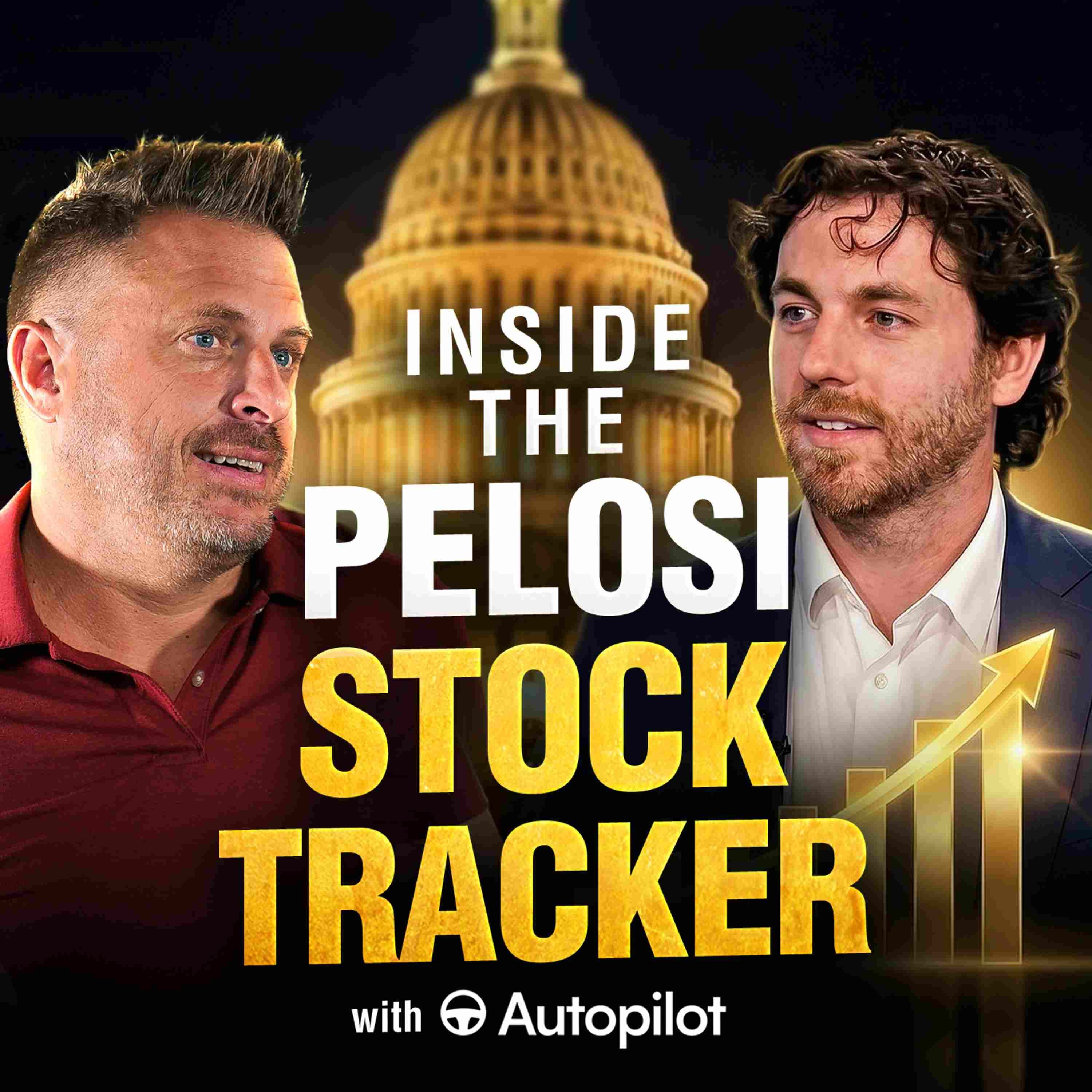
How a Viral Congressional Trading Tracker Became a $1B+ Fintech Business | Autopilot
Autopilot co-founder Chris Josephs on the Pelosi Tracker, copy-trading politicians and hedge funds, 401k fees, and why virality is overrated without a
- Autopilot charges a flat yearly subscription per portfolio followed (about $100 to follow Pelosi's filings, $200 for the Wharton AI PhD strategy) rather than a percentage of assets under management.
- Your money never leaves your own brokerage — you connect an existing Robinhood, Schwab, or Public account, allocate a portion via fractional shares, and trades mirror automatically.
- Since Autopilot began tracking her in 2023, Pelosi's recreated portfolio is up roughly 220-230%, about double the S&P over the same period, and she files trades around holidays and long weekends when the news cycle is quiet.
- The platform holds about $1.7 billion in assets across roughly 50 approved investor portfolios, with a waitlist of around 2,000 more applicants and an SEC registration plus vetting process.
- Portfolio creators earn a revenue cut from subscribers; Chris says a few are making $100,000 a month — he frames stock picking as the missing scalable side hustle for men.
- Retirement plan fees that look tiny (0.15% rising to 0.25%) compound into hundreds of thousands of dollars over 30 years for services that just place you in the same Vanguard ETFs.
- Chris's advice to founders: reverse-engineer the product so the content naturally leads back to it — a Fetterman Micron post ends with 'you can invest alongside him on Autopilot.'
- Deliberately not selling out the tracker accounts to clickbait preserved credibility with politicians and the press, which Chris says earns a seat at the table on trading-ban legislation.
So the virality is not the input. The virality is the end product doing the time, research and effort to craft up good quality content that leads to viral stuff.
I know more about politicians' stock trades than probably anyone in the world. which is embarrassing.
What was funny was we didn't expect there to be alpha. It turns out there was alpha there the entire time.
We're not going viral just to get views. We are writing up these tweets saying, trying to make people money, trying to call out the corruption, trying to get change through. So the virality is not the input. The virality is the end product doing the time, research and effort to craft up good quality content that leads to viral stuff.
You don't win by following the playbook. You win by rewriting it. 700 episodes deep with the people who actually built something real. No theory, no fluff, no shortcuts. This is Right About Now with Ryan Alford. What's up, guys? Welcome to Right About Now. Hey, it's not about what used to be, what has been. It's about what is right now. What started with the Pelosi stock tracker turned into something much bigger. Chris Joseph with Autopilot designed a platform that helps everyday investors follow proven portfolios instead of guessing on their own. He helped expose the trades everybody was talking about and suspicious about and then turn that insight into a real business. Chris, welcome to Right About Now. What's up, Chris? How are we doing, Ryan? I'm good, brother. It's good to have you. It's been fun reading about your journey. There'll be some topics that are familiar to our audience, but we're going to get underneath it. I haven't really done too many longer form podcasts. We usually do the 10 to 15 second news segments. So it's always fun to be able to go into the broader details, explain kind of how we do it, why we did it. So I'm excited for it.
You kind of surfaced what I always questioned myself when all that went down. I was just like, these people are privy to so much information. They represent us and they do this. There's got to be insider knowledge there. I feel like you surfaced what everybody is thinking. Click it all kind of partly started aside from autopilot. We pretty much just started speaking stuff that... was happening right before our very eyes, just no one was calling it out. It originally went viral back in 2021, 2022, because a lot of people didn't necessarily know that they were allowed to do it. When I started, I didn't know that politicians were allowed to trade individual stocks. I thought they were held to the same standards that a banker in New York would be, where they can't trade individual stocks, but they can own broader ETFs.
When I found out that the politicians were allowed to trade individual stocks, I'm like, well, that's kind of interesting. It's probably a little bit hypocritical, but I'm sure they're not doing anything kind of too crazy. Contrary to belief, of course, I wasn't thinking too deep into it. They obviously were using their insider knowledge, whatever committees they sit on to start making some trades. And looking back, it's pretty understandable or not necessarily understandable. It's pretty obvious why they were doing it. Give them a foot, they'll take a yard. That's what they were doing for the past 10 to 12 years since the Stock Act started back in 2012. We've been calling them out. We've seen some egregious trades. They're getting a little bit better now. They still are allowed to trade. They still are allowed to do it right before our very eyes. And our goal is to keep calling them out until a ban actually does happen.
I've always wondered, why would anybody want to get into politics? Or why do they want to keep these jobs so much? Maybe we've uncovered it. Another piece to the whole thing too, is there are two or three things that all Americans can agree on in this polarizing time. One is the stock trading. They all just want them banned from stock trading. 90% of Americans want that. And then two is term limits. A lot of people are like, how can a politician be a term, be a politician for 40 years? 40 years is insane. They're career long politicians. It shouldn't be like that. I don't think anything will happen, but at least people are calling it out more than they were five, 10 years ago. How's that going since that moment? How crazy was all that, all the publicity around it, everything that went down?
It's kind of been incredible, a little bit frustrating, incredible in the sense of how big it's actually gotten. The history of it was we started it back in 2020 and it actually started in 2021. It actually started on TikTok where TikTok was the first kind of viral moment. We saw Nancy Pelosi making trades and we wanted to essentially build a way to get notified of her next stock trade. We could copy it. Why would we not? Why am I trading my own stocks? I could just do what she does. I got behind the camera on TikTok, started talking about it. And the next thing you know, that video went viral. NPR reached out. Fox News reached out. There's some validation to this, not only on the viral fun side, the meme-y side, the way that we described it, but also on the actual alpha side. Maybe there is actual alpha in following the politician's stock trades.
Fast forward to 2022. That was when we started the Pelosi tracker on Twitter. And then we transitioned it over to Instagram. Funny enough, the Instagram account actually got banned. Zuckerberg and then they cut it right early. And it's a bummer because Joe Rogan was following that one. Was it because they felt like it was like you were showing personal information or someone else? I think what they were doing was they were saying we were probably using her name. Likeness, her likeness. Yeah, her likeness. On Twitter, you're allowed to do it, especially after Elon bought Twitter. On Instagram, it was always a shady one. So what we did, though, was... And this is kind of like a little bit of our founder story. We recreated the Pelosi tracker on Instagram, but called it the politician trade tracker. And what we would do is we would use one piece of content and we would call out the politician on Twitter...
on X, take a screenshot, make a little nice cover, and then post that same piece of content on Instagram. Funny enough, the Instagram account actually gets more views and more impressions, more engagement than the Twitter account. But the Twitter account is the original, insane, life-changing trajectory. And it's been fun. I go to the bars in New York. I chat with friends. Everyone's always like, oh my gosh, you're part of the team behind the Pelosi tracker. Yeah, I've been doing this for years. I know more about politicians' stock trades than probably anyone in the world. which is embarrassing.
Is she still winning? Yeah, she's still making trades. Since we started tracking her back in 2023 was the day that we first started with the actual autopilot portfolio. The autopilot portfolio is the recreation of her public filings. Since we've started tracking her, she's up around 220%, 230%, while the spy in that same time period is half that. She's beating the spy by over 100%, and I can confirm that after this. She's been continuing to kill it. The majority of the stocks that she picks are all in the green. She's bought CrowdStrike. She's up. She's bought Tesla. She's up. She's bought Apple, Google, Microsoft. All the stocks that she's been buying, she is continuing to crush it with. What was funny was we didn't expect there to be alpha. It turns out there was alpha there the entire time.
That's crazy, man. I heard a lot of winners in there. A lot have put it on, but it's more, I mean, CrowdStrike might be a little bit of an outlier of the names I heard. But if he's not buying speculative stuff that ends up, has there been many speculative buys? There's been a couple. Yeah. Taking a step back, one thing that we did do with the Pelosi stock tracker that was a smart idea for what we did was we did not sell out the account. where it's like, we didn't necessarily do this, even though it's kind of run by our company. We didn't do it necessarily to get headlines, to get clicks, to say, oh my God, she's inside a trade. We wanted to take an investigative journalist approach to it. And to be fair to her, the majority of the trades that she has been making have not really been that speculative. There are some, and there are many that are ill-timed. The timing of them are good. But the speculative, she's not buying microcap or penny stocks.
The most speculative stock that she did do, though, she still is crushing it with. And that was a company called Tempest. She bought that in early 2024. Tempest is a small AI healthcare company. Since she bought that stock right after, the stock flew like 130%, 120%. And that was the smallest company I've ever seen her buy. The stock has come back down since, but she's still up around 80% to 90% since her buy on January 14th. She's not doing the most egregious stuff out of all the politicians, in my opinion, but she is still one of the best. The trades that she makes, she does time them well. She holds them to the right amount of time. At the end of the day, that is what matters. It's still like if she's outperforming the stock market, then we should find a way to get in on it with her. At 234%, she's beaten some of the best traders in the world, I would say at that number, if that's holding. And I don't know how active she is. She's doing trades every week or every month.
She trades, well, her filings come out probably three or four times a year. What's funny and a little bit frustrating about Nancy Pelosi's portfolio, though, is she files the trades around moments in the calendar that she can bury the story. She files them at the beginning of the year in February, right around New Year's. She files them around July 4th. We're going to see if she's going to do one in two weeks. She files them around Thanksgiving. She always files them right before long weekends and things of that nature. All in all, I think she averages around probably 87 different sets of trades a year. They're not too egregious. They're not the crazy ones that we've been following with some of these other politicians. They just are very profitable.
Talking with Chris Joseph, he's the co-founder of Autopilot. How do you guys make money? Autopilot, we are here to try and build out this new way for retail investors to invest. The best analogy is if I were to give you $100,000 now, and I would say, what would you do with it? You would only have three options. You would have to put it in a passive ETF, which isn't bad, but people want individual stocks. You'd have to give it to a random financial advisor. He's going to charge you 2% AUM fees just to put it in an ETF. Or you're stuck having to invest it on your own, which is essentially guessing. The majority of people are guessing. Autopilot is the first platform, which is this fourth alternative that allows you to go find an investor on our marketplace.
verify them based on their track record, their thesis and their background, and then just have your money just follow them. And the way that we make money is we charge a yearly subscription. If you wanna go and follow Nancy Pelosi's stock trades, for example, you can go on, connect your Robinhood account, allocate some money, and then you pay $100 to automate your portfolio with Pelosi. We have an AI PhD from Morton. You can go and follow his stock trades and you'd pay $200. It is just a simple subscription fee that is per year. And that is how we make money. And that's how you get the value from the product. Do we have any big players, Hathaway or whatever, following any of the founders or the main guys? We have their 13Fs. Per the SEC, the SEC forces hedge funds to file their trades once a quarter. They're called 13F filings.
And we have all of those guys. We have Michael Burry. We have Warren Buffett. We got the new Leopold Ashton Brenner. He's been absolutely crushing it in the AI companies. But we don't have any bigger, we don't have a personal Bill Ackman on the platform yet. What we do have, though, is what we believe is the next generation, this new kind of world of Bill Ackman's. Our thesis, our thought is there are really good investors out there on Main Street. Maybe they're in Iowa. Maybe they're in Idaho. I don't know. They're on the internet, though. And they're sharing their stock picks left and right. They just never had the connections or the ability to launch their own personal hedge fund or prove that they're actually that good in a way that the masses can find out and catch on. What they're doing is they're going and applying to launch their own personal strategies on autopilot.
where they can prove their track record, prove their thesis, and then people can go in and invest alongside them. We don't have any Warren Buffetts yet, but our belief is we have the early innings of some guys could become the next Warren Buffett. And our goal is to continue finding those and showcasing them. There's so many people that want to invest better, smarter. No knock. I mean, I have friends that are financial planners and all that. So no knock on these guys that are professional and they've earned their credentials. level. This just seems very practical, but smartly applied. The idea of the black box is exactly it. There's just no transparency, nothing against financial advisors. They have a very specific role in the everyday life of their clients, but for the specific stock picking side of the investing side, they're
There's no track record to know if these people are good. And also you don't know how much they actually care about your kind of personal investments. We believe transparency always, if you're moving more towards more transparency, whether right or wrong, it's the right direction to go. More transparency into the government means calling out their stock trades more. More transparency into the financial ecosystem means calling out or at least shedding light on how money management works. More transparency into the companies saying, hey, you know, what is actually going on. More transparency, honestly, into the finance influencer ecosystem. These guys are selling courses. They're selling their own personal stock picks. They could be photoshopping the whole thing. You don't know. More transparency is the solution to this stuff, especially with people's money. That's why we're bullish with the direction that we're going and also why a lot of people use the product. The average age of paying client of an autopilot customer is 38 years old. They're not going to be able to do that.
not 22-year-old kids with YOLO money. They're dads with a son and a daughter, and he doesn't want to pick his own stocks or do the research. So now he's going to all Autopilot as the alternative, and it's making his life better, making his life easier. That versus a financial advisor. That is the right direction to go. We'll see how big it can get, but that is the steps that we're going and what we are focused on at Autopilot. Everybody from just coming and going and sorting by who's been the hottest, most successful the last year and everybody just using that exact track. It's diversity of the different people. We have around $1.7 billion of assets invested throughout the platform. You got Nancy Pelosi's portfolio. You got hedge funds portfolios. You got AI strategies.
The thing that we've seen in the data is performance does play a part. Absolutely. People are following the guys and girls that have had a great track record, but it also is the thesis and the ecosystem behind the stock picks. For example, we have an AI PhD from Wharton. He graduated. He's a professor of finance now at the University of Florida. He won the papers by BlackRock for writing how to use AI to pick stocks the best. His expertise is much better than you or I probably at AI. He knows how to program the different language learning models to create portfolios and baskets of stocks that AI is picking stocks for him. He's taking his expertise and his skill set and listening to those strategies on autopilot. And then now people can go in and they can invest alongside him. People in the AI world follow that guy.
Another example is we have a guy named Brooker Belcourt. He is an ex Citadel trader, an ex-co-to trader. He's worked in the hedge fund industry for years. He learned things while working there of how do we think about the larger macro companies? And one of his thesis is you don't buy the second or third best companies, you just buy the best. So you buy Uber instead of Lyft. You buy McDonald's instead of Burger King, things like that. And he is very popular with people that like the expertise and people that come from the hedge fund world. So it's not necessarily people coming in and autopiloting just the top portfolio. It is more finding the sort of strategy and the thesis, the conviction that that resonates with that individual. And then they are following that guy's stock picks. That's how it works. Have we gotten to the point where AI is smart enough that if you give it like a thousand bucks and you set it up for day trading and just let it go, is it going to make money?
I don't think it's gotten to that point. The AI, the day trading is always hard. There is an actual argument to be said though, of can AI do two things well? One, can it do research more than any other individual? We can do more research than the average person, the average retail investor. Maybe not as much as a hedge fund guy, but it does do research extremely well. The other thing that it does that is an underestimated variable, it has no emotion. Even if the stock markets are going up and down, it's not gonna panic and sell in the bottom. It's not gonna buy the top. It has no emotions. So it's going to stick to its principles, which I believe is a advantage of AI versus the human. I wouldn't say that they're necessarily smart enough to out day trade a trader, but I would say that they have two kind of unique variables that is a reasonable.
element is a reasonable way that they could outperform the average everyday person. And that, again, I think is why they've been so popular. That Chachupiti portfolio, for example, is outperforming the S&P 500. There's proof in the pudding, essentially, on the app. You can go look at it all yourself. Yeah. I love the transparency, the comparison coaches and stuff, all the ninjas and coaching gurus that have known nothing. They know who they are.
You can sell whatever you want. You can give away the courses. You can do all that shit. But just be transparent about the real results that have come from your own skin in the game using these same tactics. People aren't dumb to this stuff anymore. Maybe, you know, during the COVID era of investing, people would trust anything they see on the Internet. Trust is at all time low now because AI is behind half of these people and half of these things. The Polymarket and CalShi, these prediction markets, yes, I think they're sports betting. They have done a good in the sense of they brought a way to verify truth. And I think that is needed in the investing ecosystem. There needs to be a way to verify that these investors are actually good at what they're doing or else they're just good at creating content on TikTok. It brings value to the everyday person because now they don't have to kind of think and think twice about, oh my God, is this guy actually good? Does he have his best intentions for me? Now I can just go on and verify if he's actually good.
And again, this goes back to the thesis. If any entrepreneurs watching out there, I think there's a massive value add of just going towards building your brand to seek the truth of it. Just more accountability, more transparency, more validation. Because the more AI floods the world, the more distrust is going to happen in the world. And if you're directed towards at least trying to find the truth, I believe you'll win in that future world. Well said. Chris, when you say investor marketplace, I want to get real specific start to finish process on autopilot and what that means for someone. What's the minimum investment? How much time? Is this playing like the 401k? Set it and forget it, baby. Or is this, hey, how can I make some money over a three month period? How can I turn $100 into 170? A couple of different questions there, but I think you get the premise.
The thesis, the core thesis, the core principle is, I believe in two to three years, it's going to be stupid for everyday individuals to be buying their own stocks. They're guessing, they're reading a CNBC headline, they're reading about a stock from a friend. They don't actually are doing the research. Autopilot via the marketplace is the first platform where you can go to actually not have to deal with the guessing and the second guessing and all that. Now, the way that the marketplace actually works is it's two sided ecosystem. On the client side, someone like you or I, I can go on and the same way I go to Airbnb and I can look at different houses. I can go on to autopilot and look at different investors broken down by the reasons behind their trades, the conviction of who they are and their actual performance.
If I wanted to autopilot one of those guys, another really unique thing about this that I think the audience would appreciate is you don't have to actually open a brokerage account with us and you don't have to transfer us any money. You literally just go on and connect your Robinhood, you connect your Schwab, you connect your public account. you allocate money. If the trader you like, the investor that you picked, you don't want to stick with them anymore. You don't have to try and get your money back with them. You just go onto the app, sell out. And then since all the money is with your public or your Robin or your Schwab account, it'll sell out automatically. The money never leaves the comfort of your own account. And it works automatically. If the person you're following or autopiloting makes a stock trade, they buy or sell something, you buy or sell it as well.
One kind of final point on how all this works on the client side is it's all based on fractional shares for the most part. So if I have a $100,000 Robinhood account, I can go on and allocate 10% of that. I could put $10,000 behind the Claude portfolio. And then that Claude portfolio will only invest that $10,000 and won't touch anything else. That's on the client side. The marketplace side, the opportunity part of this is if anyone out there has ever been told, oh, you should launch your own hedge fund. Oh, you should launch your own ETF. Oh, can I just buy whatever you buy? You're a better investor. You at least kind of care more than I do. Through the marketplace are the first platform that allows people to do that.
We have around 50 investors that have launched their own personal stock portfolios. We have a wait list of around 2000 more. And these are people with all different backgrounds. We got 19 year olds that used to run their stock picking challenges in college. We had the ex Citadel and the ex hedge fund guys. We got guys that are 50 to 60 years old that have been managing their own money for years. Autopilot through the mechanism of being able to launch your own portfolio allows the people that are passionate about investing to monetize their own personal skill set. And we don't allow anyone under the sun. So there's still a vetting process. All these discord and Twitter people, you can't just throw up your portfolio and YOLO into small cap stocks.
It's built with risk. We're registered with the SECs. We make sure that all this stuff is done. But the mechanisms on the marketplace side, really, it's that simple. We believe there are really good investors out there that have never been able to showcase their investing prowess and their hobbies. And Autopilot is the first kind of spot to do it. One final thing to think about, which I enjoy, if you think about the world now, side hustles is everything, at least for people my age. I can spin up an Etsy store. I could try and become an influencer. The problem is, Ryan, though, for men, men specifically, we don't really have any side hustles in that world. Women can do get ready with me. They can do Etsy stores. They can do fashion stuff. For men, all we have is sports betting and gambling. It's honestly it. We believe through autopilot, if you enjoy investing, if you do thesis driven investing, you can make money by launching your personal skill set, your personal portfolio via the platform.
I'm also trying to build us into this ecosystem, this void of there's no side hustle for men that they can do at scale. And I think stock picking is a great opportunity for them because any investor that subscribes to follow your portfolio, you get a revenue cut from that. We have a couple of guys that are making $100,000 a month just having their personal portfolios up on the platform via the revenue cut. I have several follow-ups around the structure of all that. It's very fascinating. I like it. I'm going to interject one way and say the other way for me to do it. I'm actually doing with one of the companies I own that's called Trading Cards and learning how to flip trading cards. That's a big one. Yes, in your heads, all that. I'm in my trading card store right now. That's where our studio is in the middle of now.
But yes, interesting. Follow me here. See if I'm understanding correct. If I started my own marketplace account and I was approved because I'm good at doing, you know, picks and trends and all that stuff and I've always been successful. Is it almost like you're setting up? I know just enough about stocks and stuff. Forgive my ignorance. I do have someone. I just go here. Some money. Make me some money. And I'm interested in this, too. You almost like you're setting up your own fund in a way. Apple and these two obscure speculative stocks and these four traditional stocks. And I create this portfolio of seven things. It's my secret formula. And together make 19 percent over the next 45 days. Trended average, whatever, based on the percentage of those things.
Am I following correct, like how that works? It's all kind of based on the actual performance of the underlying stock. This is honestly the bread and butter. If the people aren't making money, if the investors aren't good, the whole product crumbles. The first principal thesis is like, yeah, they need to be investing. They need to be good at what they do. But is it a weighted average of those things or is it one stock at a time? It literally is the same way your personal portfolio works. So like if I go on Robinhood and I got $50,000 across eight different stocks and my top stock is worth 13% of my portfolio, the last stock is worth 5%. It'll just fluctuate the same exact way. We don't show performance of individual stocks yet on the platform, on the app. But if you go into the app, you will see the conglomerate, the overall performance of the entire portfolio right then and there.
But obviously it depends on how the stocks do. If you got one stock that's up 100%, but the other stocks are down 90%, the majority of your portfolio will be down because that one stock won't be able to make up for it. It's the same way you log into your Robinhood account and you see your personal portfolio, your personal performance, you get that on the app too. We could create the Chris Joseph Vanguard portfolio and it's a similar type concept. Cause like back in the day when I was a 401k employee, you go in, like I'm going to be in 23 going in and they go, all right, what, what do you want to put your 401k on? Let me have a four of the vanguards, two of the Berkshires and one of the aggressive fund. Oh yeah. Aptly titled aggressive fund. It's funny. I made a tweet about this yesterday. That is still happening at scale. The problem with that now Ryan is they're charging a lot of money for that.
The retirement account that we just had actually went up from 15 basis points or 0.15%. They're now charging 25 basis points, 0.25%. But the frustrating part is they don't do anything. They're just collecting 25 basis points, 0.25%, just to put you. the same five or six Vanguard ETFs that I could do on my own. And once you scale the stuff out, you're over 30 years of paying 0.25%, it compounds because it is taking away from the actual capital so that in a year, if you're going from $100,000 to $110,000, then $21,000 to $133,000, that is 25% basis point decrease is worth hundreds of thousands of dollars 30 years down the line. The broader retirement account stuff, the 401k stuff is a scam. They charge too much money. They should either charge nothing or at least something very, very tiny. Or if they're going to try and be alpha, they're going to try and own individual stocks and they could charge more. Right now, they're just collecting the fee and people don't know.
Yeah. And we should have the ability to sort of pre-tax, put money into something like this versus being forced into these channels that do exactly what you just said. Yeah, that is stage four of autopilot. Stage one is you call out the politicians.
You're calling out the politicians. Are you going to have to use them to kind of get to where we make these legislation changes? People always ask us, have they ever reached out? Has a lawsuit ever come in? No, it hasn't. Word of advice for everybody watching, don't sell out the brand and don't become like just clickbait headlining news, especially on Twitter and our ex and Instagram. The politicians sort of respect what we're doing because they know they're not stupid. They see what's happening. They're getting tagged in every post. We're just a platform that built a way for the everyday American to get in on the action. Over time, having that brand reputation actually would do us good, where if there are politicians that want to work with us that actually want to push these things, we are open arms. We will work with them.
If they align with what we want and they are fighting for a world of more transparency and trust, we'll back them. We'll help them. Once they get into this whole world of the retirement accounts, the 401ks, they'll realize it, too. They probably just don't know yet. Now, there is an argument of do we have the money to lobby them the same way a Vanguard probably does. Like, no, we probably don't. But we do have the power of social media, the distribution accounts that we have, that we take seriously, that we run as investigative journalists. That at least gets you a seat at the table, which I think is good. As we close out here, I want to ask you this. A lot of people or brands, whether accidental or intentional, there was some wisdom and intent here. Go viral. And this notion of what it takes to go viral and how you use that to your advantage. What would you tell people with that, with what happened with you guys? There was intent there. You guys were smart in what you did and then you've leveraged it. But has it truly leveraged into more business? I assume the answer is yes.
But you know what I mean? But a lot of people ask that question, like, oh, man, I want to do this to go viral. I'm like, well, that's great. But what are you going to do with that? And how do you leverage it? Virality is overrated unless the virality drives kind of two things. One, you're building your own personal distribution, your own personal brand. Or two, the virality is driven directly to benefit your company to make more money to then kind of build into the engine that you're doing. We've gone viral for a number of things. We have the Pelosi stock tracker. We got the politician trade tracker. Those two accounts alone have three million followers. What we do with them is we're not going viral just to get views. We are writing up these tweets saying, trying to make people money, trying to call out the corruption, trying to get change through. So the virality is not the input. The virality is the end product doing the time, research and effort to craft up good quality content that leads to viral stuff. If there's people out there that are thinking about, oh, I need to go viral. I need to get a million viewed video. Like it's not going to do nearly as much as you think.
What I would bet on is just trying to really, really focus on high quality content, high quality conversations, do the stuff that people won't do. Do the research, craft up the content in a way that would stand out. And that will bring 10 times the business versus a TikTok video or a meme or whatever that gets you half a million views. We've been there. We've done that. We've seen it. We see the different conversion rates. Virality is overrated in that aspect. Can you put a number on what it's driven for you guys? Yeah, it has driven a lot. It's driven millions of dollars in revenue, but we crafted the content and the virality to directly benefit. There's this example of Steve Jobs that said that product-led marketing is the way you actually really can make it, especially for industries that is high touch and high trust.
Are you going to trust an Instagram ad to go and put half a million dollars of your money behind it? No, you probably won't. So finance app, gambling apps, there needs to be more than just an Instagram ad. With us, the virality that we did was we reverse engineered the product to be able to go viral. So the Nancy Pelosi stock tracker idea... just naturally translates into the viral story. John Fetterman goes and buys Micron stock. Micron stock then benefits from the chip sack. We go to social media, it's like, oh my God, John Fetterman bought Micron. This is what happened. And oh, by the way, you actually now can go and invest alongside John Fetterman on autopilot. Go download it. We're trying to get them banned from stock trade. It's a very calculated formula of how we do it, which other people can replicate. It's not built solely for virality. To put a number on it, millions.
It has been millions, but I wouldn't say that necessarily it's because of the virality. I would say it's because of the way we crafted the content. Now it's the connection point. It was brilliant. And it is the biggest problem with sort of that chase and virality is it usually is chasing it for the sake of our reality and not for the sake of how it ties back to business. I've experienced that with clients and the same thing when I was doing more of the marketing agency side with we've had clients have that moment, but they weren't positioned or ready to sort of flip it to what the business outcomes are, which is pretty common. What's the single biggest, hmm, what the hell's going on here moment? I still go back to probably 2021, 2022. This is before the world caught on. This was when they were the wild, wild west. They were doing whatever the hell they wanted because no one was calling them out. Nancy Pelosi has the bad rep. She has the biggest name, but it wasn't just her. Republicans and Democrats were both doing it. What is actually going on here, trades, was one Nancy Pelosi, the Democrat, buying Tesla stock.
Right around the same time, the Biden infrastructure administration bill came out. And in that bill, it literally had billions of dollars of subsidies to benefit Tesla. Nancy Pelosi is the third most powerful person in the world at that time. It was Biden, Harris, Pelosi. That stock went up 50 to 60 percent right after. That was the like, how did that happen moment? Because how are they allowed to do that? The other one was on the other side, Michael McCall. Michael McCall is a lesser known guy, Republican, but he was buying a couple stocks that had massive conflicts of interest. I couldn't remember the exact industry, but not only was he buying a stock, the stock was directly in a bill that he was writing and kind of legislating on a committee he sat on. And that stock then went up like 50 to 60 percent, I believe.
Those are the two back in 2021, 2022 that I was fascinated by or kind of shocked by. Now they're more wary. They know that the spotlight is on them. So there's not as many. There still are some. We see them every week. But nothing to the wild, wild west times of 2021, 2022. I know they got a watchdog on them. Literally. And we're not going away. Our goal is to get on Rogan. We think Rogan would be fascinated with this. Rogan can bring a lot of awareness to this, especially when they start talking about a ban on congressional stock trading, which will be later this year, again, for the eighth time. We'll help get the word out. We're going to everybody learn more about what you guys are up to. Website, social, all that stuff.
They can find us on all the different social platforms. Our website is joinautopilot.com. On Instagram, we are the politician trade tracker and autopilot. You can search either of those two. On Twitter, you can search my personal. Chris J. Joseph's autopilot is the username or the infamous Pelosi tracker. And we answer all the DMs for what it's worth. So if you guys have any questions about autopilot, have any questions about us, shoot us a DM and we'll answer it. Chris, really appreciate your time, man. It's been fun. Thank you for having me. Hey, guys, you want to find us? RyanIsRight.com. We appreciate you for making us number one on Apple Podcasts in the marketing and business category. If you enjoyed this episode, tell your friend. That's how this works. We appreciate you. We love you. We'll see you next time. All right, about now.
Here's the truth. Information doesn't change your life. Execution does. So don't just listen to this episode and move on. Take the idea. Make the call. Launch the thing. Fix the problem. Build what you keep talking about building. For more, follow Ryan Alford on Instagram at Ryan Alford. And watch or listen to every episode at RyanIsRight.com. This is Right About Now. Now quit waiting. Go win.
Robin Alex on Replacing Your Business Tech Stack
GoHighLevel co-founder Robin Alex joins Ryan Alford on AI hype, speed to lead, white-labeling for agencies, and scaling a 2,500-person remote company.
Justin Brennan on Multifamily and Other People's Money
Real estate investor Justin Brennan explains syndication, check equity vs. sweat equity, bonus depreciation, and how to buy apartments without your own
Hiring Is a Marketing Problem: Nicole Feenstra
Nicole Feenstra of The DNA Agency tells Ryan Alford why job descriptions fail, how to market the trades, and how geofencing and storytelling win