
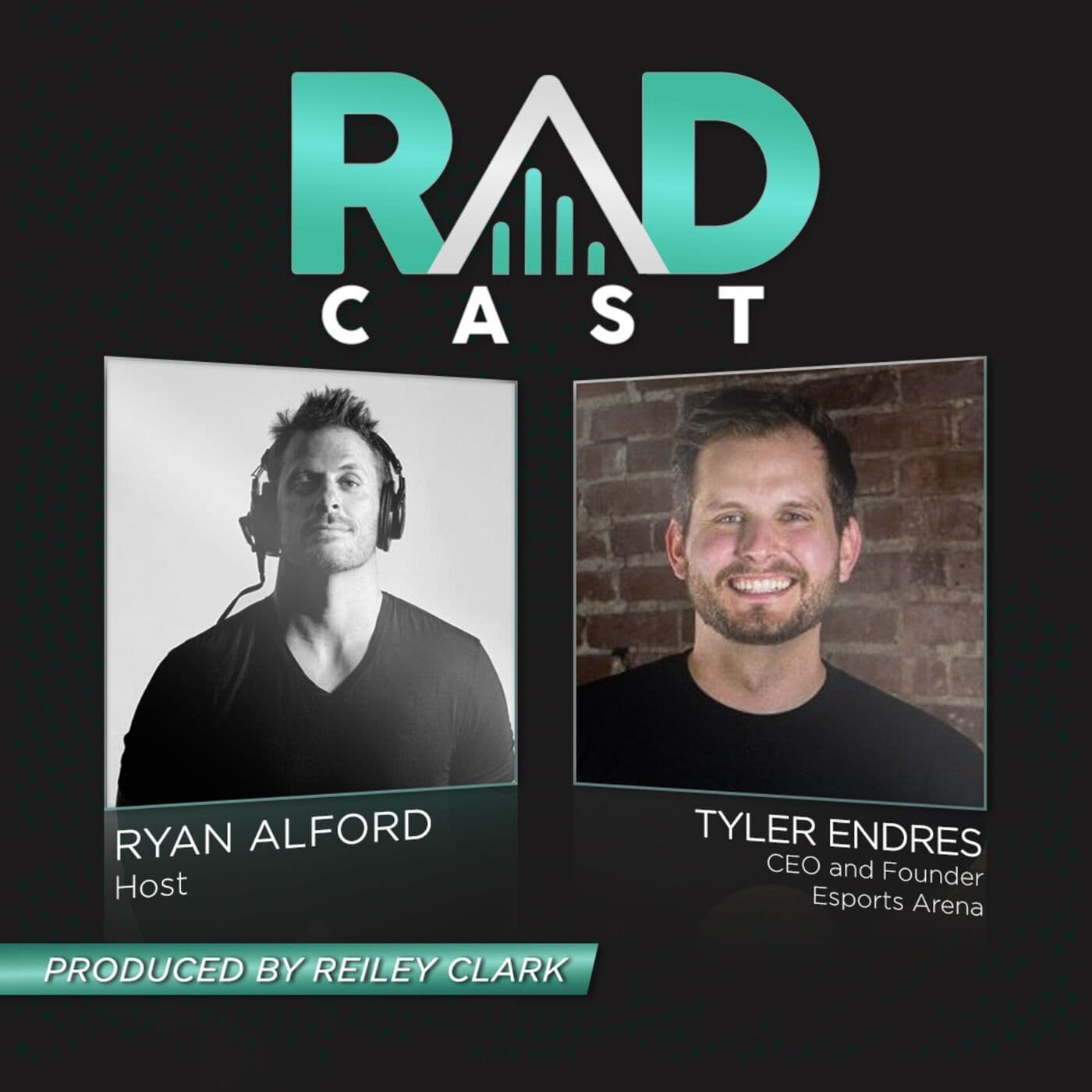
eSports Series ft. Tyler Endres
Esports Arena founder Tyler Endres on building 19 locations, the Walmart partnership, Twitch, and how brands should actually sponsor competitive gaming.
- Esports Arena started with a $152,000 SBA loan and a landlord who agreed to build out a 15,000 square foot Santa Ana space after seeing their PowerPoint.
- The company is corporate-owned, not franchised, at 19 locations: 18 inside Walmarts plus the original Santa Ana arena, because the eSports landscape pivots too fast to license a model they are still refining.
- Putting arenas in Walmart solved practical costs: free parking, existing food options, no separate security, electricity or major buildout, which made the format cookie-cutter and shippable nationwide.
- The Walmart arenas draw a 13 to 30 year old male demographic who would otherwise shop Amazon, Micro Center or Best Buy for gaming gear.
- Competitive league nights drive 75 to 80 percent of arena revenue; hourly play and buyouts make up the remaining 20 percent.
- The value proposition is hardware access: a competitive setup runs about $2,000 (roughly $1,500 PC, $250 to $300 for a 144Hz monitor, $100 in peripherals), while the arena offers 240Hz play at $5 an hour or a $10 to $15 tournament entry.
- Sponsors soured on eSports because they paid tens or hundreds of thousands for single events that got crowded out by competing tournaments the same weekend; Tyler advises growing with an authentic organizer over time rather than slapping a logo on a screen.
- Tyler recommends product-and-promo-code sponsorship deals, like the ones used in podcasting, and cites the Pringles jersey concept where a player earns a brand to represent by competing across a series.
We had an SBA loan that was worth $152,000. And started business for it with $152,000.
the coolest part about it is that the community of gamers don't necessarily care like where it is, right? As long as there's a community meetup happening, and it's on mutual ground with other people and things like that, the common denominator is gaming.
If you're good at the game, but you can't afford the nice PC, it doesn't matter. So, come to eSports arena, prove how good you are there.
Welcome to the Radical Marketing Podcast. Here is your host, Ryan Alford. Hey guys, what's up? It's Ryan Alford. It is the Radcast, part three in our eSports series. It's getting good. I'm learning more than I knew, more than my time playing Xbox with the kids ever told me. And how much, how big this business is, we're pulling back lots of layers to this onion, and I'm really excited to have today's guest Tyler Indus. Really appreciate you coming on Tyler. Yeah, I know, I'm happy to be here. And like I said, thanks for reaching out. This should be fun. Yeah, looking forward to it. So let's get in right at it. So you're the founder and the CEO of eSports Arena. You know, we'll get into the COVID impact.
It's just kind of part of the necessary evil. If you so speak, but I definitely want to focus more on, you know, talking about kind of your history in eSports, what led to starting the arena, you know, just kind of like that background that kind of led to where we are today, if you can start there. Yeah, so it's actually, I mean, it's one of, it sounds one of my favorite stories, because it's just a natural progression, I see how we started in eSports. And you know, a lot of companies just see nowadays that start eSports because they like to trigger word. They see it as an opportunity. And so they want to start something with an eSports. And a lot of companies have not been successful in doing so.
And I think it's because they're just not a gamer themselves, or they don't really have that passion around gaming. They just have it around business. And so it's worked for me thus far. I wish I had a passion about business. When I first started this, it's less about gaming, because maybe we've been a bit more successful at this and less. But to be honest, yes, when we first started out, we, a few buddies of mine from college, we love playing this game called Halo 2. By far, I mean, I think, to me, it's so nostalgic. And it's one of the greatest eSports titles of all time. You know, eSports was before Halo and all this stuff. But, you know, I think Halo was the first game.
I started, was the first game that came with the original Xbox. It was. Yeah, Halo original Halo, right? Halo combat evolved was like there. And we used to play combat evolved too, but that was before Xbox Live. So we used to like send, it was called Xbox Connect. Dude, we'd wait like 45 minutes to play one round of Halo. And it was just like, it was our fix. That was our fix. It was so good. And we'd be up to like, you know, two, three, four o'clock in the morning doing that. And so again, that's where it all sort of began. Was this camaraderie of playing Halo. And so then we went to college. We turned to like our dorm and disordered like this land center.
And then pretty much had. Had myself and my college roommate and his brother, like we formed a team. And then we were known as the best Halo players on campus. And so then they asked us if we wanted to host a tournament. So we hosted a tournament. And we had like 64 people show up. So that's 16 teams of four. And college. I mean, it was pretty great. And we won. And so then it was like, because we hosted a tournament. And we won the tournament. So I don't know. I don't know. I know. Yeah, yeah. You got the disease and the cure. Oh, I don't know. Exactly. So we thought we were, we thought we were pretty good. And we were on the local level.
And then MLG Anna Heim came around. This is back in 2007. And we competed in MLG Anna Heim. And we got in middle of the road. So it was like, I will really good at this local level. But on the pro level, where, how can we get better? And there just wasn't enough tournaments for us to compete in to practice in. It was practicing online was, was fine. But a lot of times it was cheaters. You get modded Xboxes. If someone had a better internet connection. And they had a better, you know, host connection to the game. So they had better shots. So all that, all those variables. Didn't really exist on LAN when you played in someone in the same room. And so we just thought to ourselves, like, man, wouldn't it be so cool?
There's a place that we could just go to and compete. Like, we don't want to go to a LAN center because LAN centers. You know, still even today, LAN centers aren't that. Cool, I guess. I mean, I don't want to like put LAN centers down because I used to go to LAN centers. And I mean, they're fun. But like, it's, it's not one of those things that just like every day persons go to LAN centers, right? It's just. It's just the ultimate. And so we're trying to cater to like this overall audience. And so we just wanted to go to a place that was cool that we could just compete. And it didn't exist. Like, nothing out there really existed at that time. And so once we left college, we just kept at it, kept at it, kept at it.
And when Twitch sprung out, I mean, then the game changed. Then it was like, all right, now we have to do this. And so we were searching for some buildings here in Orange County. And stumbled upon this space in Santa Ana that we have. It's this cool old school building built in 1922, some of the year background right there with the brick. And so the building owner saw our PowerPoint and met us and just loved the concept. And was like, look, I'll build this space for you. And all I need you guys to do is just, you know, run your business out of here. So obviously, we signed the leasing things, but you know, that step right there was, I think the key part of us opening this business
because look, we didn't have much money. I mean, I have much money at all. We had an SBA loan that was worth $152,000. And started business for it with $152,000. And the business that we're trying to start to scale of a $15,000 square foot arena, you're not getting far with that. There's so much to your lease. There's two months to go. You're not getting far with that. There's so much to your lease. There's two months to go. So that was, that was just our naive a day when it came to running business. And, you know, but we've thus far been able to make it work. So that's, you know, our love for video games and hosting our tournaments back in the day is really what got us to open up our first sports arena.
So we started, we had small beginnings, but now how many facilities is it a franchise? Talk to me a little bit about the nuts and bolts of the, how many facilities, the nuts and bolts of the business. Yeah, well, it's not a franchise. And I don't know if it ever will be a franchise. It may or may not. I'm not entirely sure. But, you know, we're, we've just, we're still learning, right? Esports changes. It pivots on a dime sometimes when it comes to, you know, which games anymore popular and which came to invest in, which pros, which influence or things like that. So for me to franchise this model out when we're still trying to figure it out ourselves, it's been, I mean, I've lit it open in five years.
September will be five years in Santa Ana. So for us, it's not franchise. I, I do, you know, me and my investors group obviously own all the other locations. So we run them out right out of Santa Ana, California. And we are at a total of 19 locations. So 18 Walmarts plus orange counting. So you guys have a hand in every location. Like I saw one in Raleigh, North Carolina, which is right up the earth for us. Yeah. So I've basically looked at that and I designed that whole space. And so everything you see there is, is, is what I've pictured esports arena to be. And so yeah, these, these esports areas that are inside of Walmart are much smaller, right, like more cooking cutter arenas that we can send throughout the country as opposed to what we have in Santa Ana.
And what we did have in Oakland, however, we did just, you know, COVID has, I'm good if we talk about it, but has made an impact. And so Oakland is Oakland unfortunately had to shut down. But, you know, it was, it was, it was before it's time to be honest. I do think that we will start opening up larger arenas again, but we want to get a network of these smaller ones out there first. Since you brought that up, the, you know, the Walmart aspect, let's, let's go there a little bit. You know, talk about how that came about. I mean, obviously it sounds like a natural extension of the business, you know, them wanting to, I mean, every large brand is getting into or talking about getting into or should be talking about getting into,
which is why we're having this series to kind of inform a lot of our listeners, which are, you know, kind of mid to sea level executives and marketing and things like that. But talk about that Walmart, how that came about and kind of, you know, whatever details you can share on that. Yeah, yeah, that's, that's a good little stinger at the end. But if for us, it's Walmart, I mean, some folks from Walmart had reached out to us from a mutual connection that we had and we thought, you know, look, I thought they were just wanting to like sponsor an event that we were going to host or something like that. And then one individual came, you know, is a, is a, is a VP over there.
He came down to Santa Ana, brought a team down to Santa Ana and took a look at our facility, liked the community vibe that we had, liked the look and feel that we had. And we just started talking more and more and the question came about was, do you think that this would work instead of Walmart store? And I originally thought like, no, like, no way. Honestly, I literally was like, oil and water. I just thought like, well, look, I. Esports arena is its brand, Walmart, it's brand and I don't really think that they mesh well enough. But then, you know, the more we talked about it, the more we thought about it, you know, obviously Walmart's large companies in the world. They're not a bad company to be, you know, to be talking to.
Exactly. I'm glad you why. I'm going to pause right there. I'm glad you why it's up to that fact. Make it work. Make it work. As you're, I'm not too Asian, but if I was, I would have said, Tyler, we're going to make this work, buddy. Absolutely. And it has been a, it's been a game changer sense, for sure. Yeah. And, and we did, we, you know, we came to our senses and we looked at the way Walmart sort of operates as a company and how we could be at our arms, arms like with these guys. Right. So what they have is they have these areas in the front of these stores, where typically they have like the McDonald's, or they'll have a, an optic center, like for the classes, or those are nail salons, hair salons,
banks, things like that. So we were able to fulfill at least at some of those locations across the country. And when we were first looking at this, it was like, all right, well, what stores we want to go to, how big of a space do we need? So we started off with five stores, initially it was just running a pilot there. And, and we saw, you know, once they were open, we pretty much saw success right out the gates, because it's, it's just, the coolest part about it is that the community of gamers don't necessarily care like where it is, right? As long as there's a community meetup happening, and it's on mutual ground with other people and things like that, the common denominator is gaming.
And so I'll go to this space because my friends are going because there's a meetup there, there's good competitors there. So I'll go no matter what. And the benefit of it being in a Walmart is free parking for one. Two, if you're hungry, there's usually like a McDonald's or some subway or something like that in the store. And three, you can go grab a drink, you can go grab a seat, you can do whatever you want, like typically inside the Walmart, and I don't necessarily have to have security. You know, I don't have to really run my own electricity. I don't have to do any sort of crazy buildouts. All that stuff pretty much exists there. So it made it much easier for us to take this, this model and cookie cutter it and then ship it across the country.
And that's, like I said before, has been a game changer and has seen ultimate success, a kind of foot traffic that we're bringing to the store is really good at the level of the specific customer that we're bringing. So you think of a gamer, that gamer, especially because Walmart, Walmart individuals are, you know, kids, they're either parents coming with their kids, so it's skews much younger. But then we've got the cloud core gamer that's coming out on an hourly basis coming to tournaments. We're rearranged anywhere from like a 13 to 30 year old male demographic. That's walking into a Walmart because there's any sports arena there. Typically they would shop on Amazon, typically they would go to a micro center and best buy whatever to buy the beginning equipment.
But now they're going to the back of the store or see if Walmart's got it and the bite right there. So it's a different customer that we're bringing to Walmart that they're enjoying. And again, just provides like an ultimate different experience for the Walmart shopper, which Walmart working with them for two years, two and a half years now. It's been one thing I've realized is that they've legitimately the customer is number one. The customers always first. And if they can make a better experience for the Walmart shopper, then that's what they know invested in that. And so that's what, you know, for esports arena, the fact that we are providing a better experience for a Walmart shopper, I think that they like that a lot.
Yeah, that makes a lot of sense. What is the, you went there a little bit with the makeup 13 to 30. Is it maybe bringing a little more diversity and inclusion as well with maybe like some gamers that just don't have avenues normally for those kind of things? That's where my mind went, which seems like a really big positive. A lot of folks do, and that was, that was like a total benefit that, you know, I'll be honest, I've spent five years trying to learn how to make a dollar in esports. And, and today, and I'm still learning. And I think we're on a right track, we're on a very, I mean, before COVID hit like, man, we were going to hit the peak of, and just like, and just start rolling downhill with how with the momentum that we were getting.
And it still will come, it's just been out of pause. But, but really, what we saw in the beginning was when we had these larger influencers and larger companies team up with us, they had sort of realized like, this is so cool because you're offering an experience to a 15 year old or 20 year old who can't afford a $2,000 gaming rig. Right, I mean, you figure a nice, a nice gaming PC is going to be like a nice one. Well, I would say a nice, nice one, but like, it's like $1,500, right, for a gaming rig. And then you have a monitor that you need, at least 144 hertz to play on, that's going to be $2,50, $300 right there. And you want your gaming setup, your mouse, your keyboard, your headset, you know, all that's another $100 on top of that.
So, I mean, you're at $2,000 right there for like an ultimate setup. And that's just, that's an investment. Whereas, whereas playing on an Xbox or playing on a PlayStation or Nintendo Switch, I mean, those are, that's a $300 investment. So, it's the reason my console gaming is much more popular. I would say much more popular, which were accessible than PC gaming. But we're offering that opportunity at five bucks an hour or a $10, $15,000 tournament past that night for anyone to come in and compete. So, if I love playing Fortnite on 50 years old, and I compete in my Xbox at home, well, I'm only hitting 60 frames per second on a TV screen that's only 60 hertz that is much, you know, wider. Now, when I come to eSports arena and I play on a PC, great, so I'm still by be using a controller.
But I play on a PC, I'm playing on a 24 inch screen, much more manageable to compete on. And it's at 240 hertz. So, now the frames per second that they're hitting, there's no what we call screen tearing that happens when you move your mouse really quickly. It's like a stutter. There's no stutter. It's nice and smooth refresh rate. And your frames per second are like 200, 200 frames per second is supposed to 60. And a game like Fortnite with all the building and things like that, the kids just eat it up at eSports arena. So, we're giving them this really ultimate competitive experience of competing inside a Walmart or competing inside an eSports arena. And that's again what they're paying for. And it's cool because we're offering this opportunity to just anyone to come and play.
If you're good at the game, but you can't afford the nice PC, it doesn't matter. So, come to eSports arena, prove how good you are there. So, the arena is, I mean, for all intents and purposes, I don't, there's so many complexities that like you mentioned, the changing nature of the games all the time and all that. And I want to come back to that. For all of these purposes, is this, is this like an old, the way for kids in 2020 to go to the arcade, like, or to go to, or instead of going to, you know, I don't know if there's a Frankie's in California, but like Frankie's fun part for three hours, they go to the arena and play. Give me a reference for, you know, the arena players or the kids that come or, I know it's varying ages, but yeah, talk to me about that experience.
So, I think, is it like a Dave and Buster, or is it like, you know, there's like a Chuck E. Cheese analogy, it's not. You know, one thing that we've really stayed true to in opening eSports arena has been just, we're a place to compete. We're the home of competitive gaming, right? We want to be your first step into eSports to come and compete. Typically, if you want to come, so our hours are like 3 p.m. to 11 p.m., right? So it's only after school or after work hours, and actually the most traffic times that we have are like six and seven p.m. And onward, right? So it's typically, that means that you've worked your day job, and now you're coming out to compete. It's an older demo then.
It's an older demo currently. Now, it's a current because what we're doing is we are transitioning this younger demo, though, because the parents are stopping by. They're going, holy smokes, what is this? I mean, my kid here, my kid loves to play Fortnite, and now the parents are seeing like, I want my kid to compete. I want to see how good he or she is. And so, and that's actually been really beneficial for us because to grab hold of the parents wallet versus the 16-year-olds wallet, that's a much better opportunity to earn some cash. But really, what we've, what we, I'd say the analogy is maybe like a bowling alley. Got it. To where like, I can go and just go, go, go play some bowling, right, and have some fun. I may be terrible at bowling.
And actually, so I competed in really like a bowling. I don't know if that's something I should be admitting, but it was pretty fun. We won't hold that against you. No, no, no, no, Tyler and Boulder, never call it, never call again. Okay, we're good. Let's keep going. You have your own back. You have your own back. Jim Gavin's got a joke. He says, yeah, some people have their own bowling ball and their own shoes and no friends. I like bowling too. So I don't, I won't hold that to it. It's actually pretty fun. It is. It's fun. It's a niche sport. And if you're competitive at it, then you can really see the advantage of it. And so for me, it's like, you don't have to be that great of a bowler, but you can have a handicap.
And then as you get better, the handicap helps you compete against all these other, you know, pro, you're not pro, but like better bowlers. Yeah. It is a competitive aspect to it, but a community aspect to it. So you go every Tuesday night, you pay 20 bucks to compete in that league. It's fun, but you're still competing. There's that competitive nature to it. And so at night is the league nights, but during the day, you can either come and practice, right? Pay, pay for a lane to practice or just pay to have some fun. And so I'd say that, but you know, I'd say that that is where he sports arena's model really comes into play here is that we are more centered and focused around our competitive, you know, league nights that we have.
That's what drives about 75 to 80% of our revenue. And then the hourly rates and then the bit of buyouts, things like that, that will, that'll take up the rest of the 20%. Talk about you mentioned it earlier, you know, it's, I think anything on these sports to not mention, you know, and I know Google's involved now in Facebook and all those things, but Twitch, you know, the impact that Twitch has had on these sports and just the growth is just fascinating to me. When I first, in this apartment five years, I have a buddy who's, who's big in this, he's actually the voice of India to case, Scott Cole. And lives here in Greenville, actually, Greenville, South Carolina, Scott, if you're listening shout out to you, he's actually on ESPN 2.
That's how the growth is on ESPN 2 every Tuesday nights. It's crazy. But, you know, he would, he mentioned to me, I was quite five years ago, man, Twitch has been around, you know, I guess, I don't know, 70 years, maybe longer than that. I don't know, maybe it's peak, but, or when it started really blowing up. And he talked to me about Twitch, and I'm like, you know, the people really like to watch other people play. Like I, I just, I didn't grab my head around it then. Now I see it in just how, how, you know, much, how uninformed I was at the time. But like, what's your perspective on the impact of Twitch on gaming and kind of any impact that has on your, your side of things on the arena side?
But, I mean, again, that's what sort of added fuel to the fire for us to start our business, right, was we can now monetize the same gameplay that someone is paying to play inside an esports arena. So I'm now monetizing off the person that I'm monetizing off. And so it's that that to us was a really good way to scale up our business. And I think with the way that, that Twitch, Twitch specifically has just really catered to more that influencer personal streaming five, because don't give me wrong. There's counter-strike tournaments, you know, what ESL has been able to do, what MLG's been able to do back in the day when Overwatch League, League of Legends, LCS, those numbers are staggering, right. Those numbers are absolutely insane. And it's, it's those numbers are great because the productions there, the productions phenomenal.
And you can just watch it for free, right. I can pull up Twitch and I can just start watching this incredible content for free. To me, LCS or, you know, if LCS, you know, world's world championships or the international with Dota, that could be my super bowl. And I get to sit down and just watch it and interact with friends and chat and all sort of stuff like that's an ultimate experience because I love the game Dota. So I want to watch Dota and the international. These are the best players compete in Dota. And so that to me is a much better viewing experience than I don't really, well, I don't really play football. I'm not like, I don't have a favorite team, but the soup pulls on and everyone just has a party. So I guess I'll just go to a party, but I don't really care too much about watching the game.
And so that's why the experience of watching competitive gameplay is so successful because so many people play video games. And so you want to watch the best. The reason why Ninja had his peak was because fortnight took this younger demographic, just took him and said, Hey, you're going to play our game because it's free. And then we're going to have these dances. We're going to have these skins. We're going to have this great model. That's about a Royal model that's coming out the past like, you know, three years now. And so it's still new to these console gamers. And so Ninja's been able to monetize off of that because he was the best at fortnight. I mean, he was the best. And everyone else is still playing PUBG or they're still playing Overwatch, but he transitioned over to fortnight and then totally gained all those followers took it. So to which in general, I think really invest well into guys like ninja and to and to guys like, you know, like nade shot or these influencers that are just fun to watch.
You're good at the game. And you feel you're supporting somebody. If you're, if you're, again, esports arena, we've been able to monetize these sponsorships, but we don't really monetize from subscribers or donations things like that because we're seen as a company. And so being a company streaming on twitch is much different than just being an individual streaming on twitch. I'll donate $10 to an individual because I want them to give me a shout out. I want to give, you know, say my name or say whatever, say this funny comment that I had. And that is where the individuals can really gain and make a lot of money from this and become influencers. And I think there is a difference between esports and influencers. Influences are great because they do compete in tournaments and whatnot, but a lot of times they're signing on at 9 a.m. and playing for 12 hours or 8 hours a day. And they're competing. Don't get me wrong. But esports is an ecosystem. And I think these influencers are a piece of the ecosystem.
But I think that they're really making the most of my money just because they're fun to watch, they're funny people. And surprisingly enough, they can't actually, they should be good at the game too. But yeah, twitch has definitely changed it and made gaming just something of just a cool topic to talk about. Because back when I was in college, I wasn't updating my Facebook status saying I just played 8 hours of Halo 2 last night. 8 hours of college. You didn't do that because girls didn't think that was cool. But now, now you could say it and with the way twitch is creating the community around it and a lifestyle around it, twitch has done a lot for gaming for sure. Is there any hope for me that, and I know they're probably are, but in general, I know there's not, but, but.
Wanting like a street fighter to tournament or like mortal combat, like that's what you like my fingers. I have arthritis still, you know, from the button matching of street fighter to with, you know, kicking in by his ass. So you find a two turbo. My brother and I thought that from Walmart back in the day, I remember when we first got it, my mom and take us to that. And my brother and I were so pumped. We were like, well, the first ones to have street fighter to turbo on Super Nintendo. And we were walking out the parking lot going, can't wait to go home and play street fighter to turbo. Like bragging like people were all like, oh, dude, they got it. And so my brother and I always say that turbo.
No, so we would, every night, every Wednesday night, we were hosting wins night fights with a chemical level of gaming. And one of the legends of the scene, Alex via street fighter legend hosted. And so we can, we can roughly 300 people plus like every Wednesday night coming out and playing street fighter, playing smash brothers, playing tech in, playing mortal combat. So that's all there. And then we would occasionally have retro tournaments to where yes, street fighter to or street fighter to turbo would be featured game that night to come compete. So it's out there for sure. Yeah. Where to find it is, is a challenge if you're not a part of the scene. You know, there's a, you got to typically go to the tournament platforms and just search in your area, like smash GT is really good for the fighting in community.
So you go to like that website and then search for like, you know, the type of games and things. I had like the spin kick fireball combo that you nobody wanted any part of. Yeah, you and everyone else. Yeah. Fighting games is the best because that's again, it's that's a one of you want. It's a mono we mono. So it's, it's like, hey, it's like kind of money matches, right? I'm going to put 20 bucks out. I know I'm going to beat you and stuff. Right. So like that's where I think the real competitive nature comes out and why it is successful. So come out to me and I invite and let's see it. Let's see it. When I get out to O'Cali, I'll, I'll make a stop in. Let's talk all this crazy stuff. I know what's the,
where's everything headed and like we're, you know, I always been asking all our guests this, you know, maybe your perspective for how I know how the Nike's in Walmart's and Adidas and Monster energies get involved. They throw money at it, you know, and they, you know, you've got to be organic. I think they're all doing a pretty good job. The big brands, but the medium size businesses that want to, you know, kind of leverage this target and kind of get involved. Any, any pointers tips, you know, perspective on ways for, you know, that's accessible for, you know, the brands that don't have, you know, hundreds of thousands of dollars or millions to invest in it. Yeah, I just get involved or getting some sponsorship or stuff like that.
Well, so like that, and sponsorship back in the day with Esports, I mean, if you look four or five years ago, I think that sponsorship, right now is, if you look at what it was, four or five years ago, to what it's now, and like you said, Adidas, Nike and even Walmart have sort of created this organic way to get involved with these and then there was this event, but this event, this event, this event, this event all over the country. And so now you're competing against, you're competing against Esports. And that was, you know, once it became like, what's Counter Strike and, you know, League of Legends and Overwatch and all these, all these bigger events started coming out. And then, if we're going to host the Counter Strike tournament,
well, we had to make sure we got the pros to come out to our tournaments so we can get the viewership because I need this viewership to leverage sponsorship sales. And if I didn't hit that viewership because these Counter Strike pros went to this tournament over here, now the sudden I'm not getting that viewership and my sponsors are unhappy. So a lot of sponsors, I think, became very unhappy in the beginning because they would pay hundreds of thousands of dollars or tens of thousands of dollars to sponsor an event to pay for the event essentially. And then the event didn't yield the results that it wanted to because it was too competitive. There were so many other events going on at that same time. And so the certain weekends were like, oh, we have to do it this weekend because there's no other Counter Strike event happening this weekend or no other League of Legends that happened this weekend.
So I think a lot of sponsors got, you know, had a bad taste in them out for the Esports originally and also two Esports was being run by 25 year olds. So 25 year olds who know how to run businesses are a few and far between and speaking from experience with myself. And so sponsors right now, I would say, you know, and what I've been able to really think about and able to accomplish has been consistency. So if you can grow with the sponsor, I think that that's key. And if you can develop a concept in which what we're doing, for instance, is we're starting our semi professional ecosystem to where we are going to be finding these everyday players. And you know, you get a good players, but don't really have that streamer following don't really have the, you know, haven't won in a lot of tournaments because they don't really know where to go to these tournaments.
So we want to provide a tournament space for everyday players to become pros. Yeah. So because we've got, you know, decent connections, we've been able to solidify a lot of larger brands and medium sized brands to sponsor Esports arenas ecosystem. So it's a consistent series of events to where we're finding pro players and we're actually going to be sponsoring these pro players by giving them a brand name to represent. So like Pringles, for instance, if you want to be the Pringles player, you have to compete in our series of events and then we'll, you get to dawn the Pringles jersey. And actually, I have one crisis thinking about it. Like literally right there, I could probably bring it real quick. Oh, nice. Literally Mr. Pringle here. That's sweet.
Kind of like a hockey jersey. It is. It is. Have you noticed in my background, I'm a hockey fan. So yeah. There's this hockey stuff. But I think for a sponsor to get involved with something, don't just sponsor an event because a lot of times it may not yield the results that you want. And the return on investment can be pretty low. But I think if you can work with an organizer who is pretty authentic to the scene and can bring your logo and your brand to life as opposed to just slapping it on a screen and getting tens of thousands of dollars to help pay for this event. Then that's a better opportunity for a sponsor to grow with the tournament organizer to grow with the brand to grow with an influencer.
I think is is way as sponsor needs to be a lot of times. Like I'd be willing to do things that are like, are you have any product? Great. We'll sponsor your product. But you give us a piece of your product. So therefore you don't necessarily have to have. I've seen this a lot of product with podcasts, like me undies and, you know, it's the Dollar Shave Club, things like that. Like you get you get a piece of whatever you sell based off of your promo code and things like that. And I think that's a really cool way to market because if it's if the product is going to sell the product to itself. And if, you know, the red cast is pushing that product or a B-sport 3 is pushing that product.
And I'm saying use promo code eSports. Then all of a sudden, like, yes, I'm getting that revenue. And I would I would do that all day long because if I believe in that product, I think that product is going to sell. I think that's a great way for sponsors to get involved because this is what a podcasting, right? Like podcast sort of niche, but at the same time, it's an awesome audience there. And there's a ton of competition too. So I do think that eSports and podcasting are actually very similar. Is any team sponsorship for, you know, the overseas sports arena? Are you building teams? I mean, you kind of talked a little bit about that saying, you're bringing these mid-level players and trying to get into a platform.
But I mean, is is is real building teams in your future or part of the plan? Yeah, I'm not going to say no, but I think that I think that yeah, there is there is an opportunity for us to I mean, we have so many players that just walk into our facilities and we've had a lot of players that turn pro and they'll sign with a hundred thieves and sign with face clan and sign with TSM, whatever it is, but they've started at eSports arena because look, there's one thing to get into play at home and we were talking about earlier, but I would never take away the home at home giving experience like that to me is just the ultimate giving experience for sure.
But it's different when you're on a stage and other people watching you and you have to compete, you know, against all these other people like that. That's that's the testament of a true competitor, whether or not you're she's, you know, really good at the game or not because even good in your own home for sure because you're comfortable there. Yeah, can you be good in an uncomfortable situation? And I think that that's where eSports arena comes into play here. So if I'm already finding these pro players and I'm giving them a start in their career, I'd like that, first of all, and I could, and as long as I could continue to make dollars and cents from just that model, then I'll just, I'll stick to what's good.
Yeah, thanks, but if there's an opportunity for me to find a pro player, say, wow, this kid's going to be a superstar, you know, two years from now. Then I then, yeah, there's a possibility of eSports arena signing this player and giving, you know, him or her a chance to succeed and hopefully benefiting from what they're benefiting from too. Yeah, is what's the, is it just like get the pandemic over as fast as possible? I didn't want to spend much time on this, you know, but, you know, it's depressing. It's depressing. Yeah, it's not good, not good for radio. To me in crying is not good. But yeah, but it's real like what's it, what's it look like? It's, it's rough. It is absolutely rough. I think, you know, when it first started, I was definitely naive.
I thought like, okay, wow. So I just got my, I just bought myself two months of extra time to prepare for our semi professional league that we're calling Series E. And I thought like, all right, we got, we got a couple months of prepare for this so sweet. And then I realized that, you know, that's, that's not the case, right? A couple of months and then people's thoughts of normalcy is different and, you know, eSports arena, we, we sanitize things down, right? You know, typically, because no one likes to wear the same headset that someone else just wore, but now no one likes to wear the same headset that someone else wore. Like now that's, that's a big thing. No one wants to use the same mouse that someone else used.
And that's what we offer. I mean, we're a LAN center, you know, by day and, you know, you come up and you compete. And I think that like, yeah, we push the pause button for sure. And we are waiting for things to flatten out. And I follow Mark Cuban on Twitter a lot and I think that he's obviously smart, right? And so he had said something about, you know, this is a time for you as a company to, you know, either stay in business or, or grow, right? And, and I've, I've been going stir crazy. My mind goes just thinking like, well, what's the next thing? How can I get out of this or what can we, what can we invest in or how can I, you know, be stronger out of this?
And I think that for eSports arena, we've had a lot of competitors come into the scene and try to do what we're doing. And, you know, we've, we've taken punches to the stomach and all sorts of stuff of losing, you know, contracts and those of people, but it's, we're still here. And as long as I can say that we took that punch in the gut of COVID, but we're still here, then I think that we're, we'll be much better off and much more successful post COVID whenever that may be than any of the competitors that are out there. I've got an opportunity with, with Walmart, right, to, to expand into hundreds of stores or hundreds of locations. They got 4200 stores across the country or something like that. So there's a bunch of stores. So, you know, as long as I can focus on what our strength is and what the competitor strengths have and, and, and invest into that, then post COVID, if we're, if we're strategically placed at the right time,
then I do think that we can come out of this much stronger than we were going into it. So, and that's where, that's where I'm trying to focus in on is, is focus on what's going to set us up more for success post COVID that our competitors aren't doing or that the competitors are scrambling trying to figure out as well. And why we're going to be more successful out of the gates. I think that's a great mindset. I think that's where the most successful people are is focusing on what they can control and stay and stay and focused on that and look, 4200 stores. Hey, that's, that's a lot of, hey, you, you stay busy just with that building out the, yeah, even half that 2000 stores build out.
So, that'd be wild. That would obviously wild and to see, to see the brand that we just created because we're a couple of buddies that just let's play video game to be a nationwide brand that, like a 12 year old kid who sees and goes, what is that? I want to become a pro gamer because of esports brand because of my time. Like that, that's a dream, ultimate dream for sure. My last question, Tyler, I asked, I've asked every guest this. So I have four boys under the age of 11 and they all are gamers of some sort. Is this a legitimate career path? No, they play sports, too. So they're in and out. I think if they play sports for sure because the thing is that they have that competitive nature for sure.
It is. I do think that there's the, you know, because here's the thing, like, I'm not going to be LeBron James. Sure, I'm 63, but I'm not, I'm not, you know, I'm not necessarily built for basketball. I'm not as, you know, physically trained as well for that. So I think that a lot of people think that they can become a pro gamer. Right. And a lot of, a lot of dads, a lot of parents go, oh, my son, he was once in time, like, never one of the world at this or something like that. Everyone loves to fluff up their kids and pump their tires. Right. And so I think that for, for that, it's, as long as, as a parent, you can support it, but at the same time, like, you got to go to these competitions.
And that's, like I said before, it's like competing at home is, is one thing, but going out and competing on a stage with other people watching and it's top 10 and you're sitting there and you've got four or five people just behind you that are watching you see how good you are. If you can remain focused on your game and not like that, distract you. I think there's a real shot at being a solid competitor and, you know, winning some money, like, don't get me wrong. I'm not going to be a pro baller, but I want some money, you know, bowling. And I think that as long as you can pinpoint whether or not, yes, I'm good enough to go that path to become a pro.
You can figure that out pretty early on. I'd say, you know, about 15, 16, you can really figure that out whether or not you can be a pro gamer or not. So it's worth investing in now. They're under 11. In other words, every millionaire has six streams of revenue or income. It can be one of those. It's not the one. It's tough just because so many people play video games, right? So many people play video games, but also to if your kids love it. And same time, I loved it because of the community aspect. It sounds like all four of them, they've got to, you know, they could all be competing with each other, which is really cool. They got friends that they compete with.
I was, you know, I love the fact that if, if, if a kid's playing video games in his basement, and he's that typical, you know, game or profile, he'd drink and Mountain Dew, eating Doritos in the basement, you know, whatever. I hate that analogy, but, you know, a lot of my brain went right there. I mean, I saw that guy with a taco, a taco bell taco, a Mountain Dew slushy. And that's your stereo typical. Yeah, right. I mean, it's so terrible because that's no longer it, right? But there are, there are those folks out there, and there's a lot of introverts in gaming, right? Yeah. The moment that that introvert steps out from his at home, gaming experience, and then finds a friend at eSports arena or finds a friend at a LAN center.
Then it changes, changes your perspective on eSports, changes your perspective on gaming and gives you an outlet and you find what he's interested in and, you know, type of food and restaurants. And then you go to something that's what it is. It's a camaraderie, it's a community, and that to me is the best part about gaming and eSports. And as long as I think you're your four boys, you can find solitude in that and find new friendships. I think that that's, it's worth investing in at that point. I love it. Tyler, man, I really appreciate your time. It's been great talking with you. I think we could do it for a couple hours, probably, but I'm going to let you. It's been fun. Tell people where they can kind of keep up with all things eSports arena, all things, Tyler.
Yeah. So, I know, I just want to think I haven't really done this built out my own personal platform. I usually try to stay behind the scenes. But get out there, man. Yeah, I got another ESA underscore Tyler on Instagram. And I think it's ESA Tyler on Twitter. Is a really good find me. You'll just get a lot of eSports. You're going to content and I have ducts content from me. That's pretty much all you'll get. But I typically try to allocation through my opinions out there, which I'd like to do more of. But all things eSports arena. It's at eSports arena on all social handles. And then our website eSportsrena.com. That'll show you all of our locations where we're at. We are open in some locations. I just call ahead of time.
Limited hours right now and limited occupancy right now. But join our online tournaments because they're awesome. We're doing a lot with apex right now. Valorant brand new game that came out with with riot games. And we're going to be bringing forward night back and maybe doing some stuff with Halo again. So. Well, exciting stuff coming up and we love the supports. I really appreciate you guys reaching out. This has been a lot of fun. Appreciate Tyler. All right, guys. It's been episode three in the eSports series. Really praise. Appreciate Tyler coming on. You heard where to follow him. Keep up with everything eSports arena. Follow along with us at Radical underscore results on Instagram or the radcast D dot rad dot cast on Instagram. And we'll see you next time.
To learn more about radical visit radical dot company on the web or follow Ryan on Instagram at Ryan Ulfer. Thanks for listening to the radical marketing podcast.
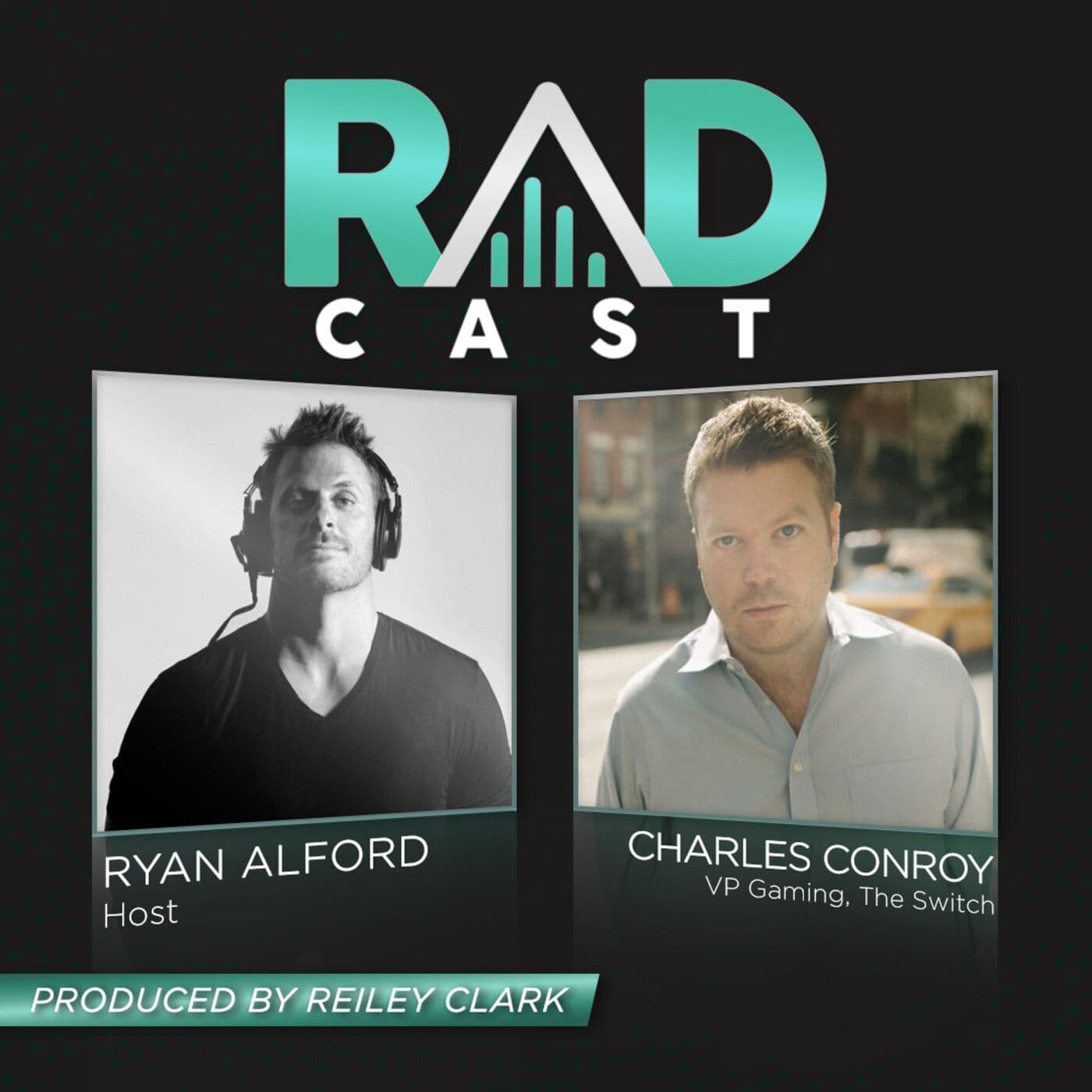
Esports Business Models with Charles Conroy
Charles Conroy, VP of Gaming at the Switch, breaks down how esports teams make money, the media rights boom, and how brands can enter esports the right
FaZe Clan x Verizon, Esports Money and Burger King Cows
Ryan Alford and producer Reiley Clark break down FaZe Clan's Verizon 5G deal, Big Tech's move into esports, and Burger King's cow-fart music video.
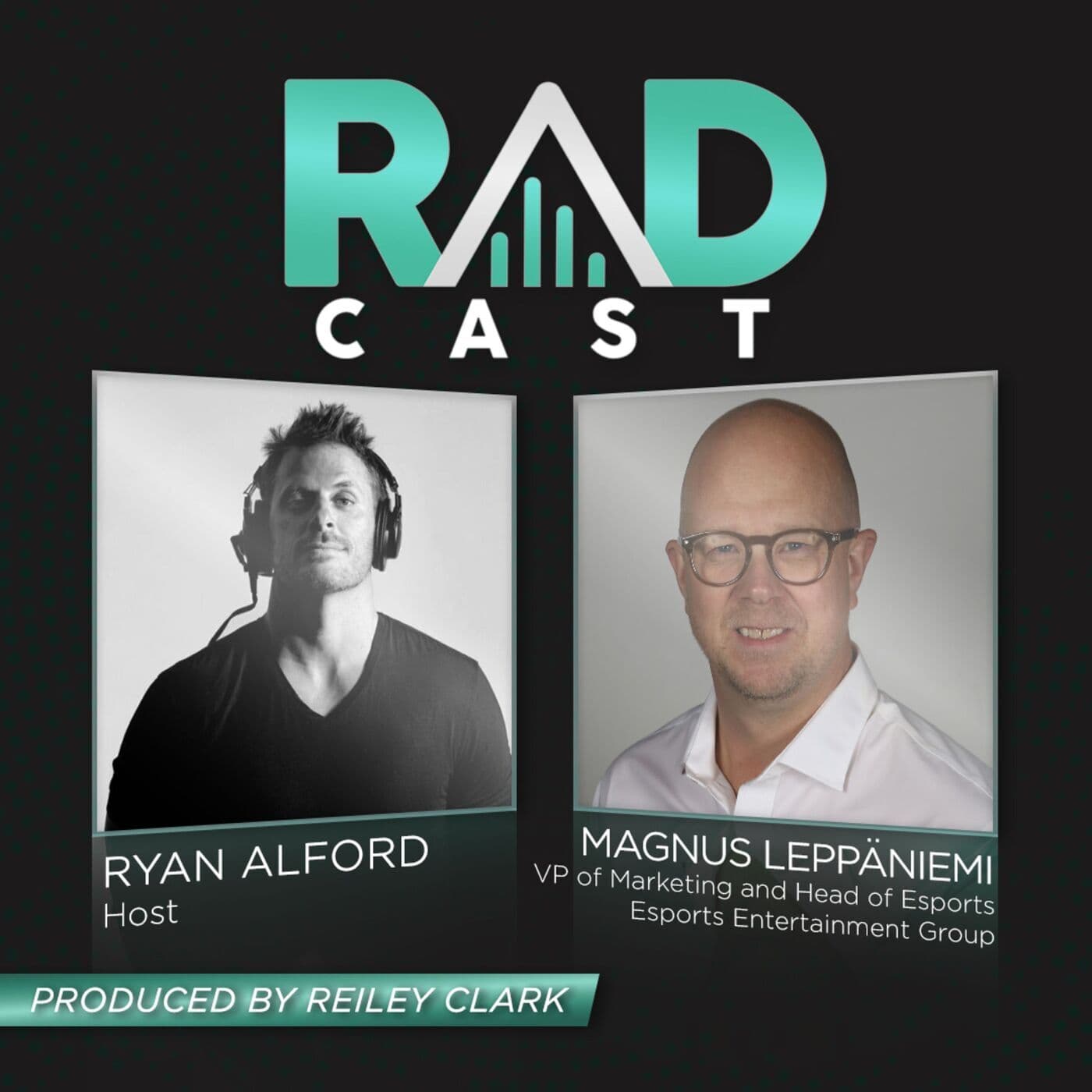
Esports Betting, Sponsorship & Twitch with Magnus Leppäniemi
Magnus Leppäniemi of Esports Entertainment Group joins Ryan Alford to break down esports betting laws, brand sponsorship, Twitch and free-to-play