
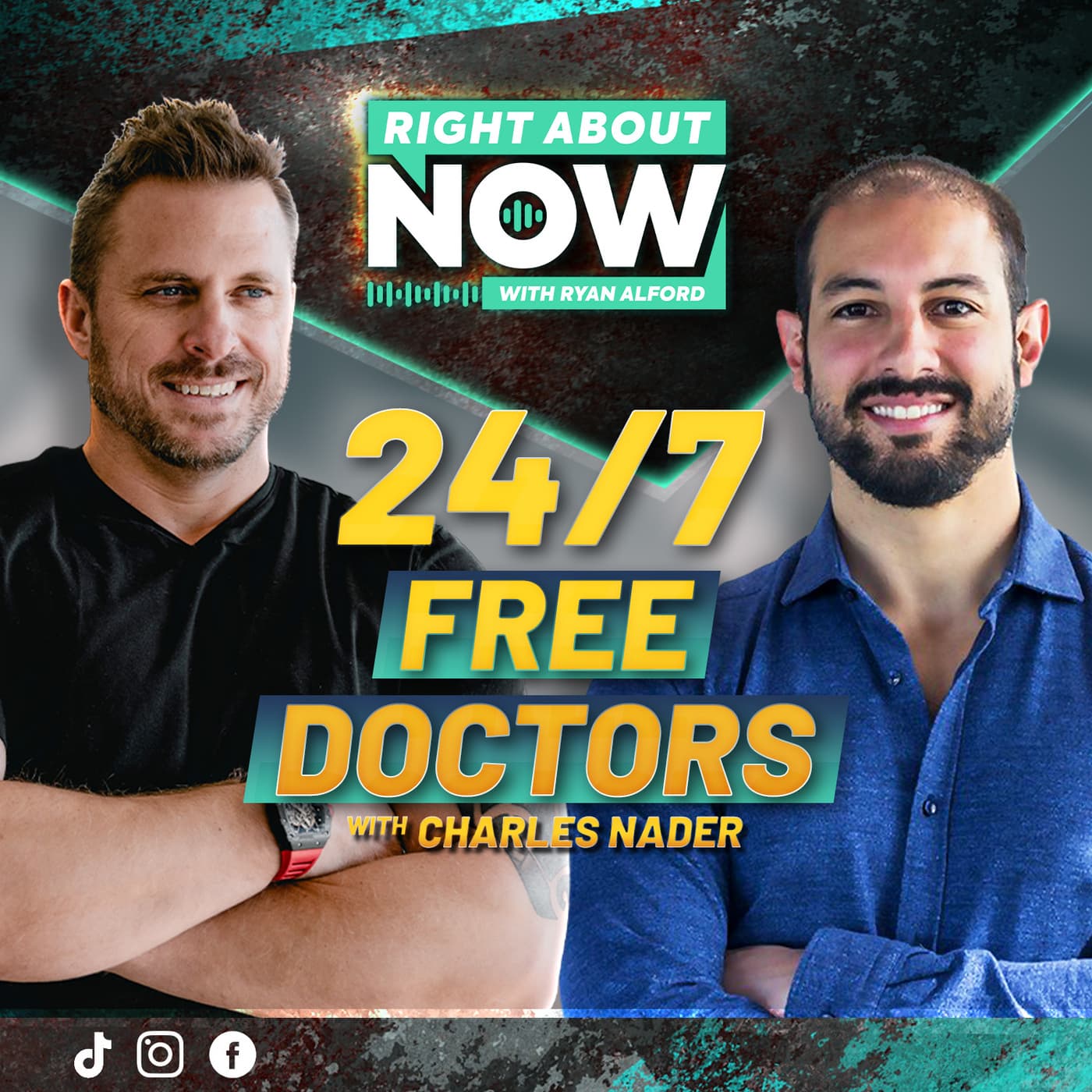
Charles Nader's Changing the Healthcare System: Doc.com's Mission to Deliver Free Care Worldwide
Doc.com CEO Charles Nader tells Ryan Alford how AI telemedicine, a pharmacy-funded model and a NASDAQ listing can make free basic healthcare global.
- Doc.com's AI collects symptoms, scans the patient's face for vitals, and hands the doctor a pre-processed case with a suggested diagnosis and treatment, cutting consultation time.
- The average call is 11.8 minutes; getting it under 10 minutes is the explicit scaling lever because it lets the same doctors treat thousands more patients.
- Consultations are deliberately capped around 15 minutes — if you need more time than that, Charles says you should go see a doctor in person.
- Doctors are paid; the free care is funded by the vertically integrated pharmacy. If 10 patients are seen per hour and two or three buy, the service cost is covered and the rest is profit.
- Doctors receive no incentive to prescribe any particular medication — Charles insists the consultation stays 'pure' and separate from the product side.
- Historically more than 50% of cases are fully resolved in the first telemedicine consultation, with gastrointestinal and respiratory complaints the most common.
- Access requires only a smartphone and the app — no insurance, no bank account, no payment — with wait times from 15 seconds to five minutes depending on the hour.
- Therapy and veterinary consultations launch next year alongside the existing medical service, and US expansion is a staged rollout because regulation is state by state.
- Charles acquired doc.com in 2018 after a year of weekly calls (including sending the receptionist flowers) and has since turned down offers worth 10x what he paid, because 'Doc' translates across English, Spanish and Chinese.
- Doc.com planned to list on the NASDAQ before year end after 18 months of preparation; Charles says PCAOB-level auditing forced the company to clean up and polish everything internally.
Mexico in particular, a lot of these people, they don't have bank accounts. They didn't have credit cards amazingly enough. Even the poorest of everyone still had a smartphone.
the world doesn't need more specialists. You actually need more preventative medicine, more primary care to guide you in the right direction to be easily accessible.
We built our business around solving the problem. You know, what is the problem? Access to health care. It wasn't just focused on trying to make money.
In this episode, we had an insightful conversation with Charles Nader, the visionary behind doc.com. Discover how Charles and doc.com are aiming to fundamentally change the future of healthcare, and that starts right about now. We really based our technology build on capturing scientifically-relevant data, which in healthcare data is extremely important. It's one of the pillars of medicine, epidemiology, and analytics. What we did is we've built something that captures all that data. We can use it to train our own AI models to make each consultation more precise. Basically, what we go through is a sophisticated process that leads out to connecting you to a doctor where the AI is doing the leg work. It presents it to the doctor all processed with a suggested diagnosis, a suggested treatment.
Really, it saves a lot of time. This is right about now with Ryan Alford, a Radcast Network Production. We are the number one business show on the planet with over 1 million downloads a month. Taking the BS out of business for over six years in over 400 episodes. You ready to start snapping necks and caching checks? Well, it starts right about now. Hello, and welcome to right about now. Always talking about what's right, what's now. We come to Charles Nader. He is the president and CEO, the chairman of doc. doc.com. What's up doc? It's a pleasure to be here. I appreciate it very much. Well, there's a lot happening right now in the world. What we're doing is pretty significant in regards to technology in the world situation
and how it can have a huge impact on society. The mission of providing free basic health care globally using tech. I'll tell you guys a story. I studied medicine in Mexico. I used to go to the general hospital in Mexico City. There would be lines of people that would form around the hospital. These people would come from outskirts of the city and spend half a day for five hours to see a doctor there. It was very taxing for the hospital. Most of the cases were cases that could have been solved at home. You had a guy come in, pain in his abdomen. Oh, you know, I've been feeling bad. It's been hours now all day. It turned out he had bad tacos last night. The problem really was that there was no easy access to health care
that could solve these types of situations. Mexico in particular, a lot of these people, they don't have bank accounts. They didn't have credit cards amazingly enough. Even the poorest of everyone still had a smartphone. That's that ubiquity of smartphones. They would find a way to get a smartphone. Really, it was something that I was inspired a lot. Our objective was to solve that access to health care because it takes its form in different shapes, different ways and different parts of the world. They're really it's a global problem. But I wanted to create a solution that would tend to that specific problem because the world doesn't need more specialists. You actually need more preventative medicine, more primary care to guide you in the right direction to be easily accessible.
The way we ended up solving it was through free telemedicine and built the business around that. Ways of monetizing around free health care. It became my life mission. It has a huge, beautiful social benefit. Maybe a basic service. You get to connect and speak to a doctor through telemedicine. There are limitations. We try to limit it to 15 minutes because really, if you need more time than that, you should actually go see a doctor. But at least we can guide you in the right direction. If it's more simpler things, we can give you prescription and it solves that basic access to health care problem. Our service is 20 hours a day. On-demand, anyone can call you. You don't need insurance or anything. We really based our technology build
on capsurizing scientifically-relevant data, which in health care data is extremely important. It's one of the pillars of medicine, epidemiology and analytics. What we did is we built something that captures all that data. We can use it to train our own AI models to make each consultation more precise. Basically, what we go through is a sophisticated process that leads us to connecting you to a doctor where the AI is doing the legwork. It presents it to the doctor all processed with a suggested diagnosis, a suggested treatment. Really, it saves a lot of time. Because if we can save even 30 seconds on our call average, we just have a call average of 11.8 minutes. We can reduce that to less than 10 minutes. It allows us to treat thousands more.
That has always been our objective to optimize that as much as possible. Because we have sophisticated AI tools now, we are able to achieve that, which allows us to scale more and really make free basic health care reality for the world. And it's just an exciting time for us. It's really one of the most significant times in human history combining these things. Because these service-like hours is now something that can be made a reality. It's not dependent on governments or institutions. It's just a standalone thing, lives on its own. We have our pharmacy vertically integrated. That is part of our business model. Our mission now is to go spread it to all continents. You know, I want to look back four or five years from now and say,
we did it. We started this in Mexico to solve the need and it evolved. And now we're a US company soon to list on the NASDAQ. It's just been an amazing journey with a lot of different evolutions. We built our business around solving the problem. You know, what is the problem? Access to health care. It wasn't just focused on trying to make money. We found ways of having a scalable business around it but solving the problem was the goal. Business model-wise, it's for profit company. I heard NASDAQ, I heard for profit. So doctors are committing their time for free basic health care. Obviously, 5, 10, 15-minute session. Walk me through that business model a bit for doctors' time, how that's compensated if it's free. Essentially, we pay the doctors.
They are compensated. We pay them and our business is pharmacy. That's our core business. We have other revenue streams. We did thousands upon thousands of consultations throughout the years. And one thing was very clear. Most patients ended up with some sort of either prescription or suggested product. It was just common sense for us to make that the core of the business model. In order for that to work and be scalable, we had to really optimize and create our own protocols for telems. And if we're able to optimize the amount of patients that doctor sees per hour, then the business is scalable. Let's say we have 10 patients seen per hour through our service and two or three buy from us. It covers the cost of our services
and then the rest becomes profit. One of the things about pharmacy is pharmacy as a business is a very noble business. It really works in all markets. What makes us scalable is pharmacy. It's not pharmaceuticals. It's different pharmaceuticals and pharmacy are two very different things. I think in the current administration in the US, you see all these healthcare reforms happening. The focus is really on trying to reduce drug prices. It doesn't impact how pharmacies work. Pharmacies will still keep on selling to their customers. It does impact the total price of the product. But pharmacies still are ongoing. Our business is really pharmacy and all the additional revenue streams. And that's why our whole platform is focused around optimizing the time. All these pharmaceutical companies in the US
spend billions of dollars on advertising and marketing which drive people to the doctor because they hear about symptoms that are marketed that they then go. And then the doctors get paid. Then the pharmaceutical companies get paid. The consumers always write in the check. None of it subsidized. We have a whole show about just that part of it. Let's go down the path of what I said is generally true. It's a very interesting approach. And obviously has some altruistic values to it that are baked in because there's a lot of people that need this healthcare. But it's an interesting model where the pharmacy profits are paying for the visit essentially, the quick visit, the efficient visit that we all long for a lot of times. Because again, how much time is wasted
driving to the doctor, waiting at the doctor, getting into the doctor, waiting on the nurse. There's so much inefficiency in that process as it is. And I love my doctor, but just saying, I can't tell it like it is. And you're serving all types here. But there's a lot of efficiency here that we could learn from. There has to be a clear separation between what the doctor does and the prescription side of things, the product side of things. What we wanted to create was the ultimate healthcare solution. You do want to have a consultation and easy access and something that's pure. That's not influenced by anyone brand or anything you want that to stay pure. And it's really a requirement. It has to stay like that.
But you also want to have treatments because treatments are a necessary thing in healthcare. It's really having a clear separation there. That's how we built it. So doctors, for example, are not incentivized for to do any kind of prescription or any. Their objective is just to give the highest quality consultation within that moment possible and solve that patient's problem. Yes, we have a pharmacy. It's vertically integrated. But there's no incentive there to prescribe a certain medication more or anything. You need both sides of it. You're right. It's true that the way the system has been kind of created over the last 50 to 100 years. There's been a lot of interests and a lot of changes and influencing happening. It's still antiquated. We started this in 2012,
the whole journey, what evolved into what today is doc. And I just even back then there was Skype that already existed. There's still many types of cases that are more on the primary care side. You can solve through telemedicine, through video chat. We're now in 2025, almost 2026. It still hasn't gone mainstream, which is incredible to me. To think, wow, you know, it's weird pushing this. I think we're that key that elocks telemedicine to the mainstream. What volume of patients are being served and what percent of them go on to need more than just that? How many things are getting knocked out with that one 10, 15 minute visit versus that have to go to a next one and how many people are we serving?
Historically, our statistics have said majority of things, let's say more than 50% are things that we can solve. So you're talking about thousands of types of cases now. There's a lot of gastrointestinal and respiratory issues. You have a lot of focus on that. If you look at telemedicine things out there right now, they're more focused on specific niches like weight loss. We're just saying this is a health care solution for whatever you need. And the data comes in from patients using it. Okay, normal, very common. Any hospital will tell you that gastro and respiratory are the most common types of ailments that people have. Those are the most common in the US. They're state by state regulation, unlike in other countries. We're doing basically a staged roll
up throughout the US. More and more people are finding out about our services. Historically, you've treated hundreds of thousands. And we want to make that millions go from there. Part of the reason we're listing on the NASDAQ and moving forward with this because that really allows us to export what we've created and which is currently running in the US to other countries and scale it much faster. That's the path ahead of us. That's our growth plan ahead of us. Especially for general stuff. I mean, look, if you've got something special, you need a specialist. You get to go see something more in depth. That makes sense. But for everyday stuff, it makes a lot of sense. We have three services. Medical, therapy and veterinary. So basically the same process.
Those are coming in next year. Therapy and veterinary. All you do is press the button. And the first thing it does is ask you what type of consultation we're just going to go into medical assistance. Then after that, what we do is we can speak to it. My head hurts. I have a headache and I think I have a fever. It just records that. Now, it scans your face. What it does is a lot of patients will tell you things that, oh, you know, feel this way. Then when you do it real-time scan, you see their pulse and their blood pressure. Another metrics tells a different story. Or so that's very useful to make a higher quality consultation for a dog. It's about 30 seconds
and within that 30 second period, we can determine lots of different metrics. So once that's done, there's discovery questions that are done based on what I told. My head hurts. I wondered if it started hurting. That's an hour ago. Where did you feel you had, like, back of the head? Different discovery questions based on what I told it and based on the scan. And then after that, it allows you to upload any pictures or any kind of documents. Let's say you have a rash on your skin or you're taking certain medication or you have a blood test. You can upload any of that. And once that's done, it puts you into it's a 24-hour service. What's the average wait time, Charles? I can go from 15 seconds to five minutes
depending on the hour of the day. It really depends on the days. The weekends have more people than the week times on the east coast. During the night time, there's less people that use it. It's really common sense goes that way. But either way, just to wait five minutes and speak to someone at no cost, it's worth the wait to speak to them. Anybody where this is available can use this for free. Yep, anyone you don't need insurance, you don't need anything, but a smartphone basically and download it from the app store, of course. Fascinating. That's really interesting. When is your NASDAQ and all that roll out with the details? We plan on listing before the year ends. We spent the last year and a half
prepping the company for that. So it's a lot of work to become public company. That's what they call. It's happening soon. We have something very unique for the public markets as far as what we do. And really because of the nature of our services, I always thought that as a company, we should be a public company. With healthcare, it's highly regulated. We're doing something very disruptive as well. And it's just something that I think enhances the company more being public because it also brings more tension to our solution. It's a huge milestone for us. We've put in one of the things about public companies. People don't realize taking a company public is a hard thing to do. Just the auditing alone. It's like, wow, it's the amount of detail in PCOB auditing.
And then you realize it's also beautiful in a sense because it forces the company to have everything glean and straight. And in our particular case, it really has enhanced a lot of the things that we've done. It just makes everything so much better and polished out. So it's been a lot of work, but we're essentially at the almost at the moment to list. And it's something very exciting for us. It's just been, you know, everything's coming together. I do know how much scrutiny and how big a deal that is. It's not an easy process. I have to ask, what did we pay for doc.com? You had to have bought that, I'm sure. Yeah, yeah, it was. It wasn't cheap, my bet. It wasn't cheap. I acquired the name in 2018.
It was something that I just thought it was a perfect name for what we were doing. The name I was after for essentially a year. It used to be owned by a big company that owned BTS sound technology for movie theaters. They acquired the name through a different acquisition that they did at a different company. They had it as an asset. But in that way, it was like passed on over the years since the 90s. So it was never actually used in a significant way. And I was after it. And I actually spoke to the receptionist company. That's how it all started. And I was just like, hey, you don't really want to buy this domain. But we don't have it. And I'm like, yes, you do.
I had to send her some flowers. So she remembered my name. Because I would call every week. And it just turned after a year later, we were able to buy it. The day transferred over to us. I got offers over 10 times what we had paid. It was one of the greatest things. It was just one of those pieces that I thought was necessary to really make it global. It works in multiple languages. Doc is really doctor and Spanish and English. And even in Chinese, you can say Doc. And they know what that means. It's I think the perfect name for what we're doing in our mission. It is as a brand marketing guy. Very smart play for what you're doing. Heads off for that.
And congratulations on everything you're doing. And he's just called to action. I've ever had. Go to doc.com to learn more. Or any other call outs, Charles, either social or otherwise. You can follow us at doc.com official on Instagram and on Twitter. My personal Twitter is Charles Nader of my Instagram is Chuck Nader. And to follow us, we're on social media. We're starting a lot more campaigns now to create more awareness. There's a lot of very amazing people helping us out from all walks of life, from people's celebrities, from Hollywood and from athletes and things like that. People that really believe in what we're doing because of the benefit that it provides, you'll see that happening. And it's just right now we're just focused on growing as a public company.
I want to look back four or five years from now and say, okay, we did it. Our services are available all over the world now. We can now say we actually changed the world for the better. That's our focus for the next four or five years. Hopefully we can get it done faster. Well, on your way. Appreciate you for coming on and sharing. And for all you're doing. Thank you very much, Ryan. I appreciate it. Appreciate the time. Hey, guys, you need to find us. Ryan is right.com. We'll have links to social media. And the easy handle, which is doc.com. Find out, learn more. And you can watch for that public. Availability comes on Nashdack over the next few months. We really appreciate Charles for coming on.
And we appreciate you for making us number one. See you next time on Right About Now. You
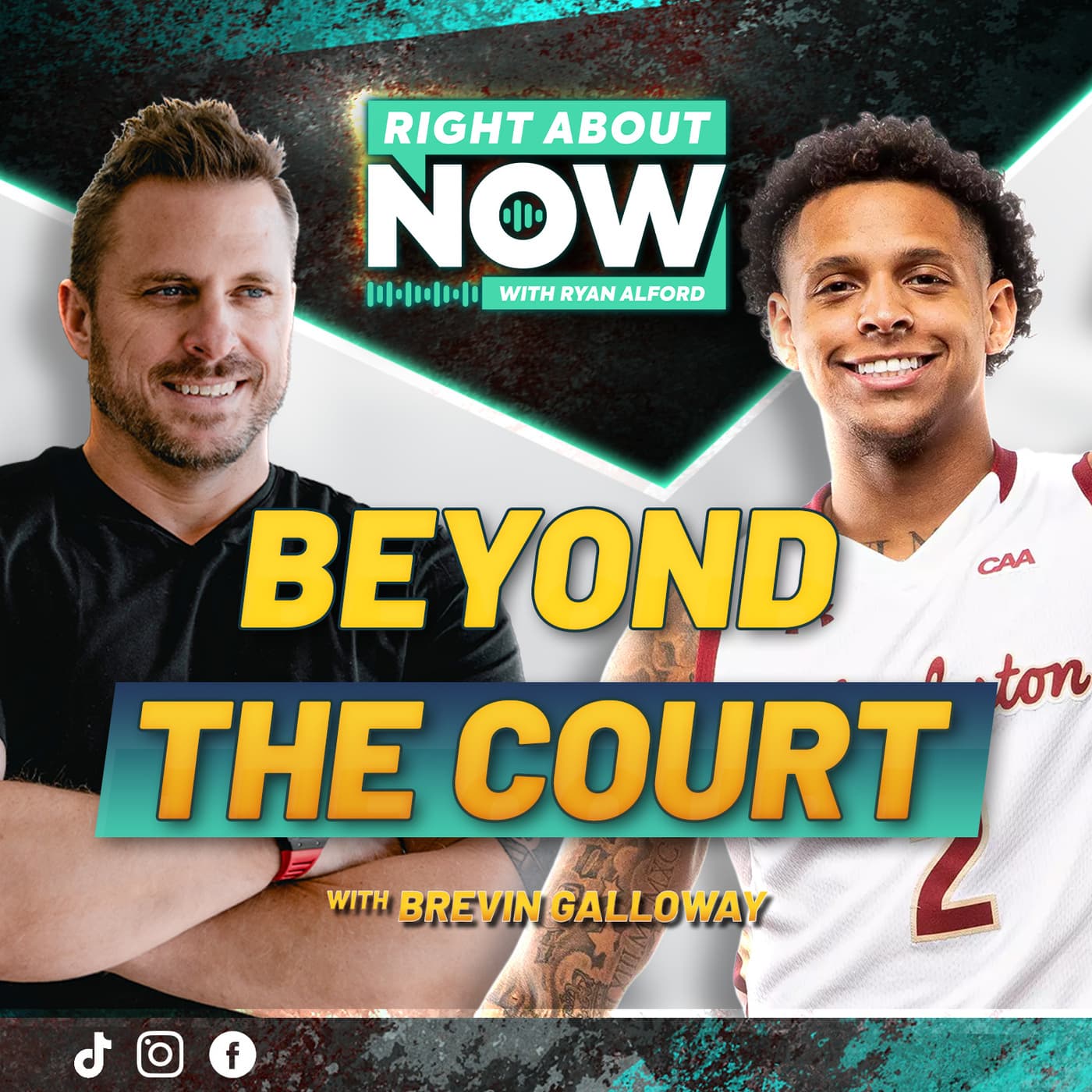
Brevin Galloway on D1 Basketball, NIL and Mental Health
Pro basketball player Brevin Galloway on surviving an ACL tear, depression at Boston College, early NIL deals, and playing pro ball in Lithuania.
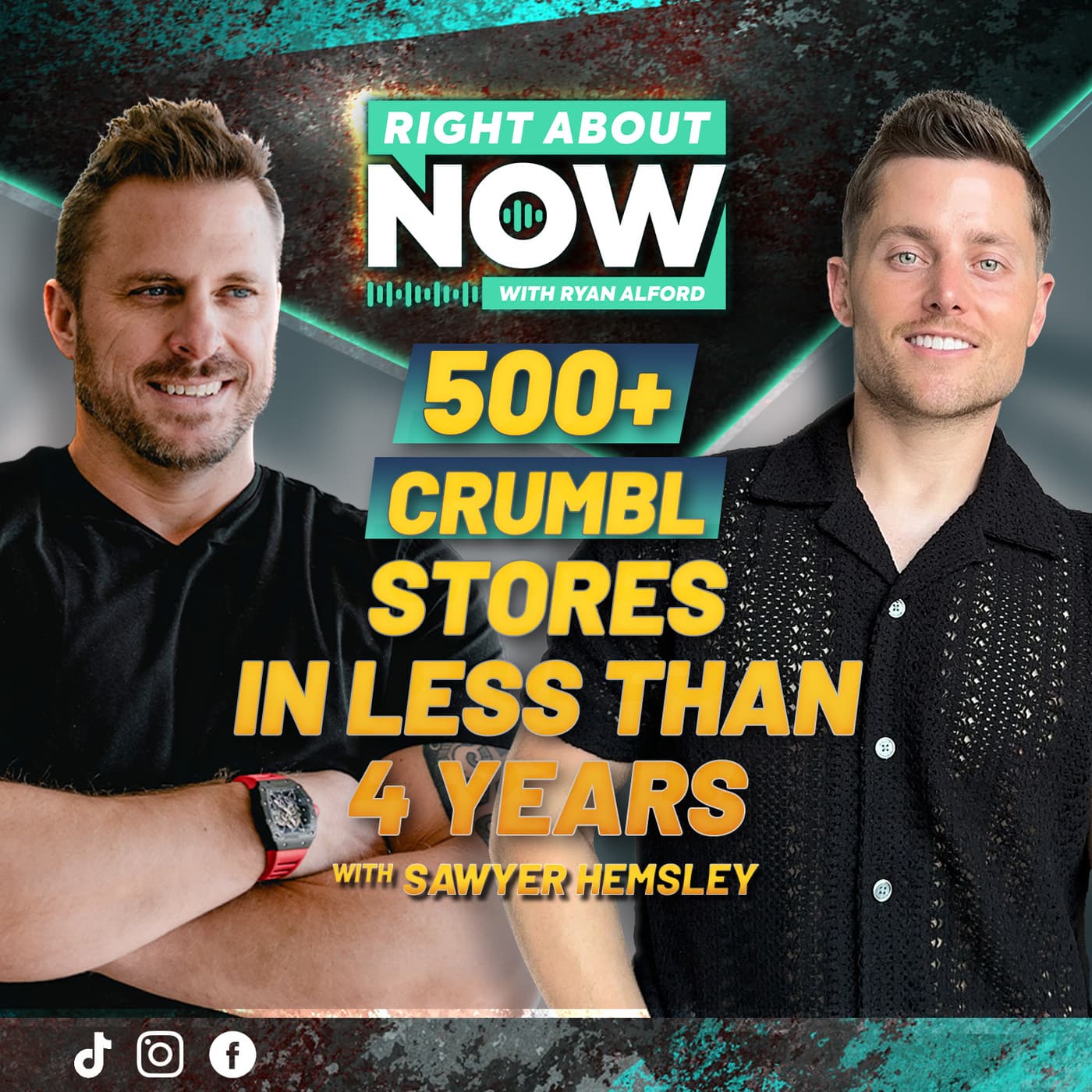
How Crumbl Cookies Grew to 500+ Stores
Crumbl co-founder Sawyer Hemsley on the rotating menu, pink boxes, in-house tech, and the organic Instagram and TikTok strategy behind 500+ stores.
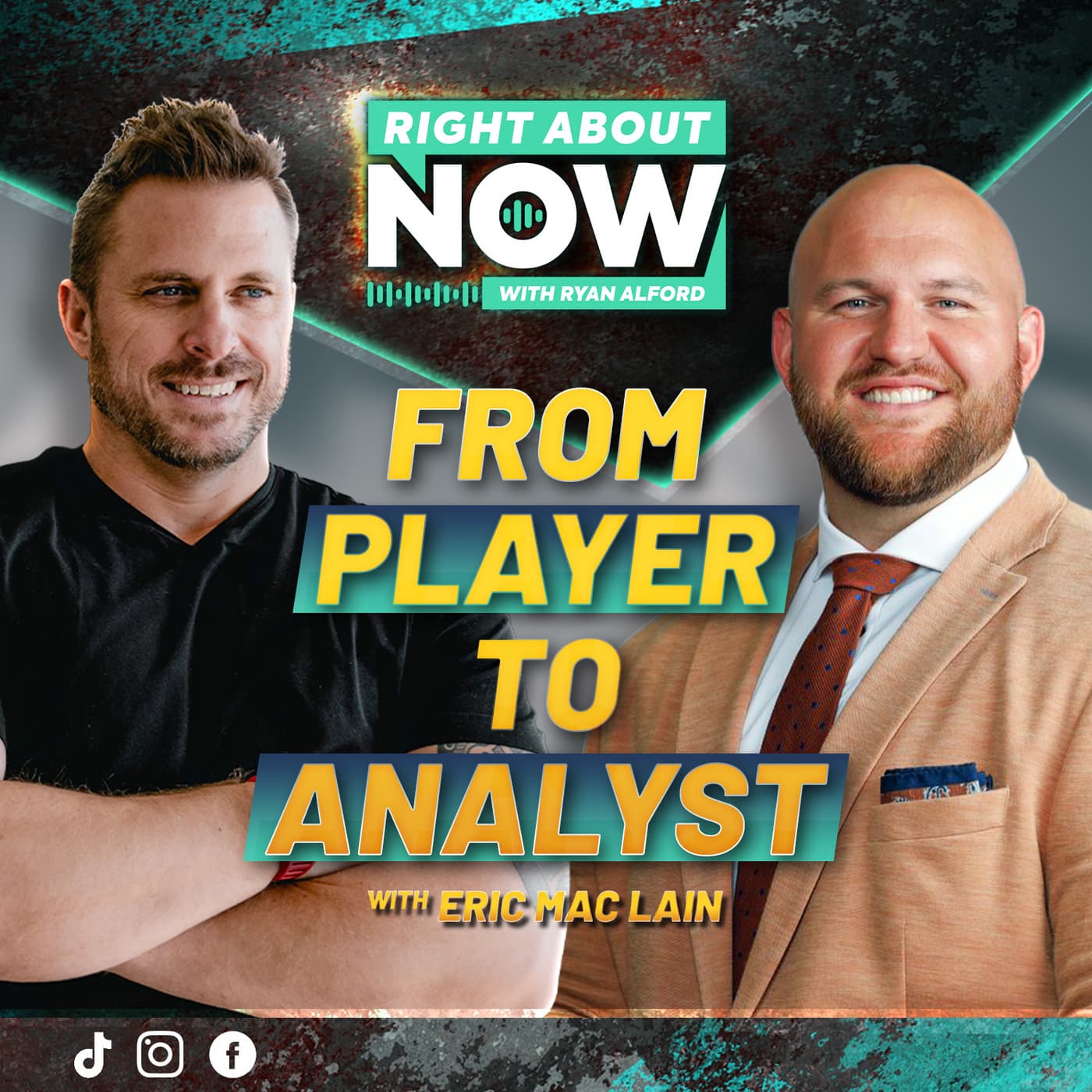
Eric Mac Lain: From Clemson Football to ESPN Analyst
Eric Mac Lain on his Clemson recruitment, the Alabama title game, learning sales at JMI Sports, the ESPN call he almost ignored, and why NIL needs one