
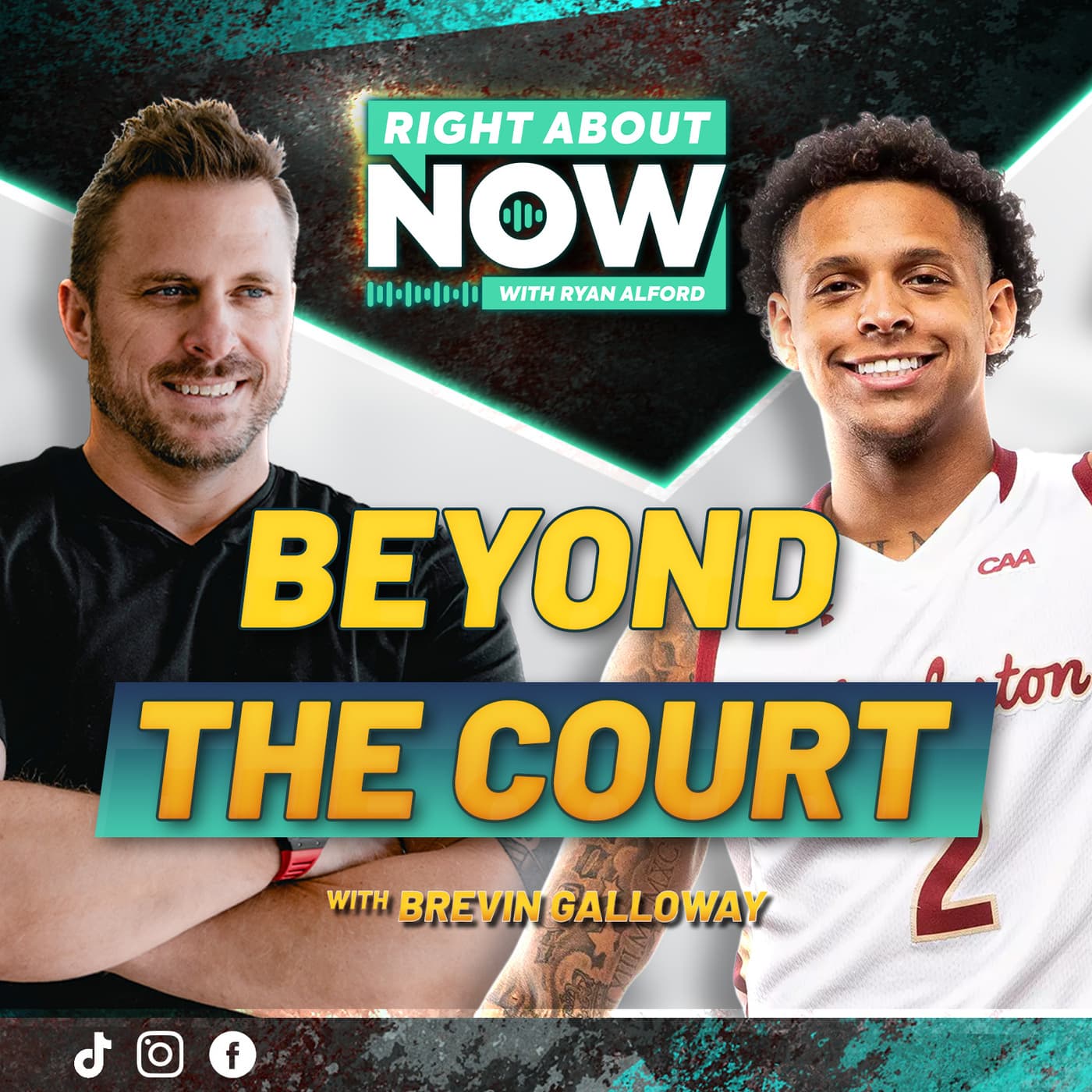
Brevin Galloway: Inside the Mind of a D1 & Professional Athlete
Pro basketball player Brevin Galloway on surviving an ACL tear, depression at Boston College, early NIL deals, and playing pro ball in Lithuania.
- :Expect more bad days than good as a D1 athlete — Brevin says early adversity is what matured him for the pro level.
- Athletes get flooded with DMs about points and missed threes but almost none asking how they're actually doing; normalizing 'it's okay not to be okay' is why Brevin posts about mental health publicly.
- NIL money follows attention, not just talent — if an athlete can't bring an audience or eyeballs to a brand, the deals won't come.
- Parents shouldn't force NIL on a kid who doesn't want to make TikToks; Brevin warns it can end up ruining the parent-child relationship.
- NIL compensation is often a combination of cash and product — Brevin's Amazon deal paid him to promote products and let him design his own clothing line; a jewelry brand sent free product plus paid TikToks.
- Treat social media as separate from real life; during his lowest period Brevin had to distance himself from Twitter to stop mean tweets from compounding his depression.
- Teammate Jerelle Brantley's line 'today could be the day' — the contract, the viral video, the good news — became Brevin's reason not to quit.
- Overseas leagues in Lithuania, Serbia and Spain offer real money and elite competition, and Brevin sees a content gap: almost nobody is making overseas basketball content.
- Consolidate your handles across platforms — Ryan notes that inconsistent names like 'Brevin 2743' and 'Galloway number one' create confusion and hurt your SEO.
I always have hope. That's one thing that I've always had throughout my life. I can take a bad situation of flipping it to a good one.
If I stop now I'll never go see the light.
As a college athlete in general, you definitely have more bad days than good.
This former college basketball star faced everything from a career threatening ACL tear to the intense struggles of mental health proving the battle off the court is the hardest one to win. Join Breven Galloway as he reveals his incredible seven-year journey navigating four different schools capitalizing on the chaos of early NIL deals and transitioning to professional basketball in Lithuania. You want the real, unedited truth about how to overcome adversity and build a global brand in the modern era of athletics. I always have hope. That's one thing that I've always had throughout my life. I can take a bad situation of flipping it to a good one. One of my femur teammates, Jerelle Brantley, he would always tell me that they could be today. That stuck with me
because you never know what day your whole life could slip. You never know. You could get the contract that day. Your video could go viral that day. You could get good news. If you stop then obviously you're never going to get to that good day or that good point. That was always in the back of my mind going through my dark time in my dark period. If I stop now I'll never go see the light. This is right about now with Ryan Alford, a Radcast Network production. We are the number one business show on the planet with over one million downloads a month. Taking the BS out of business for over six years in over 400 episodes. You ready to start snapping next and caching checks? Well it starts right about now. Hey
guys what's up? Say if it's radical we cover it. Well it's not only radical. It's a guilty pleasure. I guess I'm always a Climpson Tiger. You know once you're a tiger you're always a tiger. My buddy Brevin Galloway Pro Lithuanian basketball player and all-time Climpson grade. I'm just gonna put you on that list Brevin. Oh what's up there? I like it. I like it. That's a crazy statement. I love it.
Let's just tell everybody the ins and outs of Brevin's basketball journey and maybe just your life journey man. Let's go there. Yeah it's on recently from NHS Afterlana. I went to T on hand up for three years and I transferred to Seneca High School. I played basketball you know growing up my whole life. Always what I love to do. My dad was a really big part of my life in terms of playing the ball in my hands. Obviously the game was just kind of in me since a young kid. Obviously I was able to grow into a good player. Decent player I have to say and make a name for myself along those lines. Basketball has been nothing but great to me. It's been told me through a lot of adversity. Somebody had to be a
man, something had to grow up and just become who I've become. So I'm thankful for it. Well led you to Charleston. How was your time down in Charleston? Charleston was great. That was my first spot and I went because of Coach Earl Grant. Earl Grant was an assistant at Clemson at the during the time period before he got the job at Charleston. I already had built a relationship with him since Clemson was recruiting me and then once he got the job at Charleston it was kind of like an easy decision. I already knew where I wanted to go. It's been my four years. I trusted him. My dad was really really good friends with him growing up. I think throughout their college, after college, that's whenever they met. He
already had a relationship with him Bill. So it was pretty much just kind of easy yes at that point. He got a lot of you watching TV and everybody thinks they know and understand what it's like to be a D1 athlete. When you get hurt, the rehab or the practices and the structure and all that, walk us through through the lens. Just the ins and outs of that, stuff that maybe people don't totally understand was what it's like. As a college athlete in general, you definitely have more bad days than good. That's one thing that people kind of need to know going into it because not every day is going to be roses and sunshine. There's going to be a lot of storms that you have to face and just face head on early
in your career. I feel like that matured me for later on. But yeah, I think the biggest thing with just being a college athlete is really just overcoming it adversity because that's what it comes out to. When I think about myself as moments at Boston College, when I had to go through from a mental health standpoint, from dealing with depression, anxiety and the suicidal thoughts, people don't realize they were actually people too and we have feelings and we have needs that we need to attend to other than just performing stuff on the court because that's all the world sees. The world just sees how many points we have, how many I mean, three is we miss. That's all the demons I get. I never get any supportive demons about checking in all you are you doing like when
you're real life stuff, real life problems. I feel like that's just the kind of thing that college athletes have to deal with is just they treat us like super heroes. We can handle criticism in any kind of way. The anything that pops up we're just supposed to be able to just deal with it and they're not supposed to look pretty much like it affected us. That's probably the biggest thing that I learned throughout my college career was just it's okay not to be okay. It's okay to speak up about it and actually like let the world know that you're not okay and you make it back last year, which I do get on my socials. At the same time, the small percentage that I can't affect in the positive way is what
I'm going for. You come to Clemson Clemson's in desperate need of a shooter. You provide that and what was it like playing for Brad right now? It was great. I was thankful that he gave me the opportunity to come back home, especially since I'm from the area. I wanted that was a childhood dream. I'm on a place for Clemson. I'm very, very thankful for that opportunity. I'm the deal I made to do so, especially considering the fact that I had so many injuries and said back, you know, he could have easily picked somebody else in the transfer portal from my conversations. He trusted me and believed in me in the vision that I had for the program. It was a great honor to play for him, especially since you know, I went to all the kids
camps growing up and he signed the back of my t-shirts and stuff like that. So it was a good way to be able to play for him and have him yell at me actually, uh, for a couple of bets, a couple of mistakes, but it was a good experience nonetheless. For parents out there that are curious about this, what advice now that you've lived to breathe that you did well, you have done well. I want to talk about what you can talk about in that regard. But how should parents think about this and how could they start into maximize their children that have the talent to maybe get this kind of attention and be a D1 and all that? Is there advice that you give them or the athlete?
I think from a parents perspective, don't force an audience of your kids in terms of trying to hope for it because obviously, beginning in IO deals, I hate to say it, but it's just not fair in terms of who gets them and who does it just because it all comes down to attention, social media cloud, and followers, and you how it is nowadays. If you can't really make anybody else attention or bring anybody else in, money you're probably not going to get those deals. That means that obviously if you have the platform for it and if you love social media and you like doing that type of stuff, then yeah, go ahead and go all in for it. But if not, and you kind of just want to make extra money on the side and your kid doesn't really want to
give all in for it, then don't do it because then it's like going to end up just ruining your relationship with your fortune and awesome body. That has to stay from the kid from the parents perspective. And from the kids perspective, like I said, like obviously if you want a little bit of extra money in your pocket, you can get out of your comfort zone, make a couple TikToks, with a couple Instagram stories, and hey, you make it some free flow, free clothes, free gear, like whatever it may be. Like obviously I said, like the elite of elites get money for their content, but like I said, that's a select few. But yeah, really just do what you want to do. Obviously, if you want to get out of your comfort zone, you can. But at the end of the day, just do whatever
your heart wills. It's become fascinating to me, this balance between being the content creator and being the superstar athlete. Those two are very different things. Am I an actor or am I an athlete? They don't always come together, right? And never done it in like stress to people in the comments and see if all social media in general, like they treat you like one of the other. Some people see me as an athlete, some people see me as a goofy content creator. So I have to live with that, obviously, because that's the sort of position I put myself in. But still, in the end of the day, it's funny to think about like how really people treat you differently off of, based off how they view you.
Like it love to hate it. I mean, social media's here. And if you can get your arms around it and embrace it, it brings a lot of opportunity. But it can have the impact negative too with mental health and all that. You got to be able to compartmentalize it, right? That's where I've had to learn. And that's where I feel like I'm a shirt and grew during my time here in Boston because obviously I got on social media. And that was whenever I was at my lowest in terms of my weight, depression, my suicidal thoughts, mental health. That's where I was fighting for my life pretty much. While I would get on, I was artistly battling demons inside of me at my mental world. And then I would get all Twitter
and then see all these other mean tweets about me. So I'm like, I really have to remember social media is not real life. Take a break from it and kind of distance myself from it. And obviously seeing those tweets about me hurt. I live two years now. And it's just well, I'm happy that I was able to kind of face all that head on because this made me tougher, mentally individual and stuff like that. When you look back now, it never goes away. We're all human beings. We're dealing with struggles every day. What have been like tactics or things or people? What kind of got you through to the other side? I always have hope. That's one thing that I've always had through in my life. I can take
a bad situation of flipping it to a good one. One of my femur teammates, Jerelle Brantley, who played in the NBA and he plays overseas now. But he always like growing up. He was my teammate at Charleston and he would always tell me that they could be today. That stuck with me because you never know what day your whole life could slip. You never know. You could get the contract that day. Your video could go viral that day. You could get good news. If you stop, then obviously you're never going to get to that good day or that good point. That was always in the back of my mind going through my dark time in my dark period. But stop now, I'm never going to
see the light. That was something that's always stuff on me probably throughout that old process. Were you getting paid for some of these engagements between Boston College and Clemson? Were you there some that were dollars and some that were trade or merchandise and those kind of things? Combination. Yeah, it was a combination to both certain companies. The way with Amazon, I partnered with them and did like my own look clothing lines. I was able to meet my own graphics. I got paid to promote their products and then I also got to have my own clothing line to the side. So that was one of the cooler deals. I feel like that I did throughout my time at Clemson. But yeah, and then I have a shopgoal deal. Vanessa jewelry company. When I was there,
but they obviously sent me free jewelry and then I made TikToks and got paid for that. I mean, it changed. So those are two of my favorite deals that I probably did with the LAO space. You obviously can get Burkin Dice and pay for both depending on which company and what the contract is. So what's it been like leaving Clemson now playing Pro Ball in Lithuania? Talk to me about that process and the transition. Obviously, it's a night and day difference in terms of just a culture and everything. Obviously, I'm out here. I can't understand anything they say. So I just have a Google Translate a good bit. Other than that, the people are really, really nice and welcoming. Yeah, the city that I've been in, Lithuania is cockadini. So it's one of the same size as Clemson.
So it's not like it's really that big in terms of like a size difference. But yeah, I mean, it's been great out here. Obviously, I got to get adjusted to food. There's no boat jangles. There's no McDonald's, no winkies. They got the McDonald's, but it's an hour away. I'm a fast food guy. I really, really, really love and miss my fast food. At the end of the day, we're just playing basketball with a whole bunch of guys. Obviously, it's still got the same type of vibe in the locker room. It's a little bit more in the line in terms of, you know, the league they were playing in. I'm in the top league in Lithuania. It's the same exactly like Lamella Ball and all them play in. Whatever
they've spent their time in Lithuania, well, respectively. So I'm excited to be here from our rookie season. It's a great platform for me to be able to level up quick to both of have a good rookie year by year. You get through your four. I'll be able to be making a lot of money doing this. I'm happy and excited for this future. Yeah, there's a lot of money over there. There's a lot of fans and support for basketball overseas. Definitely, especially it depends on what country you land in. Serbia is crazy. Basketball is really, really crazy. I'm trying to think where else the league's in Spain, the early, really, really high level basketball over here. And there's a lot of NBA guys coming over here playing to obviously what they kind of get later on in their careers.
But uh, so yeah, I mean, there's a lot of big names and money to be made over here. Obviously, basketball, for sure. How's your game these days? You still stroking it? Ain't we going to be beautiful. I can't wait for you to see the highlight. So it's going to be a good year for me, for sure. And I was, I'll leave it at that for now. I'm excited. You're playing point guard, though, right? Yeah, I'm playing point guard. How's your squad overall? We're actually going to be a lot better than what I thought because obviously you never really know until you get on the court with everybody on the side. A lot of basketball coming up. So we're excited. It's one of the best players in the NBA right now from overseas. Every other big name is from overseas these days.
Basketball competition is high over there and I'm sure you're feeling that or seeing it, the skill. That's the biggest thing is that obviously the NBA will be lovely to play in, but at the same time, I want to make sure that I'm able to play in like, because obviously, I got a fault for NBA spot or just in that. Would I have played probably not? And I want to make sure that I'm in play actually enjoy my career while I can because that's what's really matters. And like you said, like the conversation and respect over here is big. It's not like you're just playing against 40-year-old men. Like now you're playing against some elite guys. Breven, where's it all headed, man? We all got to ride a road story. We know you're going to be
putting the effort in. We know you got the game, but obviously the shit happens that you can't control. What's next five or ten years? Just live that road basketball dream and go as far as you can. I mean, where you want to go with your career and everything? Definitely want to play the top level ball over in Europe. It's possible. I want to play in the Urali. You kind of want to be known as a dominant guard overseas. That's just what I envision for myself. I want to be an international celebrity as well, you know, with the social media life and you know, take time, and do all that type of stuff because I love content. That's another half of me that I have to
be able to do it, in order for me to be fully happy. So I just want to be on top of the basketball stuff, be on top of this content career stuff. It kind of want to be known for overseas basketball because I feel like there's not a lot of content creators that are doing overseas basketball content. As you do videos, I've made these past couple weeks, I did well numbers on social media. I'm excited to start that journey as well in terms of that. So yeah, I'm excited for everything. That's the modern player, man. You got the game. On and off the court, the social media gave and the game. It's a winning combination. Speaking of those social media channels, Brevin, we're here. Everybody wants the latest content. I'm bringing Halloween on every single
platform. I want to make sure that we limit the confusion. That's smart. Your way ahead, as a marketing guy, you got to put together. You know, Brevin 2743, Galloway number one. It sounds cool, but it gets confusing. It hurts your S.E.O. too. I love it, brother. Well, I really appreciate you coming on the show. It's been great watching your journey. Once a tiger, always a tiger. Yes, everybody. I appreciate you. It was an honor. Thank you for having me. Hey, guys, you know, to find us, search for Brevin Galloway, you'll find all the highlights clips from today, and go give him a follow on TikTok and Instagram. He's blowing up and doing a great job with his content. You know, to find me at Ryanoffer, that blue check right next to my name before I could
buy it. We'll see you next time. This has been right about now with Ryan Alfred, a Radcast Network production. Visit RyanisRake.com for full audio and video versions of the show, or to inquire about sponsorship opportunities. Thanks for listening.

Brevin Galloway on NIL, Mental Health and Pro Hoops
Brevin Galloway on his Charleston-BC-Clemson journey, landing NIL deals with Mercedes and Amazon, battling depression, and playing pro ball in Lithuania.
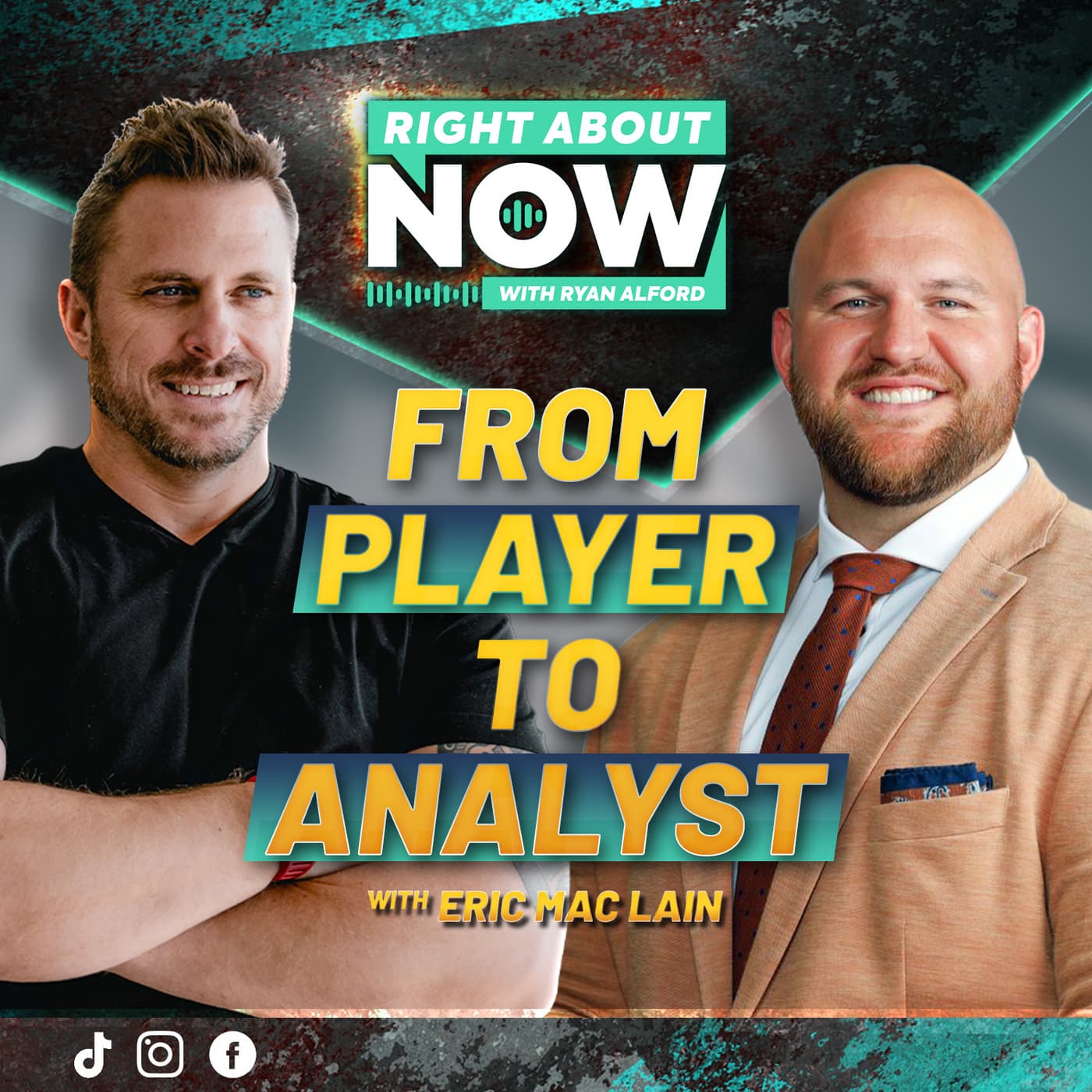
Eric Mac Lain: From Clemson Football to ESPN Analyst
Eric Mac Lain on his Clemson recruitment, the Alabama title game, learning sales at JMI Sports, the ESPN call he almost ignored, and why NIL needs one
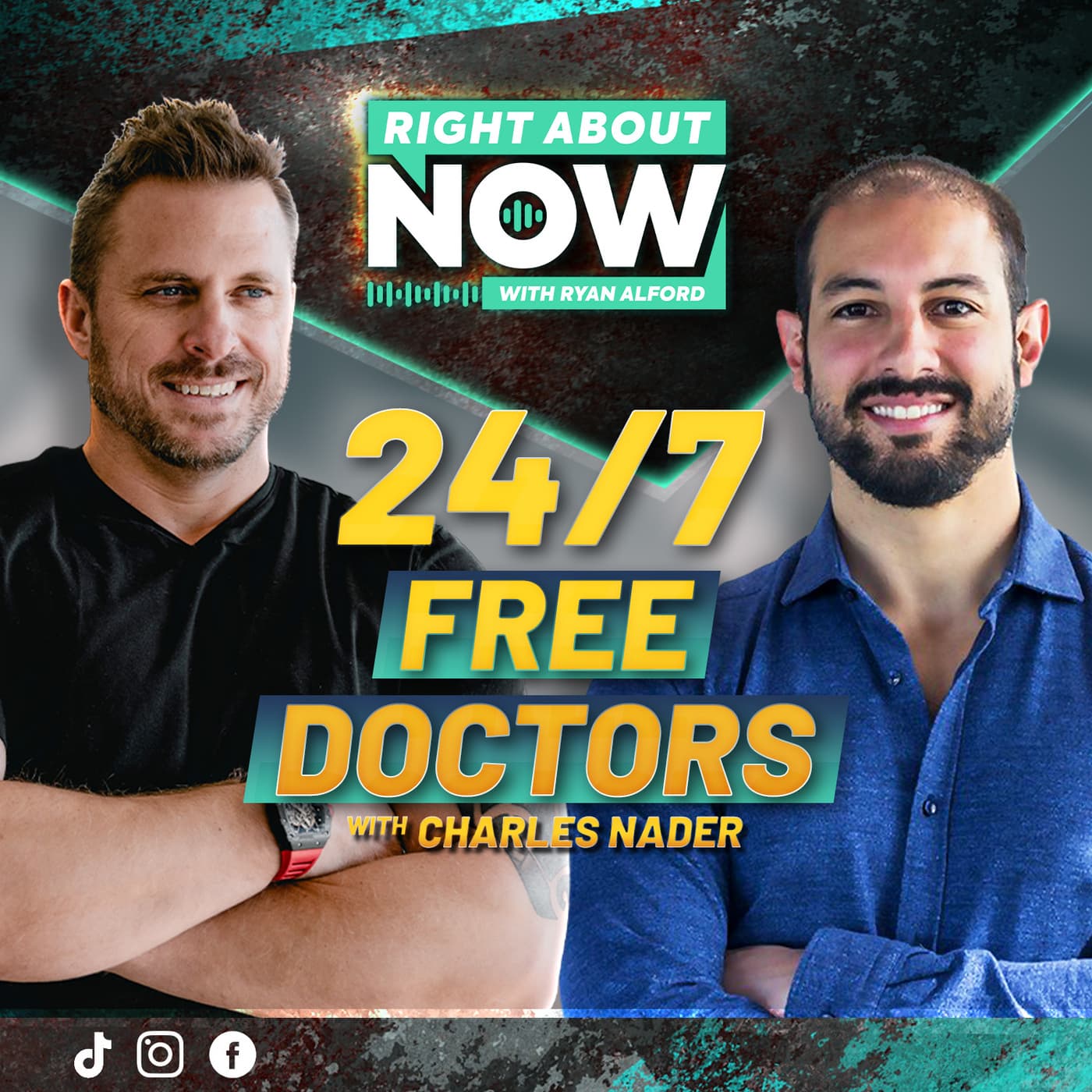
Charles Nader on Doc.com's Free Global Healthcare Model
Doc.com CEO Charles Nader tells Ryan Alford how AI telemedicine, a pharmacy-funded model and a NASDAQ listing can make free basic healthcare global.