
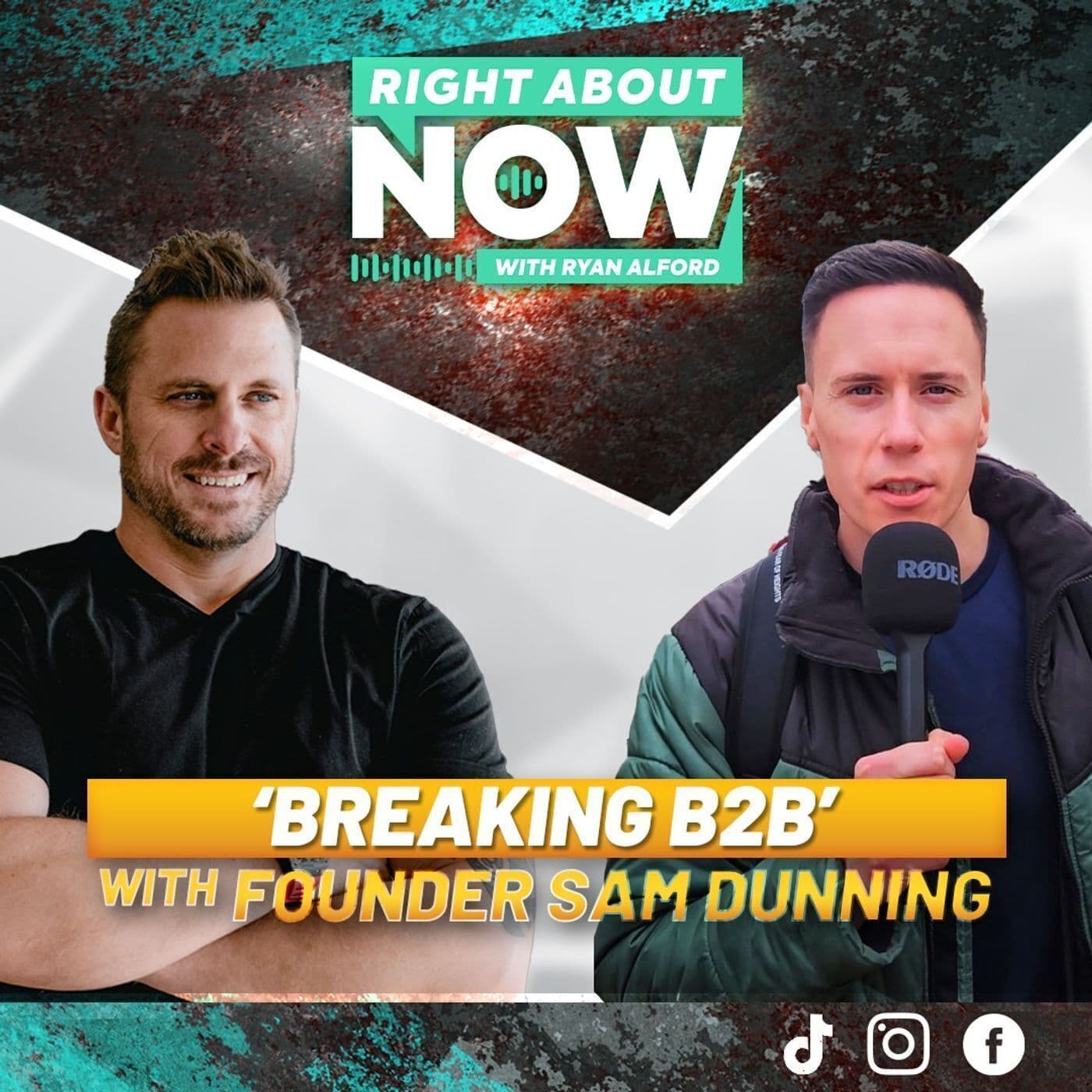
Breaking B2B with Founder Sam Dunning
Breaking B2B founder Sam Dunning on the grunt test, customer research interviews, page speed, publishing pricing, and landing pages vs websites.
- Run the "grunt test" from Donald Miller's Building a StoryBrand on your homepage hero: a first-time visitor should grasp what you do, how you help and how to get in touch within three to five seconds.
- Interview five to ten recently onboarded clients or cold-fitting target prospects — not long-term customers, friends or family, who are too biased — and look for patterns to build your headlines and messaging.
- When a research answer is surface level ("revenue is dropping"), keep asking "why" and "what do you mean by that" until you reach the expensive root problem.
- Test your problem statements before committing them to the site — Sam validated his three via cold email, cold calls to CMOs and VPs of marketing, and LinkedIn posts.
- Check your site in Google PageSpeed Insights; common culprits are too many WordPress plugins, too many embedded videos, and huge unoptimized JPEGs instead of WebP images.
- Publish at least indicative pricing ("prices start from..." or tiered plans) — the pricing page often becomes one of your most visited pages, weeds out tire kickers and builds trust.
- Add an FAQ on service and pricing pages that answers the actual objections you get on sales calls; it saves call time and speeds up deal cycles.
- Use a landing page only for a single low-ask offer such as a guide, playbook or a $50 product; high-ticket B2B buyers touch multiple channels before they ever inquire.
- Add a "how did you hear about us?" field to your booking form and verify it on the sales call to build a feedback loop across channels.
one of the biggest killers of website performance is ego.
The website in most businesses case is not for us. We are not the buyer.
I used to think that you had to well people all the time and really it's more about understanding and resonating with folks compared to just trying to make yourself sound really cool.
Remember those endless summer days that felt like they just last forever? Sunrays kiss your skin, grass tickles your toes, as you bite into the creamy popsicle melting in your hand. Pure, unbothered bliss. Capture more sun-drenched memories with the orange vanilla dream hydration multiplier from LiquidIV. This nostalgic vanilla flavor with notes of candied orange can help keep you hydrated while savoring your favorite golden hour moments. No matter how hot your summer gets, just one stick of LiquidIV and 16 ounces of water hydrates you better than water alone. It's three times the electrolytes of the leading sports drink, with eight vitamins and nutrients for refreshing on-the-go hydration. Live your summer dream with LiquidIV. Terror, poor, live more. Go to LiquidIV.com and get 20% off your first order with code
indulge20 at checkout. That's code indulge20 at liquidIV.com. As much as we want our websites to look great, to have great features, have pages that share information about us, and so on. The website in most businesses case is not for us. We are not the buyer, we are not the person that's going to be landing on the site and potentially request to do business, book a demo, book a sales pool, whatever that action is. This is right about now with Ryan Alford, a Radcast Network production.
We are the number one business show on the planet with over 1 million downloads a month. Taking the BS out of business for over six years in over 400 episodes. You ready to start snapping necks and caching checks? It starts right about now.
What's up guys? Welcome to about now. We're making it right right now. And, hey, everybody, we always, especially, I don't know, clients in the agency world, it's always discussion about how you do better marketing, how you do better, B2B marketing. So, we've just had to go to the expert. Sam Dunning, he's a founder of Breaking, B2B. Welcome to the show of Sam.
Hey, Ryan, appreciate you having me on, man. We're really looking forward to the conversation and excited to get stuck in. Yes, exactly. And not just like my accent gives away that I'm a Southern guy from other states, it's clear you're across the pond a little bit. Where's home, Sam?
Yeah, so I'm Southern as well, but Southern in England, so I'm right in the Southwest, for any folks that are familiar with England, I'm near a city called Bristol, probably about two and a half hours from London in a little town called Yovl in Somerset. That's where we're based. It sounds lovely. Is it as lovely as it sounds?
It's good until something like snow happens or torrential rain, so down south in the England, we're just not geared up for it. So, as soon as something like that happens, everything just shuts down, man. We're just like, look, being in my houses, but that's not nice countryside. Hey, it sounds more and more like South Carolina. It's the same way here. We get even a dusting. There's cars wrecking and all the bread and the store's gone, and so yeah, maybe we have a lot of like in that regard. But yeah, man, I appreciate you joining the show. I have this discussion a lot with our clients and I even, I'm even guilty of this as I told you pre-episode. We all toil about our marketing, our website, especially in B2B.
And I know you focus a lot on that and a lot of what your company does. But before we get into it, and I know we talked about you're getting into some of the deadly sins of B2B websites. Let's just set the table for everyone, Sam. Let's give everyone your background and a little bit of your career story and trajectory. Yeah, sure, man. I'll try and give you the short of version. So probably I started off in business where as my first job was in the retail world, which is funny because probably about a year and a half in, I realized that I absolutely hated working in retail. So I worked in a shop called Jessups for anyone not familiar with that, setting like camera equipment. So it's, it relates to what I do now, just like yourself,
I want to podcast. So that was where my keenness for it came into setting like video cameras, SLRs, tripods, anything associated with cameras. But I soon realized that although I love media, I did not like dealing with the general public. I soon learned that I don't know what folks are like in the US. But when you go up to someone and say, can I help you there or how are you doing there? People in the UK just run at you and almost moan at you, they're swearing at you and probably about a year into that role. So I'm really hating this man. I was probably 18 years old. And then my cousin said he was actually recruiting at this web agency at the time, a company called web choice. He said there's a project management strike sales role going.
I said, sounds good man, I'm tired of this. So I took an interview the next day and thought, yep, jacked in that retail job started working at a web agency. And essentially it was like a jackable trades. So started off kind of project managing websites, doing a few sales calls, learning how design sites, learning what was involved in digital marketing to start growing businesses. But a quick funny story. One of the first leads, one of the first sales inquiries they ever gave me, I called them up. And this lead came in, I called the guy and he wanted a web, this is probably about 12 years ago Ryan. And he wanted a website, no joke, that was pretty much the same spec as LinkedIn. Quite a small black web. I'm joking, probably the biggest platform
you could go, yeah, exactly. Probably the biggest scope of work for a web project you could even imagine. And you actually, I think I quoted it. This is the even funnier part, probably not that funny, was I think I quoted him. I just, because I had no clues at the time about sales and I was 18, 19, roughly now I'm 33. I just said, yes, every request on the sales call. I just said, yes, having no clue if we could deliver it. And then somehow sold this first ever lead that I took on, but sold it, I couldn't have undersold it anymore. I sold it for 500 pounds, which is probably equivalent of, I know, 7, 800 bucks. And luckily, yeah, that's insane, right? Like even however many
years ago, that was like 14 or so years ago, it's still insane. So luckily, we started doing a few designs and then this guy let us transition it off, cross over into other work, because he realized that the spec was too crazy. Luckily, this guy was quite friendly and understood that I was new. But yeah, as the years went on, I've had other jobs in between kind of working web agencies, like nearly join the army, worked in a cool center, worked for a marketing agency, was going to be a paratrooper, none of which worked out. And then I've always been drawn back into the web and SEO world. And I think what kind of resonated with me was the fact that you could use a website as
almost like a salesperson itself as it's live 24. Seven working around the clock. I love the fact that websites can really fuel a business within queries with sales leads and all that good stuff. It really can be the heart and soul of the business. And that teamed up with SEO. I talked about quite a lot on episodes and podcasts like this, where you can rank on Google and drive organic traffic. The fact that you can build this site to fuel your sales team really intrigued me. And that's why a lot of the way I talk about is geared up around this stuff and then eventually became a director in my last web business, which I've exited and then recently started this year fired up breaking B2B, which is a B2B SEO and web agency. And we also run podcasts, which is
themed around B2B marketing, where we interview practitioners and a B2B marketers and founders who are breaking B2B as well. Sounds similar journey to a lot of people are you're finding your passions, finding your skill sets and ultimately finding fascination and interest in something and then hard honing in your skills around that. If I'm summarizing well, Sam, at least that's what I'm hearing. Making a lot of mistakes as well. Let's not forget that. Yeah. Doing a lot of stupid stuff. The LinkedIn is just the tip of the iceberg. I've made so many stupid mistakes over the years, man. I'm trying to make silly things. But that's what you could try to imagine speccing that out after the fact because on its surface, if you go even now,
much less than 12 years ago, if you go on the surface, it doesn't look that complicated like the UI, but it's all the functionality and databases and all the stuff that you can't see. This is actually what right down probably even for, I've sort of linked in used like some gigantic digital agency wherever and spit millions of dollars on it. But at the same time, even like in a small agency, just speccing that out, that's probably two or three hundred grand. Easy. It's like when I've had sales inquiries and years ago where folks would say, I just need a website like Google, just a simple one page like Google. I can pay 300 bucks and we can get it done and then I'm just falling off my chair in laughter. Yeah, exactly. You don't know
what you don't know. Turning to me side, it is fascinating that you have this both quandary and opportunity with websites that you want it, you want it to look great. You want to be proud of it. You want this aesthetic that has been the historical perspective of your brand and all those things. In reality, you have this great opportunity, like you said, to deliver a sales funnel and leads if you can get out of your own way.
And I think even today working with particularly medium to larger companies and maybe even small companies, it depends on who's in charge and what their aesthetics are. But I think there's even today the battle that happens with what it looks like versus what it does.
How do you approach that and is that still a common refrain that you hear? Yeah, what it looks like versus what it does. I think if I may, there's a mistake that a lot of folks make with their website. And one of the biggest killers of website performance is ego. So to dive into that a bit deeper, what I mean by it, and that could be if you're running a small business that you're the founder and you're doing all the work on your website yourself or maybe you're getting a contractor. Maybe you're a larger organization and you've got a marketing team that are going to be delivering it. You've got a team of execs that can be delivering it. But what you've got to realize is as much as we want our websites to look great, have great features,
have pages that share information about us and so on. The website in most businesses case is not for us. We are not the buyer. We are not the person that's going to be landing on the site and potentially request to do business, book a demo or book a sales tool, whatever that action is. We've probably got a warehouse full of our goods, our services or for a technology business. We've got almost unlimited supply within reason of what we can deliver. So one of the biggest issues is that folks spend all this time designing, building the copy, the content, the messaging, building out the pages. But they do it all for what they think looks good as either the marketing or the founder of the business. The issue with that is unless you
fit your idle client persona 100%, which is pretty rare, your focus clients, aka the people that you want to inquire on your website or to buy your stuff, probably you're not going to resonate with it as well as you think they are. And we're often quite biased, right? And I've made an mistake on my own websites in the past. You become too attached to it. You start using copy and text like on your website headlines like award winning, best in class. We've been in business a hundred years and all this kind of stuff, which we think in theory is going to work. But most of the time, if folks are landing on your website, especially your homepage, which we can dive into the fundamentals in a sec, usually folks want to quickly get an idea of exactly what it
is you do, how you're going to help them and how they can take that next step. Especially in the times we're in now with AI fast, improving people at times, sure. So they don't have tons of time to scroll through your website and work out exactly what problems you fix, the value you bring to their life and how to be able to contact you. So that's a taster into it. For sure. I love the thought you started it as a first thing said, you go, we all think we know what's best and we have what's in our mind. And a lot of times that's serving like you said ourselves instead of our audience, instead of our target. Because it reminds me a lot of like discussions I've had
over the years with marketing executives and clients and like having to tell them that the bragging stuff, the speed, the feeds, the stuff that you're so proud of about your product, about your service, about what you do, you're so proud of it. But it doesn't translate to necessarily solving an issue or a problem for your client. And that sounds very much like the discussion we're talking about now when framing up, especially to keep positioning on the homepage, right? Yeah, yeah, exactly. And these issues like you mentioned there, Ryan, they're not just appropriate for your website, they're appropriate for marketing in general. These are fundamentals, right? When you're building for, when you're building marketing assets, be that website content, website messaging headlines, be that ad headlines, whether it's for Google ads, whether it's for
LinkedIn ads, Facebook ads, et cetera, whether it's other marketing collateral, you've got to put yourself in the shoes of your Fergus clients, the people that you want to stop in their tracks, attract, grab their attention, and then point them to take an action, whether that's to learn more or could demo, check out your case studies, whatever. So one of the biggest things that you want to do, like at the very start of a website exercise is actually, and I spend some time whether that's yourself as a founder or with your team, and really get down to basics, like what exactly do we want to get out of this website? Because I think that's just an exercise that people don't do. They get into the design, they get into the exciting stuff, but they skip out the fundamentals.
In B2B, I most B2B companies, most folks that I've interviewed maybe 350 or so marketing execs on breaking B2B, and from my experience, typically, what they want to see on a B2B website is a quick idea of what you do or the problem you fix and how you help. They want to see some proof of results, so that could be case studies, testimonials, review videos, accreditations, walkthroughs, etc. They want to see some kind of proof of your offer and action, so if you're like a technology or software business, maybe it's a demo before trial. They usually want to see how much it costs, so some kind of indicative area of pricing, whether that's bullpark figures, starting ranges or packages. They want to get their questions answered, so maybe you've got FAQ
sections of relevant sections, on relevant pages, address those key questions that come up in sales schools, and then they want an easy route to speak to sales, so maybe that's weaving in a calendar or similar to someone can book time directly on a sales rep calendar or using a tool like revenue hero, which is similar to calendar, or a simple to fill out form or book or call whatever that is. That's usually the fundamentals of what people want out of B2B site, but one tip that you can do is if you really want your website to resonate with these target clients that you actually want to buy your stuff and generate leads for on your website, this is something that's skipped by a lot of websites, and it's understandable because it takes a bit of time. It's customer research,
so what I'm saying here is basically interviewing anywhere between if you can 5 to 10 recently signed or recently onboarded clients, or if you don't have access to that as a new business, folks that fit your target persona, the people that you want to go after, and you may have to offer them something like a free console or something perhaps there's a free low ticket item you can provide, but from these people you can get golden nuggets, which is really going to make your messaging, your headlines, your content resonate, because these are the people you want to attract and convert. This is where you can ask them things like, if it's a recently onboarded customer, what was the frustrating problem that kind of tipped you over the edge of what was coming so
annoying that stopped you in your tracks that kind of made you decide there's time to fix it and reach out to a company like ours, and that's going to be really impactful for your headline, something like that is useful to know. What do you care about seeing on vendors in our sector, in our industry's website? What are the main things you quickly want to learn, see and take action upon? Again, these are golden nuggets because it's actually going to give you that spill the tea on what people actually care about seeing on the site. How do we stack up, in your opinion, as agencies or other companies or other similar businesses in our sector, and if you have got an existing website, you can ask questions around what do you feel is missing on our current website,
so that can give you some really insights like they might say, we don't have a pricing page, or a case studies are quite thin, or I couldn't really understand exactly what it is you do, or it's quite difficult to contact you. So my point here is you're doing these 5 to 10 interviews using a transcript tool, maybe a lotter, or similar, so you can dissect the notes after each call on Zoom. And then from there, you want to look for patterns, once you do 5 to 10 interviews, you'll see patterns in people's responses, you'll see common things that come up, like might be, this is the juicy problem we fix, this is the main outcome people want as a result of working with us for clients that we've already worked with, this was the main outcome we actually
brought to them. Okay, excellent, we've used this problem in this solution, and maybe our website headline, i.e., we do x, it fixes y, it's our headline. And you get all this juicy intel that it's going to basically mean that you're not designing and building your website on guesswork, you're building your pages, you're content, you're messaging them more based on what real potential clients or existing clients care about learning, seeing and doing. So that's one of the vital steps, takes a little bit of research work, but if you're a kind of growing organization, it's something that's going to be worth its weight in gold. So it just means your website's going to convert that and sure. Let me ask you a question, Sam, and that is very good, practical advice. It makes a lot
of sense, like when you should hear this thing. The only thing, like, like, that I, what I think about that, and I think about it, I know we're talking B2B, and it's different. So I just want to talk historically. Consumers don't always tell the truth. Whether they're, if you Steve Jobs would have asked consumers if they wanted the iPhone, or if they wanted an iPod, or an iPad, if you were to describe it, ask them, and I know that's a transcending category. But at the same time, it's like, when do you know your constituents, your consumers, do they really know how to frame and tell you what they want and what they need? Have you ever come across where you felt like you've been doing that research? And you're like, this, I know what they're trying to tell me,
but I don't know if they're quite distilling it to what really is valuable. Yeah, yeah, yeah. So there's a few elements to this. So I'm not a customer research expert. We've interviewed a few on breaking B2B podcasts. So you've asked a great question there. And one thing you want to be careful with is who you interview. So you don't want to interview folks that are biased towards you. So that could be long-term customers because they like and trust you already. And they're probably just going to say anything that pleases you. So if you interview like your cousin, your auntie, or you've built stuff or likewise, maybe customers that have been with you months or years, don't interview them. They're too biased. You want to interview folks that
you've only just onboarded because they don't know that much about you really or prospects that may be even a bit cold. They just fit that kind of profile, the type of business, the sector, the turnover that you're going after. And the reason we want to do 5 to 10 or so interviews is we're not biased. So we're looking for those patterns and what people say. And you've got to dig in. So you've got to be willing. So for example, if you've said to them what are the main frustrations that might cause you to look at a product or solution like ours, if someone gives you a surface level answer, I don't know, maybe revenue is dropping. You say something like, why is revenue dropping? And that's what they might say. It's taking more and more time for us to deliver
this service or to deliver this solution. And then you go, what do you mean by that? They might say something like, let's pretend for a minute we provide accounting software. They might say, we're finding that our reps are stuck in excel sheets for hours each day, trying to work out these statistics and these solutions and go, okay, so what kind of what's that doing to business? Well, all these hours could be used on client work, which would mean that we could turn over stuff much quicker. And that's where you're getting to the root of the problem. So there's a few elements to it. And this could be a huge discussion itself. But one is interviewing folks on biased. Two is not being afraid to dig in when you're
asking these kind of questions. And thirdly, it's looking for the patterns. So the things that keep coming up, whether it is around the problem you fix, whether it is the value you provide, the solutions and what folks care about to dig out those golden nuggets that you can then weave into your website messaging, ads messaging, et cetera. Yeah. I've had this debate with people. And that's a great answer, Tim. I think it makes a lot of sense. And I've had this debate with certain people at a broad level of R. And I'm using the word, we're talking about B2B consumers here in this context. But I said of calling them B2B professionals, we'll just call them the consumers of this discussion. Are consumers, are they problem aware?
Do they truly know, do they know their problem? I have that discussion with people sometimes. I'm not sure they know their problem. Yeah. Not always. Yeah. It's like they, they know there's issues, but they don't know exactly what the problem is. Yeah. Yeah. Yeah. Usually as business owners or as marketers in general, when you're doing this kind of stuff, you have to go in with a thesis or an assumption. So you might say, for example, like one of our, if I give you a tangible example, like what we've got as a business, we have three main problems that we tend to fix. One is if it's straighted, when target clients search for your offer or your service competitors are constantly ahead of your Google kind of stealing traffic or an opportunity. The second is maybe you're getting traffic
to the website, but it's failing to convert into a steady flow of inbound leads. All the third is, you've got an agency already, perhaps you're a bit wary or a bit concerned, they're not delivering. So that was the three, in our case, the three problem statements that I refined over time, but I didn't use those straightaway. In my case, I put them to the test. So I'd grab this intel from customer research, but then I thought, wait, let's test this out. So I did cold outreach using it, cold email. I did cold calls myself to my target market to VPs of marketing, CMOs, marketing offices, demand generation, folks at a kind of high level B2B companies and see if it resonate. I put posts out on LinkedIn with these kind of problem statements and then weaving in
stories to see if it resonates to you. A big part of not just website design and messaging, but marketing in general is going in with assumptions or ideas and then running experiments to see if they actually resonate with your target market. Some will find, keep them rolling. Some you might test on ads, for example, for, I don't know, a couple of months, maybe less, and then they flop. So great, I've learned that doesn't work. Let's move on to the next test. Was there anything in that exercise that surprised you? Was there maybe a hypothesis that you would just absolutely have thought to be true that just proved otherwise? I've fallen flat on my backside many times with things. Not so much of that because I had gathered that with interviews
I'd done over so much time on my podcast and stuff like that. So I was pretty sure. But when I first started, for example, when I first started selling websites and SEO and stuff like that, I used to think that the only way that I could do that was to wow potential clients. So I thought that as, in my case, as a founder selling, that it was my responsibility to just not the socks off people straight away. And before they could get a word in edgeways, I should say things like we've been in business 10 years. We've won all these awards. I've got all these case studies. I've done all this stuff, which there's a time and a place for that. But as you probably know,
if it's the first time speaking to someone on sales school, usually you do a bit of a discovery. So after you've done the pleasantries, you say, what are you doing in business right now? What's working? What's not? What's causing you to be open to this conversation? How are you tackling this right now? How's it working out for you? What are you struggling with? And then you dig in, like, I love marketing in sales is digging in to understand the prospects, current world, any frustrations they're having. If they're expensive frustrations and where they're trying to get to, like a great book and this is gap selling by a chap called Keenan, like that told me a lot of this kind of stuff working out the size of the gap. And if it's something you want to do. But yeah,
that just gives you one example. I used to think that you had to well people all the time and really it's more about understanding and resonating with folks compared to just trying to make yourself sound really cool. I'll just I'll just still that it's about them and not you. That says it in a lot of your words. Thank you. Yes. Talking with Sam Dining. He's the founder of Breaking B2B. Sam, let's get back to the nitty gritty on B2B websites. I know we've talked about some of the high level fundamentals, but yeah, maybe talk about some of those deadly sins and what is the ideal B2B website? Hey, let's dig into kind of a few of the fundamental pages and then we can test some of those apart. So we talked a bit about research. We touched a bit about the homepage. So
there's a good test that you can run on your website now. So as a test coined by a chap called, I believe Donald Miller, great book called Building a Story Brand, he says, you should run something on your homepage, the hero area, which is the banner area before you scroll, call the grunt test. And what that means is, could you stick your homepage in front of a caveman sitting in his cave in caveman times, he fires up his laptop, someone stuck a laptop in front of him for the first time ever, he's wiping the dust out of his eyes, he sees your homepage and could he run exactly what you do, how it helps him and how to get in touch within a three to five seconds
of firing up that homepage screen on his laptop. If not, and your website is not hitting the mark, and you're potentially losing traffic and potential leads. So you could run that test right now, but you could get someone that's never been on your website to check it out. Maybe it's your grandma, maybe your friend, maybe it's someone you connect to on Facebook or LinkedIn, get fired to 10 of those people to run that test. Do they quickly know what you do, how it is you help and how to get in touch? If not, then you need some work on clarifying that message straight away. So that's one killer test on homepage, and then typically what you want to do on the homepage is after you've got that clear
message statement, you don't want to weave in some social proofs that could be clients you work with, logos or creditations, maybe then as people scroll through you talk about the problems you fix, how you fix them with your key solutions, and you have clear call to actions for folks to maybe view more work or book a call or whatever's relevant. But yeah, if we dive into some of the fundamentals of websites, one big sin that I see is page speed. So as I was mentioning earlier, people these days, if they're firing up your website on their laptop, their PC or their mobile phone, and they're usually time sensitive. So if you're waiting for a site to load and you want to get some business done and it's taking three seconds, five seconds, even 10 seconds to load
up on their device, then people are going to get frustrated, have a bit of a sour taste in their mouth about your site and probably head to a competitor, it gives them a better experience, and then you've wasted the potential referral, you've wasted ads spend or however you've guided them to your website. So a quick fix you can do by that is you can go on a tool called Google PageSpeed Insights and copy and paste your website URL and it gives you actionable tips, it'll say, look, this is your website speed right now at 100. Here's some main issues that you can do to improve your website speed and it gives you some tips straight away. But common culprits we see, a lot of folks these days websites have built on tools like WordPress, so some of the main
suspects of a slow website, things like way too many plugins, maybe you're trying to embed too many videos on the page, maybe you're not optimizing your website images, you've got massive JPEGs, they're like several megabytes when you could do web-b-based images. So those kind of things, just trying to put too much content on the page is perhaps going to take ages to load too many plugins or maybe the website platform that WordPress just isn't up to date, which can slow things down. So those are some of the common culprits on that sort of things and then I'll go into a couple more, so one controversial one that a lot of folks especially in the B2B or the service-based industry space, absolutely, hate is sharing pricing on the website. So I used to be in the other
camp, I used to think that you don't want to share your pricing on a website like you want to generate as many quote-unquote leads or inquiries as possible. But after running businesses for many years and after having to deal with so many inquiries that just simply didn't have budgets to work with us, be that for a service or a product, I learned the hard way. If you're a technology business like yourself software or software as a service, it's easy to have your typical bracket like tier 125 bucks a month, tier 250 bucks a month, enterprise plans speak to sales. Where you, where it gets a little bit tricky is where companies that are often more of a bespoke, more of a custom service, that's where they'll push back on me. So they might say,
I can't share pricing, Sam, because everything we do is tailored and I'll say that's fine, surely you have a rough idea, i.e. even on my pages on our website, I'll say like prices start from a three-care month, but that's FSEO or prices start from this. Maybe you have three tiers, plan A, typically three to five K, plan B, plan B, plan C, enterprise speak to sales. But one thing is, when you build out a pricing page, you'll notice that it's probably one of your most visited pages on your site, because people want to check how much it costs. The reason it's good is because it'll kick it weed out tire kickers, so if you're getting a lot of profit inquiries, it'll weed those out. But it can be a really good paid strategy build trust. So you can, on the top
of your pricing page, share your main plans and price. But then you can weave in some social proof to build trust, so maybe a relevant customer review video, a nice testimonial with a story of problem you fixed, how you helped the customer and the results they gained with their picture and their job title. And then this is the little hack. As you scroll down, you can have an FAQ frequently asked question section, but here you have questions that you actually get asked on sales calls and common objections. For example, on our pages, I literally answer things that I get asked on sales calls like, Sam, why is your SEO so expensive compared to other agencies? Isn't Google ads way quicker compared to waiting for SEO and organic search to take impact?
How do you compare to other businesses in your space? All these questions I get on sales calls, I address them head on. The reason I do that on the service and pricing pages is because it saves me time on sales calls. And it even speeds up deals cycles. As folks read this, they're more educated. They trust me more for being transparent and the more inclined to do business with us. Those are just a few tips, but that's plenty more. Does Sam, do you think your prospects spend more or less time than you think on the website? Like I have that debate sometimes or internally, probably more than anything. Like how much time are they willing to spend here? Like today's age. All depends, right? So in very simple terms, the visitors to your website can be distilled into
either warm prospects, warm traffic or cold traffic. So if they're warm traffic, IE, let's say someone referred or recommended you, probably not going to see that much. And your website has got to do quite a lot wrong to deter that prospect from getting in touch with you, like booking your cool or whatever. But it can be done. So for example, if you make some of those deadly sins, like someone recommends you, but then they go onto your website and they think it takes ages to load, doesn't work very well on my smartphone. The design resembles that of a potato. And I'm trying to click onto pages. They're just taking ages. I can't see any results, any testimonials, any examples of work. Can't check the price.
Someone's going to get frustrated. You can even drop off warm leads. And they might not spend that much time. All they want to do is validate you, trucks check that they can trust you before they get in touch. But then if we flip it to the other end of the spectrum run, cold traffic, maybe there's someone that's coming from an ad. Maybe they found your blog post on Google. That's when your website needs to work a heck of a lot harder. This is the first time someone's ever stumbled on your website. They might be reading an article. They might have found a service page. Straight away, you've got to give a good first impression. Again, the designs got to resonate. Messing's got to resonate. Like we talked about earlier with the research. It's got to load
nice and quickly. It's got to give them the information they're looking for quickly. If you're selling a high ticket service that's several thousand pounds or dollars, then they're probably not going to necessarily inquire with you on the first time of visiting your website ever. They might flick around a few pages. They might check out your results, your case studies, your price. They might get some FAQs. But then they might hop off your website. They might spend a couple of minutes. That's where you might want to consider doing something like retargeting. It's running and retargeting ads. The channels they hang out on, whether that's Facebook retargeting, LinkedIn retargeting, etc. Because not everyone's going to visit your going to inquire on your website for the first time. That's how you can split those two types of
traffic. You'll see with cold traffic, your sites got to work a lot harder compared to warmer prospects that are refined in. Yeah. It's true. Depending on where your traffic sources are, might guide some of those decisions. If you feel like, if you're driving a lot of cold traffic, then you have one. It does bring up what masters, how many masters are we serving? I'm sure you get into this. There's a lot of businesses that, if you're selling one thing, it's an easy. There's the right way to do it and there's a driving leads. I'm sure you get into this discussions, maybe companies that come to you that are more complex. Tons of departments, tons of services and those kind of things. How does the process work? How
do you have those discussions with those more complex businesses? Yeah. That's where websites get more in depth when companies have tons of services, especially in the software space, if they're well-established, massive enterprise-level companies, where they've got perhaps businesses that they've acquired. They've got all these different tools and their tools set all these different software as a service offerings. That's where it gets complex. That's where websites can even attract, like you said, tons of different personas. There might be one kit of software, but they're having options that sell to marketing execs. That sells execs to operations to HR. That's where, again, the research is fundamental because you've got to know all those personas, you've got to know the problems they care about, the expensive problems, you've got to know their
goals, jobs they want to get done, and the end results they care about. You've got to consider a lot of stuff on this website. You've got to consider all the main service pages that they might potentially want to see. You've perhaps got to consider how this website is going to rank on Google Search, organic search from an SEO search and optimization play and how it's mapped out from that sense. You've got to consider that there might be colder and a medium-level warmer traffic and what we want folks to do when they're landing this site. So we're going to give them a clear idea of what we're doing, how we're helping. Maybe if we're providing a high ticket service, then initially we want folks to sign up to a lead magnet, so maybe download a guide,
or we want to point them to our podcast. We want to get them to check out our email list. So so much of this is understanding those persona, understanding those actions we want people to take, understanding what the root to market is, i.e. what different marketing channels are we going to be driving to this website, whether that's SEO, whether that's Google ads, whether that's social ads, which are going to be less higher intent because people are browsing social, whether that's email, referrals, etc. What pages we're driving people to. So a lot of this, like you'll see from what I'm saying, it's just getting back to those basics and understanding who we're targeting, where we're bringing them in for, what's going to resonate with them, and what kind of actions we
want them to take. And there's no long or simple answer. A lot of it involves a lot of it involves a lot of planning out researching and designing and then building and then testing over time. It sells, you should think of your website as almost a living thing because there's always things that you can measure with your analytics, like the traffic, conversion rates, session time, how long people spend on it. There's always things you can do from that side of things, an analytical, you can always be talking to prospects to learn what they like, what they think could be improved, etc. So there's always edits that you can be making to your site as well, the content standpoint, design, page standpoint, and so on. I think this is all, as you were talking
and I was thinking through it, like distilling this into the opportunity or the challenge, I don't know how you want to look at it. You think about websites versus landing pages. And so that's a lot of the challenge because you think about a website and I always, the classical sense thought of it as the brochure for the brand. In a way, your digital brand, your digital brochure, but the promise and the opportunity of digital marketing ads, content, LinkedIn ads, Facebook ads, YouTube ads, wherever or programmatic, wherever your B2B ads might be keeping this B2B focused. The landing page for that ad needs to quickly pay off and lead, get to a lead ultimately. And I think that's, I think some of the fundamental challenge of,
and then you get into SEO and thinking about how to write for keywords. If you've got a brochure type site, lots of copy, lots of opportunity to bring to life keywords on page off page, all those things, I think that's the challenge in my mind, I think for companies and even myself in thinking through landing page versus website brochure information. How would we just see all that for audience that dichotomy? I'd even throw one more in the mix as well. I'd say, I always say, if you're a brand new company and perhaps you're bootstrapped, like you've got very limited cash, I actually would say don't worry about kind of research, all that stuff I've talked about until you're more evolved and you've got a good flow of revenue
and cash flow. I'd encourage you to do a more simplified website. Yeah, exactly, it might be a landing page, it might be three to five pages, just home page services, results, contact, that kind of stuff. But to your point, for a landing page, I think landing pages are great if you've got one specific offer, one specific action you want folks to take. So if you're sending traffic from, I don't know, Facebook ads, whatever, and you're one action you want them to take is to download a guide, a playbook, or watch a video, or maybe even a low ticket investment, like 50 bucks for this thing. It ain't going to work on something that's high ticket because it's the first time you count angry from the ads, it's got to be a low-ask. And that page has got to work super hard,
it's got to build trust, share results, all that good stuff. If it's a one single offer, landing page is great. They can guide people to download that guide, download that playbook, sign up, invest in a low ticket offer, fine. And then you can email them over time, they join your list, you can remark it to them, and then you might be able to push them into higher ticket offers over time. But especially in business to business, be to be marketing, nothing's ever that simple. When you're in high ticket offers, when you're the service that you're providing is maybe several grand a month, or high tens of thousands a year, people don't just go onto your website once and inquire or buy. It's just not that simple. I'll give you an example.
Someone recently came through our website, and we have a field on our calendar booking form called, for how did you hear about us? They said, LinkedIn. On the sales school, a couple days later, I said, oh, hey, man, how's it going? What was your route to Stumbling Point yesterday? Was it LinkedIn? He said, oh, now, man, I listened to your podcast for like six months. Then I connected to your LinkedIn. Then I saw your content, then I trusted that you could deliver, listened to a few websites, popped over to your YouTube channel, and eventually reached out. To be high ticket buying is messy as anything, man. So landing pages just won't work for that kind of stuff, right? They're going to jump onto a bunch of channels, and your website is one piece
of the puzzle. Your Google ranking might be another piece, LinkedIn might be another piece of Facebook, maybe another piece of podcast. So they're all assets, right? They're all distribution channels that feed into it. Landing pages have their place, but if you're selling higher ticket stuff, it's just not that simple. Yeah, it's like the customer journey for B2B, it's fun. It's all a great discussion around that. And again, asking the customer, it gets dangerous because what's funny to me is you'll hear all of that, like what you just described. And then when you get underneath it, my buddy, Fred said you guys are awesome. Like they did all of that, but it started with cousin Fred at the grocery store line or whatever. There's always a attribute in sales.
This is a funny thing. Yeah, exactly. That's where some of the biggest bars of work before, they're like, if you ask them, is your marketing working? Absolutely. I know where exactly 50% of it works. It's always that other 50%. It keeps them up at night. It's very difficult.
It's just you don't always know the path that they're going to find it. That's it. That's it. You can never know 100%. I love you'll notice a lot of what I talk about is involving your clients, your customers, getting regular feedback loops from them, but using the tools. So with websites, you've got tools like Google Analytics and various other tools that can tell you like someone converted or they inquired on this channel, the websites picking up traffic from various channels, Google ads, organic search, Facebook ads, email, whatever. Then you can use forms on your website for how did you hear about us, make them feel like that form. Then you can ask someone sales calls and you can constantly do a feedback loop. So you can make informed decisions
based on all those different channels and all those putting all those different pieces of data together. Can you be 100% sure? Got them. Got them constantly evaluated because like I say, the buying journey is so messy. Yes. Say, Emma, as we close out here, any final tips, tricks, or things that you counsel people on? Yeah, to summarize what we've discussed, your website can quite literally be your very best or be your very worst salesperson, depending on how you research, design, build, update, and market it. So in most companies case, they want it to be their best. So don't neglect it. Even if you, even if 90% of your business is word of mouth or referrals, like we touched on earlier, these folks are probably still checking
your website and you don't know what you don't know. So you're not going to know about a lead that you missed. You're just going to miss it. So if that website isn't hitting the mark, like it's taking ages to load, it's not presenting the information they care about seeing, it's not building confidence with results, it's not sharing the key piece of information they need. You're losing leads, losing potential business that you didn't even know is coming through the door and your competitors are getting a free lunch. So that's why I'd urge you to consider. I love it. Good advice, though. You don't know what you're missing out on. That's the scary thing. But you don't know how many people are dropping off if they're not getting to the bottom of at
least the form fill or something like that. Nothing worse than that. Yeah. See, I'm working everybody learn more about what you got going on. I think you're doing it with B2B. I appreciate it, man. So yeah, bio means connect on me on LinkedIn. My name is Sam Donning. I share with the daily tips around website SEO and more. I run the podcast, which is called Breaking B2B, where we interview marketing practitioners, or I also run solo episodes each week with stories, ideas, case studies, B2B marketing. Lastly, if you're perhaps a little frustrated every time target clients search for what you do on Google, your competitors are above you stealing traffic and in bounds, or maybe you've got a decent site already, but it's just not converting a steady
flow of sales leads to your team, then happy to discuss and see if we can help you as breaking B2B.com. Awesome. Thank you so much for coming on, Sam, and I look forward to further partnership and discussions. Got a lot to share. Appreciate it, man. Hey, guys, you're going to find us. Ryan is right.com. Find all the highlight clips and the full episodes and the show notes, where you can get the details, the Sam's info, and all things breaking B2B, where I'm at Ryan Alfred on all the social media platforms. We'll see you next time. I'll write about now. This has been right about now with Ryan Alfred, a Radcast Network production. Visit RyanisRate.com for full audio and video versions of the show, or to inquire about sponsorship
opportunities. Thanks for listening.
Robin Alex on Replacing Your Business Tech Stack
GoHighLevel co-founder Robin Alex joins Ryan Alford on AI hype, speed to lead, white-labeling for agencies, and scaling a 2,500-person remote company.
Hiring Is a Marketing Problem: Nicole Feenstra
Nicole Feenstra of The DNA Agency tells Ryan Alford why job descriptions fail, how to market the trades, and how geofencing and storytelling win

Jason Brown on Options Trading, Risk and Rebuilding
Jason Brown turned a $10K student loan into six figures, lost $250K on one trade, and rebuilt. He shares his options, risk and wealth roadmap with Ryan