
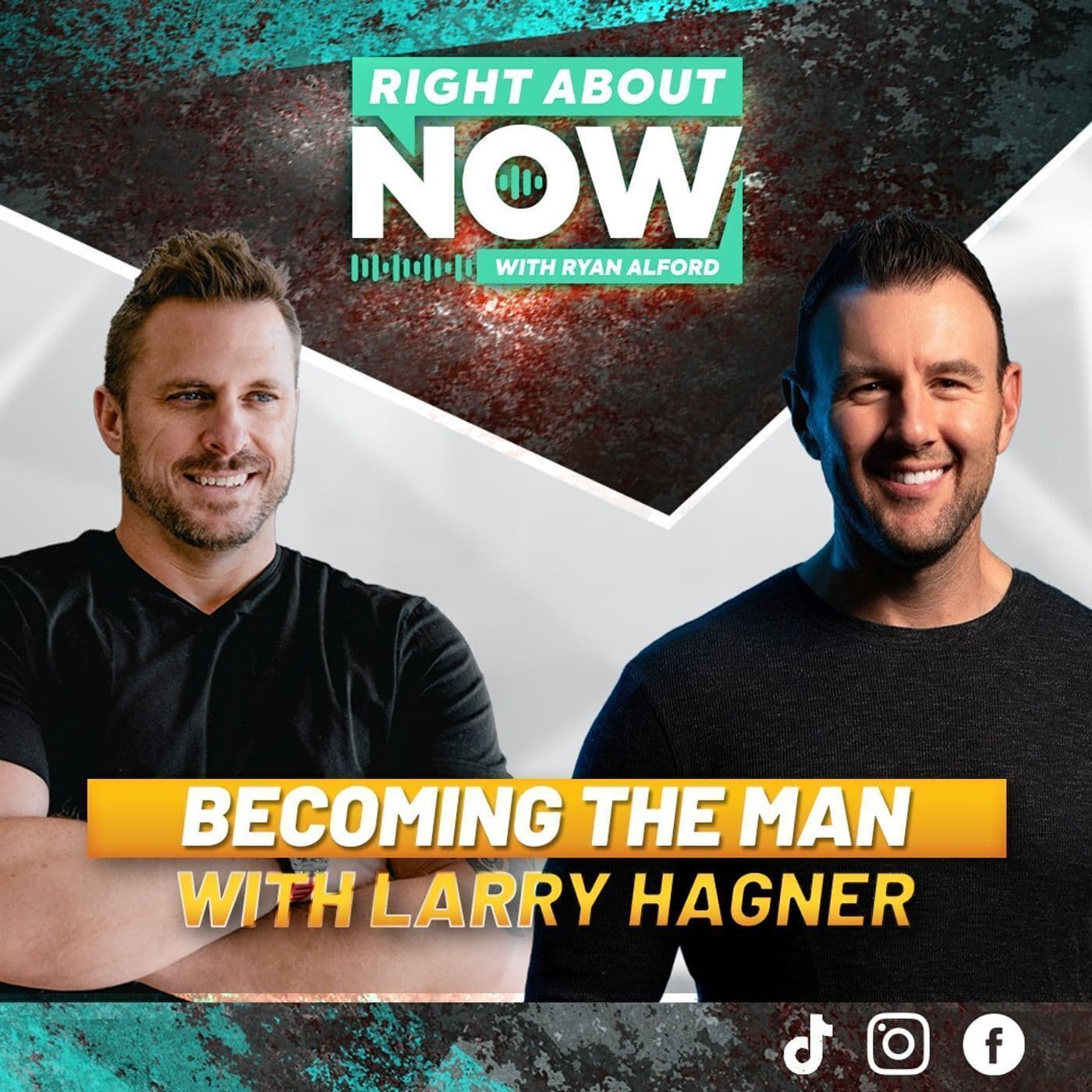
Becoming the Man with Larry Hagner
Some things are hard to commit to, like learning how to surf. Or saving for a family vacation. But one commitment that's easy, switching to Fiosome Internet with a five-year price lock guarantee. That means five great summers of fast, reliable Internet at the same low price. All with the Fios one gig Internet plan. Plus no hidden fees or equipment charges. Call 1-833 Verizon to switch today. Price Guarantee applies to Basement Day Raid only for new and existing My Home Customers.
There's something I think that really happens to you when you become a father. And throughout your own journey as a father. You start to look at the way you were raised and decisions that were made very differently. And through a different lens. And two of that lenses is quite frankly, it feels heavy. And some of it feels almost forgiving. This is right about now with Ryan Allford, a Radcast Network Production. We are the number one business show on the planet with over 1 million downloads a month. Taking the BS out of business for over six years and over 400 episodes. You ready to start snapping necks and caching checks? It starts right about now. Right now. Right now. Right now. Right now. Hey guys, what's up?
Welcome to Rad About Now. I'm Ryan Allford, your host. And first and foremost, I'm a dad. Run the podcast, run a multiple businesses. But people ask me, what do you do? And I've got to wear now. I say, what's that? But that's first and foremost. Father and husband. Those things are most important to me, which is why I really loved talking with my friend Larry Hagner, who's the CEO and founder of The Dad Edges. Here's with us today. Larry, it's great having you. What's up, Ryan? Good to have. Good to be on this side of it, man. You're when I had you on my podcast. I think I told you we had a ton of downloads. A ton of engagement on social. And people in particular really loved your stance on setting the standard for kids, man.
They liked that a lot. And so did I. Yeah. I try to practice what I preach and try to keep work and life and balance. And I don't know, it was refreshing to talk with you. And I'm excited to have you on. Because look, you know, our audience, excuse heavily towards males and fathers and a lot of executives that have children. And so I think the story that you can bring, building a business around being a dad, writing your book, the podcast, let's be honest. Like the most valuable I could bring to my audience is to how to give the dads that listen to right about now an edge. So let's set the table for them, Larry. Let's give them a little bit of that origin story.
You've got some unique parts to that dove that will be interesting to our audience. But tell us, tell who is Larry Hagener. Now, first man, I'm same as you. I'm a dad. My husband. I have four boys. I'll have an 18-year-old in two weeks as we record right now. So I have an 18-year-old ish, a 16-year-old, a 10-year-old, a 8-year-old. All boys. People ask me like, what's it like? Man, what's it like raising four boys? I'm like, just imagine this. It's a drunk fraternity house where no one wants to sleep and you never get to leave. And you don't sleep either. That's pretty much my house. I find things in places, man. No kidding around. I found a half-eaten peanut butter and jelly sandwich on the sink of my bathroom.
I don't know how I got that. I might have left it when I got out of the shower. I don't know. Okay. I'm serious about that though. I actually found a half-eaten, uncrustable on the sink of my kids' bathroom. I was like, oh my gosh. You say things out loud, Ryan, to these human beings that I either said in college or I didn't even think to say in college. That's been married for this will be 21 years so my wife and I will finally be allowed to drink together, which will be awesome. But yeah, man, she's my best friend, man. She is my rock star, my foundation. And there is absolutely a solid space for her and having dealing with all this testosterone and absolute chaos that she deals with.
It's like all moms are saints on some levels, right? Oh, man. I think they are for sure. But my wife, I'm just like, I like, I ask her sometimes, I'm like, how do you do it? And she'll be like, she's, I don't know, but if you ever figure it out, let me know. My wife gets asked that a lot too and our kids are a little younger, you know, haven't hit all of the teen, like we just hit teen years with one. So just now starting to get into to those territories, I have a feeling that it should be earning stripes even more here the next five to seven years. I'm telling you, man, I think there should be like the Oscars or like the Emmys or something
like that. Like some of the stories that we tell as parents is just wow, like it's, but I know it's not just us. It's like these funny things happen in everybody's house, but yeah, that, that is me present day as far as like how I got into this one day, man, on a Sunday morning, it was just, it was a beautiful day. I opened up the window sunlight hit my face and somehow some way I knew all the answers of being a good husband and father and at that moment, I just had to share it with the world. And that was about 10 years ago. Yeah. So that is not my origin story. It did not happen like in this great way. It actually did.
It was messy. It was dark. It was not good. And to be honest, man, it really I think stemmed from my childhood like the way I grew up and I'll share my story kind of briefly without getting into the weeds too much. But I think it really started there because when I first got married 21 years ago, I made it know if I'm like, Hey, I'm going to be a really good dad and I'm going to be married once and I'm going to do everything I can to do this well and never hit my kids out of anger. And unfortunately, I broke all of those promises except for one and that's I'm still married. And I think my struggle really came from how I grew up and I'm not saying that from a
victim mentality. I'm actually, I love how I was brought up. There was a lot of challenge, a lot of chaos. And I think there was a time probably in my 20s and early 30s, I fell into that victim and look how bad it was. I don't do that anymore. I haven't done that for a long time. It's, yeah, man, I got to learn the hard stuff and I got to learn what not to do and I'm glad I got to. But it really came and my mom and biological father were married. They were married very young. 21. They had me pretty early on after I was born a year after that. My dad and mom divorced really bad, horrible divorce. They were just kids at the time.
I think 25 at the time when they had me and then my dad was out just left. And it wasn't until I was four, my mom got remarried to another man and crazy. But the very first time I met this guy, my mom had him over for dinner and she had been dating him a while and never met him. Never even knew a guy and seen a guy in my house. And this guy walks in to meet me and if they have dinner with us and literally he stands out his hand and says, nice to meet you. And I literally just beaming at four years old and I'm like, are you going to be my dad? That was the first question I laid on this before, dude.
They got married. I think my mom took it as a sign. They got married a few months later, I think six months later. They were together for six years. But absolutely just reckless, crazy, alcohol-ridden, abusive relationship. The guy would beat up on me, beat up on my mom. Tempers would flare. It was absolute chaos. And that was, I think, my first touch point of remembering what it was like having a father in the house that was just hit you and beat you up and call your names and beat up your mom. And that was tough, man. And they got divorced when I was ten. And I have never seen him since. I found out about ten years ago he died, actually. But he was out.
He left. And then something really interesting happened when I was twelve. I started asking a lot of questions like, where did I come from? I know this guy came into my life before because I had no idea if my mom was married once before that. And that's when she laid it on me that she had been married before and I had a dad out there. And I was like, you have to kid me. I had no idea. When I was twelve, I won't go into the details. It's a long story. But I accidentally met him when I was twelve. And no idea. He lived three miles from us. He was remarried. Had another son on the way. Had two year old son, another one on the way.
We had this great relationship, man, for six months. And he came to all my literally games. I spent time with him. And then around month five things just start to change and shift. We grew apart. We drifted. And he left again. And we parted ways. I'll be honest, that sucked. And my mom just continued to date for the next decade. Date. Get remarried again. She got remarried. Total of three times. Every guy, man, every guy she dated, every guy she was with was like the same dude. Just super abusive, heartier, crazy. It was, it had chaos in my family a lot. Despite all that, went on to high school, went on to college, got my degree, went into medical device sales, married my college sweetheart, everything was looking good.
30 years old rolls around. I'm in a Starbucks here in St. Louis. Had been married for two years. Had my first son on the way. And who comes walking in for his morning coffee? My father. I hadn't seen him since I was two. Did you recognize him? Exactly who he was. You knew exactly. Right away. Yeah. Yeah. He didn't look much different. Just a little older. But I knew exactly who he was. And that interaction has now turned into a relationship that we've had for 18 years. And he's still married to the same woman has been for 45 years. I've two younger half brothers, like along with great. I was in my youngest brother's wedding. And but I'll tell you, dad edge got started because I struggled tremendously as a father.
And I'll close the story with this. I told you that I made a promise that I would never strike my kids out of anger because I was hit a lot. And when my second born who's 16 now, he was four years old at the time at a really bad day that day at work lost. I think I lost my biggest customer and medical device sales thought I was going to lose my job over it. And I was going to impact our income for the next 18 months. We're going to ready to move and just one thing led to another. And I had a bad moment and I spanked him that night because he stepped out of line and it was in that just right away that reaction.
And I'm not here to argue with her and spanking is right or wrong. I just didn't want to do it. And here's the crazy thing though, man, when I spanked him, he lost his footing. And I'm not proud of this. It kills me every time I tell the story and he fell. And when I went to help him up, because I was like, oh my God, what did I just do? I put out my hands to help him up and he literally did this, put up his hands, don't hurt me. And that was it. That was it. Because in that moment, I'll be honest Ryan, I didn't see my son. I saw my son, but I saw me like begging for a guy to stop hitting me when I was little.
And I was like, this has got to change. And I went on this mission, man, and I haven't stopped. That's been 12 years. I'm like, you know what? I just want to learn how to do this. I don't know what I'm doing. All I know is what not to do, and that's not enough. That's like going to Home Depot, buying your barbecue pit and you open up the direction and says, here's 100 ways not to do this. But best of luck, you'll figure it out. And that sucked. And the past 12 years have been an education, man. Podcasts been around for nine years, 1200 episodes. You've been one of them. And I've learned something from every single guest I've had on. And it's tremendously helped me.
And I know it's helped other men because our podcast is huge. And it's been a blessing. And but it hasn't been sunshine and rainbows either. It's been messy too, but that's been the journey, man. Damn, I mean, there's a movie in there somewhere. It sounded like I was in here. We had Paul Hudson said on earlier. And now Larry Agner's on and breaking. We got all kinds of stories hearing the dad Ed's story. Like that's powerful, dude. Like it's powerful, but it's sad in some way. Having a great dad growing up and having a father that wasn't perfect, but wasn't really great dad. And it's my best friend to this day. When I hear stories like that, or whatever growing up in the lower class
and not being handed everything, anything that I considered a detriment when I hear stories like that just pale in comparison because not having that stable father figure. And it makes me want to ask a difficult question. And I'm just going to go there, Larry. Go for it. Yeah, go for it, man. Hearing what you said, your dad remarried. He remarried, he's been remarried 45 years.
Your mom didn't make the best decisions multiple times over and over again. Was it, who was it, not that it matters who was it fault? But did you end up on the wrong side of the fence? It's interesting. I just had Gary John Bishop on the podcast. And he just wrote an incredible book called Grow Up. You come to parents, your kids deserve. And if Gary John Bishop's work was very direct and I've had Gary on the podcast, I think five or six times every time he writes a new book, he comes on the podcast. But that book really spoke to me because I honestly believe, despite the craziness that I grew up with, that everything happens for a reason. And it wasn't sunshine and rainbows.
It was chaos, but I'm thankful for it. I really am, thankful for it. But here's the thing. My mom and biological father got married, got married at 21 years old. Yeah. Like they think about that, like they were kids, right? And my dad, like he was military. He was, he fought. He was in combat. Like he was dealing with a lot of things. My mom dealt with childhood trauma. I think he had two people that got married really young. They didn't know what they were doing. And both of them had things that they grew up with. They were very tough and things that they were working through that they were very tough. And I think my mom did the best she could with what she had.
Even though it was crazy, she just kept attracting these really toxic horrible men. And my dad probably married someone who was a really good fit for him. And it was a good fit for him for life. And I think that's how those two lives turned out. That's not the best way I think I can explain. How did I want to get to the meat of the dad edge and all the great things and tips and all those things we can give to the dads out there but closing out the story, closing it. Stories still being written. But the last 18 years with your dad, what's that been like? Is that just your grown man, your 30 years old, but you have some different perspective at that stage.
How's those last 18 years been? I think I can sum that up into two really quick stories that I think were really at home. And the first story is this, when I first had my very first son who's gonna be 18 year in a couple of weeks, when I first looked at him and he was born and that's when my dad had re-entered my life, there's something I think that really happens to you when you become a father and throughout your own journey as a father. You start to look at the way you were raised and decisions that were made very differently, right? And through a different lens. Some of that lens is quite frankly, it feels heavy. And some of it feels almost forgiving.
Okay, like I made the same mistakes, so I did this right at that. But here's what I will tell you. I've looked at my kids and I've told my wife this and I've told my boys this and I'm dead serious about this. There is nothing on this planet that could take me away from them, even if my wife and I didn't work out, I would still be a part of their lives. I don't care how much it would be. I don't care if it would be 80%, 50%, 20%, whatever. I would always be a part of their life. No matter what, there would be no leaving in me, right? Ever. So I've had to wrestle with that one a little bit because not only was I left once but twice.
And but we've had a conversation around that. And I sat my dad down once and this was a couple years after we got together and here's the story I said, and I think my dad knew. I sat him down for dinner one night and we kind of had small talk and he looks at me and he goes, so why are we here? What do you want to know?
And I basically told him, I said, I just want to talk about this once. And we've actually talked about it more than that but not many a handful of times. And I just was like, I just want to know what the hell? What the hell, man? How could you leave? And not even if you didn't leave on your own terms, how can you not have contact with me? And my dad owned every bit of it and he was like, worst thing ever decided in my life. I've had to live with that my whole life. I've had to carry it my whole life and if I had to do it over again, I'd do it much differently. So that's one story. So I've forgiven my dad but here's the other one.
Last Christmas, my 16 year old and I were getting ready to leave or going over to my dad's house and it's the whole family but it's just me and my 16 year old and the kitchen everybody else was getting ready. And my 16 year old's quiet, very stoic and he doesn't ask you something unless he's been stewing on it for a minute or several months, right? So he ran the kitchen and he goes, can I ask you something? And I'm like, sure, and I knew something was coming and he's, we're going over to your dad's house and I was like, yeah. And he knows no better, he knows my, he's known him since birth. He goes, do you like going over there? I was like, yeah, of course I do.
And he's, and I go, why do you ask? And he goes and he just shook his head and he goes, and I've never seen this look on my son's face as he gave me that day and he goes, I couldn't do it. I could never forgive you if you did that to me. If you left me and I saw you on the streets, I would kill you, I would punch you, I would pummel you, those are his words. And he's bigger than me, he actually can. And I was like, I know, man, I get that. And he's, I would just never forgive you for that, ever. I was like, I get that Mason, I go, but let me share something with you. I was like, you're gonna grow up,
you're gonna have your own family. You're gonna look back on some of the things that I said did and you're gonna have your own little bag of tricks and you're gonna have things that I did that quite frankly, I didn't even know that I did wrong, but they're gonna come to the surface. And my hope is that you can give me some grace, like I've given my own dad grace. And here's what I mean by that. Me and my dad can't change the past. And I can choose to hold a grudge, but that's like drinking poison and hope my dad dies. The only person that hurts during a grudge is the person that holds it. So I've forgiven my dad, both for him and for me.
Because if I had to hold that, it would eat me alive. So that's it. A lot of story there and it's grace is a wonderful thing. We all need it. Whether we know it or not, a whole episode on just that. I will say this, I got divorced and was living in New York and had two small children at a one year old and a three year old. And you know, I didn't grow up with not the dad, but let's just say I spent close to seven figures and gave up a lot of opportunities because I sure as hell wasn't gonna be in my dad, my kids' life. So I can relate to that and I can't relate to the dads that don't, like I just can't even fathom it.
I have a hard, we talk about being the product of our environments and not being able to relate to certain things. Like the dad that didn't want to be involved with their kids is, that's on another, that's in March. I don't know that planet. I can't understand anything. And I'm not a perfect dad, you know what? But to not be involved and to not care or to be able to turn, I can't turn that trigger off. But nonetheless, the dad edge got the podcast. We've got to, hey, success around being the good dad and telling the good word about being a dad. Can there be better than that? You know what, what is the dad edge, Larry? People have asked me like, what is the dad edge, right?
And I really think what the dad edge is, it's no different than learning skills that's gonna elevate your experience and your relationships. Really, that's it. So if you think about it, like we teach several things in the dad edge. We teach men how to build, how to create an extraordinary marriage with their wife, communication, intimacy, connection, the whole nine yards. We teach men how to build better connections and relationships with their kids that the foundation of that is built on connection. It's built on trust. It's this way, and it's, by the way, it's not this soft, like, very, very way of going about it. It's also being an extremely effective leader in your family where you actually bring the best out in people. The best way I can describe it is this.
I had a Frankie Edgar on the podcast. He's like a UFC, you know, he's a UFC Hall of Famers. He has the most amount of minutes in the UFC. And I know you've had Bruce Buffer on, so he's probably called love, you know, introductions. But it's a lot like this. The way we go about marriage and fatherhood and these things that we're talking about on today's podcast is society really sets us up for, you better know what to do naturally. And if you have to speak up and be like, hey, I don't know how to do this when you're weak or you're less than or you're broken, what's wrong with you? But here's the flip side. And this was Frankie and I were talking about it.
I was like, Frankie, I was like, give me like this. If you and I were to get in a ring, which by the way, I have done, I've gone face to face with them. I'm like, dude, give me the face off, right? Like that 145 pound man, like, the look on his face, like, on the other side of that, like, he would go right through this, right? That's what he's scary. Now, I was like, if I go in and I've never done MMA, I've never done self-defense, I've never done martial arts and you and I go in the octagon, there's one result that's gonna happen and you are gonna pummel me and probably under six seconds. And people are gonna look at me and be like,
what did you train? No, I didn't train. They're like, did you do any cardio or did you do anything? And it'd be like, no, man, I just figured out figured it out. Like, I've seen no enough UFC fights on TV and they're like, you're an idiot. That's what people would say. And rightfully, and here's the thing, what if I took a year, right? To really train every day, learn some Jiu-Jitsu, right? Learn striking, learn defense, all these things. I might last 18 seconds instead of six, right? But at least I would give myself a fighting chance because I would be able to learn the skills that would be needed to go into a fight like that. It would give me a better shot. The funny thing about the journey of fatherhood
and the journey of everything we've been doing for the past 12 years is those same rules actually do apply. And if you actually take the time, if we take the time to learn these skills, then we're setting ourselves up for a much better experience and an experience actually with confidence, right? Because if I go in with a fight with Frankie with nothing, like, I'm not gonna have any confidence. I'm sure it's not gonna enjoy it and I don't even know what's coming. But if I train for it, I'm gonna be more confident. I'm gonna be more strategic. I'm gonna know maybe what to do and when to do it. He's still gonna pull on me because he's a pro fighter. But you get my point.
100% is funny, I'll sit there thinking when you were to do that in the script because I've said, I've made the comparison a lot of time like with how I don't support divorce, but sometimes it's necessary. And we make a million mistakes in life, but for some reason choosing your wife with no training on the best way to do that. We don't always get it right, but somehow we're supposed to get that decision. I mean, mistakes we make in a day, but it's a different thing. I think we might need to train men on how to choose the right partner and women too, but we're focused on the dads here, men need some help too, you know, how to help choose the right partner and get it right.
But the bottom line is it's work and to be good at work, to be good at a job. You have to train, you have to condition, you have to learn because you can't get better without continual improvement. You can't have improvement with seeing success from behaviors that you do. And I love that you're empowering men to have success in the greatest opportunity that they have, which is being a father.
Thank you, man. And by the way, I follow my face still a lot. It's just I usually see the face plant coming sooner, right? And I can recover a little faster, right? Instead of like just full force, like no hands falling on the face, I can at least brace myself for it and then get up a little faster than that used to. But yeah, you're right. I think if we took that same stance, like that same approach that it was even society accepted, that hey, are you going to go married? You know what, before you do that, learn these few things here real quick or learn these things here before you do that or even like conflict resolution. It's one of the skills we teach conflict resolution
or even a way to just connect with your kids. There's a way that you can create an environment where your teenagers will open up with, open up to you about anything, literally anything. But most people, we just don't know how to do that. I never used to know how to do that. I used to follow my face with that one all the time. But there are ways that you can cultivate that connection where your kids will want to go to you. And here's what I'll tell you. I've got two teenagers and I've got two little guys. And if anyone ever tells you, oh, just wait till they're teenagers, they won't want a thing to do with you. Like they're going to just run the other direction.
Because what I can tell you is if you do the right things and you do the small right things, and you can actually cultivate an incredible connection. Like I love hanging out with my teenagers. We work out almost every day together. And that kind of stuff, man, it doesn't happen by accident. It happens because there's that connection and trust that's built. 100%. Talking with Larry Hagner, CEO and founder of Dad Edge, Larry, talk to me last thing I'll say on the whole training and conditioning thing. Back to like you said, society's taught us like even counseling. Counseling is only for when things have gone to the worst degree. We only think of counseling as all what's going wrong. Instead of the proactive learning and training
and conditioning on the front end, it's like our medicine. It's all about treating the issue once it's already there. What could, what drug can we feed the issue that's already there instead of prevention? Instead of longevity and health and how do we get ahead of things? It's all treating with a pill. So we're going to treat issues with counseling. How can we avoid them to begin with? Wouldn't that be a wonderful thing?
No, 100% and that's another analogy we talk about all the time. It's, I've never met a guy in my whole life. At least not yet, I'll just say yet. They'd like, we're in his car and basically like the engine implodes. Like, dude, like, what, what happened? I, I mean, an oil change in 47,000 miles. I probably should have done that. And yeah, you look at him be like, are you kidding me, man? Like, why would you go 47,000 miles? We don't think about doing that in our cars. And the other thing too is I can see you have all your teeth. I have all my teeth. I go to the dentist every six months, right? I don't wait until my teeth are like literally rotting out of my head to where I go to the dentist.
So like, and this stuff, it's the exact same way, right? This is like fitness, right? You go to the gym, take supplements, take care of your body, for preventative measures, right? You get oil changes to prevent your car from imploding, right? You go to the dentist to prevent horrible things in your mouth. Same rules apply. And I'm happy to share it. And I can even share some really simple takeaways that like, immediately after these guys hear this podcast, they're like, I'm gonna go do that. And we can do it right now. I do. I wanna get to some meat. So a lot of dads out there, let's do it. Talk to, but you've got books coming out, Spirit of Fatherhood or already out. Spirit of Fatherhood, pursuit of legendary fatherhood.
But let's give some tips and some ways that you work with dads to do these, to be better dads, be better fathers. So there's an arsenal of skills that we teach, right? For when it comes to, so for instance, marriage, communication, conversational excellence, intimacy, it really boils down to becoming an absolute amazing listener. But not to the point where you're just listening for words, you're actually connecting to what she's feeling, right? You're actually saying out loud, what is she's feeling? Validation is really what it is. It's how to emotionally validate your wives and kids. Let's start with the needs though. So our wives and kids, coincidentally, actually have the same three basic needs when it comes to relationships. And I'll talk about food shelter and clothing,
I'm talking about relationship needs. Your wife needs to feel seen, she needs to feel heard, and she needs to feel safe. And here's the good news. When it comes to your kids, boy or girl, does matter. Same three needs, seen, heard and safe. Now for us as men, our three needs, when it comes to relationships are respected, appreciated, validated. We like to be respected, we like to be appreciated. In fact, if you really wanna make us feel fantastic, respect and appreciate us in public, in front of our kids, right? The appreciation in front of our kids, oh my gosh, it's like the sky's open up, right? Now, our wives have different needs. And what human beings, what we like to do is we like to go
to feel someone else's needs as if they're our own, right? So we'll maybe respect and appreciate love on our wives and tell her how great she is and how beautiful she is. That's not necessarily, she likes that stuff, but that's not necessarily what she needs. What she needs is, so for instance, here's a perfect example of every guy currently to this. When our wives are talking to us, and I had to learn this the hard way, because I'm an idiot, but when our wives are talking to us, what they really want is not for us to solve their problems, right? Not for us just to listen to words. They're looking for one thing, connection. Whether it's a topic that they're just like infuriated about, frustrated about, overwhelmed about,
they're happy about, they're ecstatic about, what they're really looking for, the reason that they're coming and telling you is because they want connection. So the way to do that is literally just to validate her emotions, like a validate where she's at. We call it validate like a boss. So for instance, what used to happen in my house? I'd come home, right? I'll give you two of the same scenarios, come home. Hey, Jess, what's going on? Like, how was your day? It's a favorite question, which by the way, I don't ask. So oh my God, today was terrible. We got a medical bill in the mail for your knee. We owe $1,300 to the surgeon. Our HOA just came in. That's $1,100. I can't believe the price went up this much.
Colton spilled milk all over the place. Ethan got an F in science. I'm just, I'm already losing my mind. Now, the way I used to address that, it's like, that doesn't make something ideal. We knew the HOA thing was going to be big, and we knew that basically like when I'm trying, and here's the thing, I do that stuff because I see that my wife is overwhelmed. I see that she's in pain. So what do I want to do? I want to take that away because I love her. I'm not saying the intention is wrong of what we're doing as men, but the tactical part of it is off because the way it lands. So when we start problem solving like that, are we start trying to de-escalate?
I say, that's not that big of a deal. We'll get through it, whatever. They don't feel seen. They don't feel heard, but here's how you can make her feel seen and heard. And this is what I'll do. I'll be like, man, that sounds furiating. Holy crap. Yeah, I pull my hair out too. You have to tell me more what's going on. Now, what I just did was I validated her emotional state. And by saying it out loud, how it lands for somebody like your wife and your kids is, that is how I feel. Or if that's not how they feel, they'll usually correct you and be like, no, I'm actually completely and totally pissed off and infuriated out of my mind. So they'll correct it, which is fine.
And when I invite for more, the more she's talking and the more I'm listening, the more we're actually connecting. Whether it's a good topic, a fiery topic, it really doesn't matter. But being able to validate makes her feel seen, makes her feel heard. And here's the cool thing too. If you can knock those two first dominoes down, the scene in the herd, the safe one usually falls automatically. Because people who feel seen and heard usually feel pretty safe. And when they feel those three basic things happen, they feel connected. They feel love. They feel intimacy. They feel like we're a team, right? We don't necessarily have to solve all those problems. And in fact, what I'll usually do is sometimes my wife does want to talk about solutions.
And what I'll do is I'll simply ask, hey, I want to listen to every single word that you're saying. And I also want to be the best support possible for you. But I really want to know what that looks like and what you need right now. So if you want me to listen, I'll keep listening. But if you want to talk solutions, we'll talk solutions to which one feels best to you. And guess what will happen? She'll tell me. She'll be like, I just need you to listen. Great. I know what to do. She'll be like, you know what? I really want to talk solutions because I'm totally overwhelmed. Great. We'll do that too. But at least I know which lane we're in because then I can fulfill that need.
Love that. Practical advice from Larry Hagnar. I've had to learn that all the hard way. Oh, man, we like it. I got her fixers. Most of us, if you're a breaker, you got a whole other challenge. We can't, we're not going to dress that today. But usually we're answers. Like it goes immediately. Okay, you've got a problem. And I've got a solution. All right, here we go. And that just doesn't work. That's the longest to learn that one.
Say, man, here's the thing too. I don't want to like, I don't want to say this is a bad thing that guys do. Because the intention is what's on point. Like we do that because we care about the other person. But here's the funny thing, right? Like you're a business guy. I'm a business guy. Let's just say I come to you. I'm like, dude, like they're serious problems with my business right now. Like I got this going on. I got that going on. I'm not really sure what to do. And if you were to be like, oh, man, that sounds tough. I'd be like, no, shit, man, what do you think I should do? I'm like, don't be, man. Otherwise, I wouldn't waste my time.
That's not necessarily what our family needs all the time. Sometimes they do. And sometimes, and if we don't know, we can ask. But usually what they're really after is, I just want to, I just want to connect. Yeah. Got to be seen, got to be heard, got to feel safe. How about with the kids, man? Like what's the other side of that coin with making them feel that way? So what I can do, since I know we're going to wrap up here in just a bit, I can give your listeners three questions to ask every single day that will actually provide the connection, the psychological safety, and when things go wrong in their life, they're going to come to you. Let's do it. Because dad's the go to.
All right, so I'm going to give you three questions. I'll give you all the psychology behind each one. So what are we asking when we come home from work? How was your day? How was your day? It's a shitty question that will give you a shitty answer. But again, the intention behind the question is great, because here's what a dad is really saying. I want to hear all about your day. I really do. I want you to tell me what happened today, right? And we're excited about it. And the kids are programmed, fine, good, crazy, boring. You're going to get a one word answer, right? So flip that question differently. And this is what I'll ask my kids. And I'll do it a variety of different ways.
Tell me about the best part of your day to day and why I was so meaningful to you. Or I'll be like, tell me about a high point moment today. Now, what I'm doing in that moment is my kid's not going to answer me, find good, busy, crazy, boring. Here's what he's going to do, no matter what age they're at. And by the way, once you've done this for long enough, your kids flip the script and they start asking you these questions, which they do with me all the time. But here's what you're doing. You're training a young mind to look into their day and we're all programmed to look at problems, to look at negativity and to be bogged down by that. But if you can be like, man, what was something really
happened really amazing today? And my 10 year old might be like, dead. I was the quarterback today. I was the quarterback recess for football the day, right? Now, that's something that he's proud of. Now, think about the psychology behind that. Let's just say you just landed the biggest client or biggest speaking gig you've ever landed in your entire professional career and you and I are friends. And you're like, dude, Larry, dude, I gotta tell you this. And you like, you can't wait to share this news. You're so jazzed, right? And then as soon as your kid shares that news, they're excited. That energy's there, which by the way, will provide connection. As soon as my kid tells me, I'm like, dude, are you serious? No way.
Tell me about it. And then suddenly, like, you were the most exciting part in the world to talk to because they're sharing this really cool moment. So that's question number one is, train them to get into the gratitude, but also use that energy as a connection point to get really excited with them. Because as soon as you label like, that must have felt amazing. As soon as I say that, that puts that emotion actually on steroids for them, right? That's the first question. Second question is this one. This is where your teenagers, you can literally program your kids. You can not program, that's a bad word. I would say cultivate an environment where your kids want to tell you the bad things, okay? Because kids will avoid telling parents bad news,
especially with how we react. So here's the question. This is a good rep for us asking the question. And it's a great rep for them telling us. So I asked them, what's something you failed at today? I want them to get very used to that word. I don't want them to be risk-adversed. I don't want them to shy away from challenge. I want them to get used to getting, let's get some reps, right? I was telling you I had Sean Patrick Flannery on the podcast, the way he raises his boys, which by the way, they had just one state, both of them, in wrestling, was, if you want to be great at something, you have to fail and suck at it first. That's what he tells his boys.
So I asked my kids, what did you fail at today? And sometimes, and this is what I'll get, they'll be like, I got enough on that spelling test, Ed. Right? Now, here's the way I was raised. And this is just knee-jerk. What do you mean you got enough on the spelling test? We don't get apps in this house. Did you not study? I didn't see you study. I told you to study, sat over and over again, you are grounded, right? And then they just blast you. So here's what I do. First of all, I praise for their courage, but, ooh, well, man, that took some courage to tell me, didn't it? Now, here's what I'll tell you before I move on. Just because I create an environment
of psychological safety that doesn't mean it's a consequence-free environment. There's still discipline, all that. We have a conversation, though. So I'm like, oh, man. So tell me what happened. How'd you prepare for it? Or I'll say this, if you had to prepare for this test over again, what would you do different? And that's when it comes out. I'll be like, man, I really didn't study for it, or I didn't study that much. I'm like, okay, that's good to know. So if you had to do it all over again, what would you do different? Because I want that growth mindset. I want them to be a critical thinker, not me lecturing them, but them to think through this. So they're doing things differently later. They'll be like, you know what?
I think I would have taken two evenings and studied and gone over it, wrote them all down. Maybe even had you quiz me on it. Okay, great, wind your next spelling test. It's actually next Friday. And I'll just say, you know what? It sounds like you came up with a pretty good plan. What's stopping you from doing that? They'll be like, nothing. They'll be like, great, let's do it. And then suddenly, that is not the scary person to tell bad news to because here's what I'll tell you. I've got an 18 year old and 16 year old. There's going to come a time. It hasn't come yet to my door yet, but it's coming where I will have a son that goes to a party
and drinks under age. And he's going to have to make a choice. Do I get behind that car and roll the dice or do I call my dad for a ride? And how we respond getting those daily reps into that psychological safety. Suddenly, dad's the guy I call. There's no question about it, right? Which I've had that conversation with my kids, but when bad things hit the fan, which they do, we're in a season right now where I'm not going to name who but one of my kids is going through some things, but he is insanely transparent with what's going on. It's got like this really good safe place to land with my wife and I. But it's from all those reps of asking that question
and creating that type of response, right? So that's question number two. And the last one is, I know we need to wrap up here is what are you most excited about tomorrow? Now, I like asking that question because I call that like the Yellowstone to be continued question because there's always this hook point at the end of every Yellowstone episode. You're like, oh, I gotta watch the first five minutes the next episode, right? So the reason I do that is because they might be like, hey, dad, like band tryouts are tomorrow. Man, I'm so excited. Like a band, I've been really working hard. So what do you think I'm going to ask them when they come up from school? Dude, I was band tryouts. Suddenly, you're not this robot, right?
You are an intricate part of their daily life and you are the go-to. They have the best conversations with you, right? You're also their guide. You are not their friend, right? My job is not to be my kid's friend. I am their father. I'm their guide. I am not the consequence for his own either, but I'm here to help you. 100% and those are the three questions I think your listeners can use and wait and why? I love it. Larry, three questions. Tell me the best part of your day. Second, what is something you failed at? And third, tell me what you're excited about tomorrow. Hey, I'm writing notes, man. I'm taking notes for myself, selfishly, but also to bring value to the audience. I love it, man.
We're going to have a part two. How about that? Can you promise me to do a part two? We're going to have a note time limit part two admittedly, a lot of things on the schedule today, the way it broke out, Larry was so gracious with his time. And the great thing is he's got one of the best podcasts is on the planet about dads and how to get better as a father, as a husband and everything else. And he's going to be so kind to tell us where to keep up with all that. Where is it, Larry? Yeah, man. Well, as long as I have a part two with you back on the show too, I'll take that. Just everything is the data, everything.
So like Instagram, the data, the data edge.com, we've got a few different resources on our website as well. We've got a resource called 25 intimate conversation starters, where if you like the three questions I gave you a day, there's 25 more that you can ask your wife, you can reframe them, dash your kids as well. You can find that the data edge.com forward slash 25 questions, but I'm not hard to find. If there's ever anything I can do to help you or your listeners out, just shoot me a DM on social, not hard to find. I answer all of those myself. But yeah, that's how you can connect with us. We got two different programs. We've got a mastermind for business owners, so dad business owners.
And we also have a mastermind for a career nine to five years as well. I'm telling you, you can sense it. Real knows real and Larry's real. If you want to be better and look, look, we're business show, but I want to bring value and look, if we have better fathers, better husbands, that's the most value I can bring. And Larry is someone you should listen to, and you need to go follow and subscribe to his show and get involved with one of those masterminds. Larry really appreciate you coming on. Can't wait to do part two.
Thanks for having me, man. Back out you can't wait to do part two with you as well. Hey guys, you're going to find us. Ryan is right.com. You'll have all the show notes, the links to Larry's information and the dad edge. Look, let's be did better dads. There'll be a better world. We'll see you next time on right about now. This has been right about now with Ryan Alford, a Radcast Network production. Visit Ryan is right.com for full audio and video versions of the show or to inquire about sponsorship opportunities. Thanks for listening.