
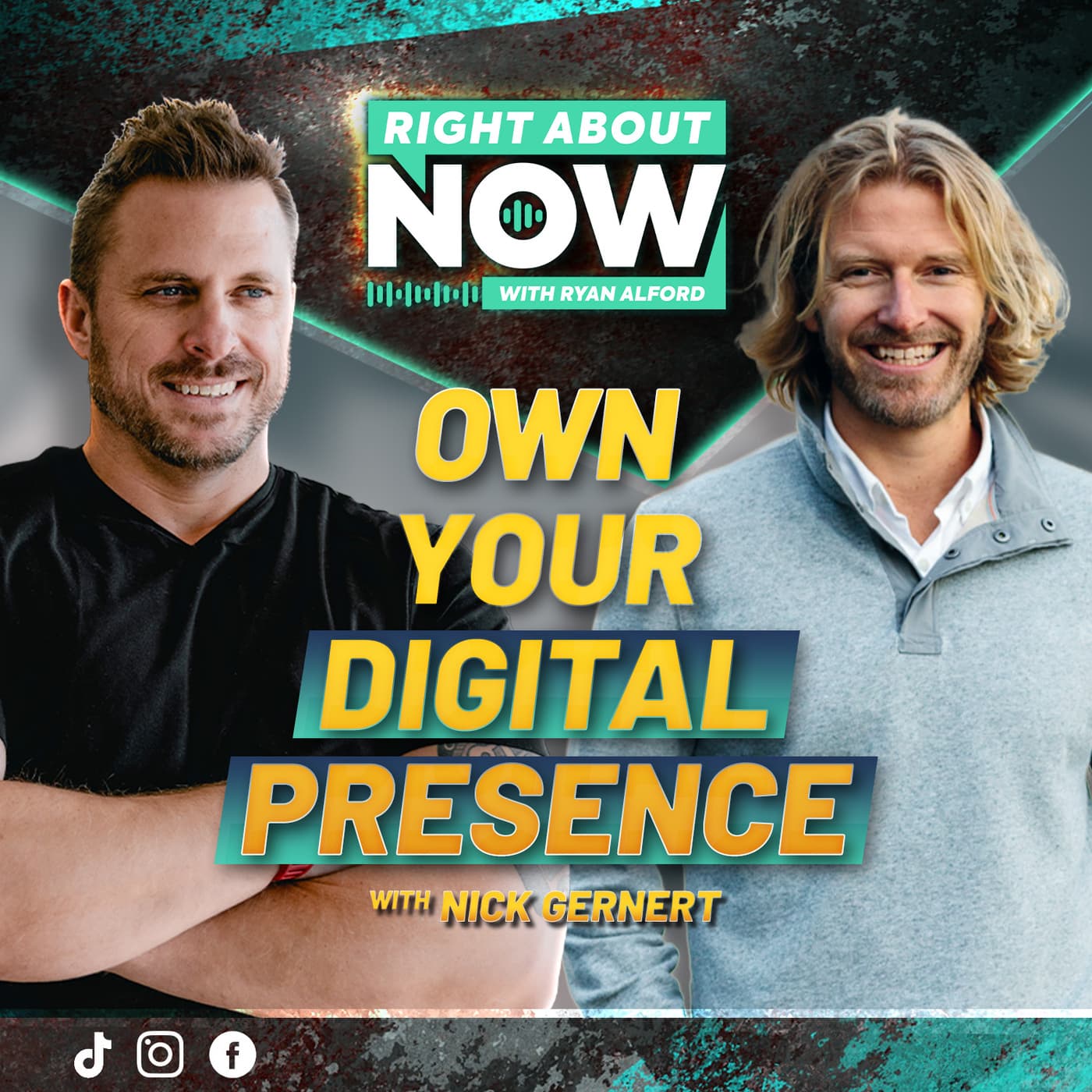
AI Meets CMS: How WordPress Is Powering the Next Wave of Digital Marketing | Nick Gernertt
WordPress VIP CEO Nick Gernert on AI in content, what their data says about Google AI summaries, and why owned land beats rented platforms.
- WordPress technology powers 43% of the top 10 million websites, and market share still inches up even at that scale.
- Nick argues enterprise digital success is roughly 70% people and 30% technology, so the win is opening publishing access up from six internal gatekeepers to hundreds or thousands of employees.
- Beware "enterprise level" platforms that are complex for complexity's sake and sold on the promise of digital transformation, then never fully used.
- Don't rebuild solved problems: creating your own CMS or your tenth custom CRM integration generates no value, since thousands of other organizations have already needed the same connection.
- Migrating onto WordPress often produces an immediate, dramatic SEO lift because of how documents are structured and delivered.
- WordPress VIP's own data across a couple hundred million daily visitors shows Google referral traffic increasing in aggregate despite AI summaries, but the gains skew toward larger organizations with dedicated SEO teams.
- Teams that keep building great content, earning backlinks and staying relevant are maintaining or growing audiences right now.
- Over-dependence on one social platform, search engine or chatbot can help in a 6-12 month window and hurt badly over a multi-year trajectory, so build owned assets like your website and newsletter.
You don't need the complexity for complexities sake. The simplest solutions or the best solutions.
we use it for the corporate blog
Creating your own CMS is not creating more value for your organization.
You're sitting on a massive content asset, but are you future-proofing it against the AI revolution? Or is Google about to steal your traffic? We're cutting through the buzzwords with Nick Gerner, CEO of WordPress VIP, who reveals the pragmatic future of content creation and the critical difference between rented and owned digital land. Watch now to unlock the owned land strategy and learn the one AI-driven SEO back-linking hack that will instantly boost your organic rankings. If you're trying to connect with your customers and you're trying to catch attention, you have to be doing this in a way where you're able to move quickly and you're able to engage authentically and directly and usually the best way to do that is not through six gatekeepers in the organization.
That's what we think, actually, like WordPress and WordPress VIP, like brings a superpower into these big companies, because it's like, get the rest of the stuff out of the way. You don't need the complexity for complexities sake, the simplest solutions or the best solutions. This is right about now with Ryan Alford, a Radcast Network production.
We are the number one business show on the planet with over 1 million downloads a month. Taking the BS out of business for over six years and over 400 episodes. You ready to start snapping necks and caching checks? Well, it starts right about now. Right about now. What's up guys? Welcome to right about now. We're always talking about now. We're always getting right here. Today, we have people on and they're doing some amazing things and they're doing things with brands that you've never heard of, technologies you've never heard of. But there's a word that I would guess 97% of our audience probably know it. It's WordPress. He's the CEO of WordPress VIP. Nick, Ernord, what's up Nick? Hello, how are you? Great man. Thanks for joining us.
I do think our audience knows the name WordPress. Watching the evolution of WordPress from the blogging platform to really the go to CMS for most definitely mid-market agencies and clients to all the way up to the corporate level as the transition and evolution. It's been fascinating to sort of watch that evolution of the company. And I'm sure you had a seat right at the table. Yeah, a seat right at the table. And I think WordPress started 2003 through think about where we were there and then where we are today. It's been a long through that and continued to grow. Market share still inches up. It's harder at the like once you reach certain scale like I mean that number that's a big number you keep moving up 43% of the top 10 million websites
are powered by WordPress technology. Talk about working for a company that has that market share and then bringing to life dominant CMS overall. But again, bringing to life the brand for corporate to kind of go direct to that transition is kind of what I was kind of building to all this. The my space and all that is you're at this level and everybody respects you, you're greeting them but then trying to be the corporate king for go to was that a hard transition to get people to make mentally? As ubiquitous as WordPress is on web it's not in that corporate sense. There was niche adoption of WordPress from a we use it for the corporate blog. A big challenge for us is like how do you take something
that is as ubiquitous as WordPress but also ubiquitously known for its blogging and maybe more consumer and small business and up to mid market. And there's everything you know about working with large organizations that's the intangibles of how do you show up as an account team? How do you show up as understanding their business needs, their objectives? How do you meet them there so that whatever software we're providing and as much as I wanna say software is the solution to everything. Really, I think 70% of its people and that's actually one of the strengths of WordPress is that it's so centered around people and creating access for people that the 30% actually that technology impacts in the organization we do really well. But how do we really bring people together
because so much of actual success and digital and everything else is like can you access the tools, can you access your audience, can you access your customers et cetera. And so much of the existing market for my perspective prevents that, actually doesn't enable that. We're like how can we open that up? How do we focus on opening that up? So that our transition is really, how do you take something that the web at large has accepted and said this thing's great fit for purpose but enterprises have a bit of skepticism around that to spend many, many, many more years trying to really help serve that market and adapt who knows what happens in the next 20 years of WordPress's story. It seems like some of these platforms and CMSs
that I think are starting to wind down, I hope they are, but I've always been skeptical they're complex for complex sake. What I love about WordPress is yeah, you gotta learn it and get your way around it but it's meant to be easy but robust. Words like digital transformation and all these things were architected in a ways to create massive budgets to extract a bunch from an organization that was looking for a solution to a problem that they really didn't understand what the root causes were in the first place. When you fast forward to today, look at all the layers that now have been created in the stack. What is the MarTech stack? What is the web stack that I bring together? My developers are telling me we need to do this thing
and use these technologies. My executives are telling me these analysts are recommending this highly complex and an enterprise level solution. And usually when we say enterprise level, it's like they're overly complex, heavy handed, massive suites of things that you don't end up using. And that's the status quo. And from my perspective, it's like that beautiful simplicity you're like preaching to the choir here on from a WordPress perspective. That's how we show up differently. It's just we'll come into an organization of a couple hundred thousand people and they'll say our existing technology, six people know how to update our digital properties at a 200,000. We got six people internally that can touch this thing. And our goal is in like how do we open that up?
How do we turn six into hundreds or thousands? The reality for marketers and organizations is if you're trying to connect with your customers and you're trying to catch attention, you have to be doing this in a way where you're able to move quickly and you're able to engage authentically and directly and usually the best way to do that is not through like six gatekeepers in the organization. That's what we think actually like WordPress and WordPress we have to be like brings a superpower into these big companies because it's like get the rest of the stuff out of the way. You don't need the complexity for complexities sake. The simplest solutions or the best solutions. What I always liked about WordPress is that you could do things quickly using and having
and to open this, having the open source side and then all the plugins. It's a wonderful thing. The way you guys are willing to work with so many other partners because so many other things need to talk to things. When a client comes to me and they do have maybe some complexity or whatever, that's why I'm always WordPress is top of mine. Okay, it's the fastest to integrate. It has a plugin for that, a plugin for this. And some people get their hair in a mess over all that but that's what I've always liked about WordPress is the willingness to sort of partner with anyone to bring these integrations to life and seemingly do it in an open way. You get to focus on actually solving new challenges.
The most frustrating thing to me is when you come up with 10 different ways to integrate with whatever CRM you're using. In reality, you're like thousands of other organizations that have also needed to integrate with that CRM or that digital asset management platform or an ad platform or analytics or any number of things. Why spend the time recreating these elements and then actually spend the time on what are your business challenges, what are your business opportunities? How do you focus on those? Because authentication systems and CRMs are not value generating activity. Creating your own CMS is not creating more value for your organization. How do you let this ecosystem and our organization help with solved problems that you really just focus on business strategy and execution
and your customers or your audiences? New problems. That's way more engaging anyway. What's been the general WordPress slash WordPress VIP, slash automatic sort of corporate position on AI in general and even your own sort of position on how it's been coming to unfold the last couple of years? There's a lot that's exciting in this and I'm also the person that wants to be really pragmatic on what are new approaches, new technologies, et cetera, bringing to the work we need to do. And how do we actually stay focused on the value of that and not just necessarily chasing trends? Because a lot of the complexity we were just talking about comes from the temptation to maybe chase trends and throw things in there and hope they actually
make things better, particularly generative AI. This idea that machines can generate text and images and video, et cetera, in ways that we have just not been able to do historically is exciting, especially when you think about our role as a content management system, where the source of record and creation for a lot of these things, our position is what is the best of those two things coming together? Because like anything, you want to focus your people time on the most valuable activities and let the machines do what they're well suited to do. From our perspective, it's like how do we make humans give them superpowers in this moment here in doing this? We don't see it, I don't see it, and I don't see it anytime
near where there's a strategy where it's just like what we just let the machines now run our content strategies, our content creation, everything. We actually view ourselves as kind of a platform by which a lot of folks will just experience AI and maybe not even fully realize their experiencing AI. It's just like, wow, the tool just works really well on these tasks that I need to do around it. We're looking at how do we help our customers take their analytics, their content performance, what has worked, et cetera. And how do we actually feed that into the content that is generated through AI? If you're looking at, I want headlines or titles that perform better, we can actually help say based on historical performance, we'll write headlines
in your tone voice or your business tone based on your performance and we will recommend things. And so we're looking at this as a way to say, we can start to get predictive on how to help customers understand what has worked historically and apply that to the future. We're looking at that as saying that how do we take our unique assets we have as an organization which is a lot of data that otherwise you don't necessarily have access to and how do we apply that to things that get generated. No matter what you're trying to get at the content whether it's entertainment, education, whether it's the brochure or the TV show that's encapsulated video and encapsulated on the site. No one needs to know you exist.
Other than the corporate person that you work with but the user experience, that's a fascinating kind of analogy. Totally agree with everything you're saying there. And our job is well done when we kind of just fade into the back. And as long as we're enabling folks to do their jobs and as long as people can get what they need when they need it, that's the job well done and it's not about us like having a physical spot somewhere in that stack. You guys are leveraging the technology, bringing a better experience to life. It's not the packaging thing to call it AI. We just call it a company using technology in a good way to make your experience better. Folks want to know about AI right now
and folks want to know what your product is doing. I don't think it's as much about AI. It's like folks want to know like what are you doing to keep up with the pace of change? Please talk to me about how you're shifting with change. AI is that lens we view it through right now but it's like how adaptable are you really? You need to talk about it, we need to talk about it through the lens by reviewing things and also I don't want to overstate that somehow this is an entirely new product. This becomes something that actually takes something you've already been doing and improves upon it in ways that are really exciting and haven't been transformed this way in many years. Just an exciting shift in the work.
How do you guys think about SEO within the landscape of the product and just overall with everything happening with AI? The foundation is WordPress has had SEO sort of it's core since its earliest days that in most cases we'll see folks migrate into the platform and immediately see a dramatic SEO improvement just because of all the care and attention that's gone into how documents get structured and delivered. It's just very SEO friendly way. Stay now in that search train just a little bit with AI. It's interesting, you know, Chatchy PT. Are you guys seeing or you have data that supports people Googling or Chatchy PT? Are you guys seeing those kind of trends in that data and reacting in any way to it? What's informing these models tends to be a lot of the content
that's been created and exists across the web. We've been helping folks navigate attention like what's fair use of my content and we're trying to help at a platform level. Like look, if you want to restrict certain things or whatever, like we want to help you there and make sure you've got those types of things. The website and web in general have a significant role to play for the foreseeable future and what informs the responses and what is considered fact and opinion, et cetera, comes from these sources. Yes, there's a certain amount of training models against those things, but I don't see it usurping the importance of the sources anytime soon. But we're helping folks navigate the fair use of their content. And then, your point on what are we seeing
from a trend standpoint in terms of consumption is we were asking ourselves over the summer, that was the introduction of AI summaries on Google, was that leading to a decline in Google referral traffic to our customer websites where people searching, they got the answer in that synopsis and then they never actually clicked the blue link anymore. That's the big fear that folks are worried about at the moment. We dug into a bunch of data around this. Overall, we're actually seeing referral traffic from Google to the websites that we look at, which we're looking across a couple hundred million visitors every day. So it's significant amount of traffic. It Google referral traffic's actually increasing right now in aggregate. And then if you've got any kind of peel that back,
there's disparity, though, between the size of the organization. What we're seeing is like the bigger you are as an organization. Kind of to your point, the better you are at navigating SEO, relevancy, et cetera. So you might have teams you can dedicate to this more than the smaller players. It's not as evenly distributed from big to smaller. And that spread, that gives us more of an impetus to say, how do we help folks navigate this? Despite whether or not they have massive teams that can stay on top of these things or not. What we're seeing is look, if you're able to engage and build great content, backlink, get related, do all the things that help you. You're maintaining at least or even a growing audience right now.
And so we're going to continue to monitor this and watch this and just help folks navigate what may or may not change in this. There's a well-earned, healthy amount of skepticism towards Google at the moment. And how much should I rely on them for traffic and as a platform that directs people to me? I think that's fair. They are a very important source of traffic, though. And I think it's both like leveraging that and also thinking about how do you have a strategy that doesn't make you overly dependent on anyone particular technology. You know this better than I, but it's that over dependency on anyone's social platform or search, or chat GBT or anything else might help you in a six to 12 month time horizon
and may really hurt you on a multi-year trajectory if you're trying to think long-term. Same rules still apply. How do you have like a, well, how do you hedge against overdependence on anyone particular company to drive your business? We're trying to help folks navigate that because we think we as WordPress and something that is open, we're not a platform that owns your data or you or anything else. You actually own all of these things. We're here to help you kind of navigate that and have a stronger own presence on the web. You nail the word there at the end, but I was gonna go as like rented versus own land. And I've always seen WordPress because I'll say this to people, look, take advantage of the platforms.
I'm not a hater on the walled gardens. Just know that's rented land and not own land. WordPress may sell products and services, but they are part of the good guy own land territory. And I've always coached that to your website needs to be your own property, your newsletter, your website, your content. You've got to own it and have places that it lives and sort of your yard and not your neighbors or the beach house you're renting down the street. They could go away at any time. One good storm away from gone. So yeah, Nick, it's been a pleasure, brother. Where can I keep up with everything you're doing? Learn more about WordPress VIP, et cetera. You can find us wpvip.com. You can find me on just about any channel
at my name Nick Gerner. You'll find me there or WordPress VIP all over the typical network she'd look at as well. So find us all there and I really appreciate the time. This has been a ton of fun. We're very aligned on many of the things that could be great here. So I appreciate it. I'd love to have you back on the show regularly, Nick. Hey guys, you don't find us. Ryan is right.com. We're bringing it together. All the best, all in business and marketing here on the show. You'll check out WordPress VIP. We'll have the show notes where we link to all the content from today, Nick's information and WordPress VIP. You can follow me on that. All the social channels that Ryan offered.
You'll see that blue check before you can buy it. We'll see you next time. I'm right about now. This has been right about now with Ryan Alford, a Radcast Network production. Visit RyanisRake.com for full audio and video versions of the show or to inquire about sponsorship opportunities. Thanks for listening.
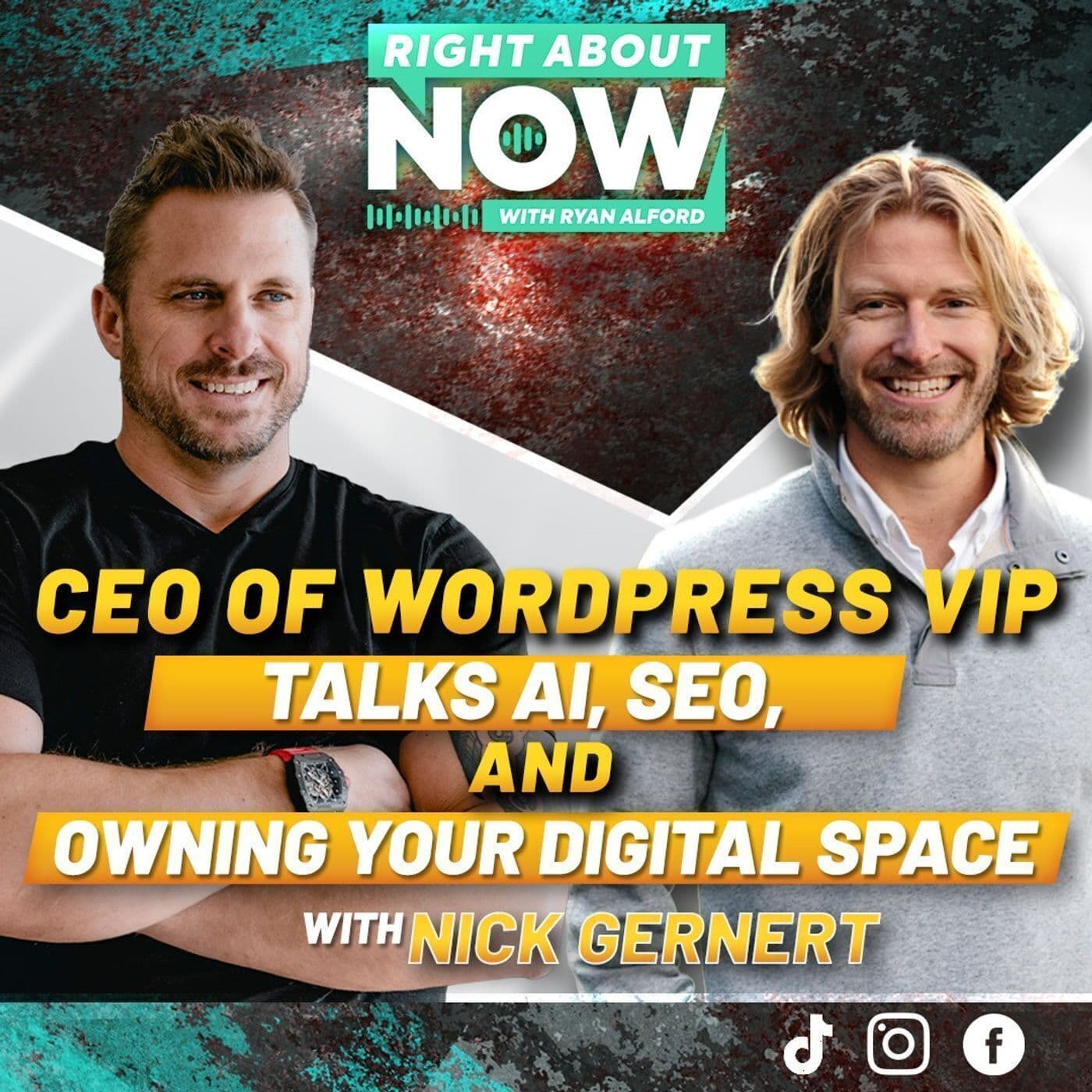
WordPress VIP CEO Nick Gernert on AI, SEO, and Owned Media
WordPress VIP CEO Nick Gernert joins Ryan Alford to discuss WordPress's 43% market share, AI-powered backlinking, Google referral data, and owning your

Ryan Stewman on Inflation, Taxes and Interest Rates
Ryan Stewman breaks down how interest rates, rent caps, taxes paid in arrears and health insurance costs are crushing business owners' cash flow.
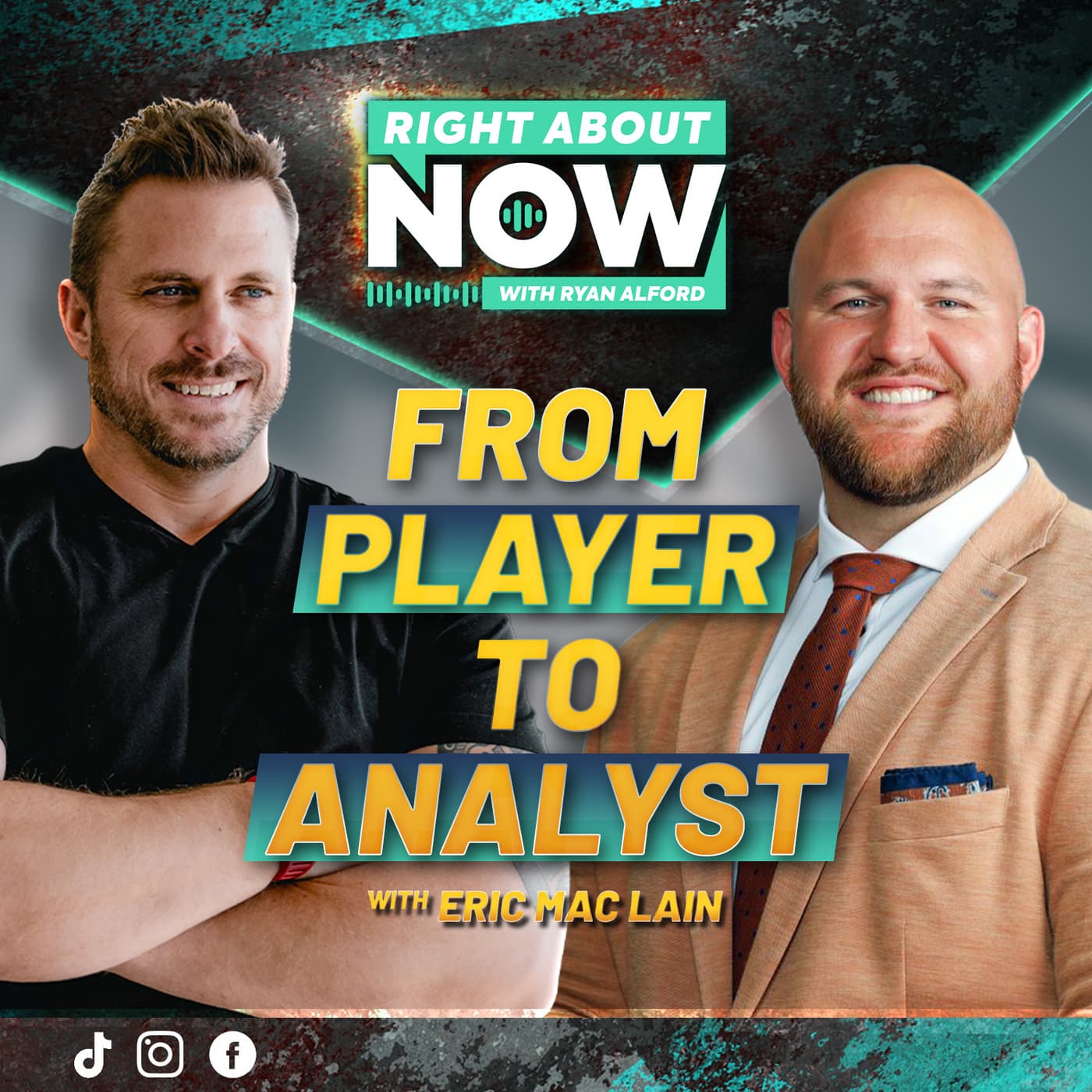
Eric Mac Lain: From Clemson Football to ESPN Analyst
Eric Mac Lain on his Clemson recruitment, the Alabama title game, learning sales at JMI Sports, the ESPN call he almost ignored, and why NIL needs one