Topic
Raising Money & Investors
23 episodes. 22 operators. Every line below is a verified passage from the transcript.














But when you look at the different types of investors, family offices, private equity, venture capital, each one of these different groups likes to focus on different things.
And it's the reason why I'm doing what I'm doing right now with a public company and why I'm taking the hits if you want to call it that way is that there's a dude a few years ago who ran a software company sold it for a couple billion dollars, right, to a private equity company, private equity firm.
But when you look at the different types of investors, you know, family offices, private equity, venture capital, each one of these different groups likes to focus on different things.
We called it loud to be loud and active and not silent investors because there's a lot of investors who put in money into opportunity or a startup.
We called it Loud to be loud and active and not silent investors, because there's a lot of investors who put in money into opportunity or a startup.
And the only people that move enough money are business owners or investors, which is why business owners and investors get the most amount of tax breaks.
The earlier in your journey you bring in investors, the lower your valuation would be because they're buying risk.
And we went with social impact investors, like our lead investor in the 70 kit, their B Corp certified.
- Identify your investor avatar first — venture capital and angels fund unproven startups, while private equity buys existing cash-flowing businesses. (From Oil Deals to Entrepreneurship: Brad)
- Before raising money, identify the investor type that fits your stage — VC and angels for unproven startups, private equity for existing cash-flowing businesses — or your message won't match the audience. (The Best of Right About Now: World class)
- Identify the investor avatar that matches your stage first — venture capital and angels fund unproven startups, private equity buys existing cash-flowing businesses, and pitching the wrong group means your message won't land. (Big Brass Balls and a Bag of Cash with B)
- Non-accredited investors can enter Cardone Capital deals for as little as $1,000, while accredited investors face a $100,000 minimum — the average non-accredited investment is close to $25,000. (Making Real Estate Investing Approachabl)
- Navin says less than 2% of companies actually need venture capital, and as a VC he encourages most founders not to take it and to consider scrappier routes or in-kind services instead. (Discipline, AI & Business Growth: Lesson)
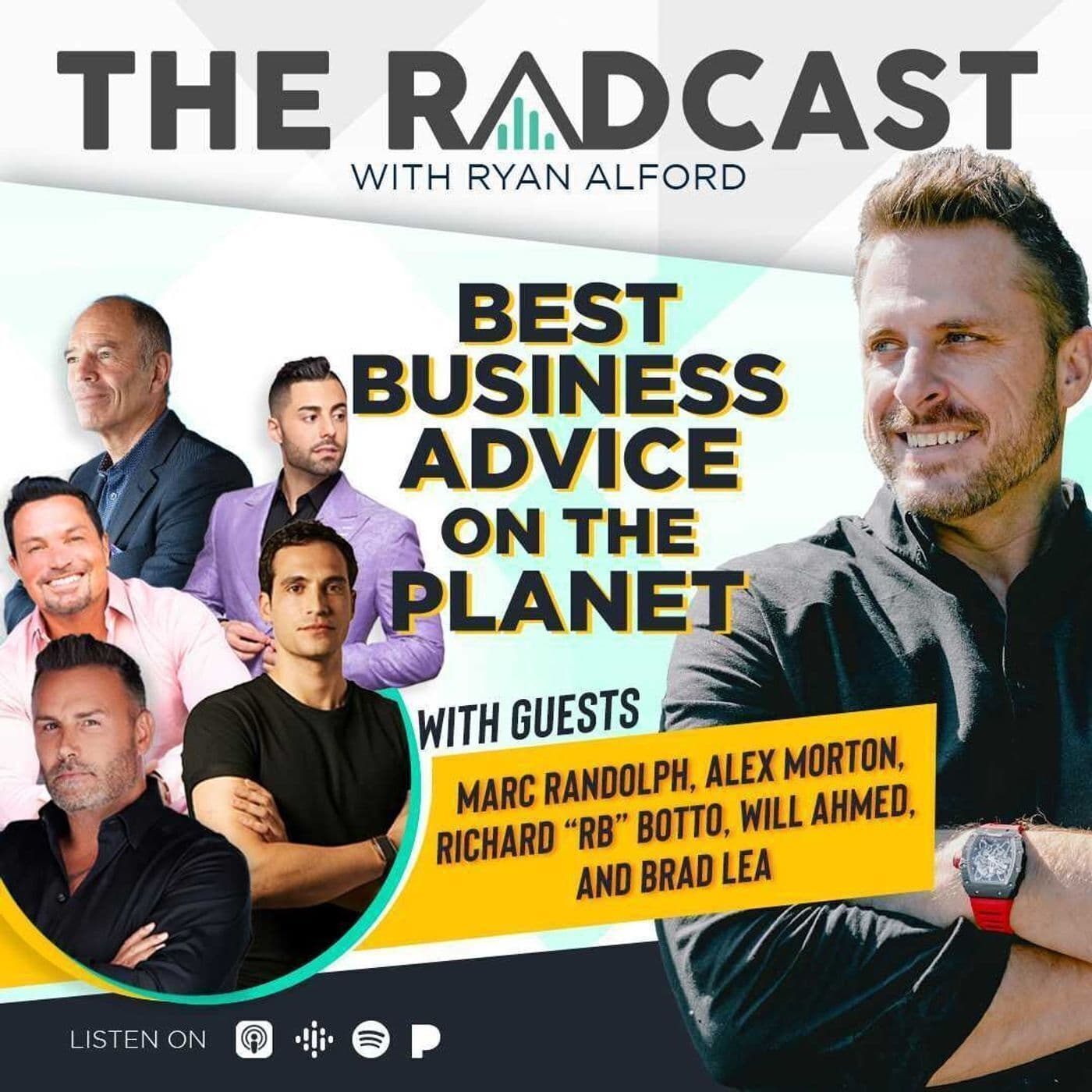
- Raising your first $250K or $1 million being hard says nothing about your ceiling; fundraising is a learnable process and investors should be aligned with your vision because you can't get divorced from your cap table. (Best Business Advice on the Planet with )
- Cardone opened a fund for non-accredited investors with a $1,000 minimum so people with under $100,000 can invest alongside him; the average non-accredited investor is putting in about $25,000. (Grant Cardone - High Profile Real Estate)
- Low interest rates help investors, not owners, because buyers still need 20% down - which is why 40% of American housing stock is being consumed by investors. (Grant Cardone - High Profile Real Estate)
- They turned down money from larger private equity firms and raised instead from B Corp-certified social impact investors whose goals matched the company's mission. (HopinTech: Creating Sustainable Solution)
- Founders in Michael's straw polls say they spend up to 75% of their time raising capital or keeping existing investors happy, which he calls the worst possible use of a founder's time. (Serial Entrepreneur Michael Loeb: E-comm)
What is the difference between angel investors, venture capital and private equity?
Big Brass Balls and a Bag of Cash with Brad BlazarShould I bootstrap or raise venture capital for my business?
Why Is Your Best-Selling Product Losing You Money?Should my business raise venture capital?
Most Businesses Should Never Raise Venture Capital | NavWhat is active capital and how is it different from a passive investor?
Most Businesses Should Never Raise Venture Capital | NavWhat kind of founder is a good fit for venture capital?
Most Businesses Should Never Raise Venture Capital | NavHow are investors using AI to assess private companies?
Most Businesses Should Never Raise Venture Capital | NavHow do you raise capital from investors without giving up control of your business?
From Oil Deals to Entrepreneurship: Brad Blazar’s MasterWhich investors fund startups versus established cash-flowing businesses?
From Oil Deals to Entrepreneurship: Brad Blazar’s MasterAll 23 episodes
Search withinJustin Brennan on Multifamily and Other People's Money
Why Your Best-Selling Product Is Losing You Money
Dan Novaes: Turning Phone Attention Into Income
Why Most Businesses Should Never Raise Venture Capital
Brad Blazar on Raising Capital With Other People's Money
Charles Nader on Doc.com's Free Global Healthcare Model
Grant Cardone: Real Estate Investing for Everyday People
Navin Goyal on Discipline, AI and Raising Capital
Building Real Estate Wealth With Other People's Money
Dan Novaes on Mode Mobile's Earn-While-You-Scroll Model
Amrinder Kamboj on Acquisitions, Equity and Scaling
Mike & Kass Lazerow on Shoveling Sh*t and Real Leadership
Best of Right About Now: Expert Business Advice
NoBaked Cookie Dough: Jimmy Feeman on Scaling a CPG Brand
Brad Blazar on Raising Capital and Other People's Money
Rick Jordan on Going All In and Taking a Company Public
Best Business Advice: Netflix, Whoop and Stage 32 Founders
Whoop Founder Will Ahmed on Building a Wearable Brand
Grant Cardone on Real Estate, 10X Thinking and Renting

HopinTech: Fixing the Commute With Existing Fleets
Michael Loeb on Startups, Friction and B2B Payments
Whoop CEO Will Ahmed on Building the Top Fitness Wearable