
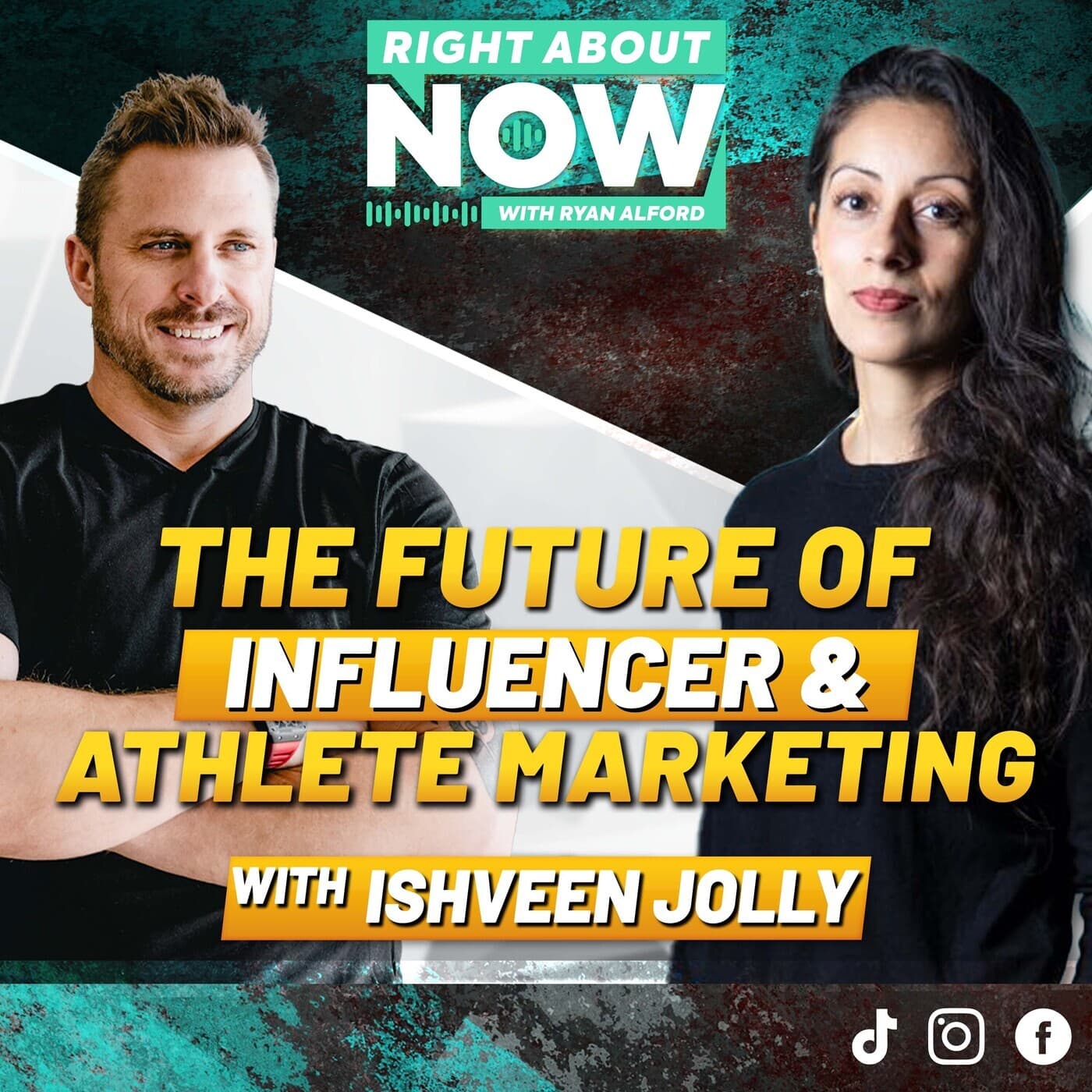
The Future of Influencer & Athlete Marketing with Ishveen Jolly
Open Sponsorship CEO Ishveen Jolly joins Ryan Alford on why athlete sponsorship is the new word of mouth, and how to structure deals that actually deliver
- Treat influencer content as an asset, not a post: one paid Instagram story can be repurposed into paid ads, PR, the website, LinkedIn, email and internal comms, which is where most of the value actually sits.
- Open Sponsorship removed its self-service option about three years ago because matchmaking alone didn't produce ROI; the team now does the editing work itself, including adding music and text overlays in tools like CapCut.
- Decide the single goal of a campaign before choosing talent: if you want UGC for ads, don't hire an athlete who never makes Reels; if you want to say you sponsor a quarterback, that's a different deal.
- Ishveen's value hierarchy for deals is cash first, product second, equity third, royalties last, and Open Sponsorship does essentially zero royalty-only deals with no product attached.
- Structure deals to de-risk both sides: pay a guarantee for traffic or in-funnel activity, then layer royalties on top instead of putting the entire fee on bottom-line sales the influencer can't control.
- Reels can't carry a link, so don't buy Reels and then judge them on sales; likewise Stories disappear in 24 hours and serve awareness, not conversion.
- Open Sponsorship has flipped its own growth focus toward retention, aiming to win a client's podcast and events budgets rather than starting from scratch with new accounts.
- Ishveen's untested idea: take a brand's Super Bowl ad budget and spend it on roughly 500 NFL player deals instead of one national spot, then measure the return.
And today it's never been cheaper because you literally can pay them to do one Instagram story for a few hundred bucks. But then you can take that and suddenly scream and tell the world, this is what we do
I just gave you gold or one of my clients or one of, you know, we gave you gold and you treated it like silver.
And so by trying to make it free, you're basically saying it's got no value anywhere else, other than the influencers channel, which is like the wrong way to think about it.
Why is influencer, sponsor, the IT medium for helping grow a brand of any size? It's the new web-to-bought mock-tank. This is right about now with Ryan Alford, a Radcast Network production. We are the number one business show on the planet with over 1 million downloads a month. Taking the BS out of business for over six years in over 400 episodes. You ready to start snapping necks and caching checks? Well, it starts right about now. What's up guys? Welcome to right about now. We're always keeping it right for you. You know, you know we're right. The website is right and it's right. You know, that's why I bring the best and the brightest from around the globe. Come from London today. We're all over the planet.
We got you covered, baby. We're talking all about sponsorships in IEL. If anybody heard of that, I'm going to go there with our guest. We're going to tell you what that means. But ultimately, it's about getting value for your marketing dollar. We've got Ishthfein. Jolly, she's the CEO and co-founder of Open Sponsorship. What's up, Ishthfein? Hi, Ryan. Thanks for being true. Yeah. Hey, we're in this marketing game together. You know, we've got to stick together. Love it. I know. I know. It's a it's a fascinating world out there. Navigating new media, the the new stars, the new spokesperson, you know, all the people. You got all the changing laws and rules with what happened with NIL in the US. I want to get down that path. But at the end of the day, it's about,
I always say this, Ishthfein, people have never been more aware that they're being marketing to, you know, being marketed to. They know. And so you've got to be more authentic and you've got to use their peers to sort of get to them. That's what I really love about what you guys are doing with Open Sponsorship. Let's set the table for everyone. And they can go check out your YouTube's and all the stuff there. Ishthfein's got all the accolades in the world. Let me just tell you all that her mentioned a few of them when she describes herself very accomplished. And her journey stories are out there. So we won't go that. We want to keep it real raw and interesting about the topic. But Ishthfein, do set the table and you know, give everybody a
little synopsis of Open Sponsorship and, you know, give a little bit of the brag reel. Come on. No, thank you. Well, I suppose very quickly because I do love the marketing stuff more as well, I started Open Sponsorship about 10 years ago. I used to be a sports agent. Prior to that, my background in sports, I played a lot growing up. I capped in multiple teams while at university. And then kind of fell into sponsorship. And then fell in love. I just thought what a wonderful form of marketing. Of course, like sponsorship today. Is it influencer marketing? Is it affiliate marketing? Is it PR? There's so many kind of cross crosses with the other verticals. But really fell in love with sponsorship. The idea that like your brand could leverage another brand
for OnePlus 1 equals like 50 kind of thing. And obviously the fact that the money goes into sports, which I'm very passionate about or entertainment music, which I'm really passionate about. And so started that 10 years ago. Fast forward today. Yeah, very lucky to receive quite a lot of accolades. I suppose highlights are we have Serena Williams as an investor, one of our lead investors. We have 19,000 athletes and influencers today. We work with brands like the Walmart or ReBalk or whoever else. And it's just fabulous. We run a small team that's mostly all in the US. And it's really rewarding. Yeah. What's considered the home base of Open Sponsorship? Is there one? Yeah. Open Sponsorship? Like. So we headquartered in New York for the longest time until COVID.
Very US-focused. I personally just like to live in London, but the business is in the US. I love working in the US market. Obviously get to meet people like yourself with all your great energy. And so the US is our base for multiple reasons. Love the marketing dollars. Of course, the budgets there, but also just the willingness to try something new. And there's a small company competing with bigger agencies, which I'm sure we could exchange notes like the American market is very much like, all right, we'll give you a little bit. If you prove yourself to get more, you know, and it's quick turnaround. Yeah, I love that. Yeah. It's a fascinating industry. I came up in marketing and sponsorship was part of what we did for Verizon and the NFL
helped shepherd in that agreement. That was a billion dollar sponsor. That's about a big sponsorship deal. I worked on that one for about three years. And it is though a very fascinating and sort of, I don't know, I love what you said about the one, you know, one in one, you know, the sum of the parts is greater than the whole. It's something like the amplification that happens when a great sponsor, a great brand, and a great entertainer athlete, influence or whatever it is comes together. It's like magic, isn't it? 100% and I think the biggest thing is just like the extension of that piece of content or that partnership across all the other marketing channels and the sales channels and the impact it has on like your employee base or whatever else. And so
like it's the fact that I don't think there's anything like it where sponsoring an athlete, using an athlete. And today it's never been cheaper because you literally can pay them to do one Instagram story for a few hundred bucks. But then you can take that and suddenly scream and tell the world, this is what we do and you put it in your PR, you put it on your website, you put it in your own personal LinkedIn, you tell your team, I'm all of this and the amplification and the ripple effect of all of it is so huge. Yes, and we're getting into really fast and nitty-gritty, but I love it. Because this thing, you just nailed it. We've worked with a lot of brands, you know, I've been on
both sides of it. I'm an digital agency and a podcast network. And then now, I mean, I hate even using my word in the name influencer, but got a good fall and good show. And so I'm on all sides of it. And it pains me when we've like worked with brands and they don't atomize it and use it the way you're just said. Like I'm like, I just gave you gold or one of my clients or one of, you know, we gave you gold and you treated it like silver. Like it's like, why didn't you use it all over the place? It's like, it doesn't need to just live within the influencers channel. You got to amplify it. That's such a mist, isn't it? Sometimes.
100% and this is why, you know, we talked about it slightly when we were kind of chatting before that. We started off, you know, I created open sponsorship with my co-founder as the LinkedIn, the Airbnb, the match.com of the industry. You know, we were like, right, we're going to help you find the person connect, boom, done. And then we realized in the journey that if you're on like a dating site or like a job recruitment site or something, if you get the match, that success, but we were, people were coming to us and they're like, great, you, you're great. But what, the outcome wasn't, the ROI wasn't there. And I was like, shit, I need to start thinking about the ROI on these deals because otherwise we're just going to see all of these guys, I try
in at once and leaving. And then we did what you did. We started trying to build into what you were saying. We tried to build into the platform. Have you thought about doing this? Have you thought about doing this and share this? And then we realized people just either don't have the time, the knowledge or whatever else. And so that's kind of why about three years ago, we were like, you know what, we're going to get rid of the self service. We're going to be completely full service. We're going to be like an extension of your team. And we're going to like make you, we're going to, we're going to do it for you. Great examples. Like a few months ago, I was speaking to my team. Now I didn't even know that they did this, but like they'll go to like a tool like
Capca and they'll put music overlay and the text overlay onto a video. And I was like, you do that for clients and they're like, yeah, but it's just like, it's harder to get them to do it and teach them and say, oh, this video would be so much more effective. They're like, we'll just do it for them and it'll take a few seconds. And so I think like what I realized is it's whatever the brand's reason is to not do. It's ultimately our problem. And so there's no point in doing these partnerships if you're not going to make it happen. Yes. And what you realize is the total, I don't know, it's the total filling the entire circle in. Okay, it's not just connecting brand
to, to influencer. It's all the magic magic in between, making sure the content gets done, making sure the content gets used, make it, you know, all of you got to leave them to the water and make them drink it. Yeah. Honestly, yeah. It's true. And because ultimately, it's what makes it work. And the only way for it to keep happening and to have success is if it works, right? 100, 100%, 100%. Yeah, I love that. And I, it's an interesting pivot. I mean, I've definitely seen with like the athletes, especially, you know, they can, you can get all these deals, they want the deals, but, you know, creating contents like the hardest part, isn't it? Yeah. How do you feel to be in sit with? We got to get content for this brand.
Yeah. I'm making it not look like it was like read off a script. Oh, yeah, exactly. To do it. Definitely a challenge that still exists. I think again, going back to the point, like, what, who, what are you using them for? So if what you want is content creation and great UGC to put in ads, don't use that guy who never does reels and like, is a little bit stiff. But if what you want is to be able to say that you sponsor the quarterback of Clemson, then great, then, you know, or whatever else, then. And I think that's the other thing is, I realise that a lot of times when you, and I do this as a CEO with a marketing budget, you conflate everything, you're like, you start off going, I want, I want a testimonial and
five weeks later, you're like, oh, but it didn't produce sales and you're like, well, that was never the goal. And so I think it's really important, again, the benefit of being hand in hand is, like, you can keep saying, remind that this is the goal of this campaign. This is the goal of this partnership. If you want to change the goal, we got to change the creative. We might need to change the person. We've got to change the deliverables. So it's like, if you, like a great example, as if you want sales, Reels doesn't allow you to have a link. Yeah. It's not going to produce sales. But if you want a brand of NSP stories and disappear after 24 hours, very, very different, which one do you want? Yeah, that's, I'm going to go down that path with you here. But since you brought
up Clemson, I mean, I had, you know, it's a Clemson guy. No, I didn't. I graduated from Clemson. I'm a Clemson grad. Yes. Tigers. K. Clibnik. Yeah. Is he on your platform? The question is about individuals. I'm sorry. I'll go there. I know. He should be. He's a human, the husband this year. I'm going to say, I'm going to say the answer is yes, because I have faith in myself. Yes, I have faith too. We'll get them on there if he's not. So I always have this trepidation. So I want to see if you share it. You know, I don't know about you. But awareness is not free. And, you know, the age old influencer deals for affiliate deals for, you know, percentage of sales is great. But what I've never understood about that whole equation as a marketer and an influencer
is why the hell would you give away free awareness? You know, like, nobody gets to run, get free awareness. Like Verizon and AT&T, you see those courses over and over and over again. And they don't know if they're generating sales tell, you tell this is not right to consumer or not, you know, but because they know they have to feed the top of the funnel to get to the bottom. But for some reason, influencers, and I'm sure you guys are working big athletes where maybe this isn't as big of a problem anymore. But why the hell should I give you free awareness? And if only if I drive you a sale, do I get paid? Who made that rule up? And it's not the rule for everything.
I know the big guys get paid, but you know, I'm saying it just seems like that set a false reality of what you have to spend as a marketing and as a brand. I love what you say. We don't do as many of those deals to be honest. But we also count product as value. So I'd say cash is king, product is second, then really equity if you've got it. And then it's royalty exactly what you're saying. So we do, we basically do zero royalty only deals with no product. And when people say it's royalty, I say do a deal for product. And if it works, if there's alignment, if you like their work, if they like you, then fine, talk about a longer term deal with royalties. But
the expectation that you're going to come in and get good things. Now, let's talk about them, why is it still, why is it happening? Well, obviously TikTok shop is changing the whole game because they've got this whole thing. I don't think it happens that much on matter or wherever I also might be on Amazon. And if I was going to play like devil's advocate, why is it happening? Well, why is it not happening to us so much is because athletes, this is not their primary job. Yeah. But if you're a content creator, let's say on TikTok, firstly, you need content to post three times a day. So if you get paid like 20 bucks for a video or like you're going to just generate a bit of sales like one, two, this is your job. So you need to figure out ways to because
like those brand awareness dollars are drying up if you don't produce, if you're not, if you don't have a viewpoint, and that's why I love the space that we're in because, you know, I used to say, we're not influenced marketing, we're sports sponsorship. And then obviously I was like, all right, we're influenced marketing and sports. Yeah, exactly. Well, if you're the buyer and you buy influence marketing, I'm here for it. Yeah, exactly. But I'd also say like with the rise of the athlete and the celebrity and the TV star or becoming better value, I think it's hard for someone who's not famous for a reason to make money from brand awareness. Yeah. And they're probably the ones doing the affiliate deals. I know. I just and I understand that I just it more drives the
shit out of me that that brand sort of expect it like more than they should, I think. And I get that the dollars have gotten to where and then want to look, we need outcomes. But if your funnel's not good, it doesn't have anything to do with how good my read is. And so if I do a read, how do we know that the vacuum cleaner I'm pushing doesn't get sold three weeks from now and I get no attribution for it? I mean, I wish there were more and we've done a few of these. I wish the deals were like more creatively set up. So it's like, okay, what does your funnel look like? I can guarantee you this amount of traffic. Let's pay for that. And then let's do royalties on top of. So it de-risks you,
it gives me a bit of upside, but there's also like you said, if your website crashes on that day, like I shouldn't be held. And also I say this to our brands like, we're not in the business of understanding your competitive set, your pricing, your packaging, like your flavors. So we can't predict the success. But what we can, but I do feel like there's probably a mess that it's like no guarantee or sales. A deal, it should be like a guarantee of something within funnel. And that would be easy, right? Because then you'd be like, well, if I don't hit it, I'll just do two extra ad reads for free. And if I do. Exactly. Exactly. We'll get it, you know, we'll deliver it, but it can't
just be bottom line sales because there's just too many companies. I mean, I'm not saying never, it depends on the, like you said earlier, you know, trying to get an Instagram reel to drop sales. Good luck. I mean, you got to have a really tight funnel or like, because friction is the enemy of influencer deals. And what do I mean by that? From knowledge to click, from, from influence to sale has to be super clean. I think also the other thing is is like, then what, like you said, awareness or whatever else, what that also does is it like goes against everything we were saying before, which is like, the value is also in like using that ad read and putting it in paid ads, proposing on LinkedIn, posting it organically, doing a marketing email and being like,
hey, did you see us on this podcast? Like, did you like, you know, or putting it like using it in PR? And so by trying to make it free, you're basically saying it's got no value anywhere else, other than the influencers channel, which is like the wrong way to think about it. So that whole thing doesn't really work, but I think what needs to happen is almost like, there needs to be a very separated approach, like your Mac, like, you know, like your Macro, and what does that look like? Or whether it's Macro or Micro or like strategies from buckets, and it's like, this is my royalty only people, but these are my people who do something else, and these are my people, and they've all got different goals. And that's what we've been trying to work on with
our clients, where we're like, your product only deal is for a testimonial review for you to use. It's not going to drive sales, because they probably got less than 5,000 followers. This person, you know, they're going to produce content that you're going to put in your paid ads, that you're going to be proud of, you know, blah, blah, blah. I think there needs to be a college course or a re-education of the brand marketers out there, you know, a course put on by Ryan Offert in Isht being jolly. I love it. And it's going to be royalty based only. Exactly. Oh, talking to Isht being jolly, she's the founder and CEO of Open sponsorships, making it accessible to everyone. I think it's interesting serving the brand, serving the athletes,
you got to serve both if you want to eat. You know, like, they're both part of the equation, you know, I mean, they're both the main course. They're both equally important. Is it ever feel like you had to, you know, who am I serving first? I'd say having been in the sponsorship game a long time, if you have the brand dollars, the right brand with the right dollars, you can make any deal happen. Yeah. And so we needed enough base to say like, hey, brand become interested.
But really, the last eight out of ten years, it's been servicing the brand. But when we feel like we built a mobile app, and that was predominantly with the focus of the athletes and the agents, because we realized that they're on the go, they don't set a desktop all day, they want to upload content from their phone, you know, all of that stuff, right? And so we've actually probably built more tech, not well, it's like the tech is 50-50, but the service is probably 75 brand, 25 athlete agent. And it goes back to the fact that at the end of the day, well, one is we work with a lot of agents, so they do part of the servicing. And two is, you know, we've had companies approaches for partnerships and they're like, hey, we've got this
great business, put it in front of your athletes, and we're like, look, our athletes come to us for sponsorship for the marketing dollars. They're not coming towards for like a merchandise line, also launch a shop survivor. Like, maybe we'd get there, but to be honest, if we didn't give them brand dollars, they'd be like, why am I here? You know, like, you know why you go to Uber, you know why you go to Airbnb, you know what, so I think we've been very clean and clear that we're not trying to give you, we're not trying to do everything for you athlete agent, we're trying to do this, and to do this, we need to have the brands. And once we have the, and you know, at the beginning,
we had very small brands, you know, you're a smaller company, you don't have any notable names. They love it now. We just did a great campaign for live golf in Miami and they're like, oh, yeah, we want to work with live and we want to work with Western Union and we want to work with Drone Colorfinn. And so they love it when we bring them better brands, they respect the fact that that's our job. And we just give you great deals. Who do you, like, who's the marketing funnel for opens? I mean, for you guys, like, are you off? You got to pitch both, right? You going after the athletes and the brands, right? Yeah, we again, probably same things. So dollars wise, we focus on the brand.
And then what we tend to do is because we have like so many athletes now, like, you know, like we've got like 80% of the NFL, we've got thousands of college athletes who got loads of influences. So when we need to fill a brand campaign that we don't have, like, we've now moved into different verticals. So we just ran a campaign with a Costco vegan parmesan cheese brand and they wanted foodie influencers who drive Costco sales. So like, we'll go out and get new people but to fulfill a campaign, kind of like what I was saying about podcasts. So like, if for some, one of our brands like, why are you interested in podcasts? We're like, cool, we'll go out and get like opportunities for you. In terms of our marketing dollars, I'd say very brand focused.
But actually, I don't know how you feel about this. So what you've seen on your side of the table, but we are more focused now on retention and growing our existing client base than new clients. Like, we've really flipped our focus because we would rather like completely service you and get more of your growing influence a budget outside of support, so get your podcast budget, or get your events budget, then having to sign another person and starting from scratch and improving ourselves. I have a book that's halfway written and you know how they, you know, the old term LTV, lifetime value. Yeah. It's the name of the book is lifetime loss. In a world hyper focused on growth, the customer you already have is the biggest secret to your
success. You got to nurture it. You got CRM, baby. I mean, customer relationship management and nurturing what you already have is the name of the game because you take care of them. There's always more budget, especially if it's a good customer. There's always referrals behind the door number two, and it's just, it's real damn hard to get a new customer, and it's real damn hard to replace a great one. It's also like, it just feels so good to produce wins for customers. Like, I think about five years ago it felt good to sign new customers, that like what you're saying, the whole thing was like growth and customer acquisition, and that's what the world is on. And now it feels so good when someone tells us something worked. I just love the feeling of
being able to go like, we actually produce something for that person. I pivoted my whole company based on that. Like I've been doing digital advertising, you know, advertising agency life for 20 plus years, left that world because I got tired of the advertiser where I was to create the account guy, and I'm like, I don't, I'm going to do my own thing. And it's all the video thing coming. And you know, we did that successfully for seven years, but the last couple of years, I felt like no matter what we did, I didn't feel like the clients appreciated it or sold the value in it.
But we got good at the podcasting, and we found something where I knew we could deliver wins for both sides. And that's exactly right. Like it's it's so rewarding and fulfilling when you deliver the wins. Like if you're not in it to do that, then I don't know what the hell you're in it for. Yeah, it's true. It's true. And when especially, I mean, yeah, helping a young athlete who's getting it going, who's, you know, got some things going, they get a little money in their pocket, the brand sees results from it. I mean, ding, ding, ding, ding, right? 100%. I'll absolutely love it, especially like we do, we do loads of like deals and like the other wellness space and, you know, truly authentic. And so you're like, even if it is a small cash
thing with a bit of product, like, you know, these like supplements are like hundreds of dollars. And if they're actually helping you achieve your goals, get help you get fair, or it's a product you use to use, it's that's like the coolest thing we can do.
Tell me, if I'm a listener out there, ishfein. Why is influencer, sponsor, why is this the it medium for helping grow a brand of any size? I think there's a few reasons given that it's having such a growth moment. I think it is a few reasons. So one is, it's the new word of mouth marketing. Essentially, like word of mouth marketing, like you said, referrals used to be, and still are technically the number one channel, but it's quite limited. And like, influencer is like the new version of that. Fine, there might be people you don't know necessarily that you follow them. So I'd say, if you think word of mouth traditional, what's it? So word of mouth, it's the new version of that. PR is still hugely important,
but it is so like to us, when we raised our last round and had like Serena Williams and David Blitzer and some of it, like getting PR was so much easier when you're aligned with a person. So like, we're all trying to sit there getting more PR. This is it's like the new version of that. In fact, you kind of don't even need the PR because it almost is its own PR in a way, it's PR channel, like doing a podcast and sponsoring an ad rate, like it's like pay their tutorial. So that's second, the third is, for better or worse, we have social media. And back in the day, the biggest thing for us is I back in the day, you needed to put a TV ad up. That TV ad was one spot
and it would cost a million bucks, let's say. You're not going to put a person in that ad unless it's a LeBron James or Tom Brady or someone big. But now you can literally, you don't even have to pay for production. These people are putting it out themselves. And so it's like buying a mill, like the one thing I haven't done that I really want to still do is Super Bowl do take someone's budget instead of a Super Bowl ad on NBC, give it to us and let us do like 500 NFL player deals across all and see what the return is. So I feel like that's another one. And then the fourth thing is around like the idea about localization and personalization. Like I was at a talk last week, advertising
some guy would say talking about in-store retail and like how when you walk around the grocery store, there's so much inventory that and they're going to start putting like digital banners in inventory and that's going to be the place and it completely made sense. And then they gave the one case study the best case study and it was Dale and our junior on a little thing with Helmann's mayonnaise and when you walk past, he would speak and go, how are you doing your mayo for Fourth of July? And they would talk about the results of this. But let's be very clear, that is because it's him, it was local to that market where it was probably in India, I don't know, somewhere where I'm at. South Carolina. Yeah, a lot of NASCAR lovers in North Carolina and South
Carolina. Exactly. So it was it was a local store and that is probably like the cost of that versus doing a TV ad which they might not have seen which is not like you said not even connected to retail. So of course you walk past that, he interacts with you and you use AI to do this stuff. So why influencer? It's not, I don't think the Instagram reel is the answer. I think it's the integration of people who influence you at points where they can make an impact for you at values that you could never have gotten before at. There you go. There's a little study called Z-M-O-T. Zero moment of truth. That's what that is. It's when in the store, walk about, Google put that on. Now you're truly a billion dollar study on consumer behavior and the
moment of truth and when you hit the decision points in that and that's what you're talking about. Hey, they're in the freaking grocery store walking by. How do you people are putting that in the car? Stopping cart. That's the zero moment of truth right there and leveraging it across and look, attention is fleeting. There's never been more things buying for our attention. That's number one and number two is our attention is not where it was 10 years ago. It's not on linear TV. It's not, it's barely on radio. It's like it's on these social media channels. It's on podcasting, 1834 girls listen and watch podcasts more than they do television. That gene is not going back in the bottle. You have to be in a so funny issue. You and I think a lot of like, I use that exact word
of mouth thing the other day. I was trying to describe it as my, this is the new word of mouth. It is. It's more authentic and it's more on that local granular authentic level, especially when done right. That's the key. That's probably the hard part of your job. I'm sure that balance of you know, you know you got the right brand, you got the right athlete, like bringing all that magic together. 100%. Yeah, it's super fun. It is fun. Working everybody keep up with everything you're doing, learning more about open sponsorships and open sponsorship in yourself. Yeah, well come check us out online and sign up for free. You can't play around www.opensponship.com and then if you want to have a chat, we love kind of any brand and they often, there's a lot of brands
who are like, yeah, but it's athlete focused and you know, I'm like, give us, give us your category and we'll find a fit for you. There's literally not, there's not a vertical or a type of brand that there isn't like a fit to some sort of retired young or older US international athlete and so we love making those matches happen. So yeah, come find us on LinkedIn or wherever else. It's been a lot of fun talking. It's finally to do it again soon. That's right and same to you. Hey guys, today's sponsor is the Radcast Network. If you're out there listening, thinking about starting a podcast, already have one grow and we're here to help you. Guaranteed growth, Guaranteed monetization and look, we got top 30 shows left and right from using our
formula. We're ready to help you go. Go to the radcastnetwork.com. Hey guys, appreciate all our sponsors. We appreciate Ishtvene. You found all our content at Ryan is right.com. Highlight clips, the full episode and links to open sponsorship. We'll see you next time. I'm right about now. This has been right about now with Ryan Alford, a Radcast Network production. Visit Ryan is right.com for full audio and video versions of the show or to inquire about sponsorship opportunities. Thanks for listening.
Wallet feeling extra light after the holidays? Yeah, same. But recovery starts right now with TikTok Slash and Free. Here's how it works. Pick the products you want in TikTok Shop, share the link and watch the price drop all the way to zero. No tricks, no catch, just free stuff with free shipping. Download TikTok, search SlashFree and start slashing today.
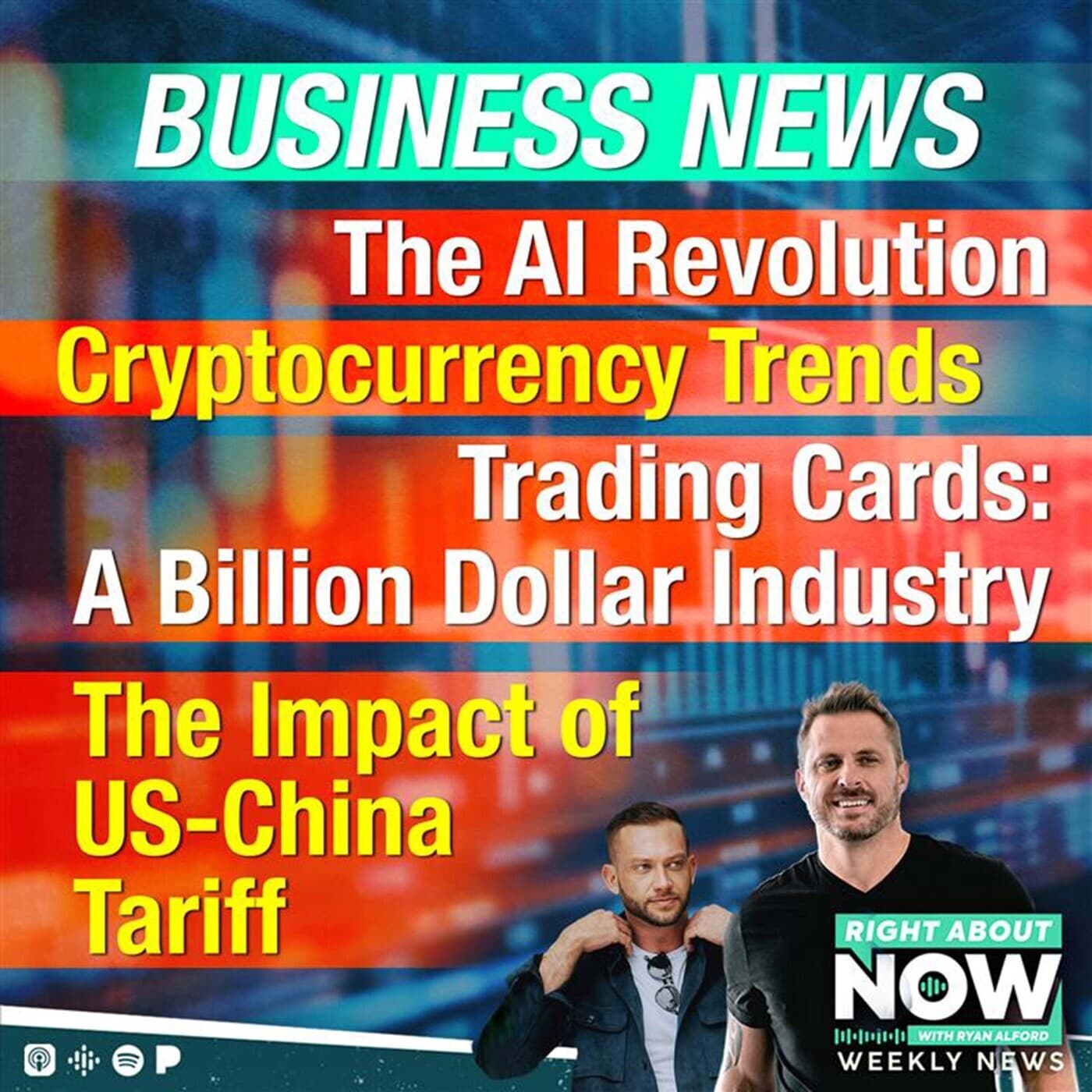
Tariffs, AI Teams, Crypto and the Trading Card Boom
Ryan Alford and Chris Hansen break down US-China tariffs, luxury markups, AI personas replacing white-collar work, crypto's rebound and Instagram Edits.
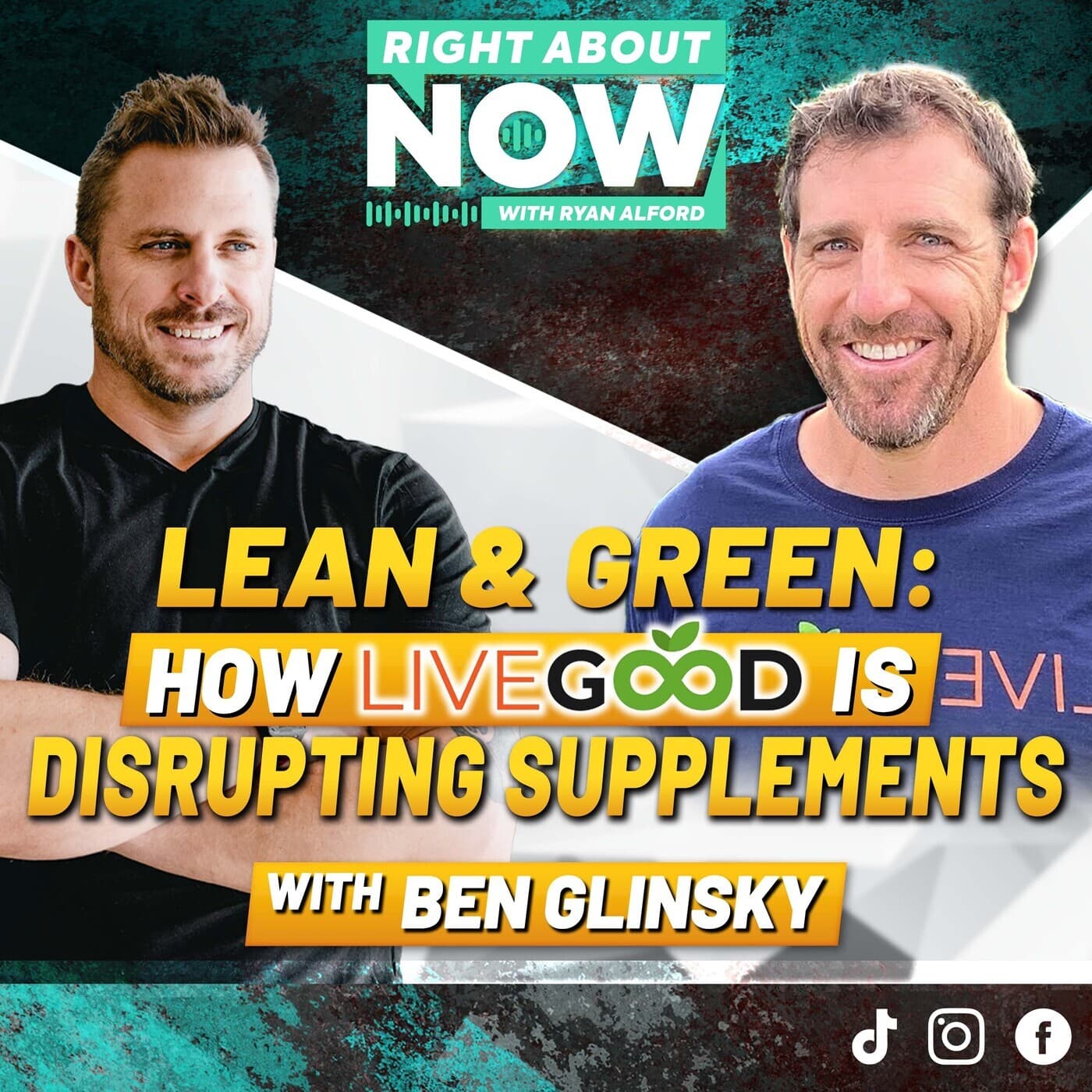
Ben Glinsky on Running a Lean $100M Supplement Brand
LiveGood founder Ben Glinsky tells Ryan Alford how no payroll, radical label transparency and affiliate marketing built a $100M supplement brand.
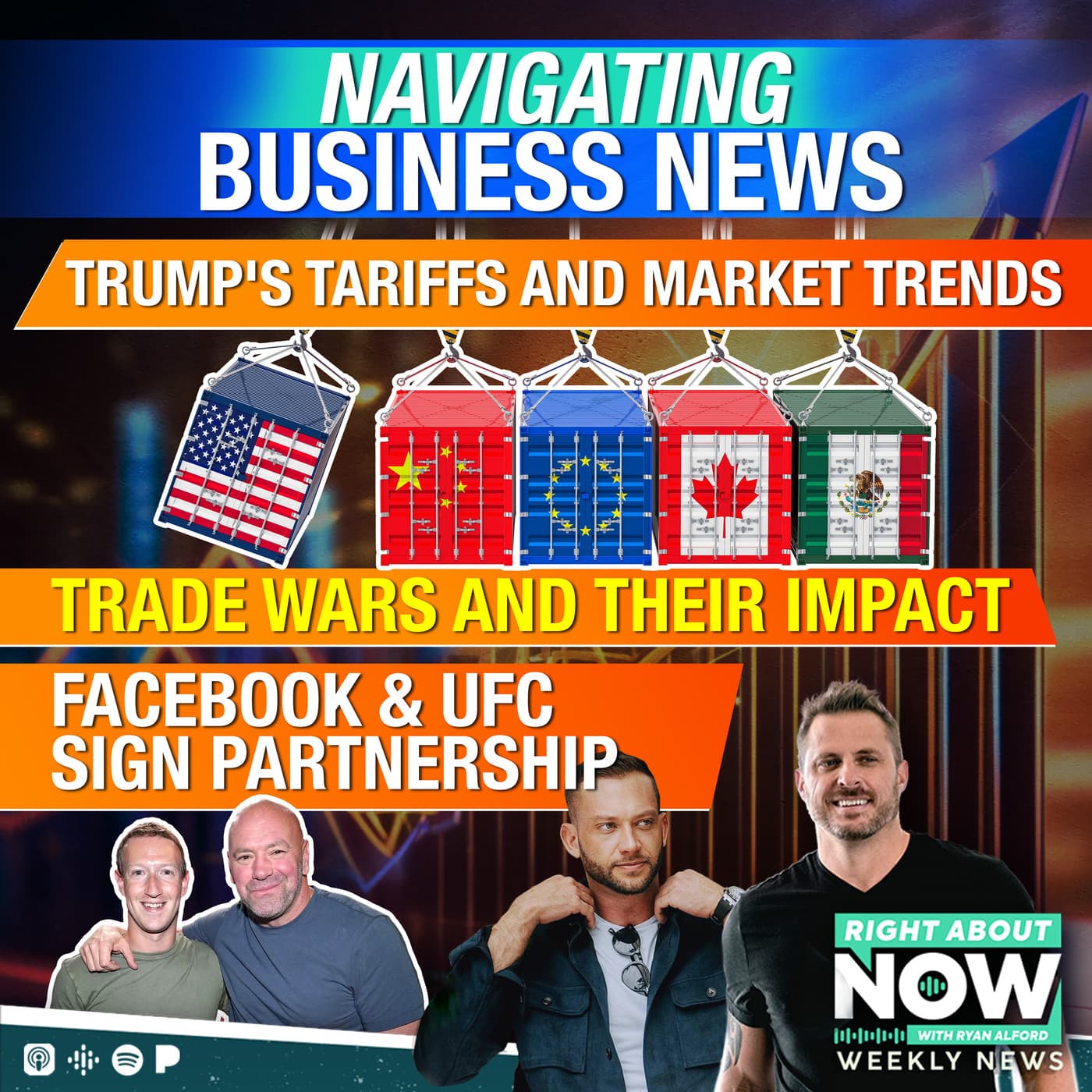
Trump's Tariffs, Market Panic and the UFC-Meta Deal
Ryan Alford and Chris Hansen break down Trump's tariff standoff with China, why panic selling is a mistake, and the new UFC-Meta partnership.